
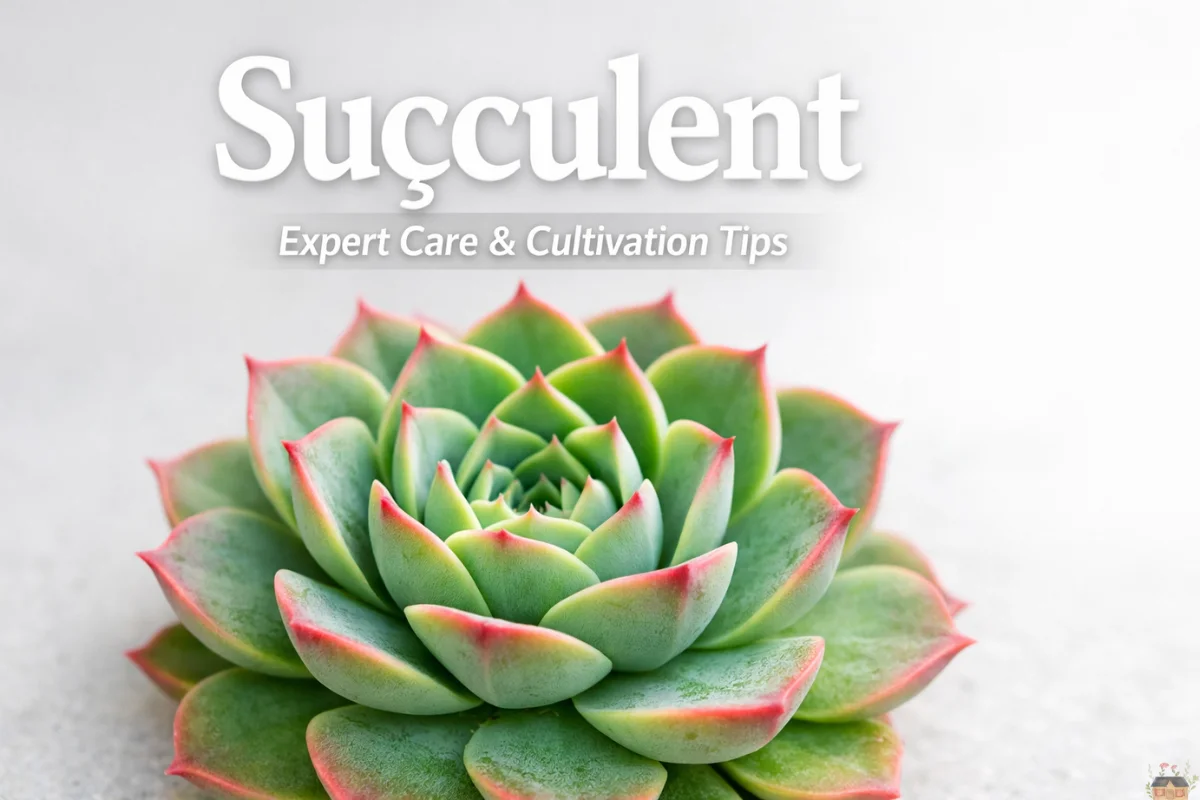
Welcome to the captivating realm of suçculent plants. If you’ve encountered this unique spelling, you are likely exploring global horticultural circles, scientific literature, or communities that appreciate precise botanical terminology. This comprehensive guide is your definitive resource, delving into the unique biology, advanced cultivation techniques, and the profound beauty of these drought-resilient plants. We will move beyond basic care sheets to provide a holistic understanding that empowers you to cultivate a thriving, stunning collection.
Understanding the Suçculent: A Botanical Deep Dive
The term suçculent is a direct linguistic relative of the more common English “succulent,” often appearing in contexts influenced by French, Catalan, or Romanian orthography where the cedilla (ç) indicates a soft ‘c’ sound. Botanically, it defines the same extraordinary group of plants characterized by thickened, fleshy parts adapted to store water. This trait, known as succulence, is a masterpiece of evolutionary convergence, appearing in over 60 distinct plant families. From the towering Saguaro cactus (Carnegiea gigantea) to the tiny Blossfeldia liliputana, the world of suçculent flora is one of staggering diversity united by a common survival strategy.
This strategy extends beyond simple water storage. Suçculent plants typically employ Crassulacean Acid Metabolism (CAM) photosynthesis, a brilliant adaptation where gas exchange occurs at night to minimize daytime water loss. Their surfaces often feature a waxy cuticle (bloom), dense hairs, or a reduced leaf area—all defenses against desiccation. Understanding these fundamental adaptations is the first step toward providing expert care, as it shifts the perspective from caring for a houseplant to stewarding a specialized desert or xeric organism.
The Essential Care Framework for Suçculent Plants
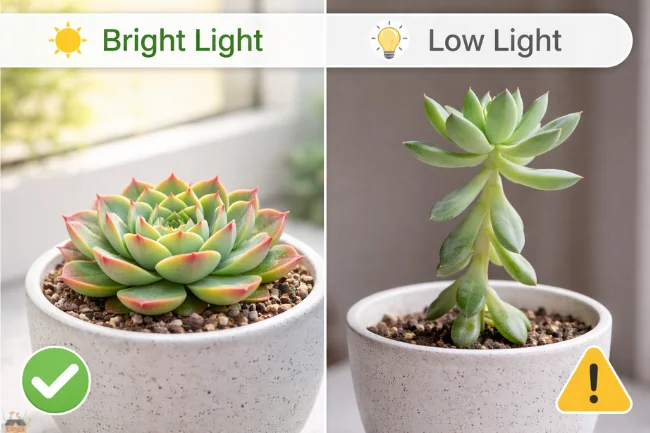
Cultivating suçculent specimens successfully requires replicating key aspects of their native, often harsh, environments. Mastery hinges on balancing three core pillars: light, substrate, and a disciplined watering regimen.
1. Mastering Light Exposure and Placement
Light is the primary driver of health and form. Most suçculent varieties demand high light intensity—several hours of direct or very bright indirect sun daily. Insufficient light leads to etiolation, a condition where stems stretch awkwardly and leaves become pale and spaced out as the plant searches for sunlight. A south or east-facing window is typically ideal in the Northern Hemisphere. For sun-loving genera like Echeveria, Sedum, and most cacti, a gradual introduction to direct outdoor summer sun can produce vibrant “stress colors” (flushes of red, purple, or orange) and extremely compact growth. Conversely, some genera, like Haworthia and Gasteria, prefer bright but filtered light and can scorch in intense afternoon sun.
2. Crafting the Perfect Growing Medium
The single greatest cause of failure with suçculent collections is inappropriate soil. Standard potting mixes are peat-heavy and designed to retain moisture, creating a waterlogged environment that leads to fatal root rot. A well-draining, gritty, and primarily inorganic mix is non-negotiable.
A Proven DIY Suçculent Substrate Mix:
| Component | Proportion | Function |
|---|---|---|
| Pumice or Perlite | 2 parts | Provides aeration and drainage, prevents compaction. |
| Coarse Horticultural Sand | 1 part | Provides stability to the mix while enhancing water flow; do not use fine beach sand. |
| Potting Soil (Cactus Blend) | 1 part | Provides minimal organic matter and anchor for roots. |
| Optional: Fine Gravel or Turface | ½ part | Increases porosity and mimics mineral-heavy native soils. |
This mix ensures water flows through quickly, roots have access to oxygen, and the substrate dries out efficiently between waterings.
3. The Art and Science of Watering
Watering is where intuition often fails. The “soak and dry” method is the universal standard. This means:
-
Soak: Water deeply and thoroughly until excess water freely drains from the pot’s holes. This allows moisture to fully reach every part of the root system.
-
Dry: Allow the substrate to dry out completely before even considering the next watering. Test dryness with a wooden skewer or your finger deep into the pot.
Watering frequency varies and is influenced by climate, season, and growing conditions.
-
Season: Water more frequently during active growth (spring/summer) and drastically reduce during dormancy (fall/winter).
-
Climate: Hot, dry, windy conditions dry pots faster than cool, humid, still ones.
-
Pot Material: Unglazed terracotta breathes and dries much faster than plastic or ceramic glazed pots.
If you’re unsure, it’s best to hold off. A dehydrated suçculent will show wrinkled, flexible leaves and can almost always be revived with a soak. An overwatered one develops soft, translucent, yellowing leaves and often faces a systemic, fatal rot.
Read more: Poieno Philosophy: Creating, Becoming, Wholeness
Suçculent Propagation Techniques to Grow Your Collection
One of the most rewarding aspects of suçculent gardening is propagation. These plants possess a remarkable vegetative resilience, allowing you to create new plants from leaves, stems, and offsets.
-
Leaf Propagation: Ideal for rosette-forming types like Echeveria and Graptopetalum. Carefully rotate a firm, well-hydrated leaf until it releases from the stem. Let it callous for 2-4 days, then place it on dry soil. Lightly mist the soil only after small pink roots begin to emerge. A new plantlet will form at the leaf’s base.
-
Stem Cuttings: The solution for leggy or overgrown plants. Make a clean cut with a sterile knife, remove lower leaves, let the stem callous, then plant it in a dry mix. Water only after roots establish.
-
Division: Applied to clumping species like Aloe, Haworthia, and Sempervivum. Gently separate “pups” or offshoots that have formed their own roots during repotting.
-
Seed Sowing: A slow but fascinating method for obtaining rare species or hybrids. Requires patience, sterile technique, and consistent warmth and humidity.
Creative Cultivation: Displaying Your Suçculent Plants
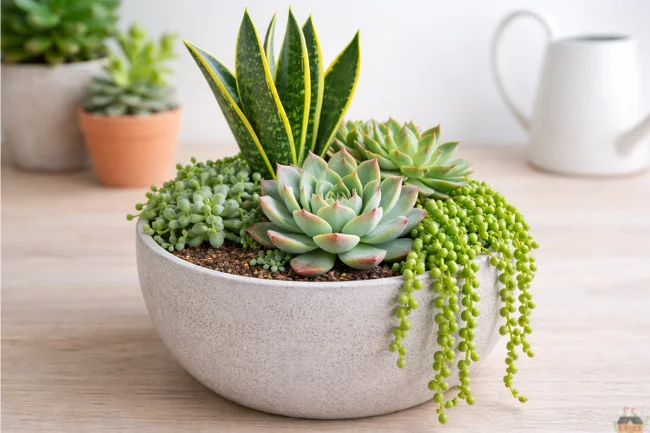
These living sculptures deserve to be showcased. Their display should highlight their architectural forms, textures, and colors.
-
The Art of the Arrangement: Employ the “Thriller, Filler, Spiller” design principle. Combine a vertical accent plant (Thriller: e.g., a cylindrical Sansevieria), several mid-sized rosettes (Filler: e.g., Echeveria), and trailing varieties (Spiller: e.g., Senecio rowleyanus) to create depth and movement in a single container.
-
Vertical and Living Wall Gardens: Utilize modular wall planters or custom-built frames to create stunning vertical gardens. This is ideal for space-saving displays and creates a dramatic focal point. Select hardy, shallow-rooted genera like Sedum for these projects.
-
Thematic and Botanical Groupings: Create displays with intention. Group plants by geographical origin (a “Madagascar” pot with Pachypodium and Euphorbia), by color (a monochromatic silver and blue arrangement), or by texture (a collection of fuzzy, farina-coated, and smooth-skinned varieties).
-
Repurposed and Found Containers: Plant in vintage tins, hollowed logs, or ceramic art pieces after ensuring proper drainage is added. This approach adds a unique narrative and personal touch to your collection.
Advanced Cultivation: Navigating Dormancy and Long-Term Health
To become an expert cultivator, recognize that suçculent plants have distinct growth cycles, often tied to the seasons of their native habitats.
-
Understanding Dormancy: Many suçculent plants have a pronounced dormant period, usually triggered by temperature or day length. For winter-dormant plants (most common), growth slows or stops in summer’s peak heat. For summer-dormant plants (e.g., many Conophytum, Lithops), growth occurs in the cooler months. During dormancy, water must be severely restricted or withheld entirely to prevent rot.
-
Strategic Fertilization: Less is more. Feed only during the active growing season with a balanced, diluted fertilizer. A low-nitrogen formula (e.g., a 5-10-10 NPK ratio) is preferable to promote sturdy growth and flowering over excessive, soft foliage. Apply at ¼ to ½ strength no more than once a month during spring and early summer.
-
Preventative Pest Management: The primary pests are mealybugs and fungus gnats. Mealybugs appear as white, cottony masses; treat with isopropyl alcohol dabbed directly on the pest. Fungus gnats indicate overly moist soil; control by letting the soil dry completely and using yellow sticky traps. Good air circulation and quarantine of new plants are the best preventative measures.
FAQs
What’s the difference between ‘succulent’ and ‘suçculent’?
Botanically, there is no scientific difference between the two terms. “Suçculent” is a spelling variant seen in languages and communities that use the cedilla diacritic. It refers to the exact same category of water-storing plants.
My suçculent is getting tall and leggy. What should I do?
This is etiolation due to insufficient light. Transition the plant to a brighter location in stages. You can also “behead” the plant: cut the top rosette off, let it callous, and re-root it to start a new, compact plant. New offshoots often form along the leftover stem.
Can I plant different types of suçculents together in one pot?
Yes, dish gardens are a common approach, but success depends on pairing plants with matching light and watering requirements. Avoid planting a fast-growing, water-loving Sedum with a slow-growing, desert Lithops, as their care requirements conflict.
How do I know when my suçculent needs to be repotted?
Signs include: roots growing out of the drainage holes, the plant becoming top-heavy and prone to tipping, the soil degrading and compacting, or a complete halt in growth despite ideal conditions. Repot during the plant’s active growing season into a pot only slightly larger than the root ball.
Are these plants suitable for pet-friendly households?
This is critical to research on a genus-by-genus basis. While many (e.g., Echeveria, Haworthia, Sempervivum) are considered non-toxic, several common genera are toxic. These include Kalanchoe (cardiac toxins), Euphorbia (irritating sap), Crassula (Jade Plant), and many Aloe species. Always consult the ASPCA’s database or your veterinarian if unsure.
The Enduring Rewards of Suçculent Cultivation
Engaging with suçculent plants is a journey into resilience, patience, and natural artistry. It is a hobby that teaches observation, rewards diligence, and offers endless creative expression. Whether you are drawn to the geometric perfection of a Lithops, the dramatic silhouette of an Agave, or the delicate cascade of a String of Pearls, you are participating in a global tradition of appreciating these botanical survivors. Start with a single plant, apply the deep, principled knowledge from this guide, and watch as your understanding and your collection grow in harmony. You are not just keeping plants alive; you are cultivating a miniature, thriving ecosystem and a profound connection to the adaptive wonders of the plant kingdom.
Learn about Ronenia

Alex Carter is a writer with 10+ years of experience across tech, business, travel, health, and lifestyle. With a keen eye for trends, Alex offers expert insights into emerging technologies, business strategies, wellness, and fashion. His diverse expertise helps readers navigate modern life with practical advice and fresh perspectives.