
In the ever-evolving landscape of digital commerce, a new term has begun to capture the attention of forward-thinking entrepreneurs and marketers: Voozon. More than just a buzzword, Voozon represents a fundamental shift in how consumers interact with technology to discover and purchase goods.
If you’re navigating the complexities of e-commerce and wondering how to prepare for the next wave of digital interaction, understanding Voozon is not just beneficial—it’s essential.
This guide will demystify the concept, explore its practical applications, and provide a concrete roadmap for integrating its principles into your business strategy, ensuring you’re not just keeping pace but leading the charge into the future of retail.
What Voozon Actually Is: Defining the Ecosystem
At its essence, Voozon is a conceptual framework for the integration of voice-activated technology and artificial intelligence into the e-commerce journey. It’s not a single software platform you can purchase, but rather a strategic approach to making your online business discoverable, interactive, and transactional through conversational interfaces like smart speakers (Amazon Alexa, Google Assistant) and AI chatbots.
The term cleverly hints at its components—the “voice” of the user and the new “horizon” for online sales. It signifies the move from a purely visual, click-based browsing experience to an auditory, dialogue-driven one.
A business that embraces the Voozon philosophy is one that optimizes its digital presence not just for typed keywords, but for spoken questions, commands, and the seamless, hands-free convenience modern consumers are beginning to expect.
The Three Pillars of the Voozon Framework
To effectively implement a Voozon strategy, you must build upon three interconnected pillars:
-
Voice Search Optimization (VSO): The technical and content-based work to ensure your products and services appear in voice search results.
-
Conversational Commerce: The implementation of AI-driven tools (chatbots, voice apps) that facilitate a two-way shopping conversation.
-
Unified Data Architecture: The behind-the-scenes structuring of product data, business information, and inventory that allows voice assistants to access and relay accurate information.
The Data Driving the Voozon Revolution
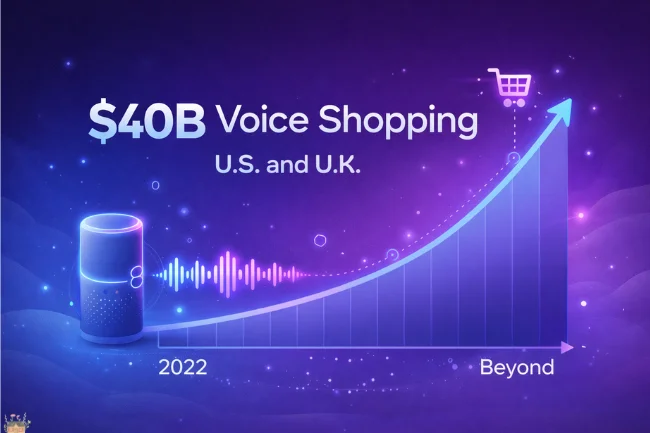
Why is this shift happening now? The adoption rates are staggering and cannot be ignored. According to a recent report by OC&C Strategy Consultants, voice shopping is projected to jump to $40 billion in the U.S. and $5 billion in the U.K. by 2022, and that growth curve continues steeply. Furthermore, Adobe Analytics found that nearly 50% of smart speaker owners use them for product research, making voice a critical point in the discovery phase of the customer journey.
This isn’t about a niche group of early adopters. It’s about a mainstream change in behavior. People are using voice commands while multitasking—cooking, driving, working out—creating micro-moments of intent that your brand can either capture or miss entirely.
Read more: 5starsstocks.com Income Stocks: AI Dividend Review
Beyond SEO: Building a Voice-First Content Strategy
Traditional SEO focuses on keyword strings. Voozon-centric content strategy focuses on query intent and conversational context. This requires a fundamental rewrite of how you think about your website’s content.
The Conversational Keyword Matrix
Move beyond single-keyword tools. To capture voice search, you need to map out the full spectrum of how people verbally ask for what you offer.
| Intent Type | Traditional SEO Keyword | Voice / Conversational Query Example |
|---|---|---|
| Informational | “benefits of organic coffee” | “Hey Google, why is organic coffee better for me?” |
| Navigational | “Nike Air Max store” | “Alexa, find the nearest store that sells Nike Air Max.” |
| Commercial | “best cordless vacuum 2024” | “Okay Google, what’s the top-rated cordless vacuum for pet hair?” |
| Transactional | “buy blue light glasses” | “Hey Siri, order a pair of blue light blocking glasses from Warby Parker.” |
To build this matrix for your business, leverage tools like Ahrefs’ Questions report, AlsoAsked.com, and the “People also ask” boxes in Google search results. Create content that directly answers these full-sentence queries.
Structuring Content for Featured Snippets and Voice Answers
Voice assistants often pull answers from Google’s Featured Snippets (Position Zero). To win this spot, your content must be impeccably structured.
-
Direct Answers First: Use the inverted pyramid style. State the clear, concise answer to the likely question in the first 40-60 words of a section.
-
Schema Markup is Non-Optional: Implement FAQPage, HowTo, and Product schema.org markup. This code acts as a direct translator for search engines, telling them exactly what your content is about and increasing the likelihood it will be read aloud by an assistant.
-
Natural Language Over Jargon: Write as you speak. Use contractions, pose rhetorical questions, and address the reader directly. For example, a product description shouldn’t just list “anodized aluminum frame”; it should say, “This frame is made from a special lightweight aluminum, so if you’re asking, ‘are these glasses going to feel heavy on my face?’ the answer is no.”
Technical Foundations for a Voozon-Optimized Store
Your brilliant content is useless if the technical backbone of your site can’t support it. Voice search users are overwhelmingly mobile and demand instant gratification.
The Non-Negotiable Technical Checklist:
-
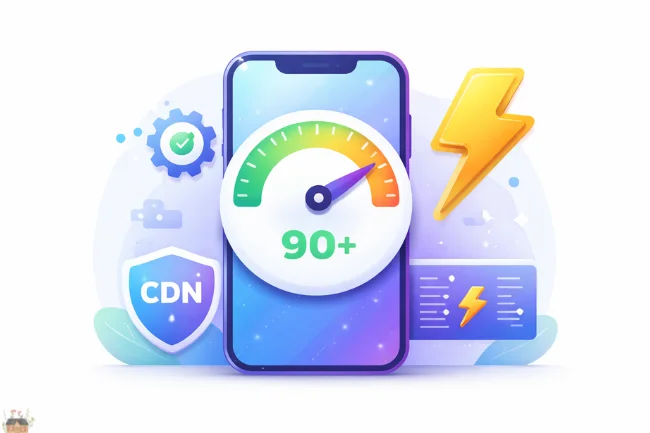
Page Speed: Aim for a Google PageSpeed Insights score above 90 on mobile. Every 100-millisecond delay hurts conversion rates. Compress images, minify CSS/JavaScript, and use a reliable Content Delivery Network (CDN).
-
SSL Certificate (HTTPS): A secure site is a basic trust signal for both users and search engines. Voice platforms prioritize secure sources.
-
Mobile-First Design: Your site must be fully responsive. Use Google’s Mobile-Friendly Test tool. Buttons must be thumb-friendly, text must be readable without zooming, and pop-ups should not interfere.
-
Local SEO for Physical Presence: For “near me” queries, your Google Business Profile is your most powerful asset. Ensure NAP (Name, Address, Phone) consistency across the entire web, collect authentic reviews, and post regular updates.
Implementing Conversational AI: From Chatbots to Voice Apps
This is where Voozon moves from passive optimization to active engagement. Integrating a conversational AI tool on your site can guide users, answer complex questions in real-time, and even drive sales.
Choosing the Right Tool for Your Business
| Tool Type | Best For | Example Use Case |
|---|---|---|
| Rule-Based Chatbot | Small businesses, simple FAQs. | Answering questions about store hours, return policy, or tracking an order. |
| AI-Powered Chatbot | Medium to large businesses, complex product lines. | Helping a customer find the right product by asking about their needs, budget, and preferences. |
| Custom Voice App/Action | Brands with high recognition and loyal customers. | Letting a user reorder a favorite product or check loyalty points via Amazon Alexa or Google Assistant. |
Start with a clear goal. Do you want to reduce support tickets, increase average order value, or provide 24/7 service? Your goal will dictate the complexity of the AI solution you need.
Measuring Success in a Voice-First World
One of the biggest challenges is attribution. A customer might ask Alexa for product recommendations, hear your brand, and then later type your URL directly into a browser. How do you track that?
Shift Your KPIs (Key Performance Indicators):
-
Track Indirect Conversions: Use Google Analytics to monitor increases in branded search traffic, direct traffic, and conversions from organic search on long-tail question keywords.
-
Monitor Featured Snippet Ownership: Use tools like SEMrush or Ahrefs to track which of your pages are winning featured snippets, as these are prime candidates for voice answer sourcing.
-
Analyze Conversational AI Performance: Look at metrics like conversation completion rate, user satisfaction scores (post-chat surveys), and the bot’s deflection rate (how many support queries it handled without human intervention).
-
Local SEO Metrics: Track impressions and actions in your Google Business Profile dashboard, especially clicks for “Directions” and “Calls,” which are strong voice search indicators.
The Future Horizon: Where Voozon is Headed Next
The evolution of Voozon is tightly linked to advances in AI and ambient computing. Prepare for these near-future developments:
-
Multimodal Interactions: The line between voice and screen will blur. A user might ask their car’s assistant, “Find a recipe for chicken marsala,” and then have a guided cooking app with video display on their smart fridge. Your content needs to be adaptable across formats.
-
Emotional AI and Predictive Personalization: Future voice assistants will detect subtle cues in tone and cadence to infer a user’s mood and context, allowing for hyper-personalized product suggestions. Building detailed, permission-based customer profiles will be key.
-
Fully Integrated Voice Commerce Ecosystems: We’ll see deeper integrations where a voice command can not only order a product but also schedule its delivery via smart lock, add it to a digital inventory manager, and automatically reorder it when sensors indicate it’s running low.
Your 90-Day Voozon Implementation Plan
Month 1: Audit & Foundation
-
Conduct a full-site technical SEO audit focusing on speed and mobile usability.
-
Complete and optimize your Google Business Profile.
-
Begin conversational keyword research using the matrix method.
Month 2: Content & Data
-
Rewrite the top 10 product pages and 5 key blog posts using natural language and direct answers.
-
Implement FAQPage and Product schema markup on key pages.
-
Research and select a conversational AI chatbot for your site.
Month 3: Launch & Iterate
-
Deploy the AI chatbot, starting with a simple rule-based flow for FAQs.
-
Launch a new “How-To” content piece optimized for a clear voice query each week.
-
Set up tracking dashboards for your new voice-focused KPIs.
FAQs About Voozon
1- Is Voozon a real platform I can buy?
No. Voozon is an industry term for the strategic approach to voice commerce and conversational AI optimization. It refers to a methodology, not a specific software product.
2- My business is B2B. Is Voozon relevant to me?
Absolutely. B2B buyers are consumers too, and they use voice search for preliminary research (“best enterprise CRM software,” “what is SaaS?”). Furthermore, conversational AI chatbots are exceptionally effective for qualifying B2B leads and scheduling demos.
3- How much does it cost to implement a Voozon strategy?
Costs vary. Technical SEO and content optimization can be done in-house or with an agency. Conversational AI tools range from free basic chatbot plans to enterprise solutions costing thousands per month. Start with the foundational, low-cost steps (keyword research, schema markup) to prove value before investing in advanced AI.
4- What’s the biggest mistake businesses make with voice search?
Treating it as a separate, siloed project. Voozon principles must be woven into your entire digital strategy—from web development and content creation to customer service and data management. It’s an integrated layer, not a standalone tactic.
Conclusion: Speaking the Language of the Future
The term Voozon may evolve, but the consumer behavior it describes is permanent. We are moving irreversibly toward a more natural, conversational, and intuitive way of interacting with technology. By embracing the Voozon framework—optimizing for the spoken query, implementing helpful AI, and building a technically flawless foundation—you are doing more than adapting to an algorithm.
You are building a business that is accessible, responsive, and ready to meet your customers wherever they are, in whichever way they choose to communicate. The future of commerce is conversational. It’s time to ensure your brand has a clear, helpful voice in that conversation.
Learn about Mutmax
For broader information, visit Wellbeing Makeover

Alex Carter is a writer with 10+ years of experience across tech, business, travel, health, and lifestyle. With a keen eye for trends, Alex offers expert insights into emerging technologies, business strategies, wellness, and fashion. His diverse expertise helps readers navigate modern life with practical advice and fresh perspectives.