
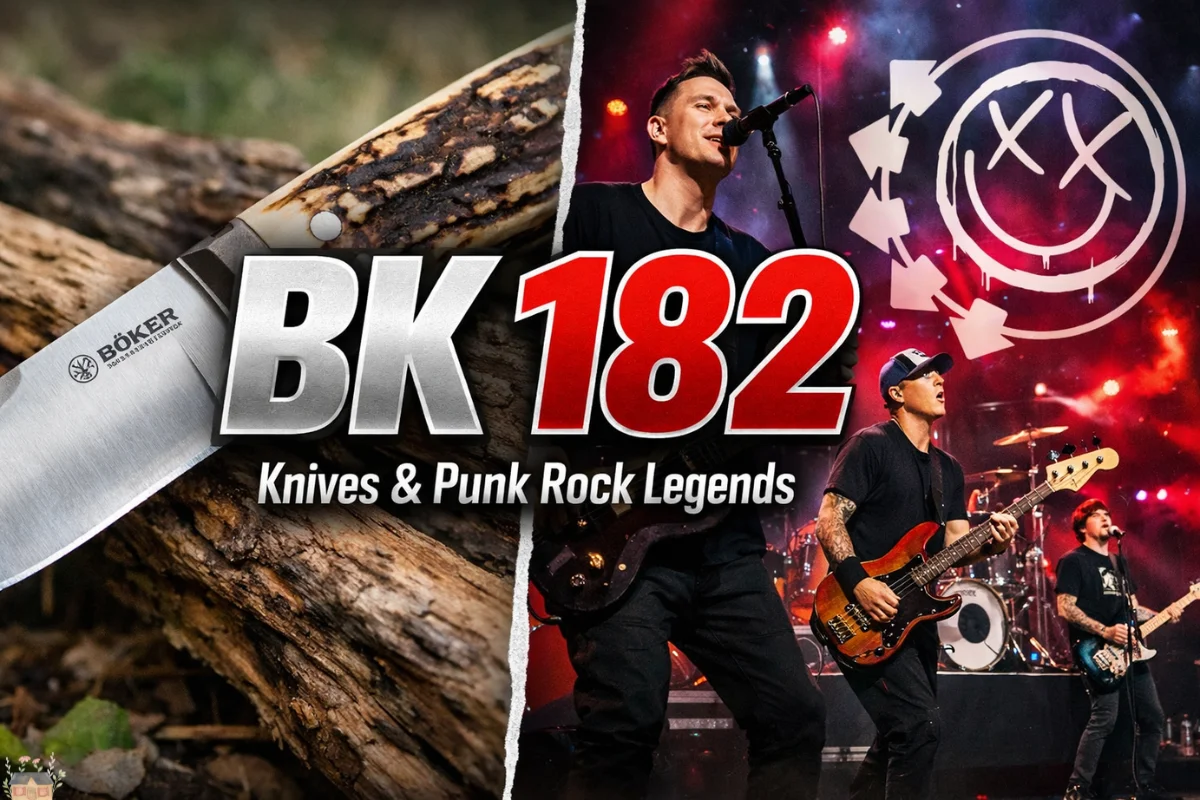
The term BK 182 resonates across two distinct yet culturally significant worlds: one of rugged outdoor utility and the other of iconic pop-punk anthems. For enthusiasts and the uninitiated alike, this alphanumeric combination can spark curiosity and sometimes confusion.
This comprehensive guide delves deep into both primary entities associated with the name—the Boker 182 series of knives and the legendary band Blink-182—offering clarity, detail, and new insights that go far beyond a surface-level overview.
We’ll explore their histories, specifications, cultural impacts, and the unique reasons behind their shared numerical identity, providing you with a complete understanding of the BK 182 phenomenon.
Understanding the Dual Identity of BK 182
At its core, BK 182 is not a single subject but a point of convergence for two separate legacies. In the realm of gear and craftsmanship, it refers to a specific model line of high-quality knives produced by the renowned German manufacturer, Boker.
In the world of music and popular culture, it is intrinsically linked to the band Blink-182, often stylized in a way that the “I” resembles a “1.” This shared nomenclature is coincidental but provides a fascinating case study in brand identity and cultural imprint.
Our exploration will treat each with the depth it deserves, ensuring you gain authoritative knowledge whether your interest lies in cutlery, music, or both.
The Boker BK 182: A Deep Dive into a Legendary Knife Series
Boker, with a heritage dating back to the 17th century, is synonymous with precision German engineering in knife-making. The BK 182 designation within their catalog, particularly the Boker Camp Knife, represents a blend of traditional design and modern functionality.
Historical Context and Design Philosophy
The Boker Camp Knife series, including models like the BK-182HH (Stag Handle), draws inspiration from classic outdoor and bushcraft knives used by generations of woodsmen, hunters, and adventurers.
The design philosophy prioritizes reliability, ergonomics, and a timeless aesthetic. The use of natural materials like stag horn for handles connects the user to a tradition of craftsmanship, while modern steel formulations ensure peak performance.
Key Models and Technical Specifications
Let’s break down the features and variations within the BK 182 knife family:
| Model Variant | Handle Material | Blade Steel | Blade Length | Overall Length | Primary Use Case |
|---|---|---|---|---|---|
| BK-182HH (Stag) | Natural Stag Horn | High-Carbon Steel | Approx. 4.5 inches | Approx. 9.5 inches | Camping, Skinning, Collecting |
| BK 182 STR | Stabilized Wood / Synthetic | Stainless Steel (e.g., 440C) | Varies (~4 inches) | Varies (~9 inches) | Everyday Carry (EDC), Tactical |
| Traditional Camp Knife | Wood or Micarta | Carbon Steel | Approx. 4.75 inches | Approx. 9.75 inches | General Bushcraft, Outdoor Tasks |
Blade Geometry and Steel: The classic drop-point or clip-point blade profile on these knives offers a versatile tip for detailed work and a robust belly for slicing. High-carbon steel variants, like those on the stag model, are prized for their ease of sharpening and exceptional edge retention; however, they must be maintained frequently to keep rust at bay. Stainless steel options in the BK 182 STR provide superior corrosion resistance for humid environments or everyday carry.
Handle and Ergonomics: The iconic stag handle on the BK-182HH is not merely decorative. Each handle is unique, providing a secure, non-slip grip that molds to the user’s hand over time. Other models feature ergonomically shaped wood or modern synthetic materials like Micarta, designed for comfort during prolonged use.
Practical Applications and Field Performance
The Boker BK 182 is not a display-case queen; it’s a working tool. The knife is versatile in its applications:
-
Camping & Survival: Ideal for processing tinder, carving tent pegs, preparing food, and general campsite chores.
-
Hunting: The blade shape is excellent for field dressing game, with a design that allows for precise control.
-
Everyday Carry (EDC): Smaller or more contemporary variants like the BK 182 STR serve as reliable tools for urban and suburban daily tasks, from opening packages to light DIY work.
-
Bushcraft: Its robust construction makes it suitable for batoning small kindling, feather-sticking, and other woodcraft tasks.
Maintenance and Care Guide
To preserve your Boker knife, regular maintenance is key. For carbon steel blades, a light coating of food-safe mineral oil or a specialized protectant after use is essential. All blades should be cleaned, dried thoroughly, and stored in a dry place. Periodic sharpening with a whetstone or guided system will maintain the legendary BK 182 edge.
Read More: Suçculent Plants: Complete Expert Care & Cultivation
Blink-182: Deconstructing the Soundtrack of a Generation
Simultaneously, BK 182 is irrevocably tied to Blink-182, one of the most influential bands in modern rock history. Their journey from San Diego garages to global stadiums is a testament to their cultural impact.
Formation, Evolution, and Lineup Changes
Contrary to the simplified origin story often told, Blink-182’s formation was a product of specific suburban Southern California culture in the early 1990s.
Mark Hoppus (bass/vocals) and Tom DeLonge (guitar/vocals) formed the songwriting core, but the drumming seat was crucial. Scott Raynor’s raw, punk-style drumming defined their early sound on albums like Cheshire Cat and Dude Ranch.
His departure and replacement by Travis Barker in 1998 marked a seismic shift. Barker’s technically proficient, hip-hop-influenced style became the band’s new rhythmic backbone, propelling them to superstardom.
Musical Style and Genre-Defining Influence
Blink-182 didn’t just play pop-punk; they refined and popularized a specific subset of it. They were known for a sound defined by:
-
Anthemic, Palm-Muted Guitar Riffs: Clear, attention-grabbing, and instantly familiar.
-
Interplay of Vocal Melodies: The trade-off and harmony between Hoppus’s smoother vocals and DeLonge’s distinctive nasal tenor.
-
Lyrical Themes: They masterfully balanced juvenile humor (“What’s My Age Again?”) with sincere explorations of adolescence, relationship angst, and later, more mature themes of loneliness and existential dread.
-
High-Energy Rhythms: Especially post-Raynor, Barker’s drums added a complexity and drive that set them apart from peers.
Their influence is immeasurable, directly paving the way for thousands of bands in the 2000s pop-punk and emo explosion and later influencing artists in alternative, hip-hop, and beyond.
Critical Analysis of the Self-Titled “Blink-182” Album (2003)
The band’s 2003 self-titled album (often called the Untitled album) is a critical pivot point that merits deep analysis. Moving away from pure pop-punk, the record incorporated elements of post-hardcore, indie rock, and experimental noise.
Tracks like “Feeling This” juxtaposed euphoric melodies with darker undercurrents, while “I Miss You” was a minimalist, haunting departure. “Stockholm Syndrome” and “Violence” featured unconventional structures and atmospheric production by Jerry Finn.
This album demonstrated artistic ambition, challenging their fanbase and critics, and solidifying their legacy as more than just a joke band. It remains a high-water mark in their discography for its bravery and depth.
Awards, Commercial Success, and Lasting Legacy
Blink-182’s trophy case and sales figures underscore their impact:
-
Grammy Nominations, including one for the Untitled album.
-
Recognized with multiple honors at both the MTV Video Music Awards and Billboard Music Awards.
-
Sales: Over 50 million albums sold worldwide, with Enema of the State achieving diamond-certified status in the U.S.
-
Cultural Legacy: They brought punk aesthetics to mainstream MTV, defined the sound of an era, and their music continues to resonate, evidenced by successful reunion tours and new music with Matt Skiba (and later again with Tom DeLonge).
Navigating the Confusion: BK 182 vs. Blink-182
For search engines and new fans, the ambiguity is real. The band’s logo often stylizes “Blink” with a star replacing the dot over the “i,” which can be misread. Furthermore, fan shorthand and typographical errors have perpetuated the “BK 182” variant. When searching:
-
Use “Boker BK 182” or “Boker 182 knife” for information on the cutlery.
-
Use “Blink-182” or “Blink 182” for information on the band.
Understanding this distinction ensures you find the precise, high-quality information you seek.
FAQs: Your Questions About BK 182 Answered
1- Is the Boker BK 182 a good knife for beginners?
Yes, particularly models with stainless steel. They are robust, relatively easy to maintain, and their classic design teaches good knife-handling fundamentals. The stag-handle version is often sought by collectors as well.
2- Why did Blink-182 choose that name?
The name has evolved in telling. Initially just “Blink,” they added the seemingly random “-182” to avoid legal confusion with an Irish band of the same name. Band members have given various humorous explanations for the number over the years, but its origin is primarily practical.
3- What does “HH” stand for in Boker BK-182HH?
In Boker’s catalog, “HH” often stands for “Hart Horn” (German for stag horn), indicating the handle is made from natural, legally sourced stag antler.
4- Are Blink-182 and Green Day similar?
Both are pivotal bands in pop-punk, but their sounds and paths diverged. Green Day has more direct punk rock and rock opera influences, while Blink-182’s sound is rooted in Southern California skate punk with a stronger emphasis on melody and humor. They are peers, not clones.
5- Can the Boker Camp Knife be used for bushcraft survival?
Absolutely. Its full-tang construction, durable blade steel, and versatile profile make it a competent choice for shelter building, fire preparation, and food processing in a survival context.
Conclusion: The Enduring Stamp of BK 182
Whether etched into a polished stag horn handle or screamed from a concert stage, BK 182 represents a commitment to identity, quality, and impact. The Boker knife series bearing this name offers tangible reliability—a tool forged for utility and tradition.
The band linked to these numbers provides an intangible soundtrack of youth, rebellion, and growth. Together, they illustrate how a simple alphanumeric code can become a powerful vessel for meaning, serving the adventurer in the wilderness and the rebel in all of us.
By understanding both, you appreciate the full spectrum of the BK 182 legacy—a legacy built to last, both in your hand and in your ears.
Learn about Duaction
For broader information, browse Wellbeing Makeover

Alex Carter is a writer with 10+ years of experience across tech, business, travel, health, and lifestyle. With a keen eye for trends, Alex offers expert insights into emerging technologies, business strategies, wellness, and fashion. His diverse expertise helps readers navigate modern life with practical advice and fresh perspectives.