

Imagine a technology that doesn’t just perform a task but thinks through it—measuring, adjusting, and optimizing in real time while you focus on what actually matters. That’s precisely what Inflatom delivers. Not merely another smart device or marketing dashboard, Inflatom represents something far more significant: the first unified growth architecture engineered to operate across both physical and digital dimensions simultaneously.
While the market floods with single-purpose automation tools, Inflatom stands apart by addressing a fundamental truth about modern work—we shouldn’t have to choose between physical efficiency and digital intelligence. We need both. And they should function as one unified system.
What Is Inflatom? Redefining Hybrid Intelligence
Inflatom defies simple categorization because it was designed to solve problems that traditional single-domain tools cannot touch. At its core, Inflatom functions as a dual-environment optimization system—one that applies sensor-driven precision to physical inflation tasks while simultaneously deploying AI-powered engagement architecture to digital growth initiatives.
This isn’t convergence for convergence’s sake. It’s deliberate architecture built on the observation that whether you’re filling a warehouse with protective air pillows or filling a content calendar with engagement opportunities, you’re managing the same underlying dynamic: controlled expansion toward a specific target state.
The Four Pillars of Inflatom’s Operating Philosophy

To understand what makes Inflatom distinct, you must first understand the principles that govern its design. These aren’t features; they’re foundational commitments baked into every implementation.
1. Calibrated Autonomy
Inflatom never assumes you want full automation or full manual control. Instead, it functions across a flexible range. You define the boundaries; Inflatom executes within them. This calibrated autonomy means a logistics manager can set acceptable pressure ranges for packaging systems while Inflatom handles the thousands of micro-adjustments required to maintain those parameters across an eight-hour shift. Similarly, a social media manager can define brand voice guardrails while Inflatom engages with comment sections at 2:00 AM.
2. Sensor-Grounded Decisioning
Unlike purely algorithmic systems that operate on historical data alone, Inflatom’s physical implementations rely on real-time sensor input—pressure transducers, flow meters, and volumetric sensors that continuously sample environmental conditions. This sensor-grounded approach prevents the detachment that plagues purely predictive systems. Inflatom doesn’t guess whether a yoga ball is fully inflated; it measures back-pressure and stops precisely when target resistance is achieved.
3. Cross-Domain Pattern Recognition
Here’s where Inflatom diverges radically from every other tool on the market. Because its architecture spans physical and digital environments, it recognizes operational patterns that single-domain tools miss entirely. An e-commerce operation using Inflatom for both packaging automation and customer engagement might discover that shipping damage rates correlate with specific times of day—not due to handling practices, but because temperature fluctuations affect inflation consistency. Inflatom’s unified analytics layer surfaces these cross-domain insights automatically.
4. Expansion Without Waste
The term “inflation” carries negative connotations in many contexts precisely because uncontrolled expansion nearly always produces waste—whether financial inflation eroding purchasing power or over-inflated packaging bursting during transit. Inflatom treats waste as a design flaw rather than an operational cost. Its entire architecture prioritizes precision-targeted expansion that stops the moment optimization is achieved.
Read More: Matoketcs Unified Digital Framework Explained
The Physical Intelligence Layer: Beyond Basic Inflation
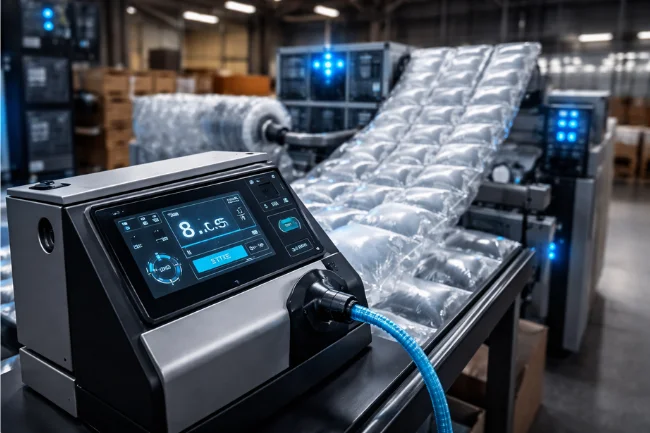
Most discussions of physical Inflatom implementations focus on convenience—automatic shut-off, preset preferences, reduced manual labor. While these benefits are real, they obscure the more significant transformation occurring beneath the surface.
From Tool to System
Traditional inflation devices are tools. You activate them, they operate, you deactivate them. Inflatom functions as a system. Consider a fitness facility managing fifty stability balls across three group exercise studios. A traditional approach requires staff to visually inspect each ball, manually top off pressure, and hope consistency is maintained. Inflatom-equipped balls communicate with a central hub, reporting pressure readings every sixty seconds. The system identifies under-inflation patterns, predicts which balls will require attention before classes begin, and schedules maintenance during natural downtime.
This isn’t automation replacing human work. It’s intelligence elevating human work from repetitive checking to strategic action.
Material-Aware Calibration
One of Inflatom’s most sophisticated physical capabilities remains largely invisible to end users: material-aware calibration. Different materials respond differently to inflation. PVC stretches. TPU holds rigid boundaries. Nylon blends exhibit creep over time. Inflatom’s sensor arrays detect these material behaviors and adjust inflation profiles accordingly.
A PVC air mattress requires gradual pressure application to allow seams to seat properly. A TPU paddle board accepts rapid inflation but requires a higher final pressure. Inflatom knows the difference—not because you told it, but because it measured material response during the inflation cycle and adapted in real time.
The Digital Intelligence Layer: Engagement as Engineering
If Inflatom’s physical layer treats inflation as a precision engineering challenge, its digital layer treats audience engagement with equal rigor. This is where Inflatom separates itself from the crowded field of social media management tools and marketing automation platforms.
Intent Signal Processing
Standard marketing tools track engagement—likes, shares, comments, and click-through rates. Inflatom tracks something more valuable: intent signals. These are behavioral indicators that precede conscious engagement. Scroll depth variation. Hover duration. Comment sentiment velocity. Pattern interruptions in viewing behavior.
By analyzing these pre-engagement signals, Inflatom identifies which audience segments are moving toward conversion before they’ve performed any trackable action. Marketers don’t just learn what worked; they learn what’s about to work.
Community Temperature Mapping
Brand communities don’t fail because engagement drops; they fail because nobody detects the drop until it’s catastrophic. Inflatom’s digital layer continuously maps what it terms “community temperature”—a composite metric incorporating sentiment analysis, response latency, cross-member interaction frequency, and newcomer integration speed.
When community temperature drops below historical baselines, Inflatom doesn’t simply alert administrators. It proposes intervention strategies calibrated to the specific engagement vectors showing decline. Perhaps long-standing members are receiving fewer responses to their contributions. Perhaps newcomers are abandoning their first comments without replies. Inflatom identifies these micro-failures before they compound into community collapse.
Comparative Framework: Inflatom Versus Conventional Solutions
| Capability | Conventional Physical Tools | Conventional Digital Tools | Inflatom |
|---|---|---|---|
| Real-time sensing | Basic pressure measurement | Engagement counting only | Multi-parameter physical + behavioral sensing |
| Cross-domain correlation | None | None | Unified analytics across physical and digital |
| Predictive adjustment | Fixed schedules only | Historical pattern matching | Real-time adaptive calibration |
| Waste prevention | Manual shut-off required | Post-campaign analysis | Continuous optimization during operation |
| Material/audience awareness | None | Demographic segments | Physical material + behavioral intent mapping |
| Learning mechanism | No learning | Platform-specific | Cross-instance pattern recognition |
Implementation Archetypes: Three Ways Organizations Deploy Inflatom
Inflatom’s flexibility produces strikingly different implementation patterns depending on organizational priorities. Understanding these archetypes helps clarify where your own deployment might focus.
The Efficiency-First Implementation
Organizations primarily concerned with operational cost reduction deploy Inflatom for repetitive task automation. In manufacturing environments, this means smart inflation stations that maintain consistent pressure across hundreds of daily units. In e-commerce, it means packaging systems that adjust fill volume based on real-time box density measurements. In marketing, it means engagement automation that maintains community responsiveness without expanding headcount.
Efficiency-first deployments typically see 40-60% labor hour reduction in targeted workflows within sixty days.
The Quality-First Implementation
Organizations for whom consistency represents a competitive advantage deploy Inflatom as precision standardization. Medical device manufacturers use Inflatom-calibrated systems to ensure cuff pressures meet regulatory specifications across production runs. Premium fitness brands embed Inflatom sensors in equipment to guarantee members experience identical resistance regardless of which location they visit. Digital publishers use Inflatom’s intent signal processing to maintain engagement quality during rapid audience scaling.
Quality-first deployments typically report a 70-90% reduction in specification deviations.
The Innovation-First Implementation
Organizations treating Inflatom as a strategic capability rather than an operational tool deploy it as an intelligence infrastructure. These organizations rarely use Inflatom’s pre-configured workflows. Instead, they access Inflatom’s API layer to build custom applications leveraging its sensor fusion and pattern recognition capabilities. A logistics company might develop predictive damage modeling that correlates packaging inflation data with GPS-tracked transport vibration. A media agency might build audience expansion algorithms that identify lookalike segments based on behavioral signal proximity rather than demographic matching.
Innovation-first deployments typically generate patentable intellectual property within eighteen months.
The Adoption Curve: Why Early Majority Adoption Is Accelerating
Early adopters embraced Inflatom for novelty and competitive differentiation. Current adoption patterns suggest the early majority is now entering the market—but their motivations differ substantially from the pioneers who preceded them.
Demonstrated ROI Across Vertical Markets
Early majority adopters require proof, not promises. The last eighteen months have produced that proof precisely across multiple verticals:
-
Third-party logistics providers using Inflatom packaging systems report 23% reduction in damage claims and 31% decrease in packing material consumption
-
University athletic departments deploying Inflatom-equipped equipment report 67% reduction in equipment setup time and measurable decreases in training injuries attributed to inconsistent inflation
-
Mid-market consumer brands implementing Inflatom’s digital engagement layer report an average 41% improvement in organic reach with no increase in content production volume
Workforce Enablement, Not Replacement
Earlier automation technologies generated resistance precisely because they positioned themselves as labor replacement. Inflatom’s design philosophy emphasizes workforce enablement—tools that make skilled workers more effective rather than eliminating their roles.
Warehouse associates trained on Inflatom packaging systems advance to quality assurance positions where they interpret system data rather than performing manual checks. Social media coordinators using Inflatom’s engagement tools evolve into community strategists who design intervention frameworks rather than writing individual responses. This upward skill migration resonates with organizations simultaneously pursuing efficiency improvements and retention strategies.
Deployment Considerations and Decision Guidelines
Organizations evaluating Inflatom deployment face legitimate questions about integration requirements, learning curves, and measurement protocols.
Technical Integration Pathways
Inflatom offers three integration tiers:
- Native deployment requires no existing infrastructure. Organizations deploy Inflatom’s complete hardware-software stack as standalone systems, particularly suitable for facilities without existing IoT infrastructure or marketing teams without established tech stacks.
- API integration connects Inflatom’s capabilities to existing enterprise systems. Manufacturers integrate Inflatom sensor data with existing SCADA systems. Marketing teams pipe Inflatom intent signals into existing CRM platforms.
- Embedded licensing allows OEM partners to incorporate Inflatom technology directly into their own products—fitness equipment with native Inflatom calibration, e-commerce platforms with embedded Inflatom engagement analytics.
Measurement Protocol Development
Organizations achieving superior Inflatom outcomes share one practice: they define success metrics before deployment rather than retrofitting measurement afterward. Effective measurement protocols address three dimensions:
- Operational metrics: Cycle time reduction, material consumption, labor hours, specification compliance
- Outcome metrics: Damage rates, customer satisfaction scores, return rates, engagement consistency
- Strategic metrics: Workforce skill development, intellectual property generation, competitive differentiation, and sustainability
FAQs About Inflatom
Is Inflatom a single product or a platform category?
Inflatom functions as both. The term describes a specific technology stack available through licensed deployment, but increasingly functions as a category descriptor for systems combining physical precision control with digital intelligence. This dual usage reflects Inflatom’s position as category creator rather than category participant.
What infrastructure is required for physical Inflatom deployment?
Physical Inflatom systems operate on standard electrical supply and require no compressed air infrastructure. The systems are fully self-contained with integrated compressors and sensor arrays. Wireless connectivity is required for systems utilizing Inflatom’s analytics and reporting features, but base inflation functionality operates independently of network availability.
How does Inflatom address data privacy in digital deployments?
Inflatom’s digital layer processes behavioral signals rather than personally identifiable information. The platform was architected from inception to operate within the GDPR and CCPA frameworks. Organizations maintain complete ownership of all engagement data, with Inflatom acting exclusively as processing infrastructure rather than a data aggregator.
Can Inflatom be deployed incrementally?
Yes. Phased deployment is standard practice, particularly in enterprise environments. Organizations typically pilot Inflatom in single facilities or with single-brand accounts before expanding to broader implementation. The platform’s architecture supports this incremental approach without requiring reconfiguration during scale-up.
What support resources are available for Inflatom implementers?
Inflatom provides certified implementation partners across twenty-seven countries, supplemented by direct enterprise support teams for strategic accounts. The Inflatom knowledge base includes more than 800 implementation guides, troubleshooting documents, and use-case case studies. Peer implementation communities operate in twelve languages.
The Trajectory: From Technology to Operating Principle
Technologies that achieve enduring relevance eventually transcend their original form to become operating principles—conceptual frameworks that shape how subsequent generations approach entire categories of problems. “Relational database” became data architecture. “Object-oriented programming” became a software design methodology. “Just-in-time manufacturing” grew beyond a process to shape operational strategy.
Inflatom is following this trajectory. What began as specific technology addressing specific inefficiencies is increasingly invoked as a design principle applicable far beyond its original implementation. Engineers designing next-generation fluid control systems speak of “doing an Inflatom”—meaning embedding intelligence at the point of actuation rather than centralizing control. Marketers planning engagement strategies ask whether their approach is “sufficiently Inflatom”—meaning calibrated, responsive, and waste-averse.
This conceptual migration marks the transition from product to paradigm. It signals that Inflatom has solved not merely the problems it was designed to address but has illuminated new ways of thinking about problems its creators never anticipated.
That is the nature of genuine innovation. It doesn’t simply provide solutions; it transforms how we think about the challenge itself.
Learn about AnonIB
For broader information, visit Wellbeing Makeover

Alex Carter is a writer with 10+ years of experience across tech, business, travel, health, and lifestyle. With a keen eye for trends, Alex offers expert insights into emerging technologies, business strategies, wellness, and fashion. His diverse expertise helps readers navigate modern life with practical advice and fresh perspectives.