
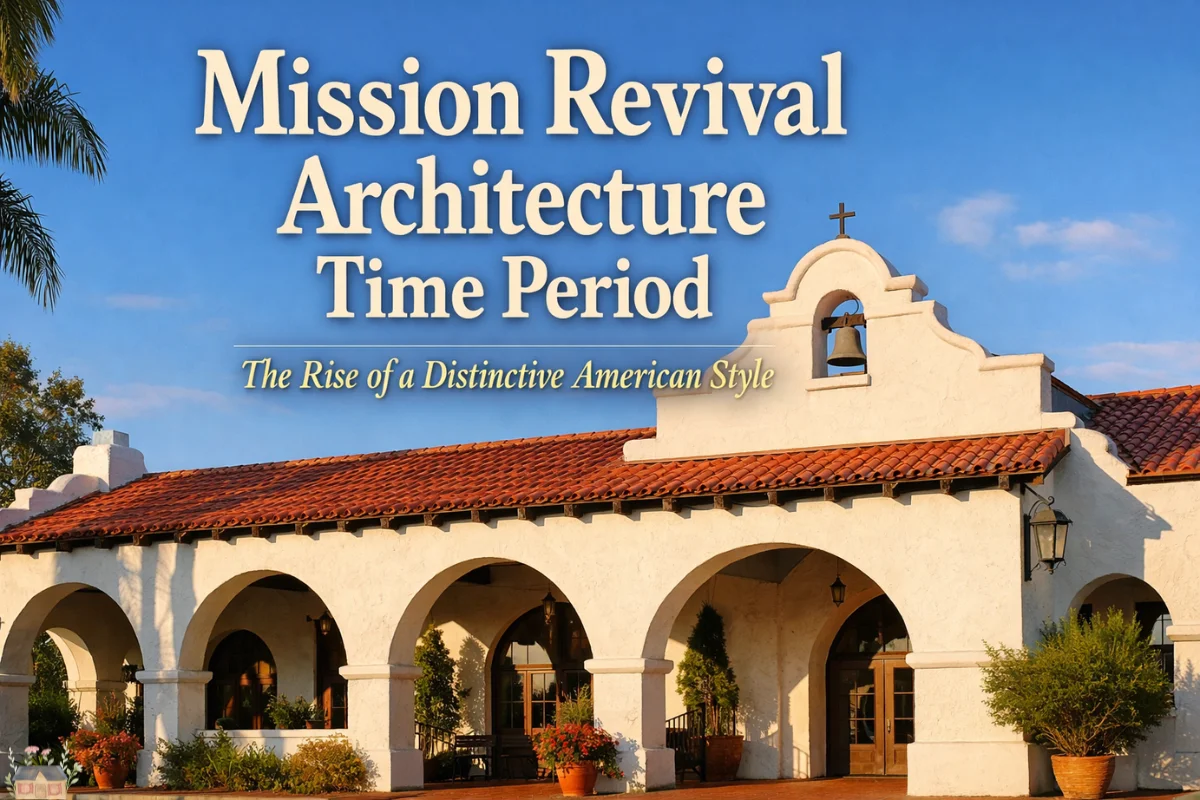
The architectural landscape of the American West and Southwest is inextricably linked to a specific aesthetic: smooth stucco walls, low-pitched clay tile roofs, and dramatic arched openings. This style, known as Mission Revival, represents a pivotal moment in American design history. Understanding the mission revival architecture time period requires looking back to the late 19th century, when California was searching for a unique cultural identity that could distinguish it from the colonial influences of the East Coast.
While the original Spanish missions were built out of necessity and religious purpose in the 1700s, the revival was a conscious, romanticized movement that sought to reclaim a “Mediterranean” heritage for a rapidly developing region. It was an era where history met modern branding, creating a look that still defines the visual character of cities from Santa Barbara to San Antonio.
Identifying the Mission Revival Era
The primary mission revival architecture time period spanned from approximately 1890 to 1915. During these twenty-five years, the style evolved from an experimental regional trend into a dominant national movement.
The movement was sparked by the 1884 publication of Helen Hunt Jackson’s novel Ramona, which romanticized the Hispanic history of California. This cultural fascination coincided with the completion of the transcontinental railroads. As tourists began flocking to the West, architects and developers realized they needed a visual “hook”—something that looked and felt fundamentally different from the Victorian or Queen Anne homes found in Boston or Philadelphia.
By the early 1900s, the style had gained such momentum that it was adopted for large-scale public projects, including railway stations, luxury hotels, and even schools. While its peak popularity waned after World War I, replaced by the more ornate Spanish Colonial Revival style, the groundwork laid during the Mission Revival era remains the foundation of Southwestern design.
The Cultural Catalysts of the Movement
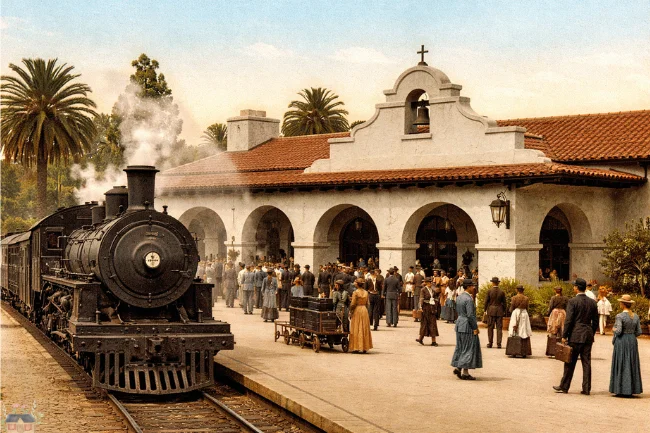
To understand why this architecture took hold when it did, we must look at the socio-economic factors of the late 19th century. California was no longer a frontier; it was becoming a destination.
-
The Railroad Influence: The Southern Pacific and Santa Fe Railways were perhaps the biggest proponents of the Mission Revival style. They used it for their depots to provide a “sense of place” for travelers.
-
The 1893 World’s Columbian Exposition: At this Chicago fair, the California Building was designed in the Mission style by architect A. Page Brown. It was a sensation, introducing the aesthetic to a global audience.
-
The Arts and Crafts Movement: Mission Revival shared many values with the Arts and Crafts movement, such as an emphasis on handmade textures, simple materials, and a rejection of industrial over-ornamentation.
Core Traits of Mission Revival Architecture
Unlike the original missions, which were often crude and strictly utilitarian, the revival buildings were sophisticated interpretations. They utilized modern construction techniques while mimicking the “honest” materials of the past.
The Mission Parapet
The most recognizable feature is the “Espadaña,” or the shaped, scalloped roofline. These curved parapets often hide the actual roof from view and provide a dramatic silhouette against the sky.
Smooth Stucco Exteriors
To emulate the original adobe brick construction, revival architects used thick coats of plaster or stucco. This created a seamless, monolithic appearance that stayed cool in the desert heat.
Deep Archways and Porches
Arched windows and doorways are staples of the style. Long arcades (a series of arches) provided shaded walkways, which were practical in sunny climates and offered a rhythmic, monastic aesthetic.
Terra Cotta Tile Roofs
Red clay tiles are the crowning glory of these structures. During the mission revival architecture time period, these tiles became the industry standard for Western residential design, offering fire resistance and a vibrant contrast to white or tan walls.
Read Also: How Architecture Has Changed Over Time Kdainteriorment
Comparison: Mission Revival vs. Spanish Colonial Revival
Many people use these terms interchangeably, but they represent different phases of Mediterranean influence in America.
The Role of Key Architects
Several visionary architects were instrumental in defining the mission revival architecture time period. Their work bridged the gap between historical preservation and modern functionality.
-
A. Page Brown: His California Building at the 1893 World’s Fair proved that the style could work for massive, monumental structures.
-
Charles Fletcher Lummis: An activist and writer, Lummis founded the Landmarks Club of Southern California to preserve the original missions, which provided the blueprints for the revivalists.
-
Irving Gill: Though he later moved toward modernism, Gill’s early work utilized the clean lines and stark geometries of the Mission style, stripping away excess ornament to find a “pure” Californian form.
Regional Growth and Architectural Variations
While the movement was born in California, it didn’t stay there. Because the style was promoted by the railroads, you can find Mission Revival depots as far east as Florida.
In Florida, the style merged with Mediterranean Revival, often featuring more lush landscaping and colorful accents. In Texas and Arizona, the Mission style was often heavier and more “fortress-like,” reflecting the rugged landscape. However, the core elements—the arches, the tiles, and the stucco—remained consistent throughout the mission revival architecture time period.
The Interior Aesthetic: More Than Just Walls
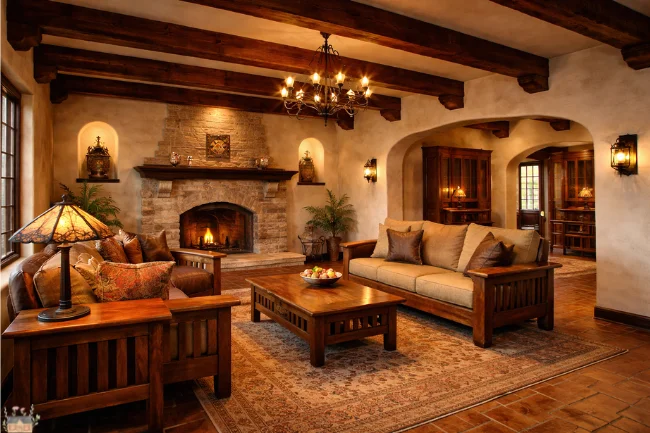
The Mission Revival movement extended beyond the exterior. It influenced interior design, giving rise to what many call the “Mission Style” of furniture, popularized by Gustav Stickley.
Inside a Mission Revival home, you would typically find:
-
Exposed Heavy Timber Beams: Often stained dark to contrast with light plaster walls.
-
Quarry Tile Floors: Durable, cool, and earthy.
-
Wrought Iron Fixtures: Used for chandeliers, stair railings, and hardware.
-
Built-in Niche Spaces: Small arched recesses in the walls for displaying religious icons or art.
This holistic approach to design meant that the “Mission” experience was immersive. It wasn’t just a house; it was a curated lifestyle that evoked a slower, more romantic era of California history.
Why the Movement Eventually Faded
By 1915, the Panama-California Exposition in San Diego introduced the public to Spanish Colonial Revival. This new style was much more intricate and varied, drawing from the Baroque architecture of Spain and Mexico.
The Mission Revival style began to feel a bit “plain” or “clunky” in comparison. The simple parapets and thick walls were viewed as somewhat repetitive. However, the Mission style never truly disappeared; it simply evolved. It paved the way for the “Spanish Eclectic” homes that dominated the 1920s and 30s.
Read Also: Architecture et du Patrimoine Berlin Wall
Preservation and Modern Influence
Today, buildings from the mission revival architecture time period are highly sought after. Preservationists work tirelessly to maintain the original stucco textures and clay tiles. In many California neighborhoods, strict historical guidelines ensure that any new construction honors these Mission-era proportions.
Modern “Santa Barbara Style” or “Desert Modern” homes still borrow heavily from this period. The emphasis on indoor-outdoor living, shaded courtyards, and natural materials remains as relevant today as it was in 1900.
Lessons for Modern Design
The Mission Revival era teaches us about the power of “Place-Making.” Instead of importing styles from Europe or the East Coast, architects looked at the dirt beneath their feet and the history of their specific region. This focus on regionalism is a cornerstone of sustainable and meaningful architecture today.
Frequently Asked Questions
1. What year did Mission Revival architecture start?
The movement began in the late 1880s and gained significant traction by 1890. It was a reaction against the overly decorative Victorian styles that were popular at the time, seeking a simpler, more regional aesthetic.
2. How can I identify a Mission Revival house?
Look for a combination of smooth stucco walls, red clay tile roofs, and most importantly, the shaped “Mission” parapet. Arched openings for windows or porches and small square windows are also common indicators.
3. Is Mission Revival the same as Southwest style?
They are closely related, though not identical. Mission Revival is a specific historical movement (1890–1915) inspired by California’s missions. “Southwest style” is a broader term that includes Pueblo Revival, Territorial style, and modern desert aesthetics.
4. Why was the Mission Revival style so popular for train stations?
The Santa Fe and Southern Pacific railroads used the style to create a distinct brand for the American West. By building depots in the Mission style, they reinforced the idea of California as a romantic, exotic destination for tourists and settlers.
5. What materials were used in the mission revival architecture time period?
While original missions used adobe (mud and straw), the revival buildings used modern materials like brick, concrete, and wood frames, finished with a thick layer of cement-based stucco to replicate the look of adobe.
6. What is Mission Revival style architecture?
Mission Revival is an architectural movement inspired by 18th-century Spanish missions. It is characterized by simple, clean designs featuring smooth stucco walls, red clay tile roofs, arched openings, and iconic-shaped parapets (scalloped rooflines).
7. What time period was the Gothic Revival?
The Gothic Revival primarily spanned from 1740 to 1880, reaching its peak in the United States and Great Britain between 1830 and 1860. It is defined by medieval-inspired elements such as pointed arches and steep gables.
8. What is the 70s architecture movement?
Architecture in the 1970s was defined by Brutalism, known for its massive, raw concrete structures, and the emergence of Postmodernism. It also saw a “Back to Nature” movement with wood-clad “shed-style” homes.
9. What time period was the Greek Revival?
The Greek Revival was the dominant architectural style in America from 1820 to 1860. Often called the “National Style,” it utilized temple-like features such as massive white columns and triangular pediments.
Summary of the Mission Era
The mission revival architecture time period was a brief but transformative era that redefined the American West. By blending the simplicity of the 18th-century Franciscan missions with the needs of a modern, booming population, architects created a style that felt both ancient and fresh. It wasn’t just about building houses; it was about crafting an American myth.
Whether you are walking through the historic districts of Riverside, California, or admiring a preserved depot in the heart of Texas, the legacy of the Mission Revival remains a testament to the power of regional identity.
Learn about the Central Railroad of New Jersey Terminal Architectural Details
For broader information, visit Wellbeing Makeover

I’m Salman Khayam, the founder and editor of this blog, with 10 years of professional experience in Architecture, Interior Design, Home Improvement, and Real Estate. I provide expert advice and practical tips on a wide range of topics, including Solar Panel installation, Garage Solutions, Moving tips, as well as Cleaning and Pest Control, helping you create functional, stylish, and sustainable spaces that enhance your daily life.