
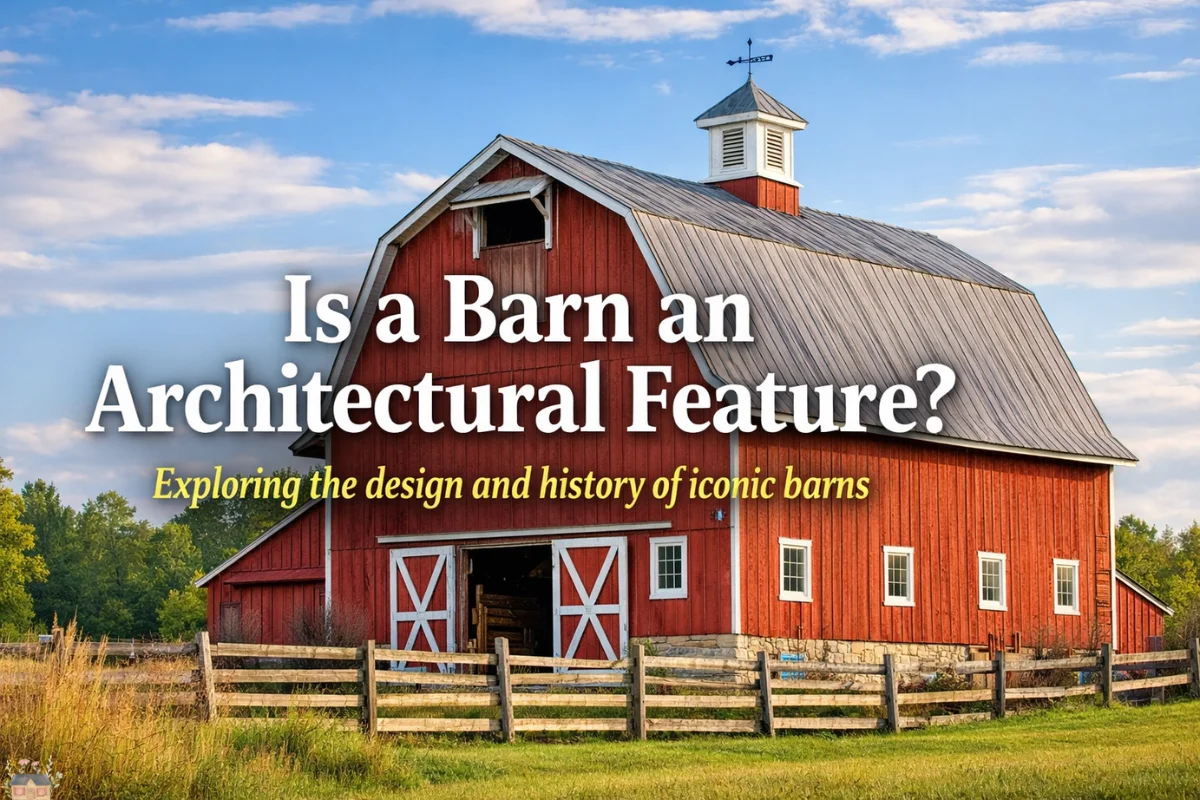
Determining whether a barn is an architectural feature depends on the lens through which you view the structure. While a barn is technically a standalone building designed for agricultural utility, its specific components—such as gambrel roofs, cupolas, and timber framing—constitute distinct architectural features that define regional styles and historical periods.
Defining the Barn in an Architectural Context
When we ask, “is a barn an architectural feature?,” we are navigating the line between functional engineering and aesthetic design. In the strictest sense of architectural terminology, a “feature” is usually a prominent part or characteristic of a building, such as a portico, a pediment, or a bay window. However, in broader land-use planning, landscape architecture, and historical preservation, an entire barn can be considered a “defining feature” of a property or a rural vista.
The evolution of the barn from a simple shelter for livestock into a complex piece of timber engineering reflects the history of human migration and industrial advancement. To understand its status in architecture, one must look past the red paint and hayloft to the structural DNA that makes these buildings icons of the built environment.
Distinguishing Between a Building and an Architectural Feature
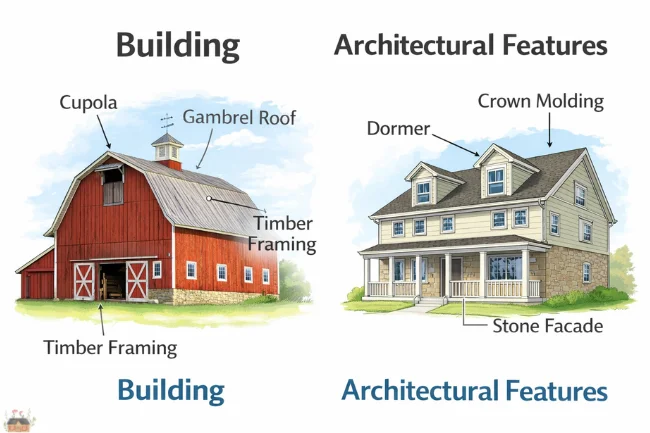
In professional architectural discourse, a building is the entity, while features are the elements that comprise it. If a developer says they are adding “architectural features” to a house, they mean dormers, crown molding, or perhaps a stone facade. Under this strict definition, a barn is a building type, not a feature.
However, context changes everything. In the realm of estate design and “Agri-hood” developments, an antique barn is often treated as a massive architectural feature of the landscape. It serves as a visual anchor. Furthermore, specific styles—such as the Dutch barn or the Bank barn—possess unique structural elements that are studied by architects to understand load-bearing transitions and natural ventilation.
Why the Classification Matters
Labeling a barn as an architectural feature often occurs in real estate and preservation. When a historic barn is preserved on a site where the main house has been modernized, the barn becomes a “feature” of the historical record. It provides “character” and “texture,” terms often used by designers to describe elements that add visual interest and historical weight to a property.
Read Also: Marble on Marble Kitch Cabinet and Counter Top Design Guide
Key Architectural Features Found Within Barns
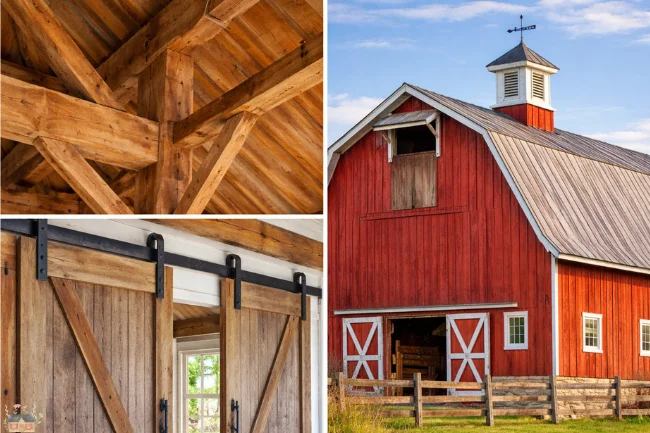
If the barn itself is the canvas, the architectural features are the brushstrokes. Many elements we associate with modern residential “farmhouse” style actually originated as purely functional components of barn construction.
The Gambrel Roof and Symmetrical Slopes
Perhaps the most recognizable feature of the American barn is the gambrel roof. Often called a “Dutch roof,” this symmetrical two-sided roof has two slopes on each side. The lower slope is steep, while the upper slope is shallow. This was not originally a stylistic choice; it was an architectural solution to maximize the volume of the hayloft without increasing the height of the roof ridge or the footprint of the building.
Cupolas and Natural Venting Systems
A cupola is a small, dome-like structure on top of a building. In residential architecture, it is often decorative. In a barn, it is a critical architectural feature used for ventilation. Moist air from livestock and curing hay needs to escape to prevent spontaneous combustion of the hay and rot in the timber frame. The presence of a cupola is a primary indicator of a building’s agricultural architectural heritage.
Timber Framing and Mortise-and-Tenon Joints
The “bones” of a barn are an architectural marvel. Traditional barns were built using heavy timbers joined together with wood-to-wood connections—specifically mortise-and-tenon joints secured with wooden pegs (trunnels). This skeletal system allows the building to “breathe” and flex under wind loads and the weight of snow, a feature that modern stick-built homes often lack.
Categorizing Barn Types as Distinct Architectural Styles
Just as one might categorize a home as “Victorian” or “Mid-Century Modern,” barns fall into distinct architectural categories based on their geographic origins and functional designs.
Evaluating the Barn as a Landscape Feature
In the field of landscape architecture, a barn is frequently cited as a “landscape feature.” This perspective views the environment as a whole. A lone barn in a field of wheat is a focal point that defines the scale and character of the horizon.
When planners discuss “view corridors” or “rural character,” they are often referring to the silhouette of the barn. In this sense, the barn moves beyond being a mere building and becomes an architectural feature of the geography itself. It marks the transition between the wild landscape and the managed agricultural world.
The Modern Transition: Barn Features in Residential Design
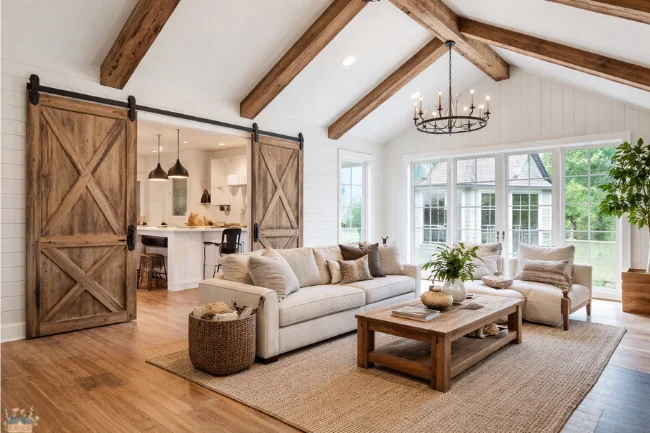
The question of “is a barn an architectural feature?” has gained new relevance with the rise of the “Modern Farmhouse” trend. Homeowners today are incorporating barn-specific features into residential structures to evoke a sense of heritage and durability.
-
Sliding Barn Doors: Large doors on black iron tracks have moved from the stable to the master bedroom.
-
Exposed Rafters: The internal logic of the barn’s roof is now a sought-after aesthetic in high-end living rooms.
-
Board-and-Batten Siding: Originally used to allow for the expansion and contraction of wood in unheated barns, this is now a primary architectural feature of modern suburban homes.
This “adaptive reuse” of barn elements proves that while the building may be agricultural, its components are quintessentially architectural.
Read Also: Cherry Wood Kitchen Cabinets: Styles, ROI & Design Guide
Structural Logic and Aesthetic Value in Vernacular Design
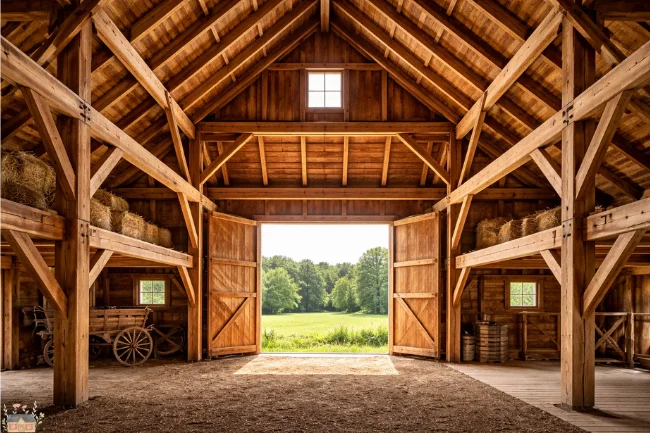
Architects often praise barns for their “honesty.” In architectural theory, an honest building is one where the exterior form clearly expresses the interior function and the structural system. A barn does not hide its purpose. The placement of the doors tells you where the wagons went; the height of the roof tells you how much fodder was needed for the winter.
This functional honesty makes the barn a masterpiece of vernacular architecture—architecture built by people using local materials and traditional knowledge rather than by professional architects following a specific “style.” For a student of design, the barn is less a building and more a collection of features that solve environmental problems.
Preservation of Barns as Significant Architectural Assets
When a barn is designated as a protected structure, it is usually because its architectural features represent a specific moment in history. For example, the presence of “forebays” (overhanging second stories) in Pennsylvania barns is a feature brought over by German settlers (the Pennsylvania Dutch).
If these features are lost to rot or modernization, the architectural identity of the region is diminished. Therefore, in the context of historical preservation, the barn is treated as a critical architectural asset. Organizations like the National Barn Alliance work to document these buildings not just as sheds, but as significant monuments of structural engineering.
Future Trends: The Barn as a Sustainable Template
As we look toward sustainable architecture, the barn is being revisited as a template for low-energy design. The architectural features that allowed barns to stay cool in the summer and dry in the winter—such as cross-ventilation, thermal mass from stone foundations, and high-volume ceilings—are being integrated into modern “green” buildings.
In this context, the barn is more than a feature; it is a prototype. It provides a blueprint for how structures can exist in harmony with their environment while using minimal resources.
Summary of Key Takeaways
The question of whether a barn is an architectural feature is answered by how you look at the building. While technically a standalone structure, its unique components—from the gambrel roof to the hand-carved timber joints—are definitive architectural features that have influenced centuries of design.
-
Structural Identity: Barns are defined by functional features like cupolas and timber framing.
-
Cultural Value: They serve as landscape features that define the visual character of rural areas.
-
Design Influence: Barn features are heavily utilized in modern residential architecture to provide aesthetic “soul” and “warmth.”
If you are looking to preserve a historic structure or incorporate these timeless elements into a new project, understanding the specific “features” of the barn is the first step toward successful design.
Learn about the White Kitchen Cabinets with Granite Countertops
For broader information, visit Wellbeing Makeover

I’m Salman Khayam, the founder and editor of this blog, with 10 years of professional experience in Architecture, Interior Design, Home Improvement, and Real Estate. I provide expert advice and practical tips on a wide range of topics, including Solar Panel installation, Garage Solutions, Moving tips, as well as Cleaning and Pest Control, helping you create functional, stylish, and sustainable spaces that enhance your daily life.