
Monthly pest control pros and cons refer to the advantages and disadvantages of scheduling professional pest treatment every month instead of opting for one-time or quarterly services. While monthly plans offer consistent prevention and early detection, they may involve higher costs and unnecessary treatments for low-risk properties.
Pest problems rarely start overnight. Ants, cockroaches, rodents, termites, spiders, and other common household pests typically establish themselves gradually. The question for many homeowners and property managers is whether monthly pest control provides meaningful protection—or whether it’s more than they actually need.
This guide breaks down the benefits, drawbacks, costs, effectiveness, and decision factors so you can determine whether a monthly service plan makes sense for your property.
Understanding Monthly Pest Control Services
Monthly pest control involves a licensed technician visiting a property every 30 days to:
-
Inspect for signs of pest activity
-
Apply preventative treatments (interior and exterior)
-
Address emerging infestations
-
Monitor bait stations and traps
-
Adjust treatment strategies based on seasonal trends
Unlike reactive, one-time treatments, monthly service focuses on ongoing prevention and early intervention.
Most plans are designed for general household pests such as:
-
Ants
-
Roaches
-
Spiders
-
Wasps
-
Silverfish
-
Rodents
-
Occasional invaders
Some plans also include termite monitoring or mosquito treatments as add-ons.
The Pros of Monthly Pest Control
1. Consistent Prevention
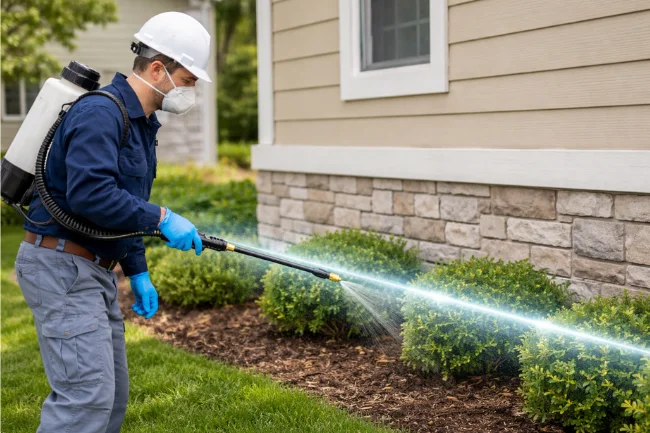
The primary advantage of monthly pest control is proactive prevention.
Pests reproduce quickly. Cockroaches, for example, can produce hundreds of offspring in a year. Rodents breed even faster under favorable conditions. Regular visits disrupt breeding cycles and prevent small problems from becoming full infestations.
Monthly service creates a protective barrier that is refreshed before treatments degrade or wash away.
2. Early Detection of Infestations
Routine inspections increase the likelihood of catching:
-
Termite activity
-
Rodent entry points
-
Moisture-related pest risks
-
Structural vulnerabilities
Early detection typically reduces treatment intensity and overall cost. Severe infestations often require extensive remediation, structural repairs, or specialized extermination services.
3. Peace of Mind
For many homeowners, the psychological benefit is significant.
Knowing a professional is routinely inspecting and treating the property reduces anxiety, especially in regions with:
-
High cockroach populations
-
Frequent rodent activity
-
Mosquito-heavy climates
-
Termite-prone zones
Monthly service removes the need to monitor every crack and corner personally.
4. Better for High-Risk Properties
Monthly plans are particularly beneficial for:
-
Restaurants and food-service businesses
-
Multi-family housing
-
Older homes with structural gaps
-
Properties near wooded or high-moisture areas
-
Warm, humid climates
In these environments, pests are not seasonal—they are constant.
5. Customized, Adaptive Treatment
Ongoing service allows technicians to adjust strategies based on:
-
Weather patterns
-
Seasonal pest activity
-
Construction or landscaping changes
-
Shifting pest populations
Instead of a one-size-fits-all approach, treatments evolve over time.
The Cons of Monthly Pest Control
1. Higher Long-Term Cost
Cost is the most common drawback.
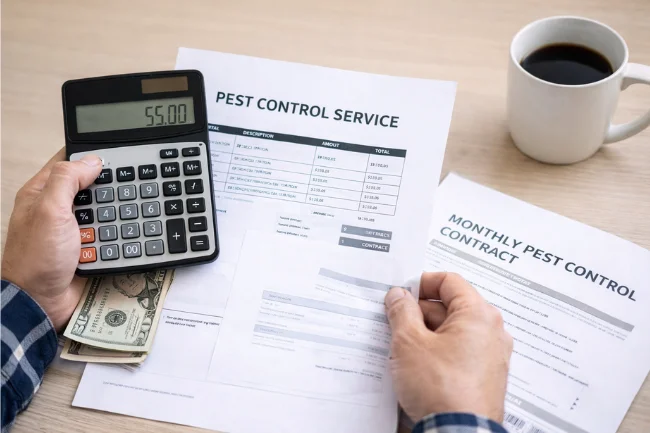
Monthly pest control typically ranges from $40 to $80 per month for standard residential coverage, though pricing varies by location and property size.
Over a year, that can total $480 to $960—more than quarterly or bi-monthly services.
For low-risk homes, this may be more than necessary.
2. Potential Over-Treatment
Not all properties need monthly chemical applications.
In homes with minimal pest pressure, quarterly treatments may be sufficient. Excessive pesticide use—while regulated and generally safe when professionally applied—may be unnecessary for low-activity environments.
Responsible pest management emphasizes targeted, need-based treatment rather than blanket spraying.
3. Contract Commitments
Some pest control companies require:
-
Annual service agreements
-
Cancellation fees
-
Automatic renewals
If service quality declines or pest pressure decreases, homeowners may feel locked in.
It’s essential to review contract terms carefully.
4. Scheduling Inconvenience
Monthly visits require coordination.
Although many treatments focus on exterior applications, some interior inspections may require access. For busy households or rental properties, this can be disruptive.
5. Not Always the Most Efficient Plan
In some climates, pest activity fluctuates seasonally. Winter months in colder regions may see minimal activity. In such cases, bi-monthly or seasonal plans could be more cost-effective.
Monthly vs. Quarterly Pest Control: A Comparison
The choice depends largely on environmental risk, building structure, and tolerance for pest sightings.
When Monthly Pest Control Makes Sense
Monthly service may be appropriate if:
-
You’ve experienced recurring infestations
-
You live in a warm or humid climate
-
Your property backs up to woods or water
-
You manage commercial or food-related spaces
-
There are vulnerable occupants (e.g., severe pest allergies)
-
DIY methods have failed repeatedly
In these scenarios, prevention is typically more cost-effective than recurring reactive treatments.
When Monthly Service May Be Unnecessary
It may not be necessary if:
-
Pest sightings are rare
-
The home is newly constructed and well-sealed
-
The region experiences cold winters with low pest activity
-
You already maintain strong sanitation and structural maintenance
In these cases, quarterly service combined with preventive maintenance may provide adequate protection.
Environmental and Safety Considerations
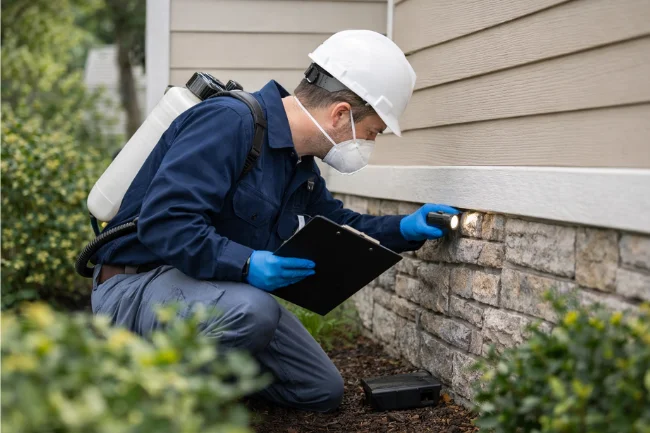
Modern pest control emphasizes Integrated Pest Management (IPM). This approach:
-
Identifies pest species accurately
-
Uses minimal effective treatment
-
Focuses on exclusion and prevention
-
Reduces unnecessary pesticide exposure
Reputable pest control providers prioritize targeted applications rather than routine overuse.
Homeowners concerned about chemical exposure should ask about:
-
Low-toxicity formulations
-
Exterior-only service options
-
Bait systems instead of sprays
-
Eco-conscious service plans
Transparency from providers is a good indicator of quality service.
Cost-Benefit Analysis: Is It Worth It?
Evaluating the monthly pest control pros and cons often comes down to cost versus risk.
Consider:
-
The cost of potential structural damage (e.g., termites)
-
Health risks from rodent contamination
-
The stress and disruption of infestations
-
Time spent on DIY treatments
If infestations are recurring, monthly prevention can be less expensive than repeated emergency exterminations.
However, if pest pressure is low, the additional cost may not provide proportional value.
Factors That Influence Effectiveness
Monthly pest control is not automatically superior. Effectiveness depends on:
-
Technician expertise
-
Correct pest identification
-
Proper sealing of entry points
-
Sanitation and clutter reduction
-
Landscaping management
Even with monthly service, food debris, standing water, and structural gaps can undermine results.
Pest control works best as part of a broader maintenance strategy.
Questions to Ask Before Choosing a Monthly Service
Before committing, consider asking:
-
What pests are covered under the plan?
-
Are termite inspections included?
-
Are retreatments free between visits?
-
Is there a cancellation policy?
-
What products are used?
-
Is interior treatment required every month?
Clear answers reduce misunderstandings and ensure the service aligns with your expectations.
Commercial vs. Residential Considerations
For commercial properties, monthly service is often standard.
Restaurants, warehouses, hotels, and healthcare facilities typically require frequent monitoring due to regulatory standards and reputational risk.
Residential homes, by contrast, vary widely. The need depends heavily on geography, building age, and the surrounding environment.
Seasonal Considerations
In many regions:
-
Spring: Ants and termites swarm
-
Summer: Mosquitoes and wasps peak
-
Fall: Rodents seek shelter
-
Winter: Indoor pest activity increases
Monthly service smooths out these seasonal spikes, reducing surprise infestations.
However, in colder climates, winter activity may be minimal enough to justify less frequent visits.
Alternatives to Monthly Pest Control
If monthly service feels excessive, alternatives include:
-
Quarterly preventative plans
-
Seasonal treatments (spring and fall)
-
Targeted rodent exclusion programs
-
On-demand service
The right approach depends on risk tolerance and property vulnerability.
Balancing the Monthly Pest Control Pros and Cons
There is no universal answer.
Monthly pest control provides:
-
Continuous monitoring
-
Strong prevention
-
Reduced infestation risk
But it also involves:
-
Higher annual expense
-
Possible over-treatment
-
Contract commitments
A thoughtful evaluation of property risk, local pest pressure, and budget constraints helps determine whether it’s justified.
Frequently Asked Questions
Is monthly pest control necessary for most homes?
Most average residential homes do not require monthly service unless located in high-risk areas or experiencing recurring infestations. Quarterly treatments often provide sufficient protection when combined with good sanitation and structural maintenance.
Does monthly pest control use more chemicals?
Not necessarily. Many providers use targeted applications and integrated pest management strategies. The frequency of visits does not automatically mean heavier chemical use, especially when treatments are focused on prevention and monitoring.
Can monthly pest control prevent termites?
Standard monthly plans typically focus on general household pests. Termite protection often requires separate inspection and monitoring systems. Homeowners should confirm whether termite services are included or offered as an add-on.
Is monthly pest control worth the cost?
It may be worthwhile for properties with consistent pest pressure, commercial buildings, or homes in warm, humid climates. For low-risk properties, less frequent service may provide similar benefits at a lower cost.
Can I switch from monthly to quarterly service?
Many companies allow plan adjustments, though contract terms vary. Reviewing cancellation policies and flexibility options before signing helps ensure you can adapt service frequency as needed.
Making an Informed Decision
Monthly pest control offers strong prevention and peace of mind, especially in high-risk environments. However, it is not automatically necessary for every property.
Understanding the monthly pest control pros and cons allows homeowners and property managers to align service frequency with real-world risk. Evaluating local pest activity, structural vulnerabilities, and budget considerations ensures a balanced approach.
If uncertainty remains, a professional inspection can provide clarity about current pest pressure and recommend an appropriate service plan tailored to your property’s needs.
For broader information, visit Wellbeing Makeover

I’m Salman Khayam, the founder and editor of this blog, with 10 years of professional experience in Architecture, Interior Design, Home Improvement, and Real Estate. I provide expert advice and practical tips on a wide range of topics, including Solar Panel installation, Garage Solutions, Moving tips, as well as Cleaning and Pest Control, helping you create functional, stylish, and sustainable spaces that enhance your daily life.