
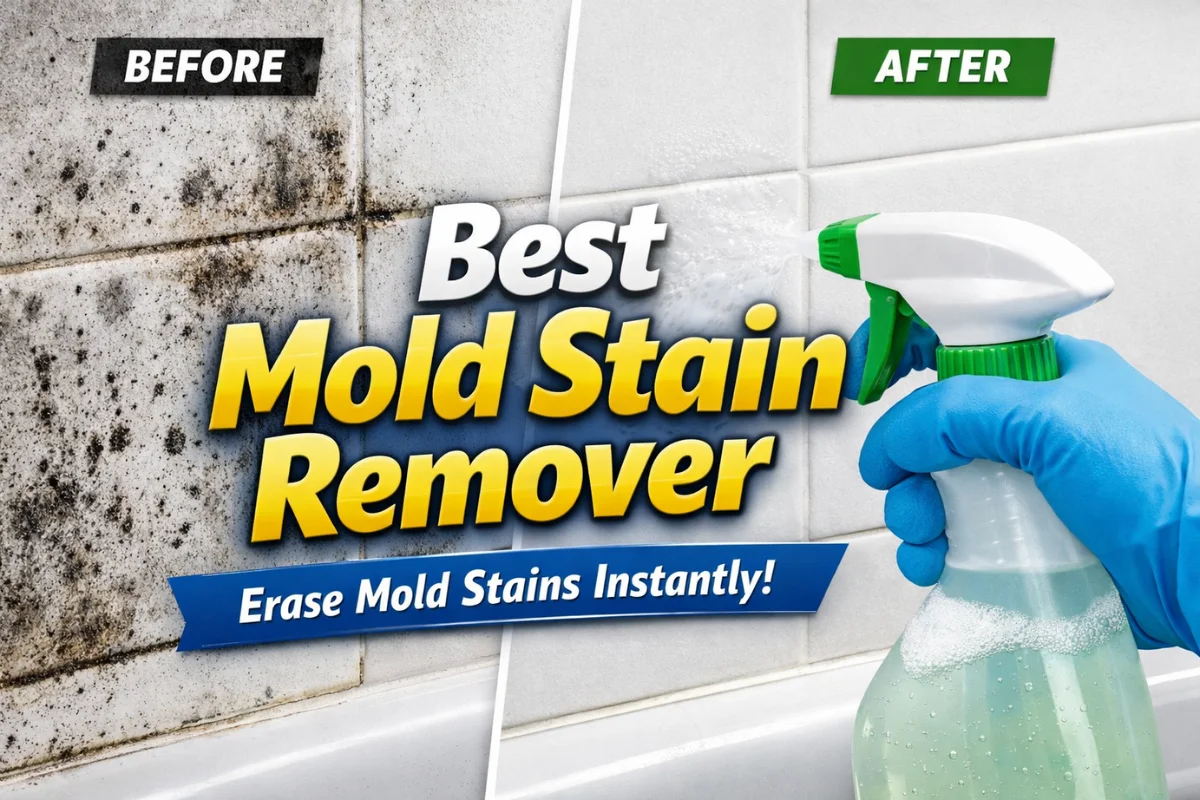
The best mold stain remover is a specialized chemical solution designed to break down the stubborn pigmentation left behind by fungal growth on surfaces like grout, drywall, and wood. Unlike standard household cleaners, these products use potent oxidizing agents—such as sodium hypochlorite or hydrogen peroxide—to lift deep-seated discoloration without damaging the structural integrity of the underlying material. Selecting the right formula requires an understanding of both the fungal biology and the chemistry of the surface being treated.
Understanding the Difference Between Killing Fungus and Using a Mold Stain Remover
Before selecting a product, it is essential to distinguish between a mold disinfectant (a “killer”) and a mold stain remover. While many modern products perform both functions, their chemical pathways serve fundamentally different purposes. In a professional restoration context, these are often treated as two distinct stages of a single project.
Mold Disinfectants: The Biological Kill
Disinfectants are EPA-registered antimicrobials designed to penetrate the cell wall of the fungus and neutralize the organism. Common ingredients include quaternary ammonium compounds or botanical thymol. However, these “biocides” often leave the dark melanin stains behind. A surface can be biologically “dead” and safe, yet still appear covered in black spots.
Aesthetic Restoration: Why You Need the Best Mold Stain Remover
These products focus on the visual restoration of the surface. They utilize high-potency oxidizers to “bleach” or break the molecular bonds of the pigments produced by the mold. Because many homeowners find the sight of fungal residue distressing even after the mold is dead, the most effective cleaning agent is one that provides an immediate “disappearing act,” restoring the aesthetic value of the property.
Top Rated Solutions: Comparing the Best Mold Stain Remover Options for 2026
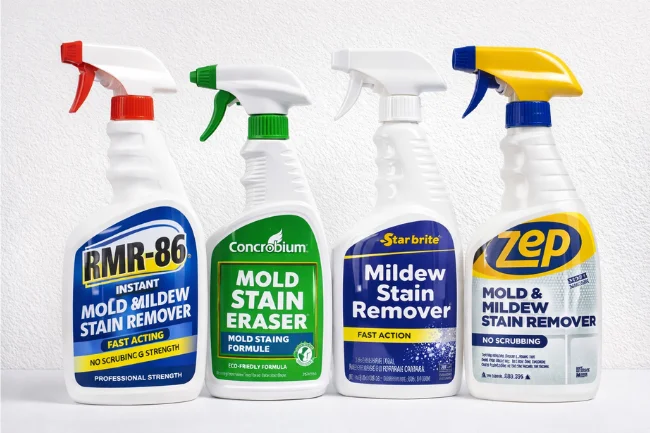
The market for home restoration products has evolved significantly, moving toward faster-acting formulas that minimize the need for manual scrubbing, which can inadvertently damage delicate surfaces like aged grout or drywall.
Product Comparison: Finding the Top Mildew and Mold Stain Remover
| Product Name | Active Ingredient | Surface Compatibility | Key Advantage |
|---|---|---|---|
| RMR-86 Instant Remover | Sodium Hypochlorite | Tile, Grout, Vinyl, Concrete | Works in 15 seconds; industrial-strength penetration. |
| Concrobium Stain Eraser | Oxygen-Based Bleach | Wood, Composite Decking | Bleach-free; eco-friendly and safe for wood fibers. |
| Star Brite Mildew Stain | High-Alkaline Formula | Marine Vinyl, Boat Seats | High UV resistance and buffered for marine environments. |
| Zep Mold & Mildew | Bleach-Based | Bathroom Tile, Sinks | High-viscosity formula that clings to vertical surfaces. |
| Home Armor FG502 | Sodium Hypochlorite | Drywall, Painted Surfaces | Features a long-term mold-resistant film (encapsulant). |
How to Select the Best Mold Stain Remover Based on Surface Type
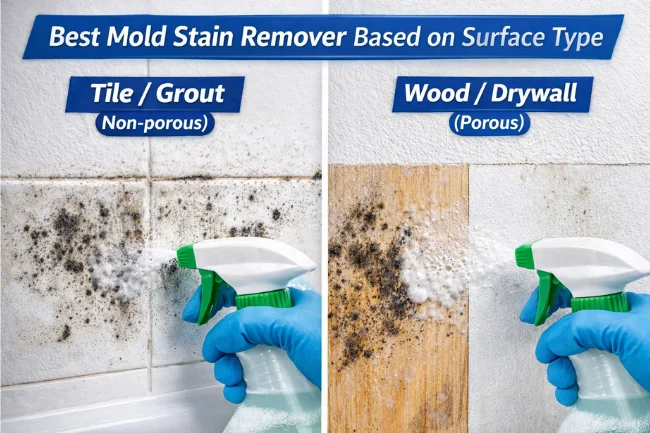
The efficacy of any cleaning solution depends heavily on the porosity of the material. Applying the wrong chemical to a porous surface can result in a “rebound effect,” where the fungus returns more aggressively because the cleaner provided more moisture than it did antifungal protection.
Treating Non-Porous Surfaces (Tile, Grout, Plastic)
Hard, non-porous surfaces are the most straightforward to treat. Sodium hypochlorite (bleach-based) cleaners are generally the best mold stain remover for these areas because they provide instant visual results. Since these materials do not absorb liquids deeply, the chemical can sit on the surface and break down pigments without risking structural damage.
However, care must be taken with metal fixtures. High-chlorine cleaners can corrode chrome and stainless steel if left to sit too long. Always rinse metal trim thoroughly after treating adjacent tile or grout.
Cleaning Porous Materials (Wood, Drywall, Fabric)
Wood and drywall require a more sophisticated approach. Standard household bleach is often ineffective here because the chlorine molecules are too large to penetrate the microscopic pores of the wood. Consequently, the water in the bleach solution is absorbed into the wood, effectively “watering” the mold roots (hyphae) while only whitening the surface.
For these materials, hydrogen peroxide-based or oxygen-based cleaners are superior. These solutions have lower surface tension and can penetrate deeper into the fibers. They work through an effervescent action—bubbling the stain out from the inside—without the corrosive side effects of chlorine.
The Chemistry of Fungal Discoloration: Why Stains Are Persistent
To appreciate why certain removers work better than others, one must understand what a mold stain actually is. Mold produces secondary metabolites, including pigments like melanin. These pigments are evolved to protect the fungus from UV radiation and environmental stress.
Melanin is incredibly stable. It does not wash away with soap and water because it is chemically bonded to the surface. The best mold stain remover must be an oxidizer powerful enough to break these carbon bonds. This is why “natural” cleaners often struggle with deep black stains; they lack the oxidative potential to shatter the pigment molecules at a molecular level.
Essential Ingredients Found in the Best Mold Stain Remover Formulas
When evaluating products, look for these specific active ingredients. Their concentration and delivery method (foam vs. liquid) will dictate their success on your specific project.
1. Sodium Hypochlorite (Chlorine-Based)
This is the “gold standard” for speed. It works by releasing oxygen atoms that attack the cell walls of the fungus. It is highly effective but comes with drawbacks: it has a high pH (alkaline) which can degrade some fabrics and creates strong fumes that can irritate the respiratory system.
2. Hydrogen Peroxide (H2O2)
Ranging from 3% to 10% in commercial cleaners, hydrogen peroxide is an environmentally friendly alternative. It breaks down into simple water and oxygen. It is particularly effective for lifting stains from light-colored wood or carpets where chlorine might cause permanent yellowing or fiber weakening.
3. Surfactants and Wetting Agents
A professional-grade stain remover is more than just a bleach solution. It contains surfactants—specialized molecules that reduce the surface tension of the water. This allows the cleaner to “creep” into cracks and crevices where spores hide. Without surfactants, the cleaner might just bead up on the surface, leaving the source of the stain untouched.
4. Encapsulants for Future Prevention
Some modern formulas include a “shield” or polymer. After the stain is removed and the liquid dries, it leaves behind a microscopic film that prevents new spores from attaching to the surface. This is a critical feature for high-humidity areas like basements or laundry rooms.
Step-by-Step Guide: Professional Application of a Mold Stain Remover
Regardless of the product quality, the application method determines the longevity of the results. Following a standardized protocol ensures safe and prevents the spread of spores to other parts of the home.
Phase 1: Preparation and Containment
Mold spores are lightweight and become airborne the moment they are disturbed.
-
Isolate the Zone: Close all vents and doors. If possible, hang plastic sheeting over doorways.
-
Negative Pressure: Place a fan in a window blowing outward to pull fresh air into the room and exhaust contaminated air outside.
-
Personal Protective Equipment (PPE): At a minimum, wear an N95 respirator, un-powdered nitrile gloves, and wrap-around safety goggles.
Phase 2: The Dry Clean
Before applying a liquid stain remover, use a HEPA-certified vacuum to remove loose surface residue. Never use a standard household vacuum; their filters are not fine enough to catch microscopic spores (which can be as small as 1-3 microns). A standard vacuum will simply act as a “mold cannon,” shooting spores into every room of your house.
Phase 3: Application and Dwell Time
Apply your chosen best mold stain remover. If you are working on a vertical surface (like a wall), a foaming trigger is best as it prevents the chemical from running down the wall too quickly.
-
The 15-Minute Rule: Most professional oxidizers require at least 15 minutes of “dwell time.” This is the time it takes for the chemical reaction to fully shatter the pigment molecules.
-
Mechanical Agitation: For deep stains in grout or masonry, use a medium-stiffness nylon brush. Avoid wire brushes on wood or drywall, as they can tear the fibers and create more surface area for regrowth.
Phase 4: Neutralization and Drying
Once the stain is gone, wipe the area with a clean, damp microfiber cloth. The most critical step in the entire process is the drying phase. Fungi require moisture to survive. If you leave the surface damp, the spores remaining in the air will recolonize the area within 48 hours. Use a dehumidifier or high-velocity air mover to ensure the surface is bone-dry.
Natural Alternatives vs. The Best Mold Stain Remover Products
For small, localized spots of mildew (typically found in shower corners), heavy industrial chemicals might be overkill.
-
Distilled White Vinegar: With an acidity of roughly 5%, vinegar is a mild antifungal. It is excellent for maintenance but generally poor at removing dark, set-in stains. It is best used as a weekly spray to prevent mold from gaining a foothold.
-
Baking Soda and Peroxide Paste: Mixing baking soda with 3% hydrogen peroxide creates a bubbling paste that provides both chemical oxidation and physical abrasion. This is often the best “green” method for cleaning kitchen sinks or refrigerator gaskets.
-
Borax: A natural mineral, Borax is a classic mold cleaner. It has a high pH that inhibits fungal growth. Unlike bleach, it does not emit toxic fumes, making it a favorite for those with chemical sensitivities.
Advanced Troubleshooting: Why Your Mold Stain Remover Results May Fade
If you have used the best mold stain remover and the spots return within weeks, you are likely dealing with one of three issues:
-
Hidden Moisture: Mold is a symptom, not the disease. There is likely a pipe leak behind the drywall or a failed seal on a window.
-
Biofilm Persistence: If the mold was not fully killed before the stain was removed, the root system (mycelium) remains active inside the material.
-
High Ambient Humidity: If the relative humidity in the room is consistently above 60%, spores will germinate on the surface even without a direct water leak. This is common in bathrooms with undersized exhaust fans.
Professional vs. DIY: Assessing the Risk of Mold Stains
The Environmental Protection Agency (EPA) suggests that any infestation larger than 10 square feet should be handled by a professional remediation company. Professionals use specialized equipment, such as:
-
Air Scrubbers: High-volume HEPA filtration units that clean the air while work is being performed.
-
Dry Ice Blasting: A method for removing mold from wood framing without introducing any moisture.
-
Thermal Imaging: Infrared cameras that can “see” moisture trapped behind walls that appears dry to the naked eye.
Frequently Asked Questions
What is the strongest mold stain remover on the market?
Industrial-grade products like RMR-86 or Fiberlock ShockWave are considered the strongest. These contain high concentrations of sodium hypochlorite and specialized surfactants that allow them to dissolve organic stains on contact. They are designed for crawlspaces and attics where rapid results are required.
Is it safe to mix different mold stain remover brands?
No. Never mix different cleaners, especially those containing bleach, with ammonia or vinegar. Mixing bleach with ammonia creates toxic chloramine gas, while mixing it with acids like vinegar creates lethal chlorine gas. Always stick to one product and rinse the area thoroughly before trying a different one.
Does “black mold” require a different cleaner?
While the term “black mold” (often referring to Stachybotrys chartarum) sounds more dangerous, most high-quality stain removers are effective against a broad spectrum of fungal species. The color of the growth is less important than the porosity of the surface it is growing on.
How do I remove mold stains from colored fabric?
For colored fabrics, avoid chlorine-based removers as they will strip the dye. The best mold stain remover for textiles is an oxygen-based bleach (like OxiClean) or a 3% hydrogen peroxide solution. Soak the fabric for 30 minutes before washing in the hottest water the fabric can safely handle.
Can I paint over a mold stain once I’ve cleaned it?
You should only paint over an area once the mold is dead, the stain is removed, and the surface is completely dry. Use a dedicated stain-blocking primer that contains an antimicrobial agent. Standard latex paint can actually serve as a food source for fungus if the underlying moisture problem isn’t fixed.
Summary of Key Takeaways
Effective restoration is a balance of chemistry, physics, and biology. While a bleach-based spray offers the fastest visual “disappearing act” for non-porous bathroom surfaces, oxygen-based cleaners provide the deep penetration necessary for wood and structural components.
The best mold stain remover is only one tool in your arsenal. To ensure the stains never return, you must couple your cleaning efforts with a rigorous moisture management strategy. Once you have cleared the visual damage, your next step should be a thorough inspection of your home’s ventilation and plumbing to eliminate the humidity that allows mold to thrive.
For broader information, visit Wellbeing Makeover

I’m Salman Khayam, the founder and editor of this blog, with 10 years of professional experience in Architecture, Interior Design, Home Improvement, and Real Estate. I provide expert advice and practical tips on a wide range of topics, including Solar Panel installation, Garage Solutions, Moving tips, as well as Cleaning and Pest Control, helping you create functional, stylish, and sustainable spaces that enhance your daily life.