

I’ve spent years planning, measuring, building, and fixing garages, and I can tell you this with confidence: 3-Car Garage Dimensions can make or break how functional your home feels. I’ve seen beautiful houses ruined by cramped garages, and modest homes transformed by garages that were sized correctly from day one. This guide reflects what I’ve learned through hands-on experience, real-world constraints, and plenty of hard-earned lessons.
Quick Summary
-
Practical 3-car garage dimensions usually fall between 30–36 feet wide and 20–24 feet deep
-
Each vehicle needs 10–12 feet of width for doors, mirrors, and movement
-
Ceiling height is critical for storage, lifts, and long-term flexibility
-
Layouts like side-by-side and tandem drastically affect daily usability
-
Planning garage dimensions around future needs adds real resale value
Why 3-Car Garage Dimensions Deserve Serious Thought
Most people underestimate how much time they’ll spend in their garage. Parking, unloading groceries, grabbing tools, storing seasonal items—this space works hard every day. When 3-car garage dimensions are too tight, the garage turns into a stress point instead of a convenience.
From my experience, poor garage sizing leads to:
-
Doors hitting walls or other cars
-
No room for storage without blocking walkways
-
Difficulty upgrading to larger vehicles later
-
Reduced home value at resale
When I design around proper 3-car garage dimensions, the garage becomes one of the most appreciated spaces in the house.
Standard 3-Car Garage Dimensions I Rely On
Typical Width, Depth, and Square Footage
Over time, I’ve settled on dimension ranges that consistently work in real homes, not just on paper.
While 30×20 technically qualifies as 3-car garage dimensions, I rarely recommend it unless land constraints are unavoidable.
Understanding Garage Width: The Foundation of Comfort
Why Width Matters More Than You Expect
If I had to choose only one dimension to prioritize, it would be width. Garage width determines how easily you can enter and exit vehicles, move around, and install storage.
What I Use as a Baseline
-
10 feet per vehicle = absolute minimum
-
11–12 feet per vehicle = comfortable, frustration-free
That translates to:
-
Minimum width: 30 feet
-
Preferred width: 32–36 feet
When planning 3-car garage dimensions, extra width gives you flexibility that depth alone never will.
Read Also: Prevent Garage Door Roller Popping Out Fast
Adding Width for Storage and Cabinets
Wall-mounted cabinets, shelves, and bike racks all eat into usable width. I usually add:
-
2–4 extra feet if storage is planned on side walls
-
1–2 extra feet if vehicles are larger than average
This small adjustment prevents daily annoyance.
Garage Depth: Planning for Modern Vehicle Lengths
Vehicles today are longer, wider, and taller than those from even 15 years ago. Garage depth has to reflect that reality.
Depth Guidelines I Follow
-
20 feet: Compact cars only
-
22 feet: Most sedans and crossovers
-
24 feet: SUVs, trucks, storage, or work areas
When determining 3-car garage dimensions, depth also affects:
-
Ability to walk around vehicles
-
Storage at the front or rear
-
Whether garage doors close without stress
Extra Depth for Workspaces and Storage
If you want a workbench, freezer, or lawn equipment storage, extra depth is invaluable. I’ve found that 24 feet deep is the sweet spot for garages that do more than just park cars.
Ceiling Height: The Dimension People Regret Ignoring
Why Height Is Non-Negotiable
I’ve had multiple homeowners tell me they wish they’d gone taller. Ceiling height determines whether you can:
-
Install overhead storage racks
-
Park taller vehicles comfortably
-
Add a car lift in the future
When finalizing 3-car garage dimensions, I strongly encourage at least 10 feet if construction allows.
Choosing the Right 3-Car Garage Layout
Side-by-Side Layout
All three cars parked next to each other.
Best for:
-
Wide lots
-
Families with multiple daily drivers
Ideal 3-car garage dimensions:
36 ft wide × 22–24 ft deep
This layout offers the easiest daily use and resale appeal.
Tandem Layout
Two vehicles parked front-to-back, with a third beside them.
Best for:
-
Narrow properties
-
Households with one infrequently used vehicle
While tandem layouts meet 3-car garage dimensions technically, they require more coordination and patience.
L-Shaped or Offset Layouts
One bay extends deeper or sideways.
Best for:
-
Workshops
-
Heavy storage
-
Hobby spaces
This is one of my favorite solutions when standard layouts don’t fit the property.
Garage Door Configurations and Their Impact
Garage doors directly influence how usable your garage feels.
For most homes, I recommend three single doors to maximize ease of use within standard 3-car garage dimensions.
Storage Planning Within 3-Car Garage Dimensions
Wall Storage
-
Reduces usable width
-
Requires planning before framing
Overhead Storage
-
Requires ceiling height
-
Keeps floor space clear
Floor-Based Storage
-
Consumes parking space
-
Often leads to clutter
I always design storage zones first, then fit parking around them—not the other way around.
How Vehicle Type Influences Garage Dimensions
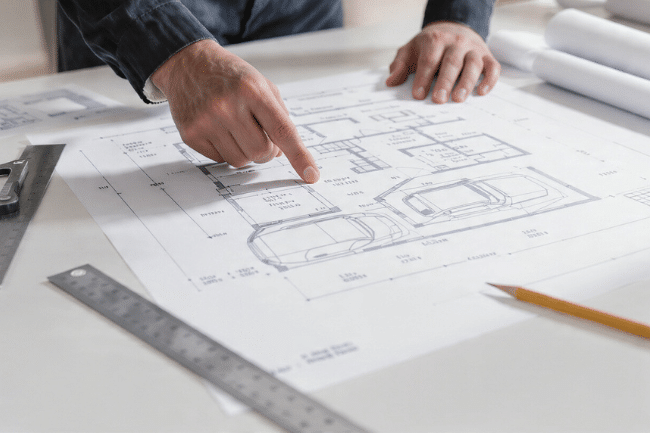
Before locking in 3-car garage dimensions, I always measure:
-
Vehicle length, including tow hitches
-
Width including mirrors
-
Height including roof racks
Full-size trucks often need:
-
2–3 extra feet in depth
-
Additional width for mirrors and doors
Ignoring this is one of the most common planning mistakes.
Property Constraints and Local Considerations
Your lot size, driveway angle, and zoning regulations will influence final dimensions. I always advise checking:
-
Setback requirements
-
Maximum lot coverage
-
Driveway slope and access
According to the National Association of Home Builders, garages consistently rank among the most desired home features, making correct 3-car garage dimensions a strong investment.
What I Learned Firsthand About 3-Car Garage Dimensions
Early in my career, I followed minimum specs too closely. Those garages met code but failed daily use. Over time, I learned to design around behavior, not just numbers.
Now, my approach to 3-car garage dimensions includes:
-
Planning for future vehicles
-
Designing walking paths
-
Separating storage from parking
That shift eliminated complaints and increased satisfaction.
My Personal Recommendation
If space and budget allow, this is my go-to formula:
-
36 feet wide
-
24 feet deep
-
10–12 feet high
-
Three single garage doors
-
Dedicated storage zones
These 3-car garage dimensions work today and tomorrow.
Final Thoughts and Next Step
When done right, a garage becomes one of the most valuable parts of a home. Thoughtful 3-car garage dimensions improve daily convenience, reduce frustration, and boost resale value.
Next Step: Measure your vehicles, list your storage needs, and consult a professional before finalizing plans. That small effort upfront pays off for decades.
FAQs About 3-Car Garage Dimensions
What are standard 3-car garage dimensions?
Most range from 30×20 to 36×24 feet, depending on vehicle size, layout choice, and storage needs.
Can three SUVs fit in a 3-car garage?
Yes, but a 36×24-foot garage provides the clearance needed for doors, mirrors, and walking space.
Is 30 feet wide enough for a 3-car garage?
It works for small cars, but it often feels tight with SUVs or trucks and leaves little room for storage.
How tall should a 3-car garage be?
I recommend 10–12 feet to allow for overhead storage, taller vehicles, and future upgrades.
Do larger garage dimensions increase home value?
Absolutely. Buyers consistently prefer spacious, functional garages with room for storage and flexibility.

I’m Salman Khayam, the founder and editor of this blog, with 10 years of professional experience in Architecture, Interior Design, Home Improvement, and Real Estate. I provide expert advice and practical tips on a wide range of topics, including Solar Panel installation, Garage Solutions, Moving tips, as well as Cleaning and Pest Control, helping you create functional, stylish, and sustainable spaces that enhance your daily life.