
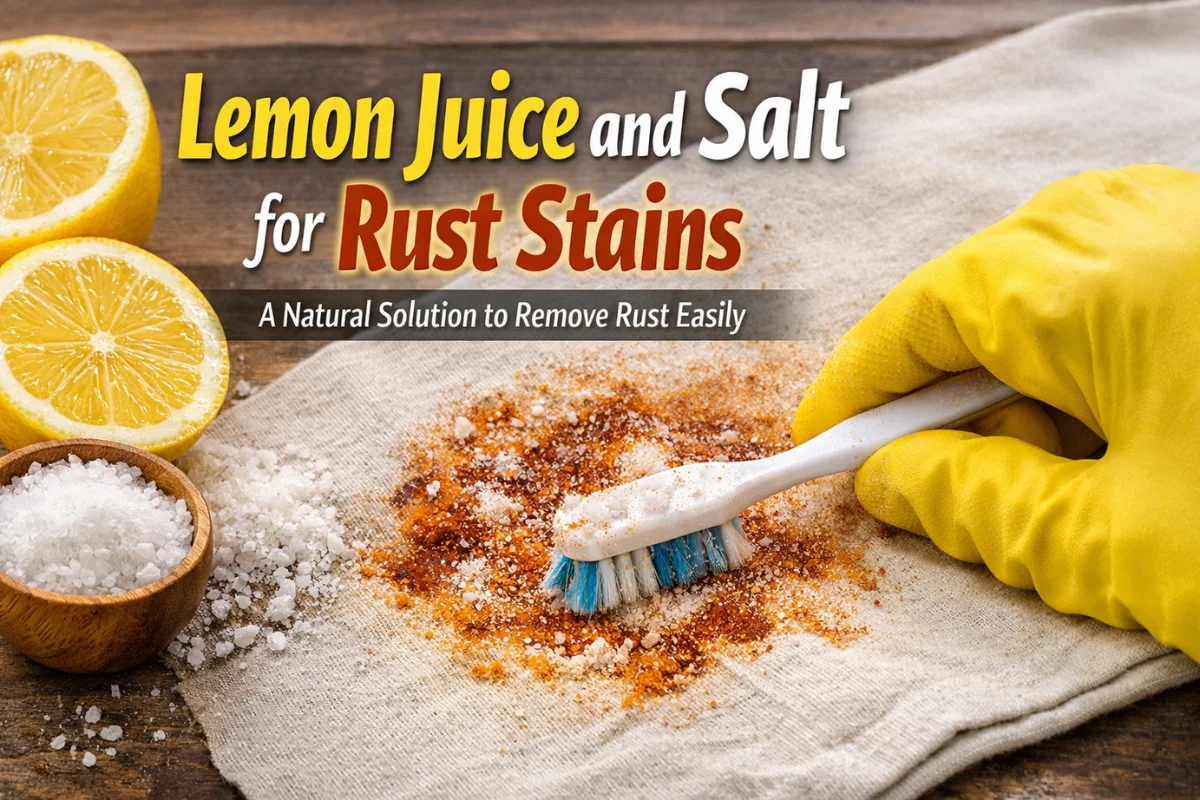
Using lemon juice and salt for rust stains is one of the oldest and most reliable natural cleaning methods available. The citric acid in lemon juice reacts chemically with iron oxide (rust), while salt acts as a mild abrasive to lift loosened particles from the surface. Together, they offer an effective, low-cost approach to tackling rust on fabrics, metal tools, porcelain, and more.
Why Rust Stains Are Stubborn (And Why Chemistry Matters)
Rust forms when iron or steel is exposed to oxygen and moisture over time, producing iron oxide — that familiar reddish-brown discoloration that seems to cling to everything it touches. On fabric, rust stains bond with the fibers at a molecular level, which is why standard laundry detergent rarely removes them on its own. On metal surfaces and tools, rust can penetrate beyond the surface layer if left untreated.
What makes lemon juice effective is its citric acid content, which typically ranges from 5–8% in fresh juice. Citric acid is a chelating agent — it binds to metal ions in rust and helps dissolve the iron oxide compound. Salt, particularly coarse varieties like kosher or sea salt, serves as a physical scrubbing agent that works alongside the acid to mechanically remove loosened rust particles.
This combination has been used in households for generations, and there’s genuine science behind why it works. That said, results vary significantly depending on the surface type, the severity of the rust, and how the method is applied.
How to Use Lemon Juice and Salt to Remove Rust Stains
On Fabric and Clothing
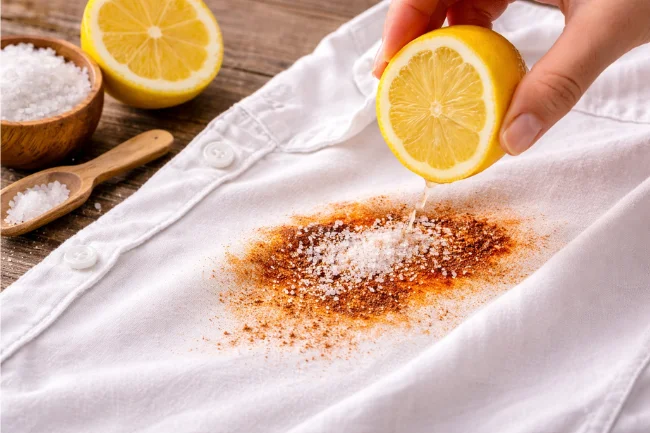
Rust on clothing can seem impossible to remove, especially after it has set. The key is to avoid putting the garment in a dryer before treating it, as heat permanently sets the stain.
What you’ll need:
- Fresh lemon juice or bottled lemon juice (higher citric acid concentration is better)
- Table salt or sea salt
- A soft brush or old toothbrush
- Cold water
Steps:
- Lay the stained fabric flat on a clean surface, ideally outdoors or near a window with natural sunlight.
- Sprinkle a generous layer of salt directly onto the rust stain, covering it completely.
- Squeeze fresh lemon juice over the salt until the area is thoroughly saturated.
- Allow the mixture to sit for 30 minutes to two hours. For older or deeper stains, extending this time — or repeating the treatment while the fabric is in direct sunlight — can improve results. Sunlight accelerates the chemical reaction.
- Use a soft brush to gently work the mixture into the fibers.
- Rinse thoroughly with cold water and check the stain before washing normally.
According to Apartment Therapy, this method works well even on older rust stains that have been overlooked for some time, particularly when sunlight is used as part of the process.
Important: Do not use this method on silk, wool, or other delicate fabrics, as the acid can damage the fibers. Always test on a hidden area first.
On Metal Tools and Hardware
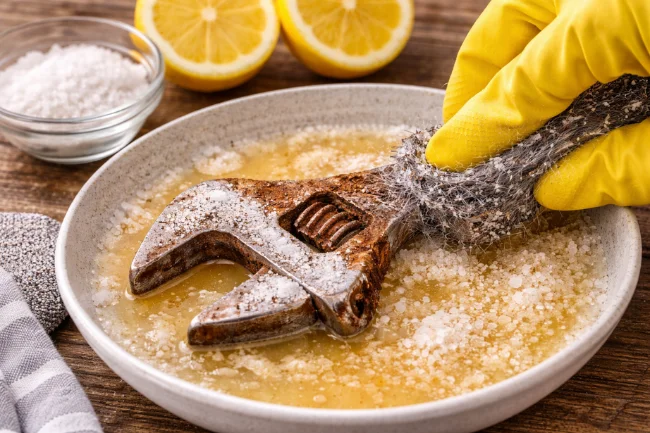
Rust removal on metal requires a slightly different approach. The goal here isn’t just to lift a surface stain but to dissolve rust that has oxidized into the metal itself.
What you’ll need:
- Fresh lemon juice or citric acid solution
- Coarse salt (kosher or sea salt works well)
- Steel wool or a stiff-bristled brush
- A shallow container or bowl
Steps:
- Pour enough lemon juice into a shallow container to submerge or coat the rusted area.
- Add a tablespoon or two of coarse salt and stir briefly to distribute it.
- Submerge small tools or parts directly, or apply the mixture generously to larger surfaces using a cloth or brush.
- Allow it to soak for 2–6 hours, depending on rust severity. For heavily corroded pieces, an overnight soak can make a meaningful difference.
- Scrub with steel wool or a stiff brush, working in circular motions.
- Rinse with clean water and dry thoroughly to prevent new rust from forming immediately.
Fine Woodworking documented this technique with wood tools and found it notably effective at removing surface rust and restoring metal to a workable condition, particularly when combined with light abrasive scrubbing (source).
On Porcelain, Sinks, and Bathroom Fixtures
Porcelain and ceramic surfaces can develop rust rings from metal cans, pipes, or hard water deposits. Using lemon juice and salt for rust stains on porcelain is particularly effective because these non-porous surfaces don’t absorb the acid the way fabric or raw metal does — meaning the reaction stays concentrated right at the stain.
- Make a paste by mixing lemon juice with enough salt to form a thick consistency.
- Apply the paste directly over the stain and let it sit for 15–30 minutes.
- Scrub gently with a soft sponge or cloth — avoid abrasive scrubbers that can scratch the glaze.
- Rinse clean with warm water.
For persistent stains on porcelain, a second application typically yields better results than scrubbing harder.
Lemon Juice vs. Other Common Rust Removers
Understanding where lemon juice and salt fit among other options can help set realistic expectations.
Lemon juice and salt occupy a valuable middle ground — more effective than baking soda alone, safer and more accessible than chemical removers, and especially useful when you need a quick solution using ingredients already in the kitchen.
Tips That Improve Results
A few practical considerations can significantly affect how well lemon juice and salt for rust stains actually perform. Small adjustments to technique, timing, and materials can be the difference between a fully clean surface and a faded-but-still-visible mark.
- Use fresh lemon juice when possible. Bottled juice works, but freshly squeezed lemon juice tends to have a slightly higher citric acid concentration, which improves the reaction.
- Sunlight helps on fabric. UV exposure combined with the acid creates a bleaching effect that assists with stain removal on white and light-colored fabrics. Avoid this on darker fabrics, as it may cause lightning.
- Don’t let the mixture dry completely on the fabric. If the lemon juice evaporates entirely before rinsing, it can leave a residue that attracts dirt. Re-wet the area before scrubbing if needed.
- Salt grain size matters. Coarser salt provides better mechanical abrasion on metal and porcelain. Fine table salt is fine for fabric where you don’t want to risk fiber damage from aggressive scrubbing.
- Rinse and dry metal surfaces immediately. Leaving moisture on bare metal after treatment will cause re-rusting quickly. If treating tools, follow up with a light coat of machine oil or WD-40 to protect the surface.
What Lemon Juice and Salt Won’t Fix
Managing expectations is part of using any cleaning method effectively. Lemon juice and salt work best on surface rust and light-to-moderate staining. It is generally not sufficient for:
- Deeply pitted or structural rust on tools or hardware (where metal has corroded significantly beneath the surface)
- Rust stains that have been heat-set in a dryer multiple times
- Very large surface areas, where the application becomes impractical
- Rust on surfaces that are sensitive to acid, such as marble, limestone, or certain stone countertops
In these cases, a commercial rust converter or oxalic-acid-based product may be more appropriate.
Frequently Asked Questions
Bringing It All Together
Lemon juice and salt are a genuinely useful, kitchen-ready solution for a surprisingly wide range of rust stain problems. It works through real chemistry — citric acid chelating iron oxide while salt provides the abrasion needed to lift loosened particles — and decades of practical use back up its effectiveness on fabric, tools, and household fixtures.
For everyday rust stains on clothing or light surface rust on metal, relying on lemon juice and salt for rust stains is often all that’s needed. For more severe rust or delicate materials, it’s worth exploring purpose-built products. Either way, starting with the simplest option that matches the problem is usually the most practical approach — and in many cases, what’s already in the kitchen is exactly that.
For broader information, visit Wellbeing Makeover

I’m Salman Khayam, the founder and editor of this blog, with 10 years of professional experience in Architecture, Interior Design, Home Improvement, and Real Estate. I provide expert advice and practical tips on a wide range of topics, including Solar Panel installation, Garage Solutions, Moving tips, as well as Cleaning and Pest Control, helping you create functional, stylish, and sustainable spaces that enhance your daily life.