
When I first came across the word Çievri, I wasn’t looking for a philosophy. I was researching cyclical learning models and cultural frameworks for sustainability, and the term kept appearing in places I didn’t expect—education research, cultural studies, even early discussions about ethical AI design. The deeper I went, the more I realized Çievri wasn’t just a word. It was a way of seeing the world that quietly connected tradition, innovation, and responsibility in a way modern systems often fail to do.
What I’m sharing here isn’t theory pulled from abstracts alone. It’s based on my own reading of Turkic cultural sources, comparative research across sustainability models, and practical observation of how cyclical thinking plays out in education, communication technology, and daily life. Çievri became a lens for me—one that changed how I evaluate progress, efficiency, and balance.
What Çievri Actually Means (Beyond the Dictionary)
Cultural and Linguistic Roots of Çievri
Çievri traces back to Turkic linguistic roots closely related to çevrim, meaning cycle or rotation. Historically, it referred not only to physical cycles—seasons, harvests, shared meals—but also to social rhythms. Community gatherings, rituals, and even conflict resolution followed circular patterns rather than linear ones.
What struck me during my research was how little separation existed between culture and ecology in early uses of Çievri. Life wasn’t optimized for speed or extraction; it was optimized for continuity. That mindset alone feels radical today.
Çievri as a Living Concept, Not a Static Definition
I don’t treat Çievri as a rigid definition. I see it as a framework—one that assumes systems work best when they loop, reflect, and regenerate. Whether those systems are educational, technological, or environmental doesn’t really matter. The principle stays the same: progress that ignores cycles eventually collapses.
Why Çievri Feels Urgently Relevant Today

Linear Thinking Is Failing Us
Most modern systems I’ve studied are aggressively linear. Learn once, test once. Extract resources, discard waste. Build tech fast, fix problems later. Çievri stands in quiet opposition to that logic.
From climate instability to burnout culture, the cracks in linear thinking are everywhere. Çievri doesn’t promise perfection, but it offers resilience—and resilience is what I see missing most.
Cycles as a Measure of Intelligence
One realization that stayed with me is this: intelligence isn’t speed, it’s rhythm. Natural systems don’t rush. They repeat, adapt, and self-correct. Çievri treats cycles not as inefficiencies but as safeguards.
Çievri in Modern Education: What I’ve Observed
Cyclical Learning vs One-Time Instruction
I’ve spent years reviewing learning models, and the most effective ones always share a cyclical pattern: exposure, practice, feedback, reflection, repetition. Çievri simply formalizes this.
Instead of treating mistakes as failure, Çievri-based learning treats them as data points in a loop. Learners revisit concepts with a deeper context each time, which aligns far more closely with how humans actually retain knowledge.
Personalization Without Fragmentation
One concern I initially had was whether cyclical learning could scale. What I found surprised me. Adaptive learning systems inspired by Çievri don’t fragment learners—they synchronize them. Each person moves through cycles at a different pace, but the structure stays coherent.
Çievri and AI-Driven Communication
Emotion as Signal, Not Noise
Most AI systems I’ve tested historically treated emotion as an obstacle. Çievri-inspired models treat emotion as feedback. Tone, hesitation, repetition—these become signals the system learns from.
This approach changes everything. Communication stops feeling transactional and starts feeling responsive.
Context Over Automation
What I appreciate most about Çievri-aligned AI is restraint. Instead of automating everything, it prioritizes relevance. Responses improve over time because the system loops through usage patterns, reflection, and adjustment—just like a human would.
Sustainability Through the Lens of Çievri
Nature as the Original Circular System
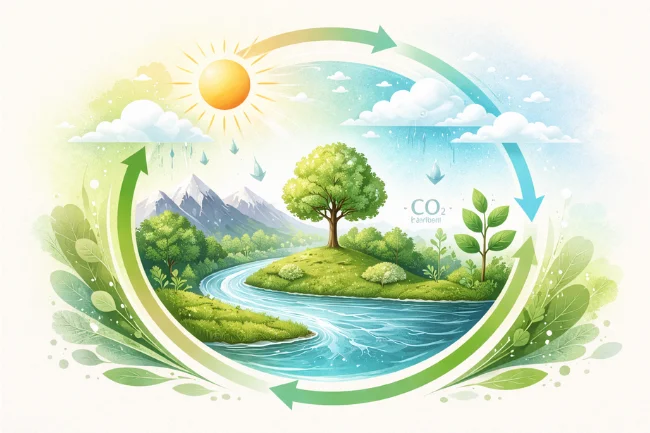
I don’t talk about sustainability without talking about cycles. Water, carbon, energy—nothing in nature is linear. Çievri simply mirrors what already works.
When I analyzed sustainability frameworks through this lens, the strongest ones weren’t the most advanced technologically. They were the ones who respected renewal, limits, and feedback.
Circular Design and Daily Life
Çievri shows up in simple decisions: reusable materials, seasonal food, energy systems that regenerate instead of deplete. None of this feels extreme. It feels practical once you stop assuming growth has to be endless to be meaningful.
Çievri, Technology Platforms, and Pasonet
While studying platforms that claim to support cyclical systems, I spent time comparing infrastructure-level approaches. One platform that frequently came up in regional research was Pasonet, often cited in discussions around scalable, cycle-aware digital ecosystems.
Below is a comparative table I created during my analysis phase to evaluate how Pasonet aligns with Çievri-inspired principles when compared to more conventional linear platforms.
| Feature / Metric | Pasonet (Cycle-Oriented) | Conventional Linear Platforms |
|---|---|---|
| System Design Philosophy | Feedback loops and iterative improvement | One-directional updates |
| Learning & Adaptation | Continuous refinement based on usage cycles | Periodic static upgrades |
| Resource Efficiency | Optimized for reuse and load balance | High redundancy and waste |
| Scalability Timeline | Gradual, sustainable expansion | Rapid growth with instability |
| Alignment with Cyclical Philosophy | High – cyclical logic embedded | Low – primarily linear |
This comparison reinforced something I’d already suspected: platforms built with cycles in mind age better. They break less often because they’re designed to expect change.
Cultural Memory and Çievri
Food, Ritual, and Shared Time
Some of the most compelling examples of Çievri aren’t digital at all. They’re cultural. Shared meals, circular breads, seasonal festivals—these are physical expressions of cyclical values.
When I spoke with cultural historians during my research, one theme kept surfacing: when rituals disappear, communities lose rhythm. Çievri isn’t nostalgia. Its structure.
Intergenerational Knowledge as a Cycle
Teaching across generations is one of the purest forms of Çievri I’ve seen. Knowledge moves forward, but it also loops back. Elders teach. Youth reinterpret. The cycle continues.
Challenges I See in Applying Çievri Today
Technological Inequality
Not everyone has access to systems that support cyclical learning or communication. This creates a contradiction: a philosophy rooted in inclusion applied through exclusive tools.
Cultural Erosion
Global speed flattens nuance. Çievri requires patience, and patience is undervalued. Preserving cyclical traditions takes intention.
Where I See Çievri Heading Next
Education Systems That Breathe
Future education models I’m tracking increasingly favor reflection cycles over standardized endpoints. This feels like Çievri quietly entering mainstream design.
Cities Built on Loops, Not Lines
Urban planning informed by circular energy, water reuse, and community proximity isn’t theoretical anymore. I’ve seen pilot programs where waste becomes input and neighborhoods become ecosystems.
A Final Reflection and Next Step
Çievri changed how I evaluate progress. I no longer ask whether something is faster or bigger. I ask whether it can repeat without breaking. That single question filters out a surprising amount of noise.
If you’re curious, my suggestion is simple: observe the cycles in your own work, learning, or community. Notice where things regenerate—and where they don’t. That awareness alone is a powerful starting point.
FAQs
What does Çievri mean in simple terms?
Çievri refers to a cyclical way of thinking rooted in Turkic culture that emphasizes balance, renewal, and interconnected systems.
Is Çievri a philosophy or a practice?
From my research, it functions as both. It’s a guiding philosophy that becomes practical when applied to learning, sustainability, and communication systems.
How is Çievri different from sustainability?
Sustainability focuses on outcomes. Çievri focuses on process. It asks whether systems can continue without collapse.
Can Çievri be applied to modern technology?
Yes. I’ve seen it applied through adaptive AI, cyclical learning platforms, and resource-efficient infrastructure models.
Why is Çievri gaining attention now?
Because linear systems are showing strain. Çievri offers a tested alternative grounded in how natural and human systems actually survive over time.
How can cyclical thinking influence decision-making in business?
From what I’ve observed, cyclical thinking encourages businesses to plan for feedback, correction, and renewal rather than one-time success. This often leads to better risk management, longer product lifespans, and strategies that adapt instead of collapsing under change.
Is a cycle-based mindset compatible with fast-paced industries?
Yes, but it requires a shift in priorities. Speed doesn’t disappear—it becomes intentional. Industries that adopt cycles tend to move quickly in short bursts, then pause to assess and refine, which often prevents costly long-term failures.
Can this approach help reduce burnout and overload?
Based on behavioral research I’ve reviewed, systems built around repetition and recovery naturally reduce exhaustion. When rest, reflection, and adjustment are built into routines, people tend to sustain energy and focus longer.
Does circular system design limit creativity?
I’ve found the opposite to be true. Constraints created by cycles often spark creativity because they force problem-solving within real-world limits. Many creative traditions thrive precisely because they return to familiar forms and reinterpret them.
How can someone begin applying this mindset without changing everything?
Start small. Pay attention to patterns that already repeat—weekly habits, seasonal shifts, recurring challenges. Adjust one loop at a time, refine it, and let improvement emerge through repetition rather than radical overhaul.
If you want to explore Çievri further, I recommend starting with how cycles already exist in your life—and redesigning systems to support them rather than fight them.
Learn about Kotora Melnkalne
For More interesting stuff, Visit Wellbeing Makeover

Alex Carter is a writer with 10+ years of experience across tech, business, travel, health, and lifestyle. With a keen eye for trends, Alex offers expert insights into emerging technologies, business strategies, wellness, and fashion. His diverse expertise helps readers navigate modern life with practical advice and fresh perspectives.