
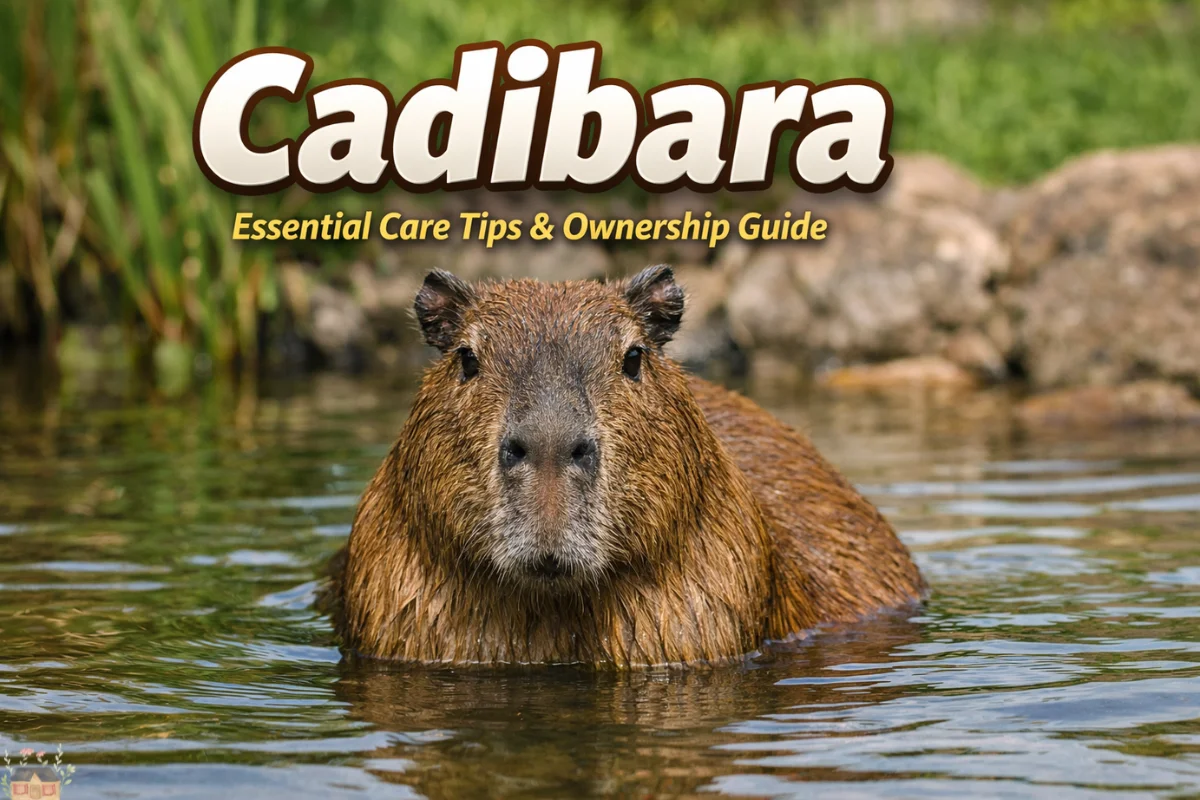
Picture this: a calm, walnut-eyed creature the size of a medium dog drifting peacefully across your backyard pond, purring softly as it nibbles on grass. If you’ve stumbled across videos of the Cadibara online, you already know why people fall hard for these South American natives. They look like giant guinea pigs blessed with the temperament of golden retrievers.
But here’s the truth: no TikTok clip will show you: bringing a Cadibara into your life is less like adopting a puppy and more like managing a small, wet, highly social ecosystem. They do not fit the traditional definition of a household pet. They are companions with very specific demands—space, water, company, and time.
If you’re genuinely considering this commitment, you need the full picture. Not the polished version you see online. Let’s walk through exactly what Cadibara care requires, why these animals are unlike any other rodent, and how to know if you’re truly ready.
What Is a Cadibara, Really? Understanding the Animal Behind the Hype
Before we dive into fencing materials and dietary ratios, it’s worth pausing to appreciate what a Cadibara actually is—and isn’t.
Native to the lush wetlands, riverbanks, and swamp edges of South America, the Cadibara is a semi-aquatic rodent and the largest of its kind on the planet. Adults typically weigh between 35 and 65 kilograms, with some individuals pushing even larger. They are closely related to guinea pigs and rock cavies, though they behave nothing like a small caged pet.
In the wild, Cadibaras live in established, hierarchical groups. They communicate through a surprising repertoire of sounds—soft purrs when content, sharp barks when alarmed, and whistles that carry across water. They spend a significant portion of their day grazing, floating, and resting in shallow water.
Here is the most important thing to absorb: a Cadibara without a group is a stressed Cadibara. Their entire evolutionary blueprint is built around community. Replicating that in a domestic setting is not optional; it is the baseline.
The Cadibara Habitat: Building a Space That Works for Both of You
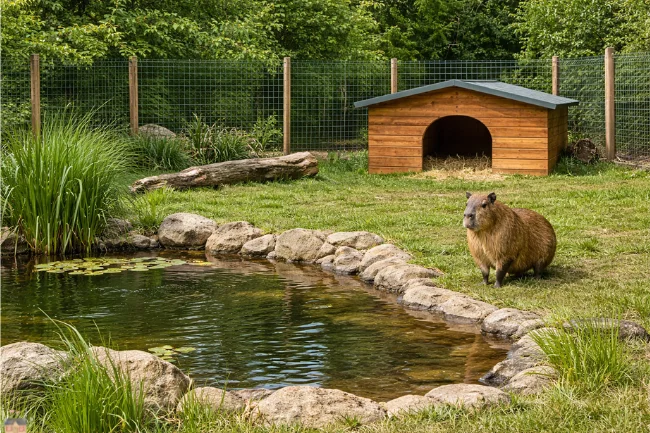
You cannot keep a Cadibara in a cage. You cannot keep one in a spare bedroom or a dog kennel. This is the first and most non-negotiable reality.
Cadibaras require outdoor living with three core components: land, water, and shelter. Every element needs thoughtful planning.
Space Requirements That Actually Matter
A modest-sized yard won’t meet their needs. Think in terms of livestock, not house pets. A pair of Cadibaras needs a securely fenced area of at least 200 to 300 square feet, though larger is always better. They are not high-energy in the way a dog is, but they do need room to graze, explore, and retreat from one another when hierarchy shifts occur.
The enclosure needs to be fully secured against predators. This means buried fencing to prevent digging, overhead netting or covered runs in areas with aerial threats, and sturdy latches. Raccoons, dogs, and birds of prey can all pose risks.
Why Water Is Not a Luxury
If your Cadibara habitat does not include a pool, pond, or large livestock tank, stop here. Water is not enrichment; it is a biological necessity.
Cadibaras use water to regulate body temperature, keep their skin healthy, and express natural behaviors. A submerged Cadibara is a relaxed Cadibara. The water should be clean, shallow enough to stand in comfortably, and large enough for full immersion. Plan on filtration and regular changes, especially during warmer months.
Shelter and Comfort
A sturdy, insulated house is essential. Cadibaras tolerate mild cold but cannot handle freezing conditions without heat. The shelter should be draft-free, raised slightly off the ground, and large enough for all residents to rest together. Use bedding that absorbs moisture well, contains no dust, and is replaced regularly.
Never overlook how intelligent they truly are. Cadibaras appreciate variety. Logs for chewing, shallow digging pits, and safe plants to browse all contribute to a mentally healthy animal.
Feeding a Cadibara: Simplicity, With One Strange Twist
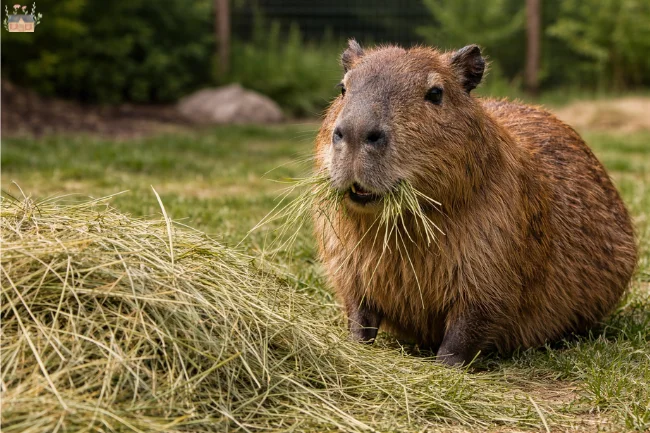
Cadibara nutrition is not complicated, but it is rigid. Their digestive systems are optimized for one thing: fibrous plant material.
The Foundation: Unlimited Hay
High-quality grass hay—Timothy, orchard, or meadow—must be available at all times. This isn’t optional; it’s the core of everything they eat. Hay supports dental health, gut motility, and satiety. A Cadibara without constant hay access will develop dental disease and obesity from less suitable foods.
Pasture grazing is excellent if your yard provides safe, pesticide-free grass. Many owners rotate grazing areas to prevent overbrowsing.
Vegetables and Pellets: The Supporting Cast
A small daily portion of fresh leafy greens—romaine, endive, cilantro—adds variety and trace nutrients. Fortified rodent pellets designed for large herbivores can supplement the diet, but only in measured amounts. Overfeeding pellets leads to selective eating, where the animal ignores hay in favor of softer, more palatable food.
Fruit and starchy vegetables like carrots or sweet potatoes should be rare treats, not staples. Cadibaras have no biological need for sugar.
The Coprophagy Factor
This is where new owners pause. Cadibaras, like rabbits and other rodents, produce two types of feces. The first is standard waste. The second, cecotropes, are nutrient-packed pellets that they eat directly from the source.
This is normal. It is essential. Do not interrupt it, clean it away immediately, or assume it signals illness. Interfering with coprophagy can lead to malnutrition even when the diet appears complete.
Social Structure: The Heart of Cadibara Wellness
You can’t hand off their need for connection to someone else. A Cadibara bonded to humans still needs the Cadibara company.
Pairs and Groups
The ideal scenario is two or more Cadibaras raised together. Same-sex pairs or small groups typically coexist peacefully, though introductions must be slow and neutral. Solitary Cadibaras frequently develop stereotypic behaviors—pacing, overgrooming, lethargy—that indicate chronic stress.
If you genuinely cannot keep multiple animals, your personal commitment must be extraordinary. We are talking hours of daily interaction, not fifteen minutes of head scratches.
Reading Cadibara Language
A content Cadibara floats with half-closed eyes. They emit a soft, steady purring sound. Alert animals stand tall, ears forward, sometimes giving short whistle-like calls. Agitated Cadibaras may chatter their teeth or lunge.
Learning these cues takes time but pays off in trust. Cadibaras remember kindness, and they remember roughness. Move slowly, speak quietly, and never chase.
Handling and Bonding
Most Cadibaras tolerate petting and scratching, especially around the neck and shoulders. Few enjoy being lifted or carried. Support the full body if lifting is necessary, and keep handling sessions brief and positive. Food can be your most effective trust-builder. A piece of leafy green offered by hand builds bridges faster than any other method.
Health Management: Prevention Over Panic
Cadibaras are generally robust, but their size and biology create specific vulnerabilities. An exotic veterinarian with rodent experience is not a luxury—they are a prerequisite.
| Health Concern | Prevention | Warning Signs |
|---|---|---|
| Dental overgrowth | Unlimited hay, chewing logs | Drooling, weight loss, selective eating |
| Obesity | Hay-based diet, limited pellets | Rounded back, lethargy, fat pads |
| Dry skin | Daily access to clean water | Flaking, scratching, rough coat |
| Parasites | Clean enclosure, fecal checks | Diarrhea, bloating, visible insects |
| Respiratory infection | Draft-free shelter, dry bedding | Nasal discharge, wheezing, eye drainage |
Annual wellness exams should include dental checks, weight monitoring, and parasite screening. Vaccination protocols vary by region; your veterinarian will advise based on local risks.
Do not skip quarantine for new animals. A thirty-day separation period protects your established group from unknown pathogens.
Common Questions From Prospective Cadibara Owners
How much does it cost to care for a Cadibara annually?
Beyond initial habitat construction, expect ongoing expenses for hay, vegetables, veterinary care, bedding, and water filtration. A reasonable estimate for two Cadibaras is $150–$300 per month, not including emergency medical costs.
Are Cadibaras legal to own where I live?
Regulations vary wildly. Some regions classify them as exotic livestock requiring permits. Some areas ban them outright. Check state, county, and municipal laws before acquiring animals, not after.
Do Cadibaras get along with dogs or cats?
Some do, but it is never guaranteed. Cadibaras are prey animals by instinct. A well-meaning dog can inadvertently cause fatal stress. Always supervise interspecies interactions, and provide Cadibaras with secure spaces where other animals cannot follow.
What is the typical lifespan of a Cadibara?
With excellent care, ten to twelve years is realistic. Certain individuals live even longer, so this is far from temporary.
Is it possible to house a Cadibara indoors?
No. Indoor environments lack adequate space, ventilation, and water access. Attempting to house a Cadibara indoors compromises welfare and typically results in health decline.
The Cadibara Commitment: A Realistic Assessment
Cadibaras aren’t the right fit for every household. They are not impulse acquisitions or novelty pets. They are demanding, expensive, and utterly dependent on their humans to reconstruct a world that mimics their wild origins.
But for the small number of people who can meet those demands—who have the land, the resources, the time, and the willingness to learn a completely different species’ language—the experience is genuinely unlike any other. Cadibaras offer quiet companionship. They do not perform or entertain on command. They simply exist, calmly and communally, and invite you to exist alongside them.
If, after reading this, you feel undeterred—if the water feature sounds like a fun project and the hay bill sounds manageable and the idea of spending a decade with a purring, swimming, grass-eating companion sounds wonderful—then you may be one of the few.
Next step: Locate an exotic veterinarian in your region who has worked with large rodents. Schedule a consultation. Bring your questions. And if they give you the green light, begin building that pond. Your future Cadibara is waiting.
Learn about Suçculent
For broader information, visit Wellbeing Makeover

Alex Carter is a writer with 10+ years of experience across tech, business, travel, health, and lifestyle. With a keen eye for trends, Alex offers expert insights into emerging technologies, business strategies, wellness, and fashion. His diverse expertise helps readers navigate modern life with practical advice and fresh perspectives.