
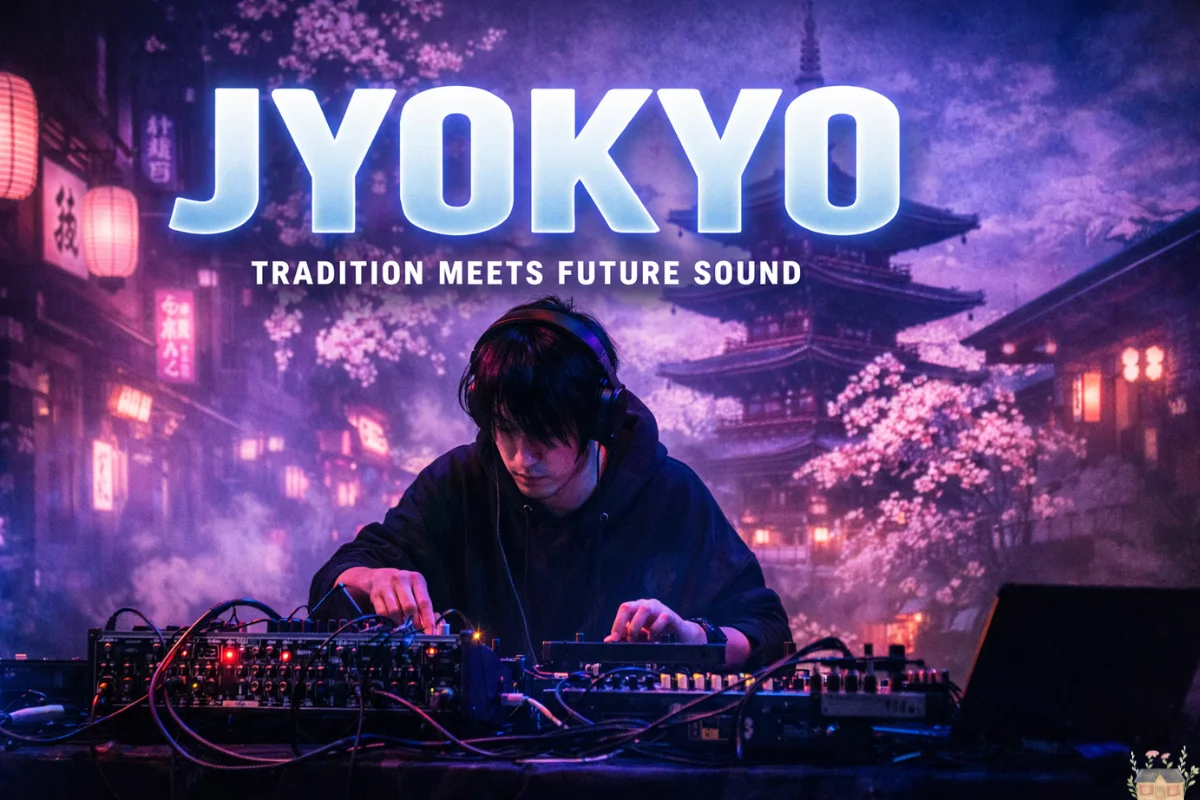
In the neon-lit labyrinth of Tokyo’s underground music scene, a quiet revolution is taking shape. Its architect is neither a classically trained composer nor a mainstream pop producer. His name is Jyokyo, and he is rapidly becoming one of the most talked-about figures in modern Japanese electronic music. By bridging the gap between centuries-old tradition and futuristic sound design, Jyokyo is not just making music—he is building a new sonic language. For those who have stumbled upon his tracks on SoundCloud or witnessed his immersive live sets, the question isn’t why he’s gaining attention, but rather how one artist manages to sound so distinctly ahead of the curve.
Who Is Jyokyo? The Voice Behind the Synthesis
Jyokyo is a Japanese electronic musician and producer known for weaving traditional Japanese musical elements with contemporary electronic production and Vocaloid technology. Emerging from Tokyo’s fiercely competitive beat-making community, he has built a reputation for crafting soundscapes that feel both intimately personal and universally accessible. Unlike many producers who strictly adhere to Western electronic music frameworks, Jyokyo pulls from a deep well of cultural heritage—integrating the melancholic pull of the shamisen, the minimalism of koto scales, and the eerie beauty of virtual vocal synthesis.
His name, once known only within niche online circles, now appears on festival lineups and international playlists. But to understand his rise, you have to go back to where it all began: a small apartment in Tokyo, a laptop, and an unstoppable curiosity.
Early Beginnings: From Bedroom Beats to Breakthrough
Long before the industry took notice, Jyokyo was navigating the raw, unpolished corners of the internet. Like many producers of his generation, he started by uploading experimental tracks to SoundCloud and YouTube. The early work was rough—glitchy, unfinished, sometimes jarring. But it carried something intangible: an emotional sincerity that technical perfection often lacks.
During his teenage years, Jyokyo immersed himself in digital audio workstations, teaching himself sound design through trial and error. He wasn’t formally trained, and that lack of rigid structure became his greatest asset. While his peers followed conventional EDM formulas, Jyokyo experimented with odd time signatures, unconventional melodies, and fragmented vocal samples.
The turning point came when he began layering traditional Japanese instrumentation beneath synthetic basslines. It wasn’t gimmicky or ornamental. He treated the shamisen and koto not as exotic flavoring, but as foundational elements of his arrangements. Listeners responded immediately. His early tracks became quiet hits within online communities, and local Tokyo artists began reaching out for collaboration.
Read More: Paul J Mauro: NYPD Inspector, Fox News Analyst
Deconstructing Jyokyo’s Signature Sound

What makes Jyokyo instantly recognizable? It is not one element, but the friction between them. His compositions often juxtapose organic and synthetic textures—bamboo flutes whisper over distorted 808s; Vocaloid voices sing ancient-sounding melodies against skittering breakbeats. There is tension in his work, but also resolution.
The Role of Vocaloid in His Workflow
Jyokyo is one of the few producers who uses Vocaloid not as a novelty, but as a legitimate storytelling instrument. Where many artists deploy vocal synthesis for novelty or commercial appeal, Jyokyo treats it as a vehicle for emotion. His Vocaloid arrangements carry vibrato, breathiness, and phrasing that mimic human vulnerability. This attention to detail separates his production from the flood of generic synth-pop flooding streaming platforms.
Traditional Japanese Textures
Equally important is his integration of traditional Japanese instrumentation. Rather than sampling generic “Asian” loops, Jyokyo works closely with session musicians who specialize in classical forms. He then processes these recordings—stretching, pitch-shifting, granulating—until they sit comfortably beside modular synthesizers and analog drum machines. The result is a sound that feels ancient and futuristic in equal measure.
Key Collaborations and Genre-Blending Projects
As Jyokyo’s reputation solidified, so did his network. He has worked with an eclectic mix of artists spanning J-pop, future bass, and experimental ambient music. Each collaboration reveals a new dimension of his artistry.
| Collaborator | Notable Work | Musical Context |
|---|---|---|
| Hatsune Miku (Virtual) | Echoes of Edo | Vocaloid-centric track blending Edo-period folk structures with modern synthwave |
| Rei Harakami (tribute) | Still Water | Ambient reinterpretation paying homage to Harakami’s minimalist piano aesthetic |
| Tokyo Chamber Ensemble | Strings of Tomorrow | Live orchestral arrangement of Jyokyo’s electronic compositions |
| Kizuna AI (Project) | Virtual Memories | Pop-leaning collaboration introducing Jyokyo to mainstream virtual idol audiences |
| Underground Tokyo Collective | Shibuya Midnight | Compilation featuring emerging electronic producers from the Tokyo circuit |
These partnerships have not only expanded Jyokyo’s sonic palette, but also introduced him to audiences far beyond the electronic bubble. His work with the Tokyo Chamber Ensemble, in particular, demonstrated that his compositions could transcend genre entirely—standing on their own in orchestral settings without losing emotional weight.
Jyokyo’s Influence on Japan’s Electronic Music Landscape
The Japanese electronic music scene has historically operated in silos. Club-focused producers rarely interact with the Vocaloid community; experimental ambient artists seldom cross into pop territories. Jyokyo is quietly dismantling those walls.
His approach has inspired a new wave of producers who no longer feel pressured to choose between “authentic” Japanese identity and global electronic trends. Young artists now experiment with taiko samples, biwa phrases, and gagaku scales—not as cultural tokens, but as natural components of contemporary production.
Moreover, Jyokyo has demonstrated that international recognition does not require abandoning one’s cultural voice. His international listeners are not searching for exoticism; they are drawn to the sincerity of his fusion. In an era where electronic music often feels homogenized, Jyokyo offers something unmistakably localized, yet universally resonant.
Live Performances: Where Sight Meets Sound
To experience Jyokyo live is to understand his artistic vision fully. His performances are sensory environments. Projections of ukiyo-e artwork shift and distort in real time, synchronized with his modular rig. Vocaloid avatars appear not as static holograms, but as evolving visual companions to his soundscapes.
Unlike high-budget virtual idol concerts, Jyokyo’s shows retain a DIY intimacy. He performs on modest stages, often surrounded by analog gear and flickering CRT monitors. There is no attempt to hide the machinery behind his music. Instead, he invites the audience into his process—cables, patches, and all.
This transparency has cultivated a fiercely loyal following. Fans describe his sets as cathartic, meditative, and unexpectedly emotional. He does not rely on drops or build-ups in the traditional EDM sense. His sets breathe, ebb, and flow like narratives.
Why Jyokyo Matters Now
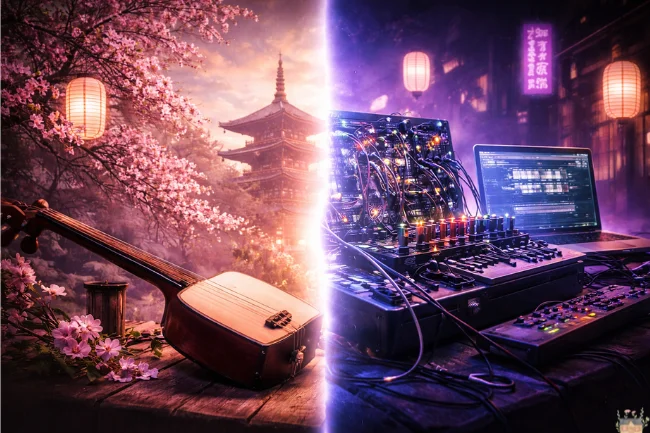
In a musical landscape saturated with algorithm-friendly production, Jyokyo represents a counter-movement. He prioritizes texture over templates, cultural specificity over generic appeal, and emotional resonance over virality. His rise suggests that listeners—particularly younger generations—are hungry for music with roots.
He also challenges the assumption that electronic music must look forward exclusively. By looking backward—reverently, not nostalgically—Jyokyo proves that innovation often lies in reinterpretation, not reinvention.
FAQs About Jyokyo
1. What genre of music does Jyokyo produce?
Jyokyo’s music is primarily electronic, but it incorporates elements of traditional Japanese music, ambient, future bass, and Vocaloid synthesis. His genre-fluid approach makes categorization difficult, which is precisely his intention.
2. Is Jyokyo signed to a major record label?
As of now, Jyokyo remains independent. He has released music through smaller Tokyo-based collectives and digital distributors, but maintains full creative control over his work.
3. Where can I listen to Jyokyo’s music?
His discography is available on major streaming platforms, including Spotify, Apple Music, and Bandcamp. Early tracks can still be found on his SoundCloud and YouTube channels.
4. Does Jyokyo perform outside of Japan?
International performances have been limited but are increasing. He has appeared at select showcases in Europe and North America, with additional dates anticipated as his global audience expands.
5. What equipment does Jyokyo use in his productions?
He is known to use Ableton Live, various modular synthesizers, and a range of analog outboard gear. For traditional instrumentation, he records live musicians and processes the audio digitally.
Conclusion: A Journey Worth Following
Jyokyo is not merely an artist to watch—he is an artist to listen to, closely and often. His music rewards patience and reveals new details with each listen. In a culture that often prioritizes the next trend over timeless craft, he is quietly building something enduring.
If you have not yet experienced his work, now is the moment. Explore his catalog, attend a live stream, or simply close your eyes and let the collision of bamboo and bass wash over you. Jyokyo is shaping the future of Japanese electronic music, one imperfect, beautiful frequency at a time.
Stream his latest release on your preferred platform and hear the fusion for yourself.
Learn about Peter Dager
For broader information, visit Wellbeing Makeover

Alex Carter is a writer with 10+ years of experience across tech, business, travel, health, and lifestyle. With a keen eye for trends, Alex offers expert insights into emerging technologies, business strategies, wellness, and fashion. His diverse expertise helps readers navigate modern life with practical advice and fresh perspectives.