

Every Sunday during football season, the same ritual plays out in thousands of households. A fan pulls up a browser, types “Meth Streams” into Google, and clicks through three redirects before a grainy feed of their team appears. They watch with one eye on the game and the other on the countdown timer threatening to close their stream.
This scene has become so common that Meth Streams has entered the vocabulary of sports fans the way Kleenex entered tissues or Xerox entered photocopying. But unlike those brand names, Meth Streams isn’t a company you can call for customer support. It isn’t a publicly listed company. It doesn’t have a legal team. In fact, it barely exists at all—at least not in any stable, reliable form.
The gap between what fans want from sports streaming and what the market provides has created a gray economy worth millions in ad revenue. Understanding Meth Streams isn’t about learning how to access illegal broadcasts. It’s about understanding why millions of reasonable people feel pushed into unreasonable solutions.
The Meth Streams Paradox: Every Fan Knows It, No One Admits It
Ask a room of sports fans if they’ve used Meth Streams and watch the body language. Shoulders tighten. Eyes shift. A few people suddenly become very interested in their phones.
That response says more than people realize. Meth Streams occupies a strange cultural position: simultaneously ubiquitous and taboo. Sports fans don’t discuss it at watch parties, yet the platform drives enough traffic to rival legitimate services on game days.
What makes this paradox possible is the nature of the service itself. Meth Streams isn’t a single website but a shifting network of domains, Reddit communities, Discord servers, and Telegram channels. When one URL gets seized, three more appear within hours. This decentralization makes the platform nearly impossible to kill and surprisingly resilient compared to traditional pirate sites.
The name itself functions as a kind of cultural shorthand. Mention Meth Streams in a sports forum, and no explanation is needed. Most people instantly understand the reference. That level of organic recognition doesn’t happen by accident. It happens because the service fills a genuine void that legitimate providers have either ignored or exacerbated.
Why Fans Choose Meth Streams Even When They Can Afford Alternatives
The standard narrative frames free streaming users as freeloaders unwilling to pay for content. This framing is comforting to rights holders but completely wrong. Research into streaming behavior reveals something far more complex.
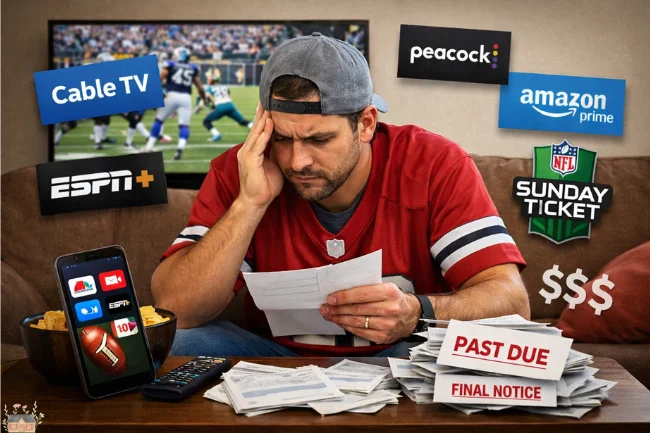
Consider the math facing an average American sports fan. Supporting a single NFL team through legitimate channels now requires multiple subscriptions. The local market broadcast, national games, Monday Night Football, Thursday Night Football, and Sunday Ticket are all live on different platforms. A fan who wants to watch their team legally might need cable, Peacock, Amazon Prime, ESPN+, and NFL Sunday Ticket simultaneously.
We aren’t describing a luxury cost. We’re describing a second utility bill.
The Real Cost of Watching Sports Legally Today.
| Service | Annual Cost | Content Included |
|---|---|---|
| Cable with sports package | $1,200+ | Local games, ESPN, FS1 |
| NFL Sunday Ticket | $479 | Out-of-market Sunday games |
| ESPN+ | $120 | Select NHL, MLB, college sports |
| Peacock Premium | $80 | Sunday Night Football, Premier League |
| Amazon Prime | $139 | Thursday Night Football |
| DAZN (boxing/MMA) | $225 | Combat sports pay-per-views |
| Total | $2,243+ | Still missing some content |
This figure exceeds $2,200 annually before accounting for playoff games, championship events, or niche sports. Compare this to the average American household’s annual entertainment budget of approximately $1,200, and the arithmetic becomes clear. The system isn’t broken because fans are cheap. It’s broken because the pricing structure assumes infinite household resources.
Meth Streams succeeds not because it offers superior technology but because it offers a single solution to a fragmentation problem that legitimate providers created and refuse to solve.
The Infrastructure of the Underground: How Meth Streams Actually Works
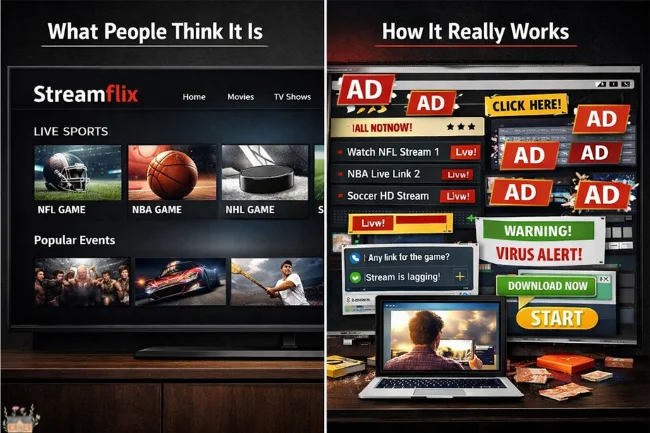
Most fans assume Meth Streams operates like a simpler version of Netflix—someone records the broadcast and uploads it to a server. This misunderstanding persists because users only see the final interface: a list of games, some links, maybe a chat window.
The actual operation resembles legitimate streaming services far more than anyone wants to admit.
- Content acquisition typically involves compromised credentials rather than camcorders in stadiums. Many feeds originate from legitimate streaming accounts whose login information has been harvested through phishing or purchased on credential markets. The stream itself is then re-encoded and redistributed through content delivery networks that often don’t realize what they’re hosting.
- The financial model relies entirely on advertising arbitrage. Meth Streams domains generate revenue through display ads, pop-unders, and redirect networks. These ads pay significantly less than legitimate sports sponsorships, but the operators have zero content acquisition costs. Every dollar of ad revenue is pure profit until the domain gets seized.
- Domain rotation follows predictable patterns. When a Meth Streams URL appears on social media, its lifespan typically ranges from 48 to 72 hours before rights holders file takedown notices. The communities that sustain the platform have evolved elaborate signaling systems to communicate new addresses without triggering automated detection.
This infrastructure doesn’t resemble amateur piracy. It mirrors the operational security of legitimate businesses operating in regulated gray markets. The sophistication suggests professional operation rather than hobbyist enthusiasm.
The Hidden Costs of Free Streams
Regular Meth Streams users develop an intuitive understanding of certain risks without always articulating them clearly. The platform costs nothing in cash but extracts payment in other currencies.
- Device compromise represents the most immediate threat. The advertising networks that monetize unauthorized streams operate with minimal quality control. Malvertising—malicious advertising—appears on these sites at rates exponentially higher than legitimate platforms. A single click on the wrong banner can install credential stealers, cryptominers, or ransomware.
- Data exposure follows inevitably from the credential harvesting business model. Many Meth Streams users eventually attempt to create accounts on legitimate sports platforms. When those users employ passwords recycled from other services—as most people do—the compromised credentials from streaming sites become keys to bank accounts, email, and social media.
- Geolocation risks vary dramatically by jurisdiction. In the United States, copyright enforcement against individual streamers remains rare but not impossible. European courts have become increasingly aggressive in compelling ISPs to identify subscribers who access unauthorized streams. The legal theory continues evolving, and yesterday’s safe behavior may become tomorrow’s statutory damage award.
These costs remain invisible during the streaming experience. No banner warns users that their device security degrades with each visited link. No pop-up calculates the cumulative probability of credential compromise over time. The platform externalizes these costs entirely onto its users.
What Legitimate Services Refuse to Learn
The sports streaming industry spends millions on anti-piracy technology and nearly nothing on understanding why piracy exists. This allocation reveals a fundamental misunderstanding of the problem.
Comparative analysis of streaming friction factors
| Factor | Legitimate Services | Meth Streams |
|---|---|---|
| Authentication steps | 3-5 (email, password, 2FA, payment) | 0-1 (direct link) |
| Geographic restrictions | Extensive blackout rules | None |
| Device limitations | Simultaneous stream caps | Unlimited |
| Content permanence | Removed when rights expire | Available until takedown |
| Payment friction | Credit card required | None |
| Commitment required | Monthly subscription | Zero |
This comparison isn’t flattering to the legitimate industry. Meth Streams succeeds because it eliminates every point of friction that legitimate providers deliberately maintain. Blackout rules don’t protect local broadcasters in today’s market—they drive fans to unauthorized streams. Authentication requirements don’t secure revenue—they introduce abandonment points. Device limits don’t encourage family plan upgrades—they push households toward unmonitored alternatives.
The legitimate industry behaves as though fans choose streaming platforms based on ethical considerations. Meth Streams proves that convenience consistently outweighs morality when the price differential exceeds a certain threshold. This isn’t cynicism. It’s consumer behavior observed across thousands of product categories for decades.
The Future Trajectory: Where Meth Streams Goes From Here
Two competing forces will determine whether platforms like Meth Streams expand or contract over the next five years.
- Consolidation pressure comes from rights holders who have finally recognized that fragmentation benefits unauthorized alternatives. The 2024-2025 season saw the first serious discussions about bundling previously competing platforms. If ESPN, Fox, and Warner Bros. Discovery can successfully integrate their streaming offerings, the legitimate value proposition improves substantially.
- Technological decentralization pushes in the opposite direction. Peer-to-peer streaming technology has matured significantly since the early days of Sopcast and Acestream. WebRTC now enables browser-based peer distribution without specialized software. If unauthorized streaming shifts toward decentralized protocols, traditional enforcement mechanisms become nearly useless.
The most likely outcome involves continued coexistence rather than resolution. Legitimate services will capture incremental market share from occasional cord-cutters while heavy consumers continue gravitating toward unauthorized alternatives. This equilibrium satisfies no one but persists because neither side can deliver a knockout blow.
Practical Guidance for the In-Between Fan

Most sports fans don’t want to pioneer the frontier of unauthorized streaming. They also don’t want to remortgage their homes to watch basketball. If you find yourself caught between these positions, certain approaches minimize both financial and security exposure.
Consider annual subscriptions during playoff windows. Many services offer significant discounts for yearly commitments that reduce per-game costs below pay-per-view rates. Calculate your actual viewing hours before rejecting subscription models.
Look into lower-cost, ad-supported options. The current streaming landscape includes surprisingly robust free tiers from services like Tubi, Pluto TV, and even some sports-adjacent platforms. These won’t carry premium live events but provide substantial non-premium content.
Evaluate the streaming plans you actively use. The average American pays for 4.7 streaming services but actively uses 2.3. Canceling unused subscriptions often frees budget for one premium sports service without increasing total entertainment spending.
Understand your ISP’s enforcement position. Some internet providers actively cooperate with rights holder enforcement. Others ignore all but the most serious complaints. Knowing where your provider falls on this spectrum helps calibrate risk tolerance.
FAQs
Is Meth Streams a single website?
No. The term functions as a category rather than a specific domain. Multiple unrelated sites operate under this branding, and the addresses change frequently.
Do Meth Streams users ever face legal consequences?
Criminal prosecution of individual viewers remains extremely rare in most jurisdictions. Civil liability is theoretically possible but rarely pursued against non-commercial users.
Why don’t sports leagues offer a single all-access pass?
Broadcast rights are sold years in advance at levels that assume fragmentation. Existing contracts prevent leagues from offering unified streaming products until those agreements expire.
Can streaming services detect when I’m using a VPN?
Many have deployed increasingly sophisticated VPN detection. Some methods rely on IP reputation databases while others analyze traffic patterns characteristic of VPN protocols.
Do ad blockers reduce the risk of unauthorized streaming sites?
Ad blockers eliminate one significant risk vector but cannot prevent credential harvesting, drive-by downloads, or DNS-based attacks. They offer some protection, but they don’t eliminate the threat.
The conversation around Meth Streams tends toward moral panic or defensive justification, both of which obscure what the platform actually represents. Meth Streams isn’t a technology company or a piracy ring. It’s a market signal transmitted at high volume through the only channel consumers have available.
When sports fans bypass legitimate services, they aren’t declaring war on content creators. They’re reporting a product-market fit problem that the industry refuses to acknowledge. Until legitimate streaming offers comparable convenience at something approaching comparable price points, the underground economy will continue expanding regardless of enforcement budgets or legal threats.
The domains will keep cycling as enforcement catches up. The ad networks will rotate. The communities will migrate to new platforms. But the underlying dynamic—fans who want to watch versus providers who want to monetize—will persist until someone finally builds the bridge between them.
Meth Streams didn’t create this gap. It just happens to be the most popular raft.

Alex Carter is a writer with 10+ years of experience across tech, business, travel, health, and lifestyle. With a keen eye for trends, Alex offers expert insights into emerging technologies, business strategies, wellness, and fashion. His diverse expertise helps readers navigate modern life with practical advice and fresh perspectives.