
In an era where media often prioritizes speed over substance, one platform is quietly reshaping how Japanese audiences connect with global narratives. NTDTVJP, the Japanese branch of NTD Television, has steadily positioned itself as more than just an alternative news source. It has become a cultural bridge—offering Japanese viewers access to stories that transcend borders while bringing international perspectives into local living rooms. But what exactly makes this platform resonate so deeply, and how is it redefining cross-cultural media in Japan?
The Rise of NTDTVJP in Japan’s Crowded Media Landscape
Japan’s media environment is dominated by long-established broadcasters and print giants. Breaking into this space requires more than just capital—it requires relevance. NTDTVJP entered the scene not by competing head-on with mainstream outlets, but by filling a gap that many had overlooked: the demand for diverse, globally conscious reporting that still respects local cultural nuances.
Viewership data suggests the strategy is working. Since its launch, the platform has seen consistent audience growth, particularly among younger demographics and professionals seeking perspectives outside the traditional NHK or commercial network frameworks. This isn’t accidental. NTDTVJP recognized early that Japanese audiences are increasingly curious about how global events intersect with their daily lives—from climate policy to human rights discussions, from traditional arts to technological ethics.
Unlike conventional foreign bureaus that simply translate international news into Japanese, NTDTVJP invests in original reporting and local partnerships. The result is content that feels both globally aware and distinctly Japanese in its presentation.
Why Japan Needs a Media Bridge
Japan is often described as a paradox: hyper-connected technologically, yet culturally insular in many ways. Language barriers, historical context, and media ownership structures have historically limited the flow of unfiltered international narratives into mainstream Japanese discourse.
NTDTVJP addresses this by functioning as a two-way conduit. It doesn’t just import global stories—it exports Japanese perspectives to international audiences through NTD’s broader network. This bidirectional approach matters because it positions Japanese voices as active participants in global conversations rather than passive consumers of foreign media.
Consider how climate change is covered. Mainstream Japanese media tends to focus on government policy or corporate initiatives. NTDTVJP, however, highlights grassroots movements, indigenous perspectives from Hokkaido, and parallels between Japan’s environmental challenges and those facing other nations. This framing helps viewers understand that local issues are rarely isolated—they are threads in a larger global tapestry.
The NTDTVJP Content Philosophy: Immersive, Not Invasive

What separates NTDTVJP from other international broadcasters is its storytelling methodology. Rather than parachuting reporters into communities for quick soundbites, the platform emphasizes immersive journalism.
Visual Storytelling That Resonates
NTDTVJP invests heavily in cinematography and narrative pacing. Their documentary-style segments often linger on details that conventional news would edit out—the texture of a craftsman’s hands, the silence of a rural morning, the hesitation in a survivor’s voice. This style recognizes the intelligence and emotional awareness of its audience. It doesn’t tell viewers what to think; it shows them what is there.
For Japanese audiences accustomed to fast-paced, information-dense broadcasts, this slower format initially felt unconventional. But it has cultivated a loyal viewership that trusts the platform’s editorial judgment precisely because it refuses to sensationalize.
Community as Co-Creator
Another distinctive element is NTDTVJP’s approach to community engagement. Rather than treating viewers as passive recipients, the platform actively solicits story ideas from local communities. Regional cultural festivals, undocumented immigrant experiences, aging rural artisans—these stories often emerge from viewers themselves.
This co-creation framework helps establish deeper credibility. When a community sees itself represented accurately and respectfully, it becomes more willing to share deeper narratives. Over time, NTDTVJP has developed a network of informal contributors across Japan who act as cultural interpreters, helping the platform navigate sensitive topics with nuance.
Giving Voice to the Unheard
One of NTDTVJP’s most significant contributions has been its consistent amplification of underrepresented communities within Japan.
The Zainichi Korean Experience
For decades, Japan’s Korean minority has navigated a complex identity—neither fully accepted as Japanese nor entirely connected to the Korean peninsula. Mainstream media rarely explores this community beyond surface-level reporting on diplomatic tensions. NTDTVJP took a different approach, producing a multi-part series following Zainichi families across three generations. Viewers heard about schoolyard discrimination, the emotional weight of using Japanese names in public, and the quiet resilience of preserving cultural traditions in a society that pressures conformity.
Disability Advocacy in Rural Japan
Another impactful segment focused on accessibility advocates in Tohoku, a region still recovering from the 2011 earthquake and tsunami. Rather than framing disability as a medical issue, NTDTVJP portrayed it as a civic design challenge. Interviews with local architects, policymakers, and disabled residents sparked conversations that extended beyond the broadcast into municipal planning meetings.
These stories don’t just inform—they catalyze. NTDTVJP has documented multiple instances where its reporting led to tangible policy discussions or community initiatives.
Amplifying Japanese Voices Globally
NTDTVJP doesn’t only bring the world to Japan; it brings Japan to the world through NTD Television’s international network.
Traditional Crafts in a Digital Age
One success story involved a Kyoto textile artisan whose family had preserved weaving techniques for over a century. Facing obsolescence, she had resigned herself to being the final generation of her craft. NTDTVJP’s profile of her work was picked up by international partners, leading to exhibitions in Milan and New York. More importantly, it attracted young apprentices—including one from Brazil of Japanese descent—who saw the craft not as antiquated, but as relevant contemporary art.
Disaster Resilience Knowledge Exchange
Japanese expertise in earthquake preparedness is globally recognized, but rarely is this knowledge contextualized for non-specialists. NTDTVJP produced a series examining how Japanese building codes, community drills, and early warning systems evolved through tragedy. The series was translated and distributed across NTD’s global network, reaching audiences in seismic zones from Chile to Indonesia. Japanese engineers and local officials participated in virtual exchanges with international counterparts—directly facilitated by connections made through the broadcast.
How NTDTVJP Stands Apart from Competitors
To understand NTDTVJP’s positioning, it helps to compare its approach with that of other international broadcasters operating in Japan.
| Feature | NTDTVJP | Traditional International Broadcasters | Mainstream Japanese Networks |
|---|---|---|---|
| Primary Content Focus | Original cross-cultural storytelling | Translated foreign news | Domestic affairs |
| Community Involvement | Co-creation with local contributors | Limited to expert interviews | Viewer mail and polls |
| Global Reach | Two-way content exchange | One-way distribution | Occasional international specials |
| Underrepresented Voices | Dedicated programming priority | Rare, event-driven | Minimal |
| Storytelling Style | Immersive, documentary pacing | Fast, headline-driven | Structured, formulaic |
| Audience Engagement | Direct story solicitation | Social media comments | Traditional ratings |
This table illustrates that NTDTVJP occupies a distinct niche. It neither mimics Japanese networks nor operates as a translation service for foreign parent companies. Its value proposition is original, locally-rooted content with global relevance.
The Road Ahead: NTDTVJP’s Expansion Vision
NTDTVJP is not resting on its early achievements. The platform has outlined several strategic initiatives aimed at deepening its impact.
Regional Bureau Expansion
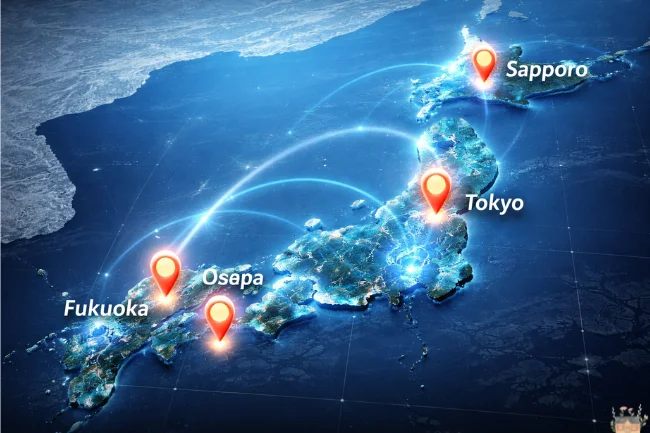
Currently concentrated in Tokyo and Osaka, NTDTVJP plans to establish permanent bureaus in Fukuoka and Sapporo within the next eighteen months. This shift toward regional expansion is deliberate. By embedding reporters in distinct cultural regions, the platform hopes to capture stories that Tokyo-centric media consistently miss—from Okinawan base politics to Hokkaido’s indigenous Ainu cultural revitalization.
Youth-Facing Digital Products
Recognizing that younger audiences consume media differently, NTDTVJP is developing a mobile-first content vertical. Short-form documentaries optimized for vertical viewing, interactive timelines for complex geopolitical stories, and podcast-style audio interviews are all in various stages of production. The goal isn’t to abandon long-form storytelling, but to meet audiences where they already spend their attention.
Collaborative Investigative Journalism
NTDTVJP is also building partnerships with independent media organizations across Asia. These collaborations focus on transnational issues—supply chain labor conditions, environmental degradation, and historical memory—that no single national outlet can adequately cover alone. By pooling resources and sharing editorial control, NTDTVJP aims to produce investigative work that holds power accountable across borders.
Challenges and Credibility
No discussion of NTDTVJP would be complete without acknowledging the broader context of NTD Television’s positioning. The network has faced questions regarding its affiliations and editorial independence. However, NTDTVJP’s Japan operations maintain distinct editorial processes tailored to local journalistic standards and audience expectations.
What matters for Japanese viewers is consistency. Over years of operation, NTDTVJP has built credibility through transparent sourcing, willingness to correct errors, and demonstrated commitment to community stories that carry no obvious ideological agenda. Trust, in media, is accumulated through repeated interactions—and NTDTVJP has steadily deposited into that account.
FAQs
1. Is NTDTVJP available on traditional television or only online?
NTDTVJP broadcasts through multiple channels, including satellite television and various digital streaming platforms. Specific availability depends on your location and service provider. Their website provides detailed access instructions for different regions of Japan.
2. Does NTDTVJP produce content exclusively in Japanese?
While the primary broadcast is in Japanese, NTDTVJP frequently collaborates with NTD’s multilingual network. Select stories are translated into English, Mandarin, and other languages for international distribution. Some original content features subtitles or dubbed versions, depending on the production.
3. How does NTDTVJP select which community stories to cover?
Story selection involves a combination of editorial research, pitches from freelance contributors, and direct suggestions from viewers. NTDTVJP maintains a publicly listed submission process for community story ideas, with emphasis on topics that have received minimal mainstream media attention.
4. Can international viewers outside Japan access NTDTVJP content?
Yes, much of NTDTVJP’s content is available through NTD Television’s global platforms. However, some Japan-specific programming may be geo-restricted due to licensing or distribution agreements. Their international website offers a substantial archive of translated features.
5. Does NTDTVJP offer internship or training opportunities for aspiring journalists?
NTDTVJP periodically conducts professional development programs in partnership with journalism organizations. These are announced through their official channels. The platform also accepts unsolicited applications from experienced reporters specializing in cross-cultural or community journalism.
Conclusion
NTDTVJP represents something increasingly rare in contemporary media: a platform that prioritizes understanding over outrage, depth over velocity, and community over clicks. By bridging Japan’s rich cultural specificity with universal human narratives, it has carved out territory that no other broadcaster currently occupies.
For viewers exhausted by the relentless churn of breaking news alerts and algorithmic recommendations, NTDTVJP offers something simpler—a chance to see the world, and themselves, more clearly.
If you haven’t yet explored their programming, start with a story outside your usual interests. Watch a segment about an Okinawan textile artist, or a documentary on Japanese-Brazilian identity, or an interview with a Hokkaido conservationist. See if it changes how you understand not just Japan, but the connections that bind us all.
Walk across and broaden your perspective.
For broader information, visit Wellbeing Makeover

Alex Carter is a writer with 10+ years of experience across tech, business, travel, health, and lifestyle. With a keen eye for trends, Alex offers expert insights into emerging technologies, business strategies, wellness, and fashion. His diverse expertise helps readers navigate modern life with practical advice and fresh perspectives.