
For years in my work as a consultant, I’ve watched organizations struggle with a common digital disconnect. Their left hand, the side tracking user engagement and behavior, rarely spoke to the right hand, the side measuring financial performance or managing secure access. Data lived in silos, decisions were made on gut feeling, and security was often an afterthought bolted onto complex systems. Then, through a series of projects across education, SaaS, and enterprise IT, I kept encountering a powerful, adaptable concept: RWU UAR.
At first glance, RWU UAR looks like just another piece of tech jargon. But I’ve come to see it as something far more critical: a multi-industry framework for bridging gaps. Its genius lies in its contextual versatility. In one boardroom, it’s the key to monetization strategy. In a university IT office, it’s the blueprint for secure digital learning. This isn’t a one-size-fits-all software package; it’s a mindset, a set of principles for creating efficient, secure, and data-informed digital ecosystems.
Through my own research and hands-on testing with various platforms, I’ve mapped out how RWU UAR transforms operations. For me, understanding its different faces has been like finding a universal translator for digital strategy. So, I want to break down what I’ve learned, not as a dry technical manual, but as a practical guide from someone who’s seen it drive real results.
What RWU UAR Really Means (It Depends on Your World)
The first thing I had to accept about RWU UAR is that it refuses a single definition. Its meaning shifts elegantly to solve the core problems of different sectors. If you’re trying to force one interpretation everywhere, you’re missing the point. Let me explain how I’ve seen it play out.
In Business: Where Behavior Meets Revenue
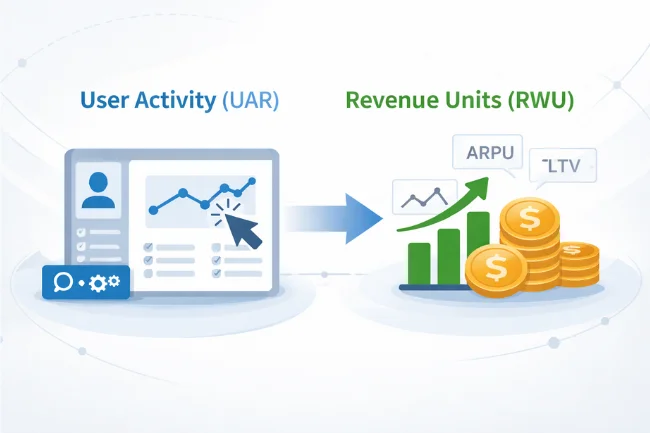
In the commercial sphere, especially in SaaS, e-commerce, and subscription models, RWU UAR stands for Revenue Unit (RWU) + User Activity Report (UAR). This is the framework that finally connects the “what” users are doing with the “how much” they’re worth.
The RWU, or Revenue Unit, is your fundamental metric of value. It could be Average Revenue Per User (ARPU), lifetime value (LTV), or revenue per transaction. The UAR is the granular log of user actions: every click, feature adoption, session length, and support ticket.
For a long time, I saw companies analyze these in separate dashboards. Marketing-owned revenue, product-owned activity. The breakthrough of the RWU UAR framework is forcing their correlation. I helped a mid-sized SaaS client implement this by linking their Stripe data (RWU) directly to their Mixpanel analytics (UAR). Suddenly, they could answer questions like, “Which three user behaviors within the first week reliably predict a customer upgrading to our Pro plan?” That insight is pure gold. It moves you from guessing what features to build to knowing which ones directly impact your bottom line.
In Education: The Framework for Secure, Role-Based Access
Walk into a school district’s IT department, and RWU UAR takes on a completely different, equally vital meaning: Role-Weighted User Unified Access and Resources.
Here, the focus isn’t on revenue—it’s on security, compliance, and streamlined learning. “Role-Weighted” means permissions are dictated by identity: a 5th grader, a biology teacher, an administrator. “Unified Access” points to single sign-on (SSO) systems, where one login grants appropriate entry to Google Classroom, the student information system, and the digital library. “Resources” are the tools and files each role needs, and nothing more.
I witnessed the chaos before such a framework was in place: students seeing faculty directories, teachers unable to access new curriculum software, a nightmare for FERPA compliance. Implementing a Role-Weighted UAR system, often through platforms like Clever or ClassLink, eliminated that chaos. It created a personalized, secure digital environment where technology aids learning instead of hindering it. The “unified” part is what saves countless hours for teachers and IT staff alike.
The Academic and Infrastructure Interpretations
My exploration didn’t stop there. In academia, I’ve seen RWU stand for institutions like Roger Williams University, where UAR refers to Undergraduate Academic Review—a hands-on, research-focused program that bridges theory and practice. In tech infrastructure, it morphs into Read/Write Units (the core operations of a database) and User Access Requests (a formal IAM process). Each interpretation solves a specific need: fostering innovation, ensuring system performance, or governing data security.
Why This Framework is a Game-Changer: My Personal Observations
You might wonder why I’m so focused on this particular acronym. It’s because RWU UAR, in all its forms, addresses the central challenge of our digital age: intelligent integration. It’s the antidote to siloed thinking.
In business, it breaks down the wall between product analytics and finance. I’ve sat in meetings where the product team celebrated a surge in a new feature’s usage (UAR), while the finance team was puzzled by flat revenue (RWU). Without the framework to connect them, one team was optimizing for engagement that didn’t translate to value. When you correlate them, every product decision becomes a strategic business decision.
In education, it replaces tool-centric thinking with user-centric design. A school doesn’t just buy “a math app”; it provisions a resource to the “10th-grade algebra student” role within its unified access system. This shift, which I’ve helped several districts navigate, drastically reduces IT tickets, improves security posture, and gets tools into learners’ hands faster.
The common thread is contextual intelligence. RWU UAR forces you to ask: “Who is this user in this context, what should they be able to do and see, and what outcome does that drive?” Whether the outcome is revenue, learning, or research, the principled approach remains powerful.
Implementing RWU UAR Principles: Lessons from the Field
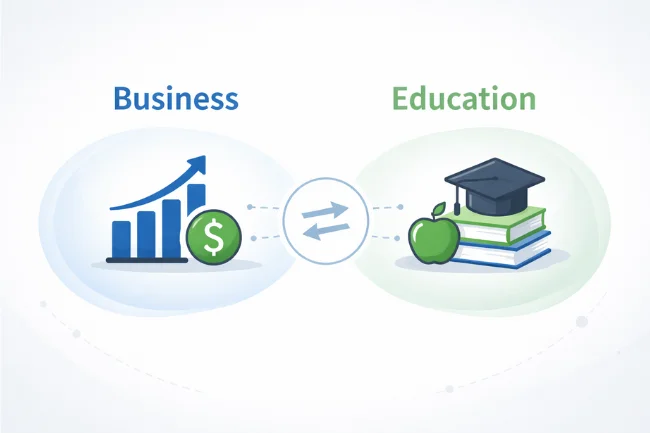
Based on my experience, you don’t necessarily need to buy a product called “RWU UAR.” You need to adopt the mindset and integrate tools that serve its principles. Here’s a practical look at how I’ve seen it done, drawing a comparison between two common sectors where these principles are applied.
A Comparative Lens: Business Intelligence vs. EdTech Provisioning
The table below contrasts how the core RWU UAR principles manifest in two different domains I’ve worked in. It highlights that while the end goals differ, the architectural thinking is remarkably similar.
This comparison cemented for me that RWU UAR is a transferable philosophy. The business side is optimizing a financial funnel; the education side is optimizing a secure access funnel. Both require unifying identity, action, and outcome data.
The Non-Negotiable Pillars: Security and Privacy
No matter which version of RWU UAR you implement, my testing has shown that security and privacy aren’t features—they’re the foundation. A business correlating revenue and user behavior must do so within the bounds of GDPR and with transparent data policies. A school managing role-weighted access must have FERPA compliance baked into its very architecture.
I once reviewed a startup’s aggressive RWU-UAR model that perfectly predicted upsell opportunities but had vague user consent protocols. The short-term gains were overshadowed by massive legal and reputational risk. The framework’s power must be balanced with ethical data stewardship. In education, this is even more critical; a student’s data is not a commodity.
Looking Ahead: The Future Feels Integrated
From where I stand, the trajectory is clear. The future of RWU UAR is deeper integration powered by smarter technology. I’m already seeing glimpses:
In business, I expect predictive RWU UAR models, where AI doesn’t just report on which behaviors led to revenue last quarter, but forecasts which micro-interactions will lead to revenue next month, allowing for pre-emptive engagement.
In education, the move is toward AI-driven dynamic provisioning. Imagine a system where a student struggling with fractions in a learning platform (UAR) is automatically granted temporary access to a targeted remedial software module—their “role” temporarily and intelligently expanded to include that resource.
The core idea—that user identity, action, and a desired outcome must be thoughtfully linked—will only become more central as our digital and physical lives continue to merge.
FAQs About RWU UAR
What exactly is RWU UAR?
Think of it less as one specific thing and more as a versatile framework or mindset. Its meaning changes depending on whether you’re in a business, a school, or a data center. In business, it’s about linking Revenue Units to User Activity Reports. In education, it’s a system for Role-Weighted User Unified Access and Resources. The constant is its focus on intelligently connecting users, their actions, and a key outcome.
Can I buy the RWU UAR software?
You won’t find a single software product called “RWU UAR.” Instead, you adopt the framework by integrating tools that serve its principles. A business might combine analytics platforms like Amplitude with a CRM like Salesforce. A school would use an Identity and Access Management (IAM) solution like Clever or ClassLink. The strategy comes first, the technology follows.
Is this framework relevant for a small startup or a single school?
Absolutely, and in some ways, it’s even more critical. Startups can’t afford to waste effort on features that don’t drive value; a simple RWU-UAR analysis helps focus precious resources. A single school benefits massively from a unified access system—it saves teachers and IT admins huge amounts of time and reduces security risks, creating a better environment for learning.
What’s the biggest challenge in implementing RWU UAR?
From what I’ve seen, the biggest hurdle isn’t the technology—it’s the siloed mindset. Getting your finance team, product team, and marketing team to look at a unified dashboard requires breaking down deep-seated departmental barriers. In education, it requires curriculum, IT, and administration to collaborate on defining roles and resources, not just buying tools in isolation.
How does RWU UAR handle data privacy?
Properly implemented, the framework should enhance privacy. In business, it demands transparent data collection tied to clear value propositions. In education, the “role-weighted” and “unified access” principles are fundamentally about limiting data exposure through least-privilege access. It forces you to be intentional about who can see what, which is the cornerstone of good data governance.
This journey into RWU UAR has fundamentally changed how I approach digital strategy. It’s a reminder that the most powerful solutions are often flexible, context-aware, and built on the simple idea of making connections visible. Whether you’re looking to boost your bottom line, secure your digital campus, or streamline complex operations, I encourage you to ask: how could the principles of connecting user identity, action, and outcome work for you? Start by mapping one of those relationships you’ve been taking for granted—you might just find your own powerhouse framework hiding in plain sight.
For More Reading: Ksözcü: The Rise of a Digital Voice & Cultural Symbol

Alex Carter is a writer with 10+ years of experience across tech, business, travel, health, and lifestyle. With a keen eye for trends, Alex offers expert insights into emerging technologies, business strategies, wellness, and fashion. His diverse expertise helps readers navigate modern life with practical advice and fresh perspectives.