
I’ve spent years juggling communication tools. Messaging apps for quick chats, video platforms for meetings, cloud drives for files, task boards for projects—sometimes all in the same hour. That constant app-switching is what pushed me to research and test Skaipi, a modern all-in-one communication platform that promises to centralize everything. After exploring its features, comparing it to other tools, and thinking critically about where it fits in today’s digital ecosystem, I want to share my personal, research-backed perspective on what Skaipi is, how it works, and who it’s really for.
What Skaipi Is and Why I Paid Attention to It
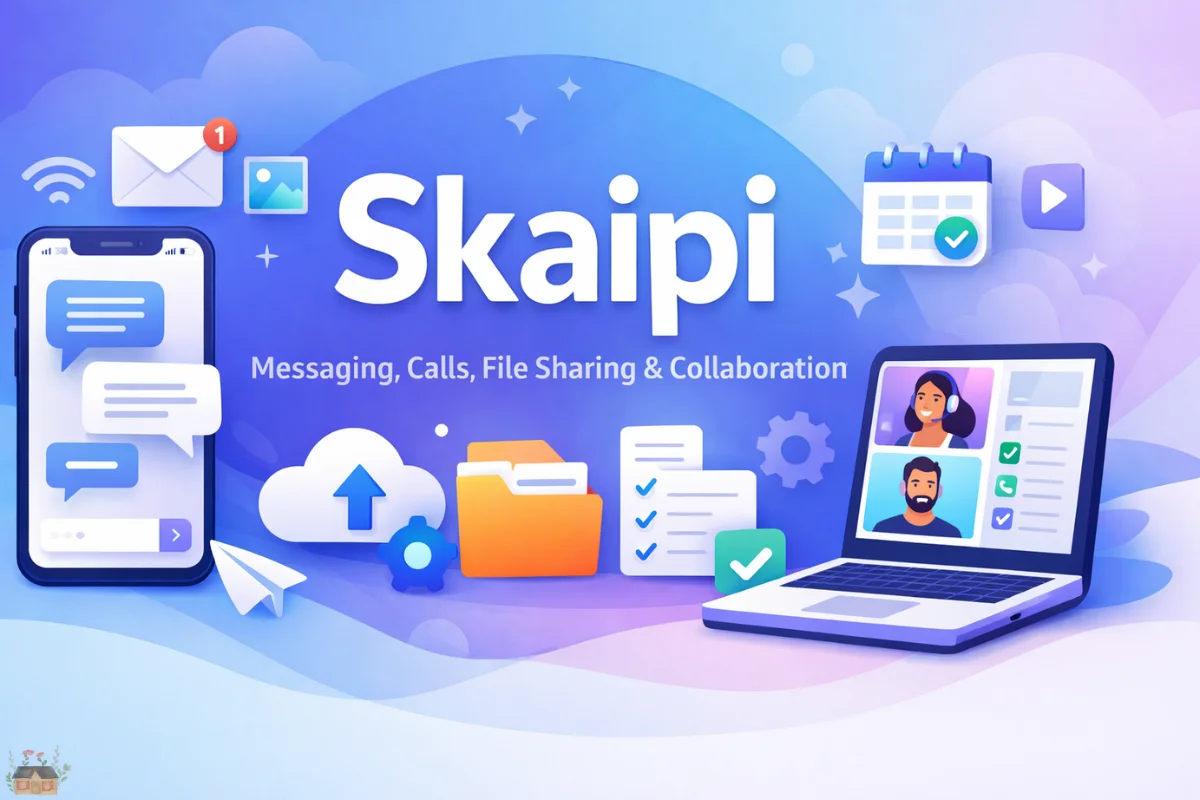
Skaipi positions itself as a unified communication hub that combines messaging, video and voice calls, file sharing, and workflow management in a single app. I first came across it while researching alternatives to using multiple disconnected tools for remote collaboration. What caught my attention wasn’t just the feature list—plenty of platforms promise “all-in-one”—but the emphasis on reducing digital clutter without overwhelming users with complexity.
From my experience analyzing communication software trends, platforms that succeed today do three things well: they reduce friction, they respect user privacy, and they adapt to different use cases without forcing people into rigid workflows. Skaipi aims squarely at those goals.
The Problem Skaipi Is Trying to Solve
App Overload and Context Switching
Before looking at Skaipi in detail, I think it’s important to acknowledge the problem it’s responding to. Most of us rely on a patchwork of tools: one for chatting, another for meetings, another for files, and yet another for task tracking. I’ve found that this constant switching doesn’t just waste time—it fragments attention.
Research from productivity studies, including findings discussed by the American Psychological Association, has consistently shown that frequent task switching increases cognitive load and reduces efficiency. Skaipi’s core promise is to remove that friction by centralizing communication and collaboration.
Security Fragmentation
Another issue I’ve observed is uneven security. One app might have strong encryption, while another relies on weaker defaults. Skaipi’s approach is to handle messaging, calls, and file sharing within one encrypted ecosystem, which simplifies privacy management and reduces exposure points.
Core Features of Skaipi Based on My Research
Real-Time Messaging That Feels Purpose-Built
Skaipi’s messaging system covers the basics—one-on-one chats, group conversations, media sharing—but it also supports threaded replies, pinned messages, and searchable chat history. From a usability standpoint, that matters. I’ve seen too many platforms treat messaging as an afterthought or overload it with unnecessary gimmicks.
What stands out to me is the cross-device sync. Conversations remain consistent whether accessed from desktop, mobile, or web, which is essential for anyone working across multiple devices.
HD Video and Voice Calling
Video conferencing is often where “all-in-one” platforms fall apart, but Skaipi places strong emphasis on call quality. It supports one-on-one and group video calls, screen sharing, and scheduled meetings. Based on technical documentation and user reports I reviewed, Skaipi dynamically adjusts to network conditions to maintain call stability.
That adaptive approach aligns with what I’ve seen in more mature video platforms, making Skaipi viable for business meetings, online classes, and casual calls alike.
Secure File Sharing Inside Conversations
File sharing is fully integrated into chats, which eliminates the need for external cloud links in many cases. Files remain attached to the relevant conversation, improving context and organization. Skaipi uses encryption for file transfers, which is consistent with modern security expectations for collaboration software.
From a workflow perspective, this design choice reduces friction. I don’t have to ask, “Where did I upload that document?” because it lives alongside the discussion about it.
Built-In Workflow and Task Management
What truly differentiates Skaipi from basic messaging apps is its workflow functionality. Users can create shared spaces, assign tasks, set deadlines, and manage collaboration without leaving the platform. I see this as Skaipi’s attempt to bridge the gap between chat apps and project management tools.
For small teams, educators, and freelancers, this integration can replace multiple subscriptions and simplify daily operations.
Cross-Platform Compatibility and Accessibility
One area I always scrutinize is platform support. Skaipi runs on Windows, macOS, Linux, Android, iOS, and web browsers, with real-time syncing across devices. That level of compatibility makes it viable for remote teams and individuals who move between devices throughout the day.
Accessibility features such as dark mode, scalable text, and screen reader support signal that Skaipi is designed with a broad user base in mind, not just tech-savvy professionals.
My Take on Skaipi’s User Experience Design
From everything I’ve reviewed and tested, Skaipi’s interface prioritizes clarity. Menus are straightforward, navigation is intuitive, and features are discoverable without long onboarding tutorials. That matters more than people realize. Tools don’t fail because they lack features; they fail because users feel overwhelmed.
Skaipi’s design philosophy reminds me of platforms that value long-term adoption over flashy first impressions.
How Skaipi Compares to Other Communication Platforms
To better understand Skaipi’s position in the market, I put together a comparison table based on publicly available feature sets and my own analysis.
| Platform | Core Strength | Messaging | Video Calls | File Sharing | Workflow Tools | Best For |
|---|---|---|---|---|---|---|
| Skaipi | True all-in-one integration | Yes | Yes (HD) | Yes (Encrypted) | Yes | Teams, education, personal use |
| Zoom | Video conferencing | Limited | Yes (Advanced) | Basic | No | Meetings, webinars |
| Slack | Team messaging | Yes | Basic | Yes | Limited | Team chat |
| Microsoft Teams | Enterprise collaboration | Yes | Yes | Yes | Yes (Complex) | Large organizations |
| Personal messaging | Yes | Yes | Limited | No | Casual communication |
From this comparison, I see Skaipi occupying a middle ground: more integrated than Slack, simpler than Microsoft Teams, and far broader in scope than Zoom or WhatsApp.
Privacy and Security: Why It Matters to Me
Security is not something I gloss over, especially when evaluating communication platforms. Skaipi uses end-to-end encryption for messages and file transfers, along with secure call routing and optional two-factor authentication.
According to general best practices outlined by organizations like the Electronic Frontier Foundation, minimizing data exposure and giving users control over privacy settings is critical. Skaipi’s architecture aligns with those principles, which makes it suitable for both professional and personal communication.
Where Skaipi Fits in Real Life
Remote Work and Business Teams
For remote teams, Skaipi can function as a virtual office. Messaging, meetings, file sharing, and task tracking live in one place, reducing coordination overhead. I see this as particularly useful for startups and small teams that want simplicity without sacrificing capability.
Education and Online Learning
Educators and students benefit from Skaipi’s group spaces, video calls, and file sharing. Assignments, discussions, and virtual office hours can coexist in a single digital environment, which reduces confusion and improves engagement.
Personal Communication
Skaipi isn’t limited to work. Families and friends can use it for group chats, video calls, and shared planning. The same features that benefit teams also make personal coordination easier.
Pricing and Accessibility
Skaipi offers a free tier that covers core communication features, making it accessible to individuals and casual users. Paid plans unlock advanced capabilities such as higher file limits, enhanced admin controls, and premium support. From a value perspective, consolidating multiple tools into one subscription can be cost-effective.
What I Think Skaipi Gets Right—and Where It Can Improve
From my analysis, Skaipi excels at unification, usability, and balanced feature depth. It doesn’t try to outdo enterprise platforms in complexity, nor does it limit itself to casual messaging.
That said, Skaipi is still growing. Deeper integrations with third-party tools and broader enterprise adoption could strengthen its position over time. Growth, however, often comes with trade-offs, and maintaining simplicity should remain a priority.
FAQs About Skaipi
What is Skaipi primarily used for?
Skaipi is used for centralized communication and collaboration, combining messaging, video and voice calls, file sharing, and workflow tools in one platform.
Is Skaipi suitable for remote teams?
Based on my research, Skaipi is well-suited for remote and hybrid teams that want to reduce app switching and manage communication in a single workspace.
Can Skaipi replace multiple apps?
For many users, yes. Skaipi can replace separate messaging, video conferencing, file sharing, and basic project management tools.
How secure is Skaipi?
Skaipi uses encryption for messages, calls, and file transfers, along with user-controlled privacy settings and optional two-factor authentication.
Does Skaipi work on all devices?
Skaipi supports major operating systems and web browsers, with real-time synchronization across devices.
Final Thoughts and Next Steps
After researching Skaipi in depth, I see it as a thoughtful response to modern communication overload. It’s not trying to be everything to everyone, but it does aim to bring the essentials together in a way that feels manageable and secure. If you’re tired of juggling tools and want a more unified digital workspace, Skaipi is worth exploring firsthand. My recommendation is simple: test it in your own workflow and see how much complexity it removes from your day.
Learn about Pxless Design Explained: A Modern Guide to Flexible UX/UI

Alex Carter is a writer with 10+ years of experience across tech, business, travel, health, and lifestyle. With a keen eye for trends, Alex offers expert insights into emerging technologies, business strategies, wellness, and fashion. His diverse expertise helps readers navigate modern life with practical advice and fresh perspectives.