
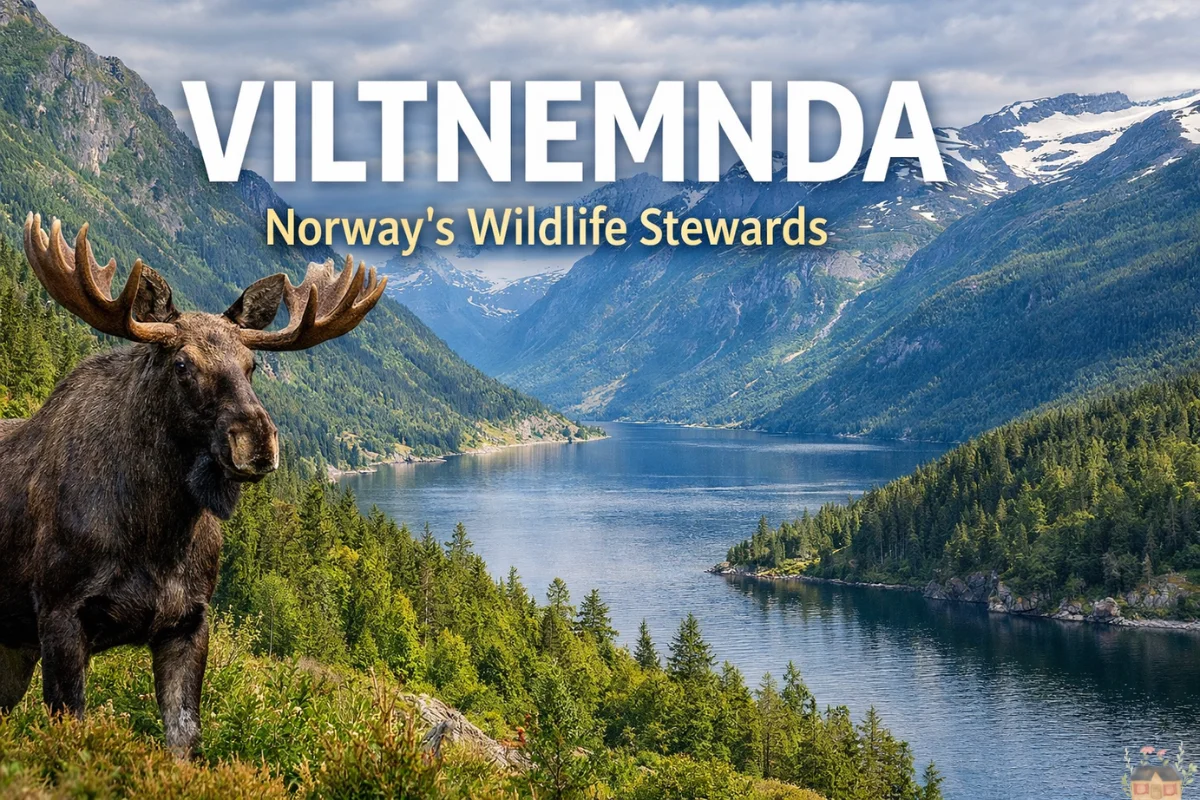
Norway’s landscapes read like a poet’s dream—deep fjords carved by ancient ice, dense boreal forests, and mountain plateaus where reindeer roam. But behind this postcard beauty lies a quiet, persistent force ensuring it stays that way. That force is the Viltnemnda. For over a century, this wildlife management body has worked largely outside the international spotlight, yet its influence touches every corner of Norwegian nature. From setting hunting quotas in remote valleys to rescuing an injured moose calf on the outskirts of Oslo, the Viltnemnda operates as the invisible hand guiding Norway’s relationship with its wild inhabitants.
This article pulls back the curtain on who they are, how they evolved, and why their work matters far beyond Scandinavia’s borders.
What Is the Viltnemnda? Understanding Norway’s Wildlife Stewards
The term Viltnemnda translates roughly to “Wildlife Committee,” but that clinical name belies a deeply rooted cultural institution. At its core, the Viltnemnda is a decentralized network of local boards operating across Norway’s counties. Each board consists of members with diverse expertise—biologists, hunters, landowners, and conservationists—who volunteer or serve part-time. Their mandate: to manage wildlife sustainably while balancing ecological integrity with human interests.
Unlike centralized agencies in many countries, Norway’s system places significant authority at the local level. This isn’t red tape without purpose. It reflects a fundamental belief that those who live alongside wildlife understand it best.
The Viltnemnda’s legal foundation rests on the Wildlife Act, which outlines the state’s responsibility to maintain viable populations of all native species. But laws alone don’t save species. People do. And that’s where the Viltnemnda transitions from administrative body to community pillar.
From Hunting Clubs to Ecological Guardians: A Century of Evolution
The Early Years: Managing the Harvest
At the turn of the 20th century, Norway faced a crisis familiar across industrializing Europe. Key game animals were experiencing sharp declines. Hunting, once a subsistence activity, had become an unregulated sport. The precursor to today’s Viltnemnda emerged in the 1920s primarily as a hunting oversight mechanism. Early committees focused almost exclusively on bag limits and hunting seasons. Their mandate was limited, and their outlook focused mainly on practical use.
Post-War Awakening: Science Enters the Picture
The 1950s and 60s brought new thinking. Ecologists began publishing data showing that managing huntable species in isolation ignored the interconnectedness of ecosystems. The Viltnemnda responded. Slowly at first, then deliberately, they incorporated population biology and habitat science into their decisions. This period marked the shift from gamekeeping to wildlife management.
Modern Era: Climate, Coexistence, and Complexity
Today’s Viltnemnda bears little resemblance to its early 20th-century ancestor. Climate disruption alters migration patterns. Growing cities break natural habitats into smaller pieces. Invasive species arrive on trade winds and ship hulls. The modern committee must be part biologist, part diplomat, and part educator. Their evolution mirrors Norway’s own journey—from a nation harvesting nature to one safeguarding it.
Key Responsibilities: What the Viltnemnda Actually Does
Wildlife Monitoring and Population Assessment
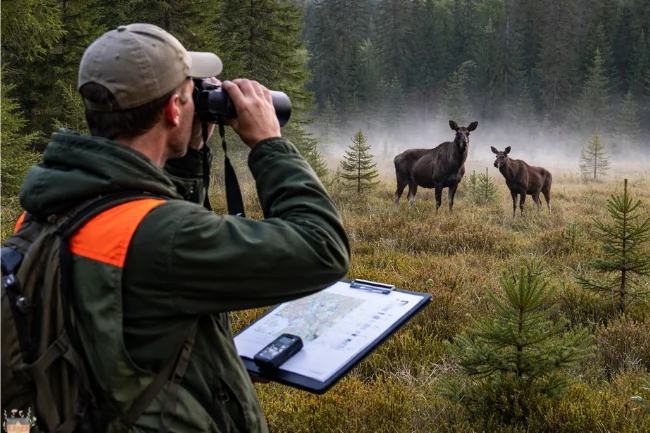
Without data, stewardship becomes guesswork. Each year, local Viltnemnda boards coordinate extensive wildlife surveys. Volunteers, many of them hunters, record sightings. Researchers conduct aerial counts of deer and moose. DNA sampling from tracks and droppings helps estimate population density.
This data doesn’t sit unused. It drives decisions. When moose numbers in a region exceed the forest’s carrying capacity, the Viltnemnda adjusts quotas accordingly. When wolverine populations show decline, protective measures follow.
Setting and Enforcing Sustainable Hunting Quotas
Hunting in Norway is a privilege, not a right. The Viltnemnda determines how many animals—and which individuals—may be harvested each season. These quotas are anything but arbitrary. Committees analyze age structures, reproductive rates, and winter survival data. They consider forage availability and predation pressure.
Crucially, the Viltnemnda distinguishes between species. A surplus of red deer might justify increased harvest. A struggling arctic fox population triggers moratoriums. This precision is what separates sustainable use from exploitation.
Responding to Injured and Distressed Wildlife
Norwegians encounter wildlife daily. At times, these interactions have unfortunate outcomes. A reindeer tangled in fencing. A young eagle was stunned by a power line. An orphaned bear cub wandering the village outskirts.
The Viltnemnda operates a coordinated emergency response system. Trained personnel assess whether the intervention is appropriate. Not every injured animal can—or should—be saved. But when rehabilitation is viable, the Viltnemnda facilitates transport to licensed wildlife centers. They also handle the less visible work: advising police on dangerous animal incidents, managing carcass removal to prevent disease spread, and documenting causes of mortality.
Mediating Human-Wildlife Conflict
Norway’s large carnivores—wolf, bear, lynx, and wolverine—inspire both awe and anxiety. For sheep farmers, a lynx kill represents a lost livelihood. For conservationists, each predator is a sign of ecological health.
The Viltnemnda occupies the uncomfortable middle ground. They investigate predation claims, verify livestock losses, and administer compensation programs. They also authorize lethal removal in extreme cases where non-lethal deterrents have failed. These decisions are never popular with all parties. But the alternative—unilateral action by frustrated stakeholders—would unravel decades of conservation progress.
Public Education and Community Outreach
Perhaps the Viltnemnda’s most understated role is educational. Boards host local meetings to explain upcoming regulations. They visit schools to demystify predator behavior. They publish accessible summaries of population data.
This outreach serves a strategic purpose: compliance improves when people understand the rationale behind rules. It also fosters the next generation of conservationists.
Collaboration: The Viltnemnda’s Partnership Network
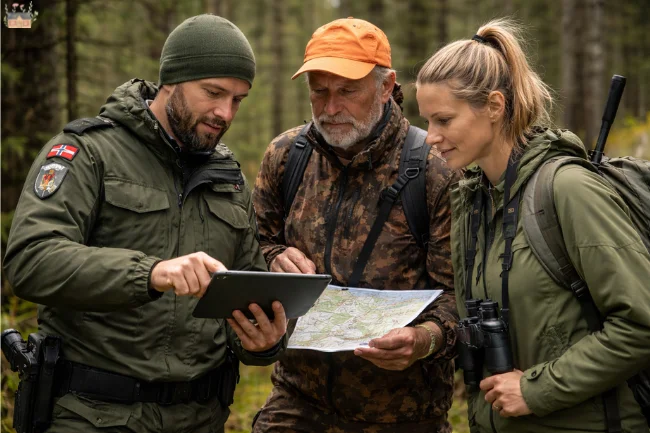
Wildlife management is a team sport. The Viltnemnda works alongside the Norwegian Environment Agency, which provides national policy direction. Universities contribute fresh research. Landowner associations offer ground-level intelligence.
But the most vital partnership is with hunters themselves. Norway’s hunting community acts as the Viltnemnda’s eyes in the field. Their observation reports feed directly into population models. Their ethical adherence to quotas determines whether sustainable harvest is achievable.
This cooperative model stands in contrast to the adversarial relationships common elsewhere. It was forged through long-term commitment. The Viltnemnda spent decades building trust through transparency and consistent follow-through.
Success Stories: When the System Works
The Moose Recovery, Southern Norway
In the 1980s, moose populations in parts of southern Norway had declined to concerning levels. Habitat loss and uncoordinated hunting were primary drivers. The Viltnemnda responded not with blanket bans, but with precision. They reduced cow harvests to protect breeding females. They adjusted season timing to avoid disrupting mating. Within fifteen years, populations rebounded. Today, the region supports a healthy, genetically diverse moose population and a sustainable hunting tradition.
White-Tailed Eagle Resurgence
Once persecuted to the brink of extinction, the white-tailed eagle now soars along Norway’s coast—a recovery owed partly to Viltnemnda-led nest protection programs. Local committees identified critical nesting sites, restricted human activity during breeding months, and collaborated with landowners to preserve shoreline habitat.
Invasive Plant Control in Wetland Reserves
Less charismatic, equally important: the Viltnemnda has spearheaded the removal of invasive plant species threatening native waterfowl habitats. In the Østfold region, volunteer teams systematically uproot Sitka spruce seedlings before they colonize open marsh. It’s quiet work that rarely earns attention. It’s also effective.
Challenges on the Horizon
Climate Change: The Great Disrupter
Warmer winters mean milder conditions for some species, stress for others. Roe deer, adapted to historical snow depths, now face longer parasite exposure. Migratory birds arrive earlier, sometimes before the insect hatch peak. The Viltnemnda lacks authority over emissions policy. Their adaptation strategy relies on flexible management—adjusting quotas responsively, protecting climate refugia, and maintaining genetic diversity to bolster resilience.
Shifting Public Sentiment
Norwegian society, like much of Europe, is increasingly urbanized. Younger generations often view hunting with discomfort, even when it serves conservation ends. The Viltnemnda confronts this disconnect through education, but bridging the rural-urban divide requires more than pamphlets.
Political and Funding Pressures
As a publicly mandated body, the Viltnemnda depends on consistent political support. Budget fluctuations affect survey capacity. Legislative changes can expand or contract their authority. Maintaining effectiveness through shifting administrations requires adaptability and clear communication of their societal value.
A Closer Look: Key Species Under Viltnemnda Management
| Species | Primary Management Focus | Recent Trend | Key Challenge |
|---|---|---|---|
| Moose | Sustainable harvest quotas | Stable | Habitat fragmentation |
| Red Deer | Population monitoring | Increasing | Overbrowsing forestry |
| Wolverine | Conflict mitigation | Slowly increasing | Livestock predation |
| White-tailed Eagle | Habitat protection | Strong recovery | Illegal persecution |
| Arctic Fox | Captive breeding support | Vulnerable | Climate competition |
| Greylag Goose | Agricultural damage control | Expanding | Crop losses |
| Lynx | Quota-regulated harvest | Fluctuating | Public acceptance |
The Road Ahead: Adaptive Management in Practice
The Viltnemnda’s future lies not in rigid prescription but in adaptive management. This means treating policies as hypotheses to be tested, not doctrines to be defended. If a quota fails to stabilize a population, it gets revised. If a habitat restoration technique proves ineffective, alternatives are trialed.
Technology will increasingly inform this process. Camera traps and acoustic sensors already supplement human observers. Genetic sampling offers unprecedented insight into population connectivity. Some committees are experimenting with citizen science platforms that allow hikers to submit wildlife sightings via smartphone.
Yet no algorithm can replace local knowledge. The Viltnemnda’s strength remains its embeddedness in communities. As long as that foundation holds, Norway’s wildlife has an advocate capable of navigating whatever changes come.
FAQs About the Viltnemnda
1. Is the Viltnemnda a government agency or a volunteer organization?
It combines public mandate with local participation. Members are appointed by municipal councils, making it publicly mandated. However, many participants serve without full-time compensation, contributing local expertise rather than bureaucratic credentials.
2. How are Viltnemnda hunting quotas determined?
Quotas derive from annual population surveys, habitat assessments, and long-term trend data. Committees weigh ecological carrying capacity against conservation goals and social considerations.
3. Does the Viltnemnda handle domestic animal conflicts?
While their mandate focuses on wild species, they frequently mediate situations involving livestock predation. This includes verifying kills and authorizing predator removal when necessary.
4. Can individuals contact the Viltnemnda directly?
Yes. Each county maintains contact information for its local board. Residents commonly report injured wildlife, unusual animal behavior, or suspected violations.
5. Does the Viltnemnda have authority over marine wildlife?
Marine mammals like seals and harbor porpoises fall under separate fisheries management. The Viltnemnda’s purview centers on terrestrial and freshwater species.
Conclusion: Why the Viltnemnda Matters Beyond Norway
Visitors marvel at Norway’s fjords, northern lights, and midnight sun. They rarely notice the infrastructure enabling those experiences—the invisible scaffold of regulations, research, and relationships keeping ecosystems intact. The Viltnemnda is that scaffold.
Their work offers a replicable model. Not every nation can decentralize authority to the same degree. Not every culture shares Norway’s hunting heritage. But the principle applies universally: durable conservation requires local ownership, scientific grounding, and institutional patience.
If you live in Norway, locate your local Viltnemnda board. Attend a meeting. Report on the injured hedgehog. If you’re observing from elsewhere, consider what similar institutions exist in your region—and whether they need your voice. Nature’s guardians don’t wear capes. Often, they carry clipboards and meet in community center basements. Their efforts ripple far beyond local forests.
For broader information, visit Wellbeing Makeover

Alex Carter is a writer with 10+ years of experience across tech, business, travel, health, and lifestyle. With a keen eye for trends, Alex offers expert insights into emerging technologies, business strategies, wellness, and fashion. His diverse expertise helps readers navigate modern life with practical advice and fresh perspectives.