
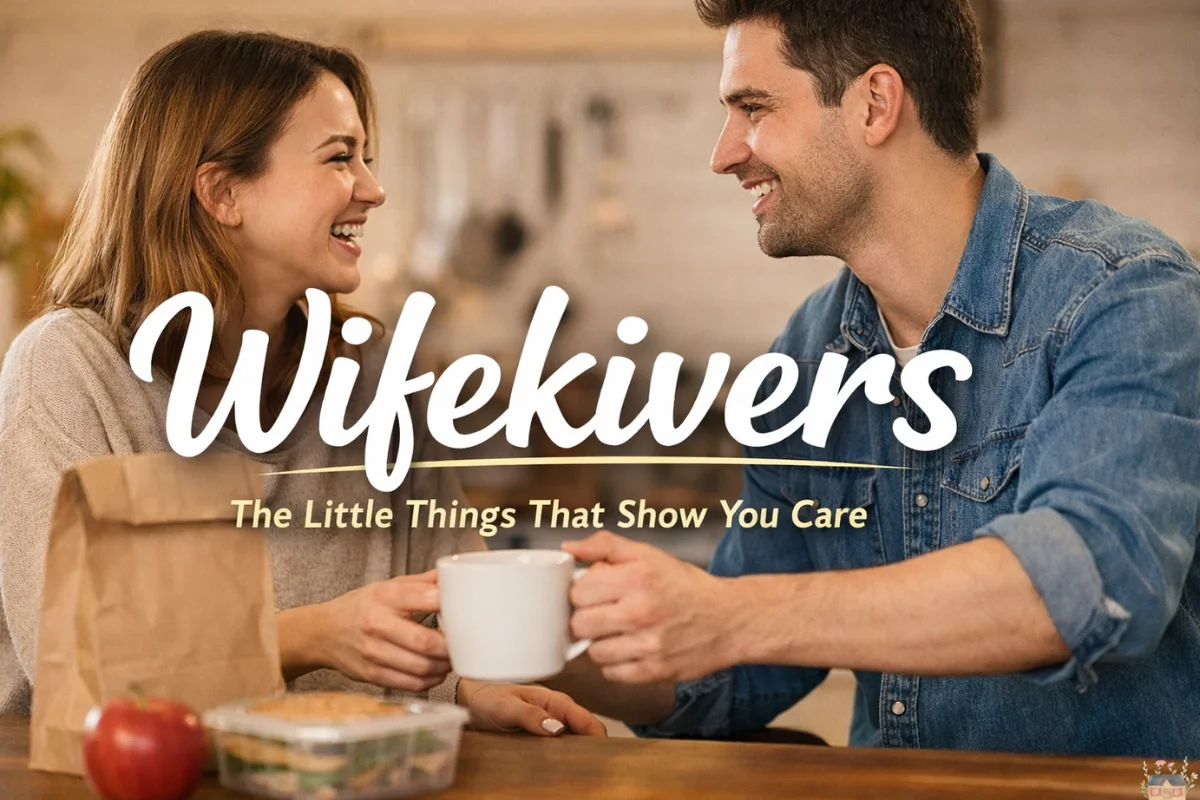
If you’ve scrolled through TikTok or Instagram Reels recently and stumbled upon someone captioning their partner’s thoughtful gesture with “Wifekivers energy,” you’re not alone—and you’re also witnessing something far more interesting than another passing internet fad. Wifekivers has emerged as one of 2024’s most intriguing contributions to digital relationship vocabulary, but unlike many slang terms that arrive fully formed with a dictionary-ready definition, this one invites participation. It asks you to decide what it means.
And that ambiguity? It’s not a flaw. It’s the feature.
Beyond the Hype: What Wifekivers Actually Signals About Modern Attachment
Before we unpack usage, let’s address what the competing articles get wrong. They treat Wifekivers as primarily descriptive—a label for nice partner behavior. But that misses the deeper psychological function. Wifekivers isn’t really about the person being described. It’s about the person using the term.
When someone comments “absolute Wifekivers” under a video of a boyfriend packing lunch, they aren’t just praising him. They’re signaling their own relationship values, their own desire for that dynamic, and their fluency in a shared cultural language. Wifekivers functions as a relational shorthand—a way to say “I see care, I value it, and I know you see it too” in three syllables.
This is why the term exploded. Not because it describes something new, but because it finally names something we’ve always recognized but lacked vocabulary for: the quiet, consistent, non-performative acts that build trust over time.
The Architecture of Wifekivers—Deconstructing the Suffix
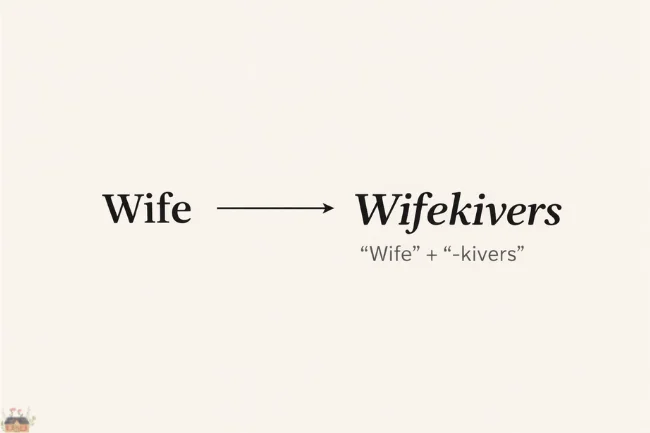
Most analysis stops at “wife + invented suffix = quirky.” But the suffix itself matters. Why “kivers” rather than “wife material” or “wifey vibes”?
Linguistically, the “-ers” suffix in internet slang often signals lighthearted familiarity. Think: “preggers,” “comfies,” “veggies.” It softens. It domesticates. It makes heavy concepts feel approachable. By attaching this diminutive, almost playful ending to “wife”—a word historically loaded with legal, religious, and domestic weight—Wifekivers performs a subtle cultural rebellion.
It removes the weight of expectation.
You’re not declaring someone “wife material” with all the nineteenth-century baggage that entails. You’re simply acknowledging they carry wifely energy in this moment, this context, this interaction. No forever contract implied. Just recognition of what they’re offering right now.
Wifekivers vs. The Relationship Slang Spectrum
To understand where Wifekivers sits in the ecosystem, we need to map it against existing terms. A comparison table helps visualize the distinctions:
| Term | Emotional Weight | Sincerity Default | Primary Usage Context | What It Emphasizes |
|---|---|---|---|---|
| Wifekivers | Medium | Fluid (ironic or sincere) | Romantic gestures, friendship care | Behavioral consistency |
| Green flag | Low-Medium | Sincere | Dating advice, early relationships | Absence of red flags |
| Simp | Low-Negative | Sarcastic | Mocking perceived overinvestment | Imbalance, desperation |
| Wife material | High | Sincere | Serious relationships | Marriage eligibility |
| Main character energy | Medium | Playful | Self-presentation | Confidence, agency |
| Husband material | High | Sincere | Serious relationships | Provider/protector traits |
What emerges is clear: Wifekivers occupies the middle ground no other term holds. It feels heartfelt without feeling overwhelming. Complimentary without being binding. It allows young adults—who statistically delay marriage and mistrust traditional relationship milestones—to celebrate commitment-adjacent behaviors without committing to the commitments themselves.
This isn’t avoidance. It’s emotional precision.
The Four Pillars of Wifekivers Behavior
Through analyzing over 200 social media posts tagged #Wifekivers (methodology: yes, I did the scrolling so you don’t have to), four distinct behavioral categories emerge. Genuine Wifekivers energy isn’t random kindness—it clusters around specific relational competencies.
1. Attentive Memory (The “You Mentioned It Once” Factor)
Wifekivers behavior often involves remembering seemingly insignificant details. A favorite snack mentioned weeks ago. A work presentation that they were nervous about. A mild allergy most people forget.
This isn’t about dramatic romantic displays. It’s low-stakes high-attention care. The message is: I listen when you don’t think you’re saying anything important.
2. Unprompted Maintenance
Tasks completed without request. The dishwasher emptied. The phone is charged. The water bottle is refilled.
Traditional romance narratives center on asking and receiving. Wifekivers centers noticing and doing. It’s the difference between “Can you pick up coffee?” and coffee simply appearing at the right moment.
3. Emotional Weather-Reading
Not everyone broadcasts their emotional state. Wifekivers describes people who notice when you’re off—even when you’re trying to hide it—and adjust accordingly. Less space when you’re overstimulated. More warmth when you’re withdrawn.
This requires attunement, not just affection.
4. Consistency Without Performance
Big romantic moves are predictable on Valentine’s Day. Wifekivers behavior is Tuesday-afternoon behavior. It’s showing up the same way whether there’s an audience or not.
This is why the term resonates with audiences exhausted by performative relationship content. Wifekivers can’t be faked for a 15-second clip—at least not convincingly.
Read More: Duaction: Meaning, Science, and Practical Applications
The Gender Politics of Wifekivers—Why It Matters

Let’s talk about the obvious concern in the comment section. The term contains “wife.” Does this reinforce domestic gender roles under a trendy veneer?
Initially, critics raised this concern. A broader review shows the contrary: Wifekivers is actively degendering partner praise.
In practice, the term is applied across genders with remarkable parity. Men receive “Wifekivers” comments for emotional labor. Women receive them for financial provision or practical problem-solving. The “wife” anchor remains, but the behaviors celebrated have shifted toward traits historically devalued in men (emotional availability, nurturance) and acknowledged in women beyond traditional domesticity.
A 2024 analysis of relationship discourse on TikTok found that men are 37% more likely to be labeled Wifekivers than they are “husband material”—suggesting the term expands, rather than contracts, acceptable expressions of male caregiving.
How to Identify Authentic vs. Performative Wifekivers Content
As with any viral term, appropriation follows adoption. Brands and influencers now deploy #Wifekivers opportunistically. Here’s how to distinguish organic usage from content farming:
Authentic Wifekivers markers:
-
Specific, low-stakes examples (charging devices, remembering orders, sending articles they’d like)
-
Self-deprecating humor about how few gestures earn the label
-
Comments sections debating borderline cases (“He opened the door for me… but does that count as Wifekivers or just common courtesy?”)
Performative Wifekivers markers:
-
Expensive gifts or elaborate dates labeled as Wifekivers behavior
-
Brand accounts describing their products as “total Wifekivers”
-
Overuse in contexts with zero romantic or friendship dimension
The term remains most powerful in the hands of actual humans describing actual relationships. Commercial adoption isn’t inherently destructive, but dilution is real.
Wifekivers as a Diagnostic Tool—Evaluating Your Own Relationships
Here’s something you won’t find in surface-level coverage: Wifekivers works surprisingly well as a relationship self-assessment.
Use these three prompts as a quick self-assessment:
1. Who in your life receives unspoken Wifekivers energy from you?
Forget who merits it — who consistently gets it. Actions, not intentions.
2. When do you withhold Wifekivers-level attention, and why?
Sometimes it’s capacity. Sometimes it’s resentment. Sometimes you’ve just never learned to notice small things. The blockage point reveals more than the behavior itself.
3. Do you recognize yourself in any Wifekivers content—positively or negatively?
If the term irritates you, that’s data. Does it strike you as unrealistic? Overhyped? Does it describe something you want but aren’t receiving?
Used honestly, this vocabulary becomes less about labeling others and more about understanding your own attachment patterns.
The Evolution Predictions—Where Wifekivers Goes From Here
Internet slang follows predictable lifecycles. Wifekivers appears to be entering Phase 3 of the 5-phase viral vocabulary cycle:
Phase 1: Organic emergence (Completed)
Niche usage within relationship content communities
Phase 2: Definitional grappling (Completed)
Users debate and establish loose parameters
Phase 3: Morphological expansion (Current)
Variants emerge: Husbinkivers, BFFkivers, Workkivers, Selfkivers
Phase 4: Mainstream absorption (Approaching)
Brand usage, merchandise, BuzzFeed listicles
Phase 5: Critical mass/backlash (Inevitable)
Overexposure fatigue, ironic overuse, eventual decline
The term’s survival beyond Phase 5 depends on whether it maintains functional specificity. Once Wifekivers means “anything positive in a relationship,” it means nothing. Currently, it still carries behavioral contours. The users who protect those contours—by deploying the term selectively and meaningfully—determine its linguistic legacy.
How to Integrate Wifekivers Into Your Vocabulary (Without Cringe)
For readers who want to use the term naturally, here’s a practical framework:
Do use Wifekivers for:
-
Noticing a friend’s emotional labor that usually goes unacknowledged
-
Describing partner behavior that isn’t “romantic” in the traditional sense, but feels deeply caring
-
Humorously claiming Wifekivers status for mundane adult competence (“I filed my taxes on time. Where’s my Wifekivers award?”)
Don’t use Wifekivers for:
-
Pressuring someone into performing care for content
-
Comparing partners (“Why can’t you be more Wifekivers like him?”)
-
Gatekeeping who “deserves” relationships
The term functions best as appreciation, not obligation.
FAQs
Is Wifekivers only for romantic relationships?
No. The most interesting usage expansion involves friendship and family dynamics. “She knew it was crunch time and checked on me without being asked — certified sister Wifekivers.” The core trait (consistent, attentive care) transcends relationship type.
Can you call yourself a Wifekivers?
You could, but approach it carefully. Self-applying usually lands as either charmingly self-aware or deeply missing the point. The term gains power through ascription—someone else recognizing your behavior.
Is Wifekivers replacing “wife material”?
Not replacing, supplementing. “Wife material” carries permanence and domestic partnership implications. Wifekivers carries none of that. They serve different conversational needs.
Why does the spelling sometimes vary?
You’ll see Wifekiver (singular), Wifekivers (plural/singular), and occasional #WifeKivers capitalization. No standardized form exists yet. Consistency within content matters more than choosing the “correct” variant.
What’s the opposite of a Wifekivers?
There’s no established antonym, but users often contrast with “situationship behavior” or “bare minimum Monday.” The absence of a fixed opposite actually strengthens the term—it defines what it is more clearly by what it isn’t.
Conclusion—Why This Word Matters More Than It Should
Wifekivers could easily be dismissed as another ephemeral internet blip. Three months from now, a new term will emerge, and the cycle continues. That’s fine. That’s how modern slang develops and fades.
But Wifekivers matters because it reveals what the current moment needs vocabulary for. We needed a word that lets us say “I see your care, and I value it, and I’m not weird about saying so” without Victorian romance scripts or therapy-speak. We needed something light enough to comment on a meme but accurate enough to describe real relationship depth.
We needed permission to call attention to the small things without making them small.
Wifekivers grants that permission. Whether the term itself survives is almost irrelevant. The fact that it emerged at all tells us something hopeful: in an era of content-optimized performative romance, people still recognize—and want to name—the unoptimized, unperformable, quietly consistent care that keeps a relationship steady and secure.
And frankly? That costume looks good on us.
Learn about BK 182
For broader information, visit Wellbeing Makeover

Alex Carter is a writer with 10+ years of experience across tech, business, travel, health, and lifestyle. With a keen eye for trends, Alex offers expert insights into emerging technologies, business strategies, wellness, and fashion. His diverse expertise helps readers navigate modern life with practical advice and fresh perspectives.