
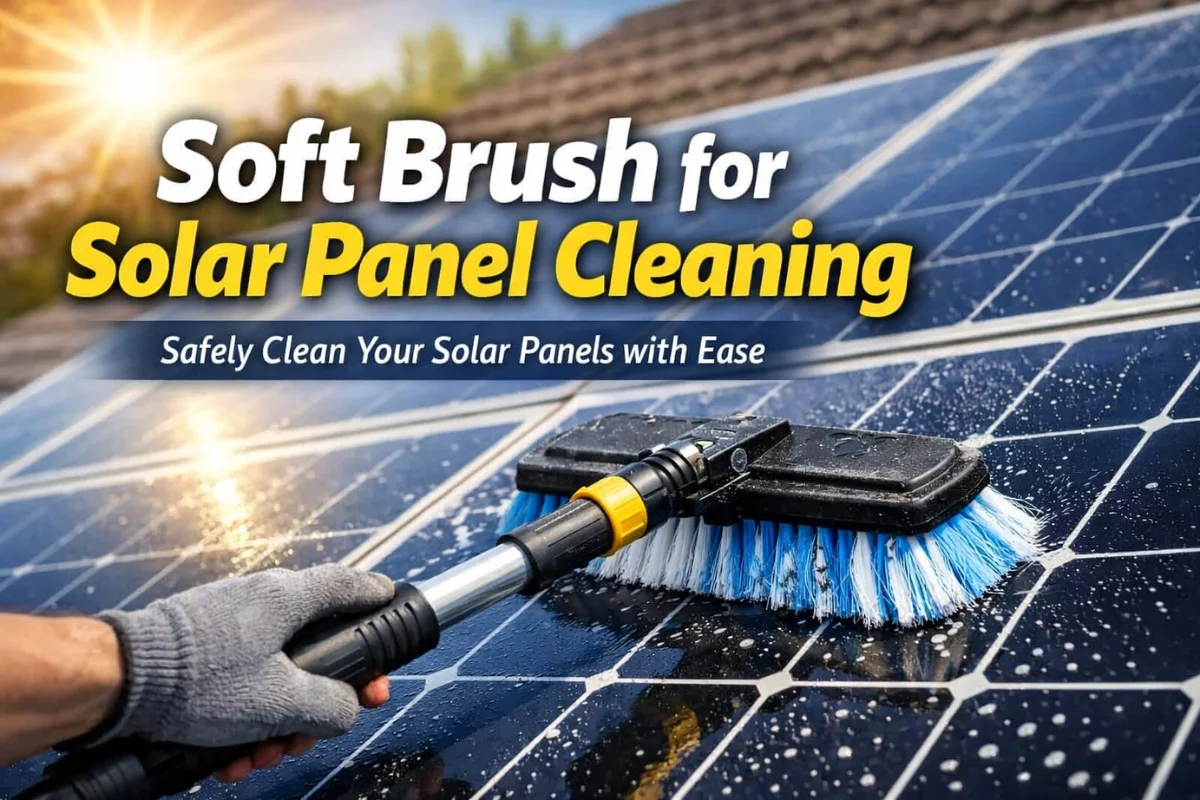
A soft brush for solar panel cleaning is a specially designed tool with gentle, non-abrasive bristles used to remove dust, dirt, pollen, and debris from photovoltaic (PV) panel surfaces without scratching the glass. Choosing the right brush preserves panel efficiency, extends system lifespan, and avoids warranty-voiding damage that harder cleaning tools can cause.
Why Cleaning Solar Panels the Right Way Is Non-Negotiable
Solar panels are a significant investment, and like any outdoor equipment exposed to the elements year-round, they accumulate grime. Studies from the National Renewable Energy Laboratory (NREL) have shown that soiled panels can lose anywhere from 7% to over 25% of their energy output, depending on location and environmental conditions.
The issue is not just whether you clean your panels — it is how you clean them. Using the wrong tool, such as a stiff-bristled brush, abrasive scrubbers, or pressure washers set too high, can introduce micro-scratches on the anti-reflective coating. Over time, those scratches trap more dirt and reduce light transmission, compounding the efficiency loss you were trying to prevent.
A proper soft brush for solar panel cleaning solves this problem at the source.
What Makes a Soft Brush for Solar Panel Cleaning Safe for PV Glass
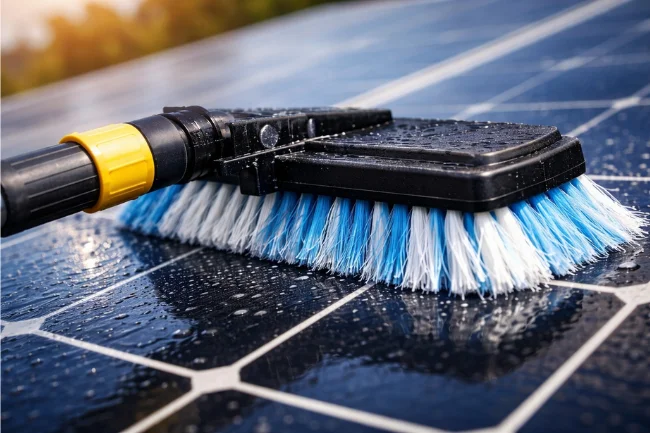
Not every brush labeled “soft” qualifies as panel-safe. The bristle material, stiffness rating, and brush head design all play a role in whether a tool is genuinely safe for photovoltaic glass surfaces.
Bristle Material
The safest bristle materials for panel cleaning include:
- Nylon with a low denier count — fine, flexible fibers that conform to the panel surface
- Microfiber — excellent for dry dusting and light debris removal
- Natural horsehair — traditionally used in detailing, gentle enough for coated glass
Avoid brushes made with polyester bristles that are stiff at room temperature. These can feel soft but become abrasive under pressure, especially when scrubbing dried bird droppings or caked-on pollen.
Bristle Length and Density
Longer, less densely packed bristles tend to flex more under light pressure, which means less friction against the panel surface. Brushes with shorter, stiffer bristles concentrate more force per square inch and carry a higher risk of surface damage.
Handle and Extension Design
Most residential solar installations have panels mounted on rooftops, sometimes at steep angles. A soft brush for solar panel cleaning paired with a telescoping or water-fed pole keeps the cleaner safely on the ground while still reaching panels effectively. Water-fed pole systems, in particular, deliver purified water through the brush head, which reduces the need for any scrubbing pressure at all.
Types of Soft Brushes for Solar Panel Cleaning
Understanding the different brush styles helps match the right tool to specific panel configurations and levels of soiling.
Each type serves a purpose, and many homeowners with larger systems keep more than one on hand for different seasonal cleaning needs.
How to Use a Soft Brush for Solar Panel Cleaning Without Causing Damage
Having the right brush is only part of the equation. Technique matters just as much. Here is a straightforward process used by solar maintenance professionals:
- Choose the right time of day. Early morning or late evening is ideal. Panels are cooler, and water evaporates more slowly, reducing mineral spotting. Never clean panels in direct midday sun — thermal shock from cold water on hot glass can cause micro-fracturing over time.
- Rinse first. Use a garden hose with a gentle spray setting to loosen surface debris before brushing. This removes grit that could otherwise be dragged across the glass by the bristles.
- Apply minimal pressure. Let the water and the brush’s weight do the work. Pressing hard against the panel surface increases the chance of scratching, especially if any debris particles are still present.
- Work in overlapping horizontal strokes. Start at the top of the panel and work downward so that loosened debris drains off naturally.
- Final rinse with purified water. Tap water contains minerals that leave white residue when dry. Deionized or distilled water for the final rinse prevents hard water spots that reduce light transmission.
For a deeper look at how solar panel technology intersects with practical maintenance approaches, this resource on solar panel efficiency and care offers useful context on how panel surfaces respond to environmental exposure over time.
What to Avoid When Cleaning Solar Panels
Knowing what not to do is as important as knowing the right technique. Several common cleaning mistakes cause more harm than the dirt itself.
Hard Brushes and Abrasive Pads
The most widespread mistake is using whatever brush is available — a deck brush, a car wash brush with coarse bristles, or a kitchen scrub pad. These tools are far too aggressive for the thin anti-reflective coating applied to photovoltaic glass. A dedicated soft brush for solar panel cleaning is the only reliable alternative.
Dish Soap and Household Cleaners
Many household detergents contain surfactants, fragrances, and abrasive agents that leave residues on solar panels. These residues attract more dust and can interact with the glass coating in unpredictable ways. If a cleaning solution is used at all, it should be specifically formulated for PV panels and used sparingly.
Pressure Washers at High Settings
High-pressure water jets can penetrate panel frame seals, introducing moisture into the junction box — a serious electrical hazard. Low-pressure rinsing with a standard garden hose is sufficient for most cleaning tasks.
Cleaning During Peak Hours
While solar panels do not need to be powered down for external cleaning, cleaning during peak generation hours (midday sun) on hot panels creates temperature stress. Morning cleaning is safer and practically more effective.
How Often Should You Use a Soft Brush for Solar Panel Cleaning?
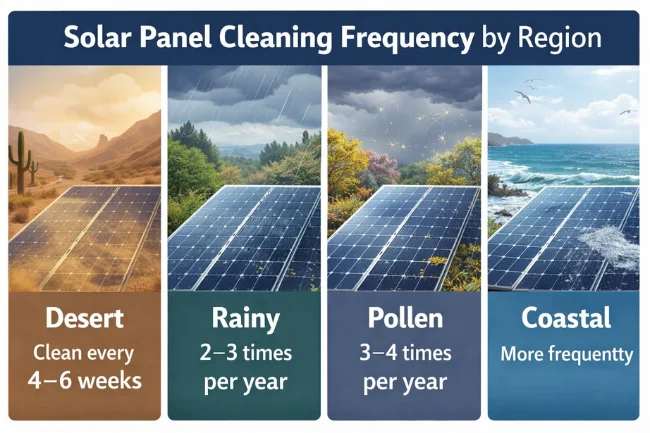
Cleaning frequency depends heavily on location and environmental conditions. There is no universal answer, but the following guidelines reflect what most solar maintenance professionals recommend for U.S. residential installations:
- Desert Southwest (Arizona, Nevada, New Mexico): Every 4–6 weeks during dry seasons due to dust accumulation
- Pacific Northwest: 2–3 times per year; rainfall naturally handles a significant portion of light debris
- Midwest and Northeast: 3–4 times per year, with extra attention following pollen season and summer storms
- Coastal areas: More frequent cleaning may be needed due to salt spray residue
For homeowners interested in low-maintenance or passive cleaning approaches, there are emerging technologies worth exploring. Innovations in self-cleaning panel coatings, for example, work on similar principles to self-cleaning street light projects that rely on hydrophobic surface treatments to shed debris with minimal human intervention.
Choosing a Soft Brush for Solar Panel Cleaning: Key Features to Look For
When shopping for a soft brush specifically marketed for solar panel use, several features separate effective tools from marketing gimmicks.
- Bristle softness certification or rating: Some manufacturers specify bristle stiffness in millimeters of deflection under load. The softer end of the spectrum (higher deflection at lower force) is preferable for glass surfaces.
- Flow-through design for water-fed poles: Brushes with center-flow or perimeter-flow water channels distribute water evenly across the brush head, reducing the scrubbing force needed to lift grime.
- Head size relative to panel area: Wider brush heads clean more efficiently but can be harder to control around panel edges and frames. A 12–18-inch head is practical for most standard residential panels.
- Handle material: Fiberglass and carbon fiber poles are lighter than aluminum, which matters significantly when reaching panels 15–20 feet overhead.
For a thorough breakdown of the solar panel brush market, including side-by-side comparisons of popular models and bristle types, this detailed guide on solar panel brushes covers specifications across a range of price points and use cases.
Solar Panel Cleaning and Broader Energy Efficiency Thinking
Clean panels are one piece of a larger energy efficiency picture. As solar technology scales — from residential rooftops to community installations — maintenance practices are becoming more systematized. Some utility-scale operations now use robotic cleaning systems that incorporate ultra-soft rotating brush assemblies, a scaled-up version of the same principle that applies to home panel maintenance.
For homeowners curious about how solar energy projects extend beyond household applications, projects exploring alternative energy infrastructure using renewable resources demonstrate the broader potential of clean energy when maintenance and design work together.
Wrapping Up: Practical Takeaways for Panel Owners
Selecting the right soft brush for solar panel cleaning comes down to bristle material, brush type, and cleaning technique working together. Microfiber and fine nylon bristles are the safest choices for most residential panels. Water-fed pole systems offer the most effective and lowest-risk cleaning method for roof-mounted arrays. Timing cleans for cooler parts of the day, rinsing before brushing, and using purified water for the final pass round out the fundamentals of responsible panel care.
For most U.S. homeowners, investing in a quality soft brush and establishing a seasonal cleaning routine is one of the most cost-effective ways to protect and maximize the return on a solar installation. Before starting any cleaning routine, checking the panel manufacturer’s maintenance guidelines is always a worthwhile first step — some warranties specify approved cleaning methods.
Frequently Asked Questions
What type of soft brush for solar panel cleaning is the safest option?
Brushes with soft nylon, microfiber, or natural horsehair bristles are safe for solar panels. The key is choosing bristles that flex easily under light pressure without dragging grit across the glass surface. Avoid stiff-bristled brushes, abrasive scrub pads, and anything designed for heavy-duty outdoor cleaning, as these can scratch the anti-reflective coating on PV glass.
Can I use a regular car wash brush on solar panels?
Most standard car wash brushes are too stiff for solar panels. Even brushes labeled “soft” for vehicle use may be aggressive enough to introduce micro-scratches on photovoltaic glass. Solar-specific brushes are designed with finer, more flexible bristles and are tested against panel coatings. If a car wash brush is the only available option, use it only with minimal pressure and plenty of water.
How often should I brush my solar panels?
Cleaning frequency depends on your location and environmental conditions. In dusty, dry climates like the desert Southwest, cleaning every 4–6 weeks during peak dust periods is reasonable. In wetter regions with regular rainfall, 2–3 times per year may be sufficient. A visible drop in energy output readings, compared to historical performance data, is often a practical indicator that cleaning is overdue.
Is it better to clean solar panels with or without soap?
For most routine cleaning, water alone — especially purified or deionized water — is sufficient and safer than using soap. If a cleaning agent is used, it should be a product specifically formulated for photovoltaic panels. Household dish soap and general-purpose cleaners can leave residue that attracts more dust and may interact poorly with the panel’s surface coating over time.
What is a water-fed pole brush, and is it worth it for homeowners?
A water-fed pole brush is a cleaning tool that delivers water through the brush head via a connected hose or reservoir, often using purified water. It allows cleaning without needing to climb onto the roof and reduces the scrubbing pressure required to lift dirt. For homeowners with roof-mounted arrays or more than a few panels, a water-fed system is generally worth the investment for both safety and cleaning effectiveness.

I’m Salman Khayam, the founder and editor of this blog, with 10 years of professional experience in Architecture, Interior Design, Home Improvement, and Real Estate. I provide expert advice and practical tips on a wide range of topics, including Solar Panel installation, Garage Solutions, Moving tips, as well as Cleaning and Pest Control, helping you create functional, stylish, and sustainable spaces that enhance your daily life.