
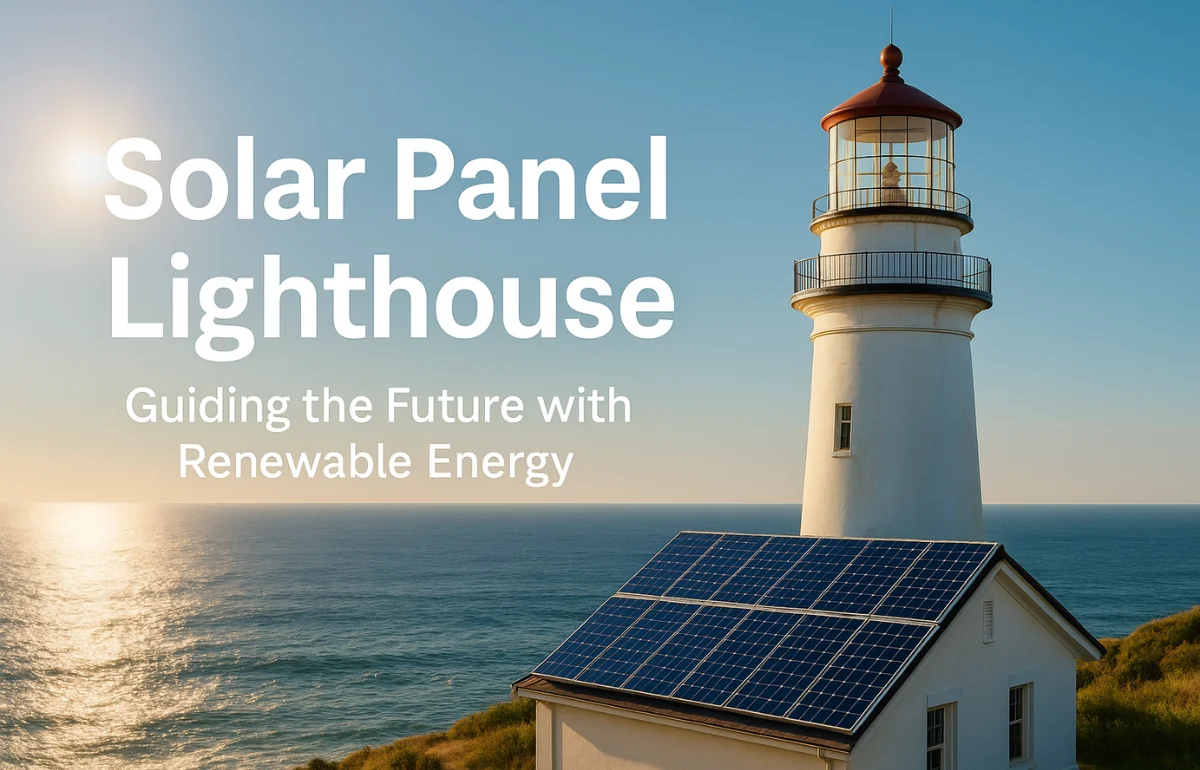
A solar panel lighthouse is a self-sustaining navigational aid that uses photovoltaic (PV) cells to convert sunlight into electricity, storing it in high-capacity batteries to power LED beacons throughout the night. By eliminating the need for fossil fuels or external grid connections, these systems provide a reliable, low-maintenance, and eco-friendly solution for maritime safety in remote coastal environments.
From Whale Oil to Photons: The Great Energy Transition
For centuries, lighthouses were the ultimate test of human endurance. Early mariners relied on open wood or coal fires, which were notoriously difficult to maintain during the very storms they were meant to warn against. By the 19th century, lighthouses transitioned to whale oil and later kerosene, requiring keepers to manually trim wicks and haul heavy fuel up spiral staircases every few hours.
The mid-20th century saw the introduction of diesel generators and grid electrification. While these were more powerful, they introduced new problems: noisy operation, high fuel transportation costs, and the constant risk of environmental contamination from oil leaks.
Today, the solar panel lighthouse represents the pinnacle of this evolution. It is not merely a change in fuel; it is a shift toward total autonomy. Modern solar systems allow these beacons to operate in the world’s most inhospitable locations—from the salt-sprayed cliffs of the Arctic to the remote tropical atolls—without a single drop of fuel or a resident keeper.
How a Solar-Powered Lighthouse Operates
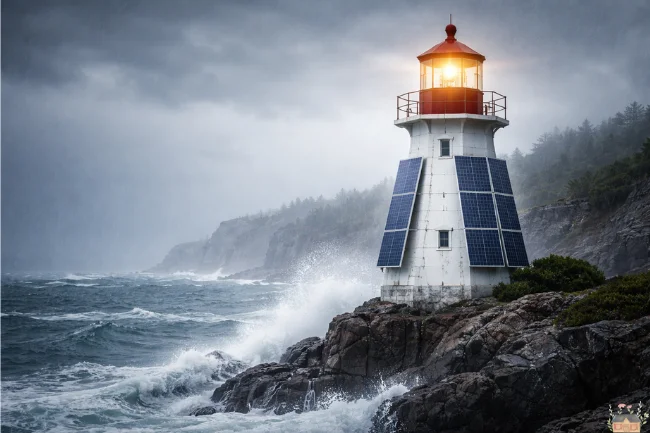
Unlike a residential solar setup, a maritime solar system must be over-engineered to handle “worst-case scenarios,” such as consecutive weeks of heavy fog or storm surges.
1. The Marine-Grade Photovoltaic Array
Standard solar panels often fail in coastal areas due to salt mist corrosion. Lighthouse arrays typically use monocrystalline silicon cells protected by tempered, anti-reflective glass and frames made of anodized aluminum or 316-grade stainless steel. These panels are often treated with a specialized hydrophobic coating to prevent salt crystals from accumulating and blocking light.
2. Deep-Cycle Energy Storage
The heartbeat of the system is the battery bank. Most modern retrofits have moved from traditional lead-acid batteries to Lithium Iron Phosphate (LiFePO4).
-
Autonomy: Systems are typically sized for 10 to 20 days of autonomy, meaning the light will stay active even if there is zero sunlight for nearly three weeks.
-
Temperature Resilience: These batteries can handle the extreme temperature swings common in coastal climates.
3. High-Intensity LED Optical Systems
The invention of the LED changed the feasibility of solar lighthouses. A traditional incandescent bulb might require 1,000 watts to produce a beam visible for 20 nautical miles. A modern LED beacon can achieve the same range using less than 50 watts.
Technical Comparison: Solar vs. Diesel Lighthouse Operations
The Invisible Benefits: Protecting Marine Ecosystems
The shift to the solar panel lighthouse isn’t just a win for the Coast Guard’s budget; it’s a victory for marine biology.
Eliminating Chemical Hazards
Traditional lighthouses required frequent deliveries of diesel or kerosene. Offloading fuel in heavy seas is a high-risk operation. A single spill near a lighthouse can devastate local tide pools and nesting seabird colonies. Solar power removes this threat entirely.
Noise and Light Pollution Management
Diesel generators produce constant low-frequency vibration and noise, which can disrupt the echolocation of marine mammals like dolphins and seals. Solar systems are silent. Furthermore, modern solar-powered LEDs can be programmed with “Smart Dimming”—reducing intensity during clear nights and boosting it only when sensors detect fog, which helps reduce the impact on migratory birds attracted to bright lights.
Engineering Challenges: Why You Can’t Use “Regular” Solar Panels
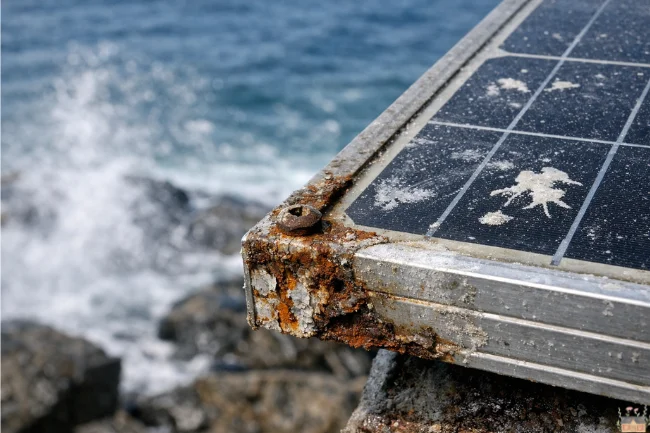
Marine environments are among the harshest and most corrosive conditions on the planet. A standard “off-the-shelf” solar panel installed on a lighthouse would likely fail within 24 months due to three specific factors:
-
Salt Mist Intrusion: Sodium ions are highly conductive. If they penetrate the panel’s backsheet, they create internal short circuits and “Potential-Induced Degradation” (PID).
-
Galvanic Corrosion: When salt water acts as an electrolyte between different metals (like a steel bolt and an aluminum frame), it creates a battery-like reaction that eats the metal away. Marine solar systems use specialized gaskets to keep these metals isolated.
-
Guano Accumulation: Seabirds love the high vantage point of solar arrays. Bird droppings (guano) create “hot spots” on panels, where shaded cells can overheat and burn out. Engineers often install “bird spiders” or slanted mounts to prevent birds from nesting on the glass.
Smart Lighthouses: The IoT Revolution
The next generation of the solar panel lighthouse is “smart.” Through the Internet of Things (IoT), coastal authorities can now monitor hundreds of lighthouses from a central dashboard.
-
Predictive Maintenance: Sensors track the “health” of each battery cell. If a cell begins to degrade, an alert is sent before the light fails.
-
Dynamic Beam Adjustment: Using real-time visibility data from local weather stations, the lighthouse can adjust its candela (brightness) to save energy when visibility is high and maximize safety when it’s low.
-
Remote Diagnostics: In the past, a keeper had to climb the tower to check a fuse. Now, engineers can reset charge controllers or update firmware from an office 500 miles away.
Global Case Studies in Solar Navigation
The “Green” Guardian: Cape Byron, Australia
As Australia’s easternmost point, Cape Byron experiences intense UV radiation. The transition to solar was driven by the need to protect the surrounding marine park. The system now powers the most powerful lighthouse light in the Southern Hemisphere, proving that solar isn’t just for “small” lights.
Heritage Preservation: Ristna Lighthouse, Estonia
Converting historic lighthouses to solar is a delicate architectural task. At Ristna, engineers hidden the solar arrays on the roof of auxiliary buildings to maintain the 19th-century aesthetic of the main tower, proving that 21st-century technology can coexist with maritime heritage.
Is a Solar Lighthouse Right for Private Marine Property?
While we often think of massive coastal towers, the “solar panel lighthouse” concept is widely used for private piers, marinas, and small-scale navigational markers.
- Pro Tip for Private Owners: If you are installing a solar beacon on a private dock, ensure the unit has an IP68 waterproof rating. Many decorative “garden” lighthouses look the part but will fail in a single season of salt-air exposure. Look for units specifically labeled for “Marine Navigation” to ensure the electronics are potted in resin to prevent moisture ingress.
Conclusion: Lighting the Path to Sustainability
The solar panel lighthouse is more than a technical upgrade; it is a symbol of how we can protect human life while respecting the natural world. By harnessing the same sun that once made the sea visible to the naked eye, we have created a system that is safer, cheaper, and infinitely cleaner. As battery technology continues to improve and IoT integration becomes the standard, these beacons will continue to stand as silent, sun-powered sentinels for centuries to come.
? Frequently Asked Questions
1. Can a solar panel lighthouse work in the winter or during heavy fog?
Yes. These systems are designed with “days of autonomy,” typically carrying enough battery storage to run for 10 to 20 days without any sunlight. High-efficiency panels can also generate energy from “diffuse” light on cloudy or foggy days.
2. How do you clean solar panels on a tall lighthouse?
Most modern maritime solar arrays are installed at a steep angle (45° to 60°) to allow rain to naturally wash away salt and bird droppings. In extreme cases, technicians perform annual “climb-and-clean” maintenance using deionized water.
3. What happens if the solar panels are damaged in a storm?
Most lighthouse systems are “hybrid-ready” or have dual-redundant arrays. If one panel is damaged by flying debris, the remaining panels and the deep-cycle battery bank keep the light operational until a repair crew can arrive.
4. How long does a solar lighthouse system last?
The solar panels themselves generally have a 25-year warranty. The LED beacons can last up to 100,000 hours (over 11 years of continuous use), and modern Lithium Iron Phosphate batteries typically last 7 to 10 years.
5. Are solar lighthouses as bright as electric ones?
Absolutely. Modern LED technology allows a solar-powered lighthouse to produce millions of candelas, reaching the same 18 to 25 nautical mile visibility as grid-powered lamps, but at a fraction of the energy consumption.
Learn about Solar Panel Cleaning Equipment
For broader information, visit Wellbeing Makeover

I’m Salman Khayam, the founder and editor of this blog, with 10 years of professional experience in Architecture, Interior Design, Home Improvement, and Real Estate. I provide expert advice and practical tips on a wide range of topics, including Solar Panel installation, Garage Solutions, Moving tips, as well as Cleaning and Pest Control, helping you create functional, stylish, and sustainable spaces that enhance your daily life.