
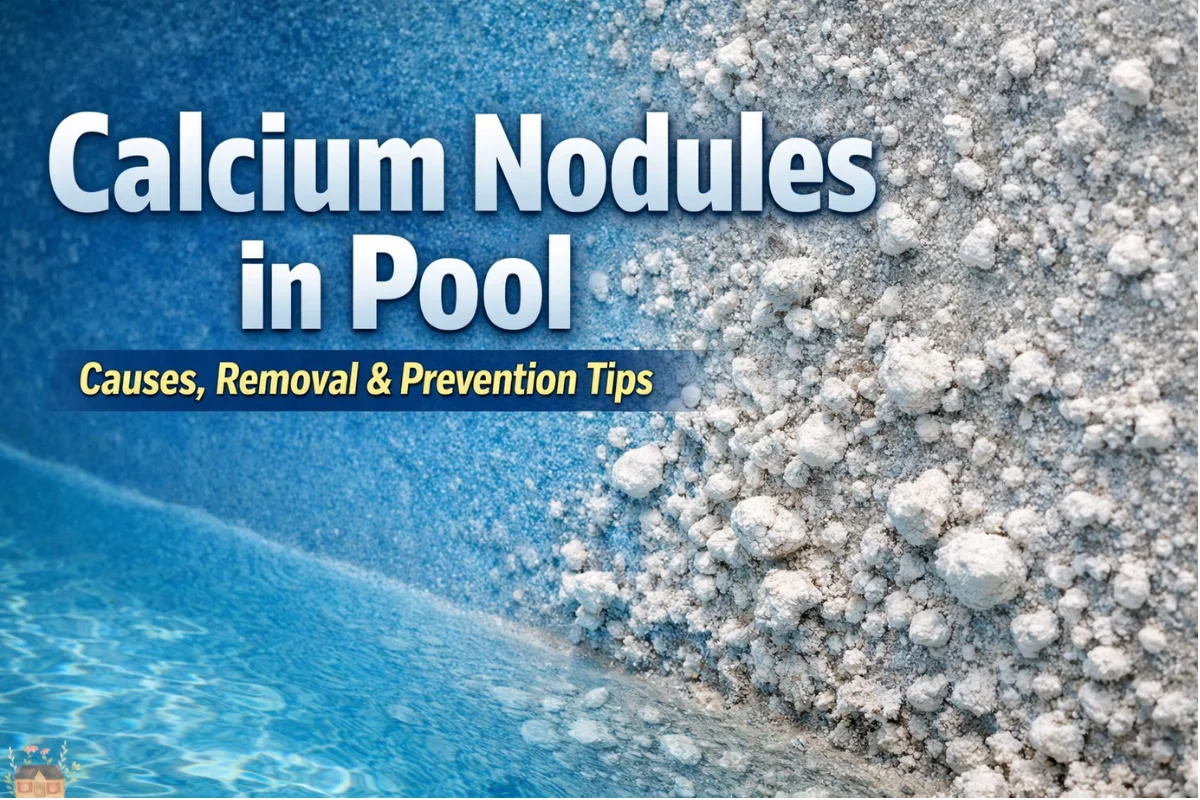
If you’ve noticed rough, white, or grayish bumps forming on the walls or floor of your swimming pool, you’re likely dealing with calcium nodules in pool surfaces — and you’re not alone. This is one of the more frustrating pool maintenance issues homeowners face, mainly because those hard little protrusions aren’t just cosmetic.
Left unaddressed, they can damage your pool’s finish, irritate swimmers’ skin, and become a gateway to more serious structural problems. I’ve seen pool owners mistake them for simple staining or algae, only to discover the issue runs deeper than a bottle of chlorine can fix.
This guide walks you through everything you need to understand about pool calcium nodules — from what’s actually causing them to form, to which removal methods work best, to how you can stop them from coming back. Whether you have a plaster pool, a fiberglass shell, or a pebble finish, the fundamentals are the same.
What Are Calcium Nodules in a Pool?
Calcium nodules — sometimes called calcium deposits, calcium bumps, or pool calcium buildup — are hard mineral formations that develop on the interior surface of a pool. Unlike calcium scaling, which tends to be a thin, flat film on the waterline, nodules are raised, cone- or dome-shaped protrusions that are embedded into the plaster or finish itself.
They’re primarily composed of calcium carbonate or calcium silicate, and they form when calcium-rich water reacts chemically with the pool’s plaster substrate. That reaction creates a hard crystalline structure that literally grows outward from within the surface. The result: bumpy, rough patches that can range from the size of a pea to nearly the size of a golf ball in severe cases.
It’s worth distinguishing nodules from regular calcium scale. Calcium scale sits on top of the surface and can often be wiped or brushed away. Calcium nodules are anchored in the plaster — removing them without damaging the surrounding finish requires more care and the right approach.
Why Calcium Nodules Form in Your Pool: Root Causes Explained
There’s rarely a single cause behind calcium nodules in a pool — it’s usually a combination of factors that compound over time. Here are the primary drivers:
1. High Calcium Hardness Levels Trigger Pool Calcium Nodules
Water that’s too “hard” — meaning it contains an excess of dissolved calcium — is the most common culprit. The ideal calcium hardness range for a pool is between 200 and 400 parts per million (ppm). When levels climb above 400–500 ppm, the water becomes supersaturated and begins depositing calcium onto any available surface, including your pool’s plaster. According to the Pool & Hot Tub Alliance (PHTA), maintaining balanced water chemistry is the single most effective way to prevent calcium nodules in pool surfaces from forming.
2. High pH and Alkalinity Accelerate Calcium Nodule Growth
Even if your calcium hardness is within range, high pH (above 7.8) or high total alkalinity pushes your water’s saturation index into positive territory — meaning the water wants to deposit minerals rather than hold them in solution. This is measured using the Langelier Saturation Index (LSI), a formula pool professionals use to determine whether water is corrosive, balanced, or scale-forming. A positive LSI means you’re in scale-forming territory, and calcium nodules are one possible outcome.
3. Poor Plaster Quality Leaves Pools Vulnerable to Calcium Nodules
Not all pool surfaces are created equal. Plaster mixes that were applied during hot or windy conditions, or that had an incorrect water-to-cement ratio, tend to be more porous and chemically reactive. This porosity gives calcium a foothold to begin forming nodules from the inside out. Cheap or poorly cured plaster is particularly susceptible to this kind of mineral infiltration.
4. Pool Age and Finish Deterioration Invite Calcium Nodule Formation
Older plaster naturally becomes more porous as it wears. Once the protective surface layer breaks down, calcium can migrate through micro-cracks and begin forming nodules beneath the surface. If your pool is more than 10–15 years old and hasn’t been replastered, calcium nodule formation is significantly more likely.
5. Heat and Evaporation Concentrate the Calcium That Causes Pool Nodules
Hot climates accelerate evaporation, which concentrates calcium and other minerals in the water. Pools in arid or desert regions — the American Southwest, the Middle East, parts of Australia — are disproportionately affected by calcium buildup issues. If your pool runs warm and loses water frequently, you’re at higher risk for developing calcium nodules in pool surfaces over time.
How to Identify Calcium Nodules in Your Pool vs. Other Surface Problems
Before reaching for a treatment, it helps to confirm you’re actually dealing with calcium nodules in your pool and not something else. Misidentifying the problem leads to wasted effort and money. Here’s a quick reference to tell them apart:
- Calcium nodules: Hard, raised bumps; white, gray, or off-white; rough to the touch; don’t brush off easily
- Calcium scale (waterline deposits): Flat, crusty white or gray film; usually at the waterline; often removable with a brush
- Algae: Soft, slimy, or powdery; green, black, or yellow; responds to shock treatment and brushing
- Spalling: Flaking or chipping plaster; rough patches but no raised protrusions; indicates delamination
- Efflorescence: White, chalky deposits; often appears after the pool is drained; related to salts migrating through the plaster
A simple DIY test: press a piece of dark-colored cloth against the bump and feel how hard and anchored it is. Calcium nodules won’t budge with casual pressure, and they won’t respond to algaecide or shock. If you’re unsure, a pool professional can test a sample of the deposit to confirm its composition.
How to Remove Calcium Nodules in a Pool: Methods That Actually Work
There’s no one-size-fits-all removal strategy for calcium nodules in a pool — the right method depends on the severity of the deposits, the type of pool surface, and whether you want to DIY or call in a pro. Here’s a breakdown:
Pumice Stone Scrubbing for Minor Calcium Nodule Spots
For small, isolated calcium nodules on plaster surfaces, a wet pumice stone is the most accessible starting point. You simply wet the stone and the surface, then use firm circular strokes to grind down the nodule. This works reasonably well on minor formations, but it’s labor-intensive, and you risk scratching the surrounding plaster if you’re not careful. Never use a pumice stone on fiberglass or vinyl surfaces.
Chemical Calcium Removers for Pool Nodule Deposits
Specialty pool calcium removers — typically acid-based or chelating agent formulas — can dissolve calcium deposits without the physical labor of scrubbing. Products like BioGuard’s Scale Inhibitor or Natural Chemistry’s Scale Free are designed to break the bond between calcium deposits and pool surfaces. These work best as both a treatment and an ongoing preventive measure. Always follow the manufacturer’s dilution instructions and check compatibility with your pool finish before applying.
Acid Washing to Tackle Severe Calcium Nodules in Pool Plaster
For widespread or stubborn calcium nodules in pool plaster, a full acid wash is often the most effective solution. This involves draining the pool and treating the surface with a diluted muriatic acid solution, which dissolves calcium deposits and strips away a thin layer of plaster. It’s aggressive — which is exactly why it works — but it also removes some of your plaster each time, so it shouldn’t be done more than once every few years. This is typically a professional-grade job due to the hazardous chemicals involved.
Pressure Washing for Surface-Level Pool Calcium Deposits
High-pressure water can blast away surface calcium scale and some lighter calcium nodule formations, but it’s generally not powerful enough to address deep or well-established nodules. It works best as part of a broader cleaning regimen — after a chemical treatment, for example, pressure washing can help rinse away loosened deposits.
Pool Replastering: The Permanent Fix for Extensive Calcium Nodule Damage
If calcium nodule damage is extensive, the finish is compromised, or the underlying plaster is aging badly, replastering the pool is the definitive fix. This strips the old surface entirely and applies a fresh finish. It’s expensive — typically $3,000 to $10,000 or more depending on pool size and finish type — but it resolves pool calcium nodule problems at their root and gives you a fresh start for proper water chemistry maintenance.
Removal Method Comparison at a Glance
| Removal Method | Difficulty | Cost | Best For | Effectiveness |
| Pumice Stone | Easy | Low ($5–$15) | Small spots | Moderate |
| Calcium Remover (Chemical) | Easy–Medium | Low–Medium ($10–$30) | Widespread scale | High |
| Acid Wash | Hard (Pro) | High ($150–$400) | Severe buildup | Very High |
| Pressure Washing | Medium | Medium ($80–$200) | Surface scale | Moderate |
| Pool Replastering | Pro Only | Very High ($3,000+) | Deep nodules/spalling | Permanent Fix |
Sources: Pool & Hot Tub Alliance (PHTA) maintenance guidelines; HomeAdvisor average cost data 2024.
How to Prevent Calcium Nodules in Your Pool from Returning
Removing calcium nodules in a pool is satisfying, but if you don’t address the underlying conditions, they’ll return. Here’s what you need to stay ahead of the problem:
Test Your Water Chemistry to Stop Pool Calcium Nodule Formation
This is non-negotiable. Test your pool water at least twice a week during the swimming season for pH, total alkalinity, calcium hardness, and cyanuric acid. Aim for pH between 7.4 and 7.6, total alkalinity between 80 and 120 ppm, and calcium hardness between 200 and 400 ppm. The CDC and leading pool organizations all recommend routine water testing as the foundation of pool health — and as your best defense against recurring calcium nodules.
Use a Scale Inhibitor to Guard Against Pool Calcium Deposits
Adding a quality phosphonate-based scale inhibitor to your pool maintenance routine — typically weekly or monthly, depending on your calcium levels — keeps minerals suspended in solution rather than allowing them to precipitate out onto surfaces. Think of it as a preventive buffer that gives you more margin for error when chemistry drifts.
Monitor the Langelier Saturation Index to Avoid Calcium Nodule Conditions
Ask your pool supply store to calculate your LSI at your next water test, or use an online LSI calculator. A reading between -0.3 and +0.3 is considered balanced. If it’s consistently creeping positive, you need to lower either your calcium hardness, your pH, or your total alkalinity — all of which are risk factors for calcium nodule formation in pool plaster.
Address Hard Water at the Source Before Calcium Nodules Develop
If your tap water is naturally high in calcium — common in limestone-heavy regions — consider using a pool water softener or partial fill with filtered water. Some pool owners mix softened water with tap water during refills to keep hardness levels manageable from the start, which dramatically reduces the risk of pool calcium nodules developing over time.
Brush Pool Surfaces Regularly to Disrupt Early Calcium Nodule Growth
Brush your pool walls and floor at least once a week. Regular brushing disrupts early-stage mineral deposits before they can bond to the surface and harden into calcium nodules. It also keeps circulation even, reducing dead spots where calcium can accumulate undetected.
Calcium Nodules in Pool Surfaces: How Different Finishes Are Affected
The way calcium nodules behave in a pool — and how you treat them — varies somewhat by pool surface type. Knowing your finish type helps you pick the right removal approach without causing additional damage:
Plaster Pools: The Most Common Target for Calcium Nodules
Plaster is the most common pool finish and the most susceptible to calcium nodule formation. It’s porous by nature, especially as it ages. Acid washing and pumice scrubbing are both viable options on plaster for removing calcium nodules, but you need to monitor plaster thickness over time since aggressive treatments remove thin layers with each use.
Pebble and Aggregate Finishes: Calcium Nodules in the Grout Lines
Pebble Tec and similar aggregate finishes are denser and more resistant to calcium infiltration than bare plaster. However, calcium nodules can still develop in the grout lines and between pebbles. Chemical removers tend to work better than abrasive tools on these surfaces to avoid dislodging the aggregate.
Fiberglass Pools: Rare Calcium Nodules, Common Surface Scale
Fiberglass surfaces are non-porous, so true calcium nodules in pool fiberglass — the kind that grow from within the substrate — are rare. What fiberglass pool owners more often see is calcium scale on the surface: flat deposits that respond well to chemical calcium removers and non-abrasive scrubbing. Never use pumice stones or acid washes on fiberglass.
Vinyl Liner Pools: Scale Around Fittings, Not True Calcium Nodules
Vinyl liners don’t support the kind of calcium nodule formation that affects plaster, but the metal fittings and coping can develop calcium scale. Keep pH and calcium hardness balanced, and use a soft cloth rather than abrasive tools around fittings to avoid liner damage.
When to Call a Pro About Calcium Nodules in Your Pool
Some situations call for professional intervention rather than a weekend DIY project. Consider calling a certified pool technician if you notice any of the following calcium nodule warning signs:
- Calcium nodules in your pool cover more than 20–30% of the surface area
- You see cracking, spalling, or delamination around nodule sites
- Previous calcium nodule removal attempts have left rough, uneven patches
- Your pool water chemistry is consistently out of balance despite corrections
- You’re considering acid washing or replastering for the first time
A certified professional can also conduct a full water chemistry audit and identify whether your local water supply is contributing to the calcium nodule problem — something worth knowing before you invest in major surface work.
FAQs
1: Are calcium nodules in a pool dangerous for swimmers?
They aren’t toxic, but they are physically hazardous. Rough nodule surfaces can scrape and cut feet, knees, and hands — especially for children. Address them as soon as you identify them to keep your pool safe for everyday use.
2: Can I use vinegar to remove calcium nodules from my pool?
White vinegar can dissolve light calcium scale on non-submerged surfaces like tile and coping, but it’s far too weak for the hardened deposits of actual calcium nodules in pool plaster. You’ll need a dedicated calcium remover or professional acid treatment for embedded nodules.
3: How long does it take for calcium nodules to form?
That depends on your water chemistry. In a pool with consistently high calcium hardness and elevated pH, early-stage nodules can begin forming within a few months. Without correction, they can become well-established in one to two seasons.
4: Will lowering my calcium hardness dissolve existing nodules?
Unfortunately, no. Once calcium nodules have bonded to the plaster surface, rebalancing water chemistry won’t dissolve them — you still need mechanical or chemical removal. Balanced chemistry prevents new nodules from forming after treatment.
5: How much does it cost to have calcium nodules professionally removed?
Minor acid washing typically runs $150–$400, depending on pool size and region. Full replastering — the most thorough solution for severe nodule damage — generally costs $3,000–$10,000 or more. Getting multiple quotes from licensed pool contractors is always a smart move before committing.
Final Thoughts on Calcium Nodules in Pool Surfaces
Calcium nodules in pool surfaces are one of those issues that rarely resolve themselves, and the longer you wait, the more work and expense you’re looking at. The good news is that with a solid understanding of what causes them and a consistent approach to water chemistry, they’re absolutely manageable.
Start by testing your water chemistry this week — specifically your calcium hardness, pH, and total alkalinity. If levels are off, correct them and add a scale inhibitor to your regular maintenance routine. For existing nodules, match your removal method to the severity: pumice stone for light cases, chemical removers or acid washing for more stubborn buildup, and professional replastering if the damage is extensive.
Your pool is a significant investment. A little attentiveness to mineral balance goes a long way toward keeping it smooth, safe, and looking its best for years to come.
Sources: Pool & Hot Tub Alliance (PHTA) — phta.org | Centers for Disease Control and Prevention (CDC) Healthy Swimming — cdc.gov | Langelier Saturation Index Reference — poolchemistry.com | HomeAdvisor Pool Replastering Cost Guide — homeadvisor.com

I’m Salman Khayam, the founder and editor of this blog, with 10 years of professional experience in Architecture, Interior Design, Home Improvement, and Real Estate. I provide expert advice and practical tips on a wide range of topics, including Solar Panel installation, Garage Solutions, Moving tips, as well as Cleaning and Pest Control, helping you create functional, stylish, and sustainable spaces that enhance your daily life.