
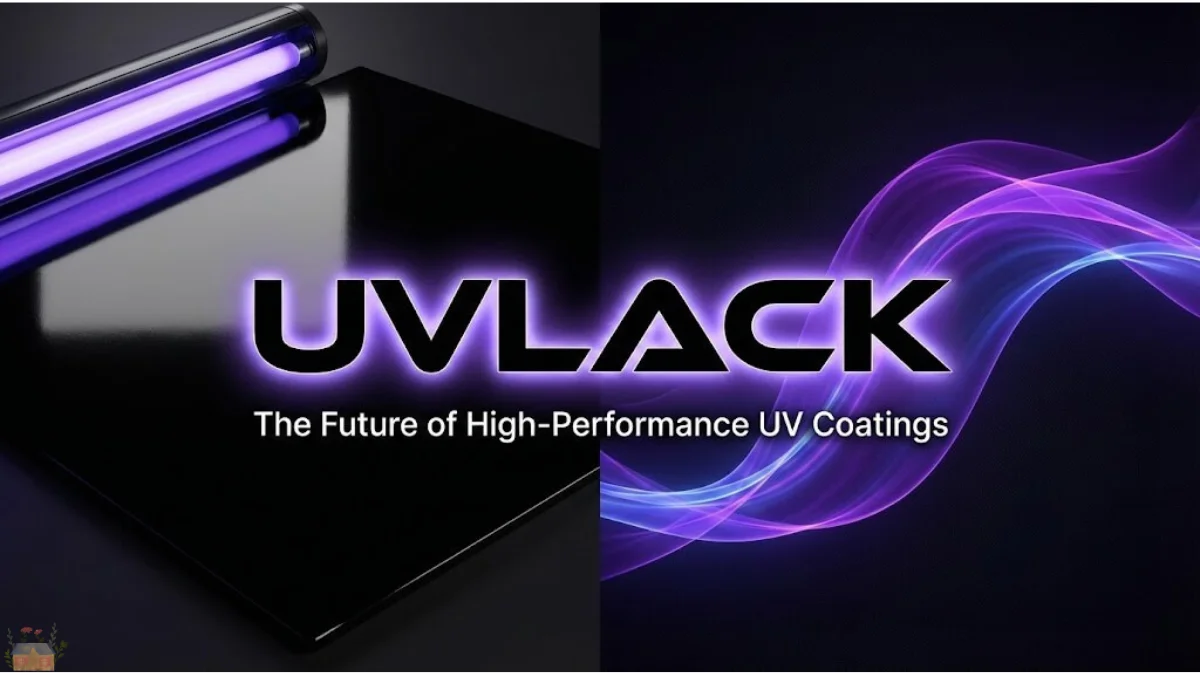
The word Uvlack is rapidly carving out a niche in our modern vocabulary, serving as a linguistic bridge between the technical world of ultraviolet curing and the aesthetic depth of the color black. At first glance, it might seem like a simple portmanteau, but Uvlack represents a sophisticated shift in how we approach surface finishes, beauty standards, and industrial efficiency.
By combining “UV” (ultraviolet) and “lack” (from the German Lack, meaning lacquer or varnish), the term encapsulates a high-performance methodology that prioritizes speed, resilience, and a striking visual finish. Whether you are a professional in the automotive industry, a tech entrepreneur looking for a bold brand identity, or simply someone trying to get a manicure that actually lasts through a workweek, understanding the scope of Uvlack is essential for navigating today’s innovation-driven market.
The Linguistic and Conceptual Origins of Uvlack
To truly appreciate why Uvlack is trending, we have to look at its roots. Etymologically, it draws from the European tradition of high-quality coatings. In many Germanic languages, “lack” is the standard term for a protective finish. When you marry this with “UV,” you aren’t just describing a color; you are describing a process of instantaneous transformation.
A Fusion of Contrast and Science
The “black” element of Uvlack isn’t just about pigment. It represents the “void” or the depth that high-gloss finishes achieve when they are perfectly cured. Ultraviolet light exists just beyond the visible spectrum of human sight, yet it is the very tool used to bring these finishes into their final, hardened state. This duality—using invisible light to create a deeply visible, tangible result—is what gives Uvlack its philosophical weight. It is a concept rooted in the idea of “seeing the unseen” and using advanced science to enhance the tactile world around us.
Uvlack in the Global Beauty Industry: Beyond the Basic Manicure
One of the most immediate and recognizable applications of Uvlack is found in the nail and cosmetics sector. For decades, the beauty industry struggled with the compromise between drying time and durability. Traditional solvent-based polishes take forever to dry and chip almost immediately. Uvlack changed that narrative.
The Science of the “Cure”
In a beauty context, Uvlack refers to a specific gel-based formula that remains liquid until exposed to a specific wavelength of UV or LED light. This isn’t just “drying”; it is a chemical reaction known as photo-polymerization. Within 30 to 60 seconds, the liquid resins cross-link to form a hard, plastic-like shield.
This process provides several benefits:
-
Instant Gratification: You can reach into your purse for your keys the second you leave the chair.
-
Structural Integrity: It reinforces the natural nail, preventing snaps and peels.
-
Optical Clarity: The “black” or pigment within the Uvlack formula remains trapped in a crystal-clear matrix, preventing the dulling that usually happens as traditional polish oxidizes.
Safety and Best Practices
There has been some debate regarding the safety of UV exposure in nail salons. However, recent studies, including those discussed by the Journal of Investigative Dermatology, suggest that the risk from these lamps is remarkably low when compared to natural outdoor sunlight. To be safe, many professionals recommend applying a broad-spectrum sunscreen to the hands or using fingerless UV-protective gloves during the Uvlack application process.
For More Reading: Coerant: A Human-Centered Digital Transformation Partner
Industrial Applications: The Hard Science of Uvlack Coatings
While beauty might be the most visible use case, the industrial sector is where Uvlack truly proves its worth as a workhorse. Manufacturers are under constant pressure to increase “throughput”—the speed at which products move through the factory. Traditional air-dry or heat-dry coatings are a bottleneck. Uvlack coatings eliminate that bottleneck.
Automotive and Aerospace
In the automotive world, Uvlack is used for everything from headlamp lenses to interior trim. These surfaces need to withstand extreme heat, friction, and chemical exposure (like spilled coffee or cleaning agents). A UV-cured coating provides a level of scratch resistance that traditional paints simply cannot match.
Woodworking and Furniture
High-end furniture manufacturers have shifted toward Uvlack finishes because they allow for a “closed-pore” look that is incredibly smooth to the touch. Because the coating cures instantly, there is no time for dust or debris to settle into the wet finish, resulting in a flawless surface that looks like glass.
Comparison of Coating Technologies
To understand why industries are pivoting, we can look at the performance metrics between Uvlack and traditional solvent-based varnishes.
The Environmental Argument: Why Uvlack is a Green Choice
In an era where ESG (Environmental, Social, and Governance) goals drive corporate policy, Uvlack stands out as a remarkably sustainable technology. The primary environmental culprit in the coating industry is Volatile Organic Compounds (VOCs). These are the chemicals that “off-gas” and create that strong paint smell, contributing to smog and respiratory issues.
Eliminating the “Off-Gas”
Uvlack formulations are typically 100% solids. This means that 100% of the liquid you apply to the surface stays on the surface after it is cured. In traditional coatings, up to 50% of the product evaporates into the atmosphere. By switching to Uvlack, companies can reduce their carbon footprint and provide a safer working environment for their employees.
Energy Efficiency
Traditional drying ovens must be kept at high temperatures constantly, consuming massive amounts of natural gas or electricity. UV lamps used for Uvlack only need to be powered when the product is directly underneath them. This “instant-on” capability results in energy savings of up to 70% in some industrial settings.
Uvlack as a Branding and Design Powerhouse
Beyond the chemistry, Uvlack is emerging as a powerful “concept word” in the world of branding. It sounds tech-forward, sleek, and premium. For a startup or a luxury brand, adopting the Uvlack aesthetic means embracing a specific set of values: precision, modernity, and depth.
The “Uvlack Aesthetic” in Tech
We see this in the design of high-end electronics. The “piano black” finish on a smartphone or the matte-but-deep-black finish of a luxury electric vehicle often relies on UV-curable tech. It creates a sensory experience that feels “expensive.” Designers use Uvlack to create contrast—pairing a high-gloss UV finish against a raw, tactile material like leather or brushed metal.
A Metaphor for Innovation
In branding, Uvlack serves as a metaphor for the intersection of the visible and invisible. It represents a brand that works behind the scenes (the invisible UV light) to create a bold, undeniable presence (the black lacquer). This makes it an ideal identifier for cybersecurity firms, AI platforms, or high-performance gear companies.
For More Reading: Rolerek: The Sustainable Tech Brand Redefining Electronics
Application Guide: How to Achieve Professional Results with Uvlack
If you are looking to implement Uvlack—whether in a small workshop or for personal use—the methodology is critical. Because the process is so fast, there is very little room for error.
Surface Preparation
The golden rule of Uvlack is that the coating is only as good as the surface beneath it.
-
Decontamination: Use an isopropyl alcohol wipe to remove all oils. Even a fingerprint can cause “fisheye” defects in the UV layer.
-
Abrasion: For industrial surfaces, a light sanding (400-600 grit) creates “mechanical teeth” for the Uvlack to grip.
-
Thin Layers: It is tempting to go heavy, but UV light has a limited “depth of cure.” Multiple thin layers are always superior to one thick layer.
The Curing Environment
Uvlack requires a specific light spectrum (usually between 200nm and 400nm). If your bulb is old or the wrong wavelength, the surface might feel “tacky” or sticky. This is known as oxygen inhibition. Professional setups often use a nitrogen blanket to displace oxygen, ensuring a bone-dry finish every time.
Technical Specifications and Material Compatibility
Not all materials react to Uvlack in the same way. Understanding the substrate is key to preventing delamination or cracking.
Challenges and Counterpoints: Is Uvlack Always the Answer?
As an intellectual sparring partner, I must challenge the assumption that Uvlack is a “magic bullet” for every application. There are legitimate drawbacks to consider.
The “Shadow” Problem
UV light travels in straight lines. If you are coating a complex 3D object with deep crevices or “shadow” areas, the UV light cannot reach those spots. The coating in those shadows will remain liquid indefinitely, creating a mess and a safety hazard. In these cases, a “dual-cure” system (which uses both UV and moisture or heat) is necessary.
Equipment Costs
While Uvlack saves money on energy and time, the initial investment in UV lamps and high-performance resins is significantly higher than traditional methods. For a small hobbyist, the barrier to entry might be steep.
Future Horizons: What’s Next for Uvlack?
The trajectory of Uvlack is pointing toward “smart” coatings. Researchers are currently developing Uvlack formulas that can self-heal. Imagine a car finish that, when scratched, simply needs to be parked in the sun for the UV rays to re-activate the polymers and “flow” back into the scratch.
We are also seeing the rise of 3D printing resins that utilize Uvlack technology to create high-resolution medical devices and aerospace components. The “black” in Uvlack is becoming a canvas for carbon nanotubes and graphene, pushing the boundaries of what a “coating” can actually do—moving from mere protection to active conductivity and thermal management.
Conclusion: Embracing the Uvlack Revolution
Uvlack is far more than a buzzword; it is a fundamental shift in the way we finish the world around us. From the micro-scale of a perfect manicure to the macro-scale of automotive manufacturing, it offers a rare trifecta of speed, durability, and environmental responsibility. By understanding the science behind the “cure” and the aesthetic potential of the “black,” professionals and enthusiasts alike can leverage this technology to create products that are built to last and designed to impress.
As we move toward a more sustainable and fast-paced future, the principles of Uvlack—efficiency through science—will likely become the standard rather than the exception. Whether you are looking to upgrade your business’s production line or simply want a more resilient finish on your personal projects, exploring Uvlack is a logical next step in your pursuit of quality.
FAQs

I’m Salman Khayam, the founder and editor of this blog, with 10 years of professional experience in Architecture, Interior Design, Home Improvement, and Real Estate. I provide expert advice and practical tips on a wide range of topics, including Solar Panel installation, Garage Solutions, Moving tips, as well as Cleaning and Pest Control, helping you create functional, stylish, and sustainable spaces that enhance your daily life.