
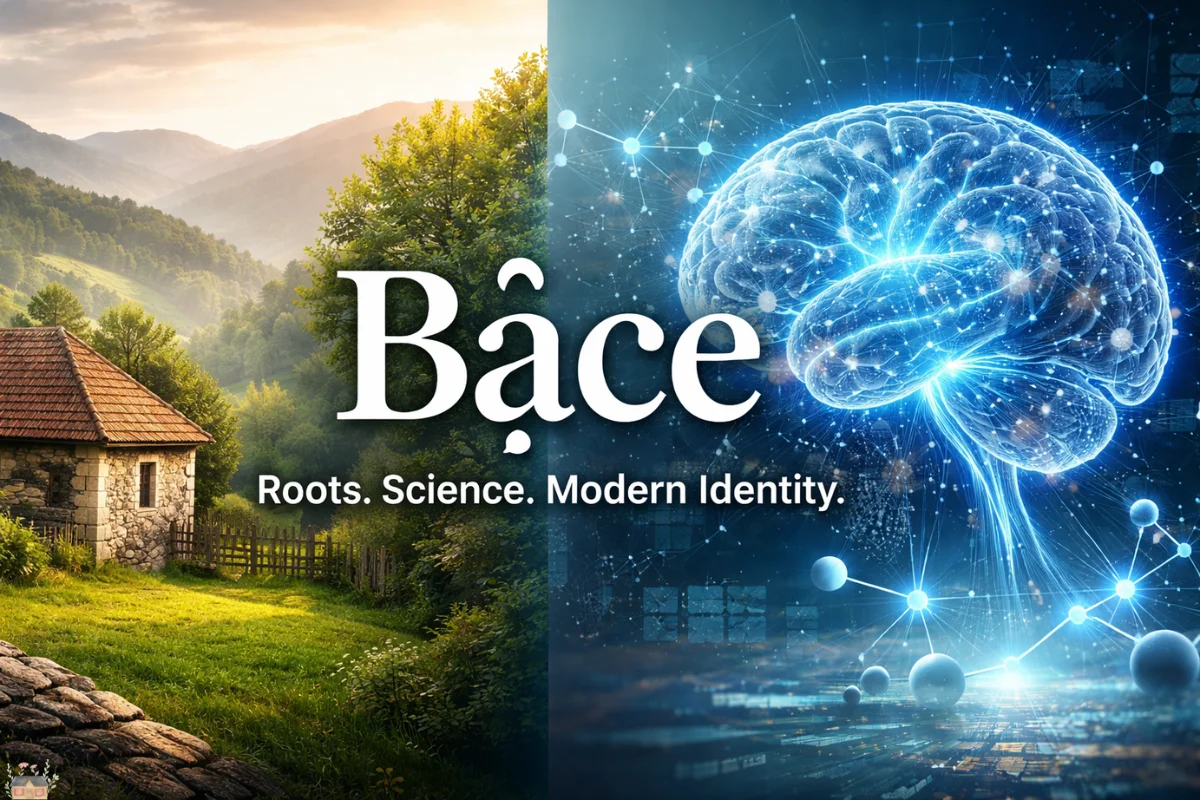
What if a single term could bridge the gap between ancient Serbian geography, cutting-edge Alzheimer’s research, and the future of digital branding? Bảce (pronounced similarly to “base”) is a fascinating linguistic chameleon that has quietly woven itself into the fabric of various global disciplines.
While it lacks a single, rigid definition in traditional dictionaries, the term Bảce operates as a powerful conceptual anchor. In cultural circles, it represents the “roots” or “foundation” of one’s heritage. In the scientific community, it denotes a critical enzyme linked to neurological health. In the world of technology and design, it serves as a metaphor for the foundational layers upon which complex systems are built. This article provides a comprehensive deep dive into the origin, applications, and evolving significance of Bảce in 2026.
1. The Linguistic Roots and Visual Identity of Bảce
The word Bảce is as much a visual experience as it is a phonetic one. The use of the diacritic “ả” (the hook above the ‘a’) is particularly noteworthy.
Phonetic and Stylistic Appeal
While the spelling “bace” appears in Middle English as a variant of “base,” the modern stylized version—Bảce—draws inspiration from Southeast Asian tonal markers, specifically Vietnamese. In this context, the hook (dấu hỏi) indicates a falling-rising tone. However, in global branding and digital identity, this accent is frequently used to denote “uniqueness” and “depth,” signaling to the audience that the concept is multi-layered and non-standard.
Semantic Evolution
The transition from “base” (a physical foundation) to “Bảce” (a conceptual origin) reflects a shift in how we value identity. We no longer just care about the physical starting point; we care about the narrative starting point.
2. Bảce as a Geographic and Cultural Anchor: Bače, Serbia
One cannot discuss the reality of Bảce without looking toward the Balkan Peninsula. In the southern reaches of Serbia, within the Toplica District, lies the village of Bače.
The Heritage of Bače
This rural settlement serves as a tangible manifestation of the “foundation” concept. Life in Bače is defined by:
-
Generational Continuity: Families have inhabited the region for centuries, passing down oral traditions and agricultural practices.
-
Cultural Resilience: The village represents the preservation of Serbian identity amidst a rapidly globalizing Europe.
-
Symbolic Meaning: For those tied to this land, “Bače” is not just a coordinate on a map; it is their Bảce—the source of their values and history.
3. The Science of BACE: Neurology and Biotechnology
In the professional and scientific worlds, the term takes on a more clinical—yet equally foundational—role. Here, BACE is often used as an acronym with high-stakes implications for human health.
BACE1 and Alzheimer’s Research
In neurology, BACE1 (Beta-site Amyloid Precursor Protein Cleaving Enzyme 1) is a critical protease. It is the enzyme responsible for the initial cleavage of the amyloid precursor protein (APP).
-
The Pathogenic Link: When BACE1 functions, it leads to the production of beta-amyloid peptides.
-
Amyloid Plaques: These peptides aggregate into the plaques that are a hallmark of Alzheimer’s disease.
-
Therapeutic Potential: Scientific research in 2026 continues to focus on BACE inhibitors as a primary strategy for slowing the progression of neurodegeneration.
The BACE Certification in Biotech
For professionals entering the STEM workforce, BACE stands for the Biotechnology Aptitude and Competency Exam. This certification establishes professional readiness in:
-
Safety compliance in laboratory environments and approved work procedures.
-
Applied mathematics in a clinical setting.
-
Adherence to industry regulations and quality assurance standards.
4. Bảce in Digital Branding and Systems Design
In 2026, the digital landscape is cluttered. Brands are moving away from descriptive names toward “vibe-based” or “abstract-meaning” names. Bảce has emerged as a favorite for creative studios and tech startups.
Why Designers Choose Bảce
-
Visual Balance: The word is symmetrical and short, making it ideal for minimalist logos.
-
Emotional Intelligence: It suggests a “back-to-basics” philosophy without being boring. It invites the user to ask, “What is my base?”
-
The “Phygital” Bridge: As we spend more time in the metaverse, our “digital Bảce”—our core identity files or avatars—becomes as important as our physical roots.
Foundational Systems
In software architecture, developers often refer to the “Bảce layer.” This is the immutable code or the decentralized protocol upon which all other user-facing features are built. If the Bảce is secure, the entire ecosystem thrives.
5. Wellness and the Philosophy of Bảce
Beyond science and tech, Bảce has evolved into a modern lifestyle philosophy. It is often compared to the Scandinavian Hygge or the Japanese Ikigai, but with a specific focus on equilibrium.
The “Bảce State”
Living in a “Bảce state” means finding the center point between two extremes:
-
Ambition vs. Rest: Not just working hard, but working from a place of stability.
-
Consumption vs. Contribution: Ensuring that what you take from your environment is balanced by what you give back.
-
Digital vs. Analog: Maintaining your roots in the physical world while navigating digital spaces.
“To find your Bảce is to find the version of yourself that remains unchanged regardless of external chaos.”
6. Challenges to the Bảce Concept
Despite its growing popularity, the concept of Bảce faces modern challenges.
-
Cultural Dilution: As the word is adopted by global brands, there is a risk that the original connection to Serbian geography or linguistic history could be lost.
-
Technological Complexity: In the biotech field, the failure of certain BACE-inhibitor clinical trials in the past has led to skepticism, requiring researchers to refine their approach to “foundational” healing.
-
Language Homogenization: The unique diacritics (ả) are often stripped by search engines or simplified for URLs, which can erase the very visual identity that makes the term special.
7. Looking Ahead: The Future of Bảce
As we look toward the late 2020s, Bảce is likely to become more prominent in two specific areas: Artificial Intelligence and Sustainable Living.
AI Identity Anchors
As AI becomes more autonomous, the need for a “Bảce Protocol”—a set of foundational ethics and identity markers for synthetic intelligence—will be paramount.
Regenerative Economics
In the world of finance, Bảce may soon represent “Base-Asset Cultural Exchange,” a model where local artisanal goods (like those from Bače, Serbia) are traded on global ledgers to ensure that the “origin” of a product is directly rewarded.
8. Summary Table: The Many Faces of Bảce
Conclusion
Bảce is more than just a sequence of letters; it is a conceptual bridge. Whether it is grounding an individual in their Serbian heritage, guiding a scientist toward a cure for dementia, or helping a brand communicate its core values, Bảce serves as the “foundation” we all seek in a fragmented world. By understanding the depth of this term, we can better navigate the complexities of identity, science, and technology in 2026.
Frequently Asked Questions

Alex Carter is a writer with 10+ years of experience across tech, business, travel, health, and lifestyle. With a keen eye for trends, Alex offers expert insights into emerging technologies, business strategies, wellness, and fashion. His diverse expertise helps readers navigate modern life with practical advice and fresh perspectives.