
Annual vs quarterly pest control refers to how often a professional pest management company treats your home for insects and rodents. Annual service typically involves one comprehensive visit per year, while quarterly service includes treatments every three months to prevent infestations before they start.
Choosing between the two depends on your home’s location, pest pressure, climate, and tolerance for risk. Below is a detailed comparison to help homeowners make an informed decision.
Understanding Pest Control Service Frequency
Pest control isn’t just about eliminating visible bugs. Modern pest management focuses heavily on prevention, monitoring, and environmental adjustments that reduce the likelihood of infestation.
Service frequency determines:
-
How often protective barriers are refreshed
-
How quickly emerging pest issues are addressed
-
Whether seasonal pest cycles are managed proactively
-
The overall long-term risk of infestation
In many regions, pest activity fluctuates throughout the year. Ants, spiders, roaches, rodents, termites, mosquitoes, and wasps each have different life cycles and peak seasons. Service frequency plays a major role in controlling these patterns.
What Is Annual Pest Control?
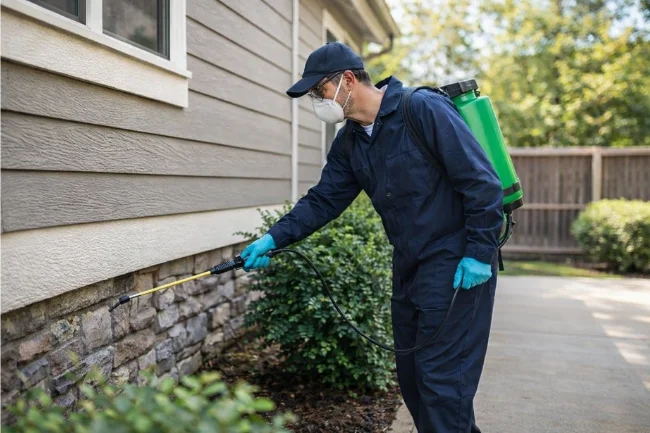
Annual pest control typically involves one scheduled visit per year. During this appointment, technicians inspect the property, identify vulnerabilities, apply treatment where needed, and offer recommendations for prevention.
What an Annual Visit Usually Includes
-
Exterior perimeter treatment
-
Inspection of common entry points
-
Spot treatment for active pest issues
-
Basic monitoring for high-risk pests
-
General prevention advice
This approach is often reactive rather than preventative. If pests appear between visits, additional service calls may be necessary.
Who Typically Chooses Annual Service?
Annual pest control may suit:
-
Homes in low-risk pest areas
-
Newly built properties with minimal entry points
-
Households that rarely experience infestations
-
Homeowners comfortable calling for service only when needed
However, it does not provide continuous seasonal coverage.
What Is Quarterly Pest Control?
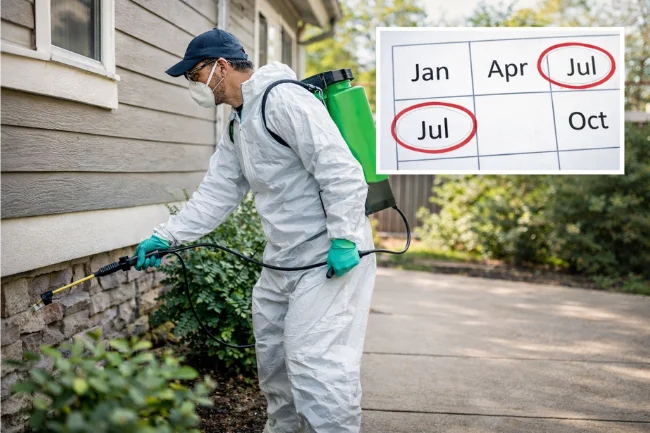
Quarterly pest control involves scheduled service visits every three months. Treatments are adjusted based on season, pest pressure, and property conditions.
This model is widely considered a preventative pest management.
What Quarterly Service Typically Includes
-
Seasonal perimeter treatments
-
Monitoring and preventative interior treatments
-
Rodent and insect activity checks
-
Web removal and nest disruption
-
Reapplication of protective barriers
-
Follow-up if pest activity appears between visits
By maintaining consistent protection, quarterly service reduces the likelihood of infestations becoming severe.
Why Quarterly Service Is Common
Many pest control providers recommend quarterly treatment because:
-
Most chemical barriers degrade over time
-
Seasonal pests emerge throughout the year
-
Eggs and larvae can hatch between treatments
-
Small problems can escalate quickly
Quarterly service helps address these cycles proactively.
Annual vs Quarterly Pest Control: Key Differences
The following table outlines the major distinctions between annual and quarterly pest control plans:
The core difference lies in prevention versus response.
Seasonal Pest Activity: Why Frequency Matters
Most pests follow seasonal patterns. For example:
-
Spring: Ants, termites, wasps begin activity
-
Summer: Mosquitoes, flies, roaches peak
-
Fall: Rodents seek indoor shelter
-
Winter: Spiders and overwintering insects remain indoors
An annual visit may not align with these cycles. If treatment is performed in early spring, protection may weaken by late summer or fall—when rodent activity increases.
Quarterly service adjusts treatments seasonally. For instance:
-
Spring visit: Focus on ants and termites
-
Summer visit: Address mosquitoes and stinging insects
-
Fall visit: Reinforce rodent exclusion
-
Winter visit: Interior monitoring and spider control
This timing can significantly reduce infestation risk.
Cost Comparison: Is Quarterly Worth It?
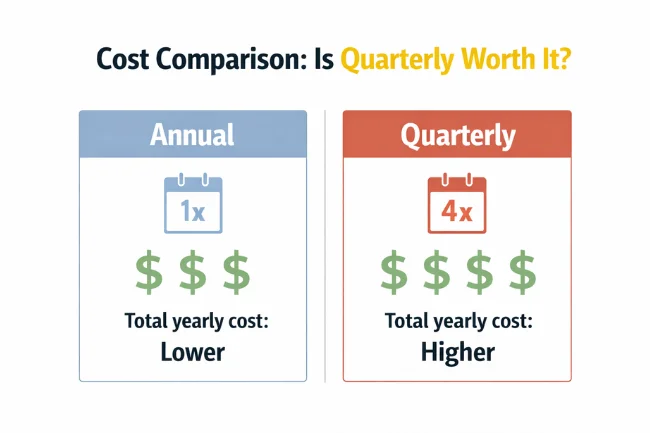
Cost is often the primary concern when comparing annual vs quarterly pest control.
Annual Plans
-
Lower initial cost
-
Fewer scheduled visits
-
Potential added fees for emergency treatments
If pests appear mid-year, additional service calls may increase total expenses.
Quarterly Plans
-
Higher overall annual cost
-
Predictable billing
-
Often includes free follow-up visits
While quarterly service may cost more upfront, it may reduce long-term damage costs associated with termites, rodents, or cockroach infestations.
Structural damage, contaminated food, and electrical wiring issues caused by pests can exceed the cost difference between service plans.
Risk Factors That Influence Your Decision
Not all homes face the same pest pressure. Consider these variables when deciding.
Geographic Location
Warm, humid climates typically experience higher pest activity year-round. Coastal areas and regions with mild winters may require consistent service.
Surrounding Environment
Homes near:
-
Wooded areas
-
Water sources
-
Open fields
-
Dense vegetation
tend to attract more insects and rodents.
Property Age and Condition
Older homes often have:
-
More entry points
-
Cracks in foundation
-
Aging weather stripping
-
Attic and crawl space gaps
These increase vulnerability to infestations.
Previous Pest History
If a property has experienced:
-
Termite damage
-
Rodent infestations
-
Recurring ant problems
-
Persistent roaches
quarterly service may provide better long-term protection.
Effectiveness: Which Plan Controls Pests Better?
From a prevention standpoint, quarterly pest control generally provides stronger protection.
Chemical treatments and barriers do not last indefinitely. Weather conditions such as rain, heat, and UV exposure reduce effectiveness over time. Quarterly service ensures reapplication before coverage declines significantly.
Annual service can still be effective in low-risk environments, but it relies heavily on homeowner vigilance between visits.
Environmental and Safety Considerations
Modern pest control emphasizes integrated pest management (IPM), which combines targeted treatments with environmental modifications.
Quarterly service does not necessarily mean heavier chemical use. In many cases, it allows for smaller, controlled applications because problems are caught early.
Preventative visits may reduce the need for large-scale treatments later.
Professional providers typically:
-
Use regulated products
-
Follow label instructions
-
Apply treatments strategically
-
Adjust approach based on pest type
Homeowners concerned about environmental impact may benefit from discussing eco-conscious options with their provider.
Convenience and Peace of Mind
One of the most overlooked aspects of annual vs quarterly pest control is convenience.
With quarterly service:
-
Appointments are pre-scheduled
-
Inspections are routine
-
Issues are identified early
-
Emergency calls are less frequent
Annual plans require more active monitoring by homeowners. If pests appear unexpectedly, scheduling urgent service can be inconvenient.
For many households, the predictability of quarterly visits offers reassurance.
When Annual Pest Control May Be Enough
Annual service can be reasonable when:
-
The home is newly constructed
-
There is minimal nearby vegetation
-
Winters are harsh and long
-
No prior infestation history exists
-
The homeowner prefers reactive treatment
In these situations, pest pressure may remain low enough to justify once-a-year service.
When Quarterly Pest Control Is Recommended
Quarterly service may be more appropriate if:
-
The region has year-round pest activity
-
The home has experienced recurring infestations
-
The property is surrounded by woods or water
-
There are crawl spaces or basements prone to moisture
-
The homeowner wants continuous protection
Homes with children, pets, or stored food in accessible areas may also benefit from consistent monitoring.
Termites and Specialized Pests
Some pests require separate treatment plans regardless of general service frequency.
For example:
-
Bed bug treatments
-
Wildlife exclusion
-
Mosquito yard treatments
These services may operate independently from standard annual or quarterly plans.
It is helpful to confirm what is included in any service agreement.
Questions to Ask Before Choosing a Plan
Before deciding between annual vs quarterly pest control, consider asking:
-
What pests are most common in my area?
-
How long does each treatment remain effective?
-
Are follow-up visits included?
-
What happens if pests return between services?
-
Are preventative measures included?
A reputable provider should clearly explain the scope of service and expected outcomes.
The Role of Professional Assessment
While general guidelines are helpful, a property-specific inspection provides the most accurate recommendation.
A technician evaluates:
-
Structural vulnerabilities
-
Moisture conditions
-
Entry points
-
Pest evidence
-
Environmental risk factors
This allows for a tailored service plan rather than a one-size-fits-all approach.
Balancing Budget and Protection
Budget considerations matter, but so does long-term risk.
Annual service may reduce short-term expenses. Quarterly service may reduce:
-
Structural damage
-
Health contamination risks
-
Emergency service costs
-
Stress from recurring infestations
The right choice depends on risk tolerance and property conditions.
Frequently Asked Questions
Is quarterly pest control really necessary?
Quarterly pest control is not mandatory for every home, but it offers consistent prevention. In regions with moderate to high pest activity, seasonal treatments help maintain protective barriers and reduce infestation risk. Homes in low-risk areas may manage with less frequent service.
Does annual pest control save money?
Annual pest control has a lower upfront cost. However, unexpected infestations between visits may require additional service calls, which can increase total expenses. The overall savings depend on how frequently pest issues occur throughout the year.
How long does pest control treatment last?
Most perimeter treatments remain effective for several weeks to a few months, depending on weather conditions and pest type. Rain, heat, and environmental exposure can reduce longevity, which is why some providers recommend quarterly reapplication.
What pests are covered in quarterly plans?
Quarterly plans typically cover common household pests such as ants, spiders, cockroaches, and rodents. Coverage varies by provider, so reviewing the service agreement helps clarify which pests are included.
Can I switch from annual to quarterly service later?
Many providers allow plan adjustments after assessing pest activity and property needs. If infestations become recurring, transitioning to quarterly service may offer stronger preventative protection.
Choosing the Right Pest Control Schedule
The difference between annual vs quarterly pest control ultimately comes down to prevention, risk level, and personal preference.
Annual service may be sufficient for low-risk properties with minimal pest history. Quarterly service provides ongoing seasonal protection and greater peace of mind, especially in regions with consistent pest activity.
A professional inspection can clarify which schedule aligns best with your home’s conditions. Understanding local pest pressure, treatment longevity, and your tolerance for unexpected issues will guide a confident decision.
Evaluating service options, reviewing coverage details, and requesting a property assessment can help ensure your home receives the appropriate level of protection throughout the year.
For broader information, visit Wellbeing Makeover

I’m Salman Khayam, the founder and editor of this blog, with 10 years of professional experience in Architecture, Interior Design, Home Improvement, and Real Estate. I provide expert advice and practical tips on a wide range of topics, including Solar Panel installation, Garage Solutions, Moving tips, as well as Cleaning and Pest Control, helping you create functional, stylish, and sustainable spaces that enhance your daily life.