
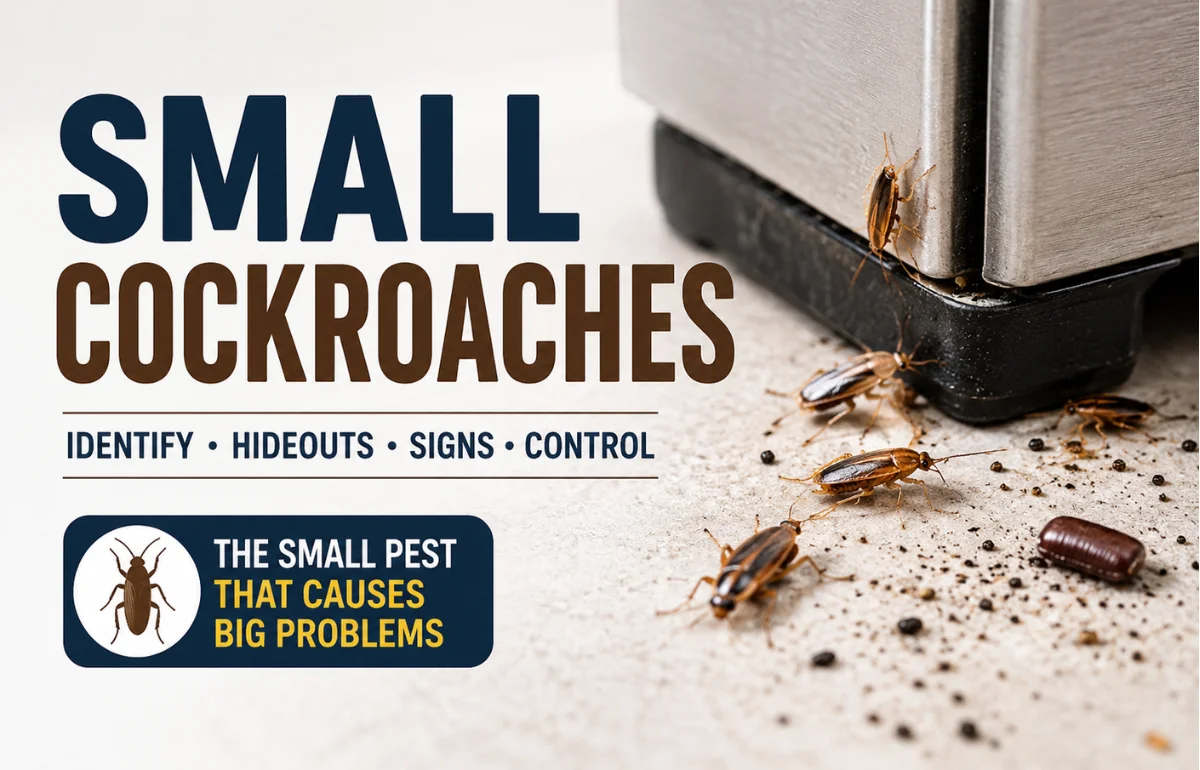
Small cockroaches are house-dwelling roach species — mainly the German cockroach and the brown-banded cockroach — that measure no more than 1.5 centimetres as full-grown adults, with newly hatched nymphs starting at a tiny 3mm. Unlike the larger roaches that wander in from the garden on a humid night, small cockroaches spend their entire life cycle indoors, breeding quickly and tucking themselves into spots most homeowners never think to check.
They’re behind almost every serious indoor infestation across Australian homes, and from what I’ve seen, they’re also the species people misidentify the longest, because at a glance, they don’t even register as cockroaches. They just look like small brown beetles scuttling under the toaster.
I’ve spent a fair bit of time around pest issues in my own home and helping family sort out theirs, and small cockroaches are the ones that catch people off guard. They’re not the dramatic, flying intruder you swat with a thong at midnight. They’re quiet, they’re patient, and by the time you actually spot one in daylight, there’s usually a colony already established somewhere close by.
What Are Small Cockroaches Exactly?
When pest professionals talk about small cockroaches, they’re almost always referring to two species that have adapted brilliantly to life inside human buildings.
German Cockroach
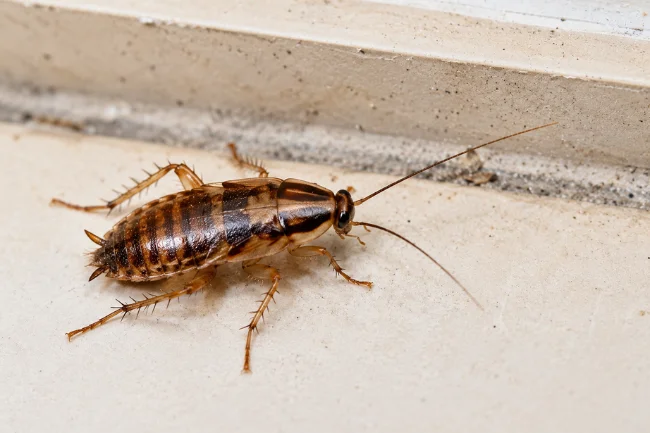
This is the one you’ll find in nine out of ten kitchen infestations. Light tan to brown in colour, with two dark parallel stripes running down behind the head, the German cockroach is small, fast, and breeds at a rate that genuinely surprises people. A single egg case (called an ootheca) can carry up to 40 eggs, and a female can produce several of these across her lifetime. They love warmth, moisture, and proximity to food — which is exactly what a kitchen offers in abundance.
Brown-Banded Cockroach
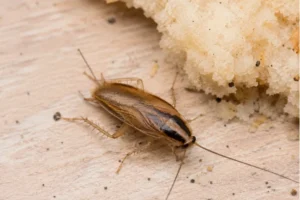
Slightly less common but still a regular in Australian homes, the brown-banded cockroach gets its name from the pale bands across its wings. What sets it apart from the German cockroach is that it tolerates drier conditions far better, so you’ll sometimes find it in bedrooms, behind picture frames, inside electronics, or up near ceiling cornices rather than strictly in the kitchen or bathroom.
Both species are small cockroaches in the truest sense, and both are far more difficult to eliminate than the big, slow-moving roaches that occasionally wander in from outside.
Why Small Cockroaches Cause Bigger Problems Than Large Ones
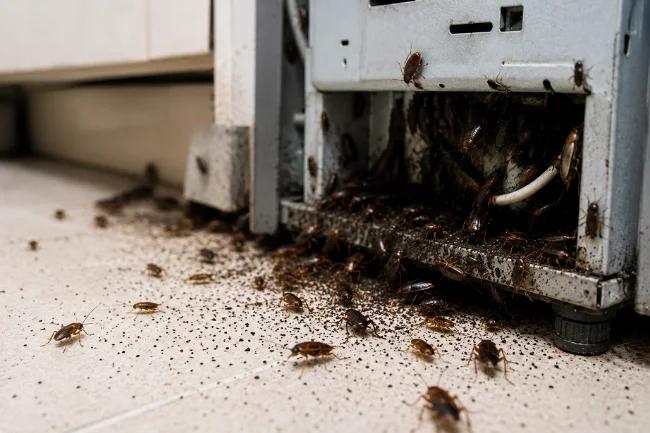
This sounds backwards, I know — surely a bigger cockroach is the worst problem? In practice, it’s the opposite, and it comes down to three things: size, speed of reproduction, and where they’re able to hide.
A large cockroach, like an American cockroach, is an outdoor pest that occasionally finds its way inside. You’ll usually only deal with a handful at a time, and they’re relatively easy to spot and treat. Small cockroaches are a different story entirely. Because nymphs start at just 3mm, they can squeeze into gaps as thin as 1.5 millimetres — behind skirting boards, inside power points, under the rubber seal of a dishwasher door, even inside the casing of a microwave or modem where the warmth from the electronics suits them perfectly. By the time you’ve seen two or three small cockroaches in your kitchen, there’s a very good chance there are dozens more hiding within a few metres, simply because they’re built to stay hidden until conditions are right.
Signs You Might Have Small Cockroaches
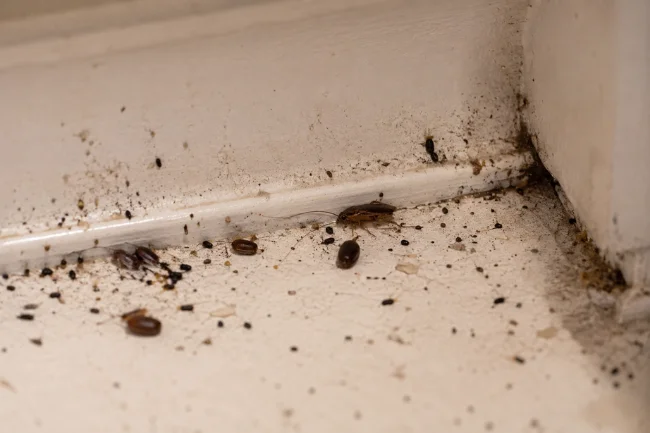
Before reaching for a spray, it’s worth confirming what you’re actually dealing with. A few telltale signs tend to show up well before you spot a live cockroach:
- Droppings that look like coffee grounds or coarse black pepper, usually clustered in corners of cupboards or drawer runners
- Smear marks along skirting boards or under sinks, which usually point to a damp, warm hiding spot nearby
- A musty, slightly sweet or oily smell in cupboards or behind appliances, caused by the pheromones cockroaches use to signal other roaches to congregate
- Tiny shed skins, since nymphs moult several times before reaching adulthood
- Oval egg cases (ootheca) tucked into crevices, often mistaken for a seed or a bit of dirt
If you’re noticing more than one of these at once, it’s a strong sign you’re past the “one stray roach” stage and into an actual infestation.
Small Cockroaches vs Large Cockroaches: A Quick Comparison
People often assume all cockroaches behave the same way, but small and large species are genuinely different problems with different solutions.
Where Small Cockroaches Actually Hide
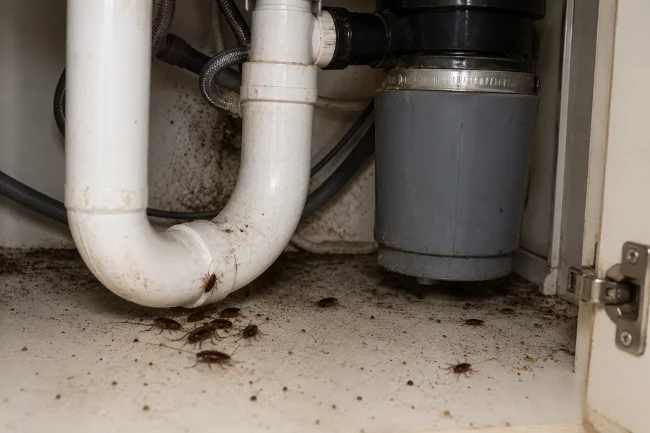
Most articles on this topic list the obvious spots — under the sink, behind the fridge — and stop there. From experience, the places people miss are usually the ones causing the infestation to come straight back after a clean-up.
Hot water systems and instantaneous gas heaters are a favourite, since the consistent warmth makes them an ideal year-round harbourage even through a Melbourne or Hobart winter. Routers and modems are another one most people never think to check, simply because nobody pulls a modem off the wall to inspect it. Inside the control panel of a dishwasher, behind the rubber door seal of a washing machine, and underneath the rim of a pet’s water bowl are all spots I’ve personally found activity in. Even cardboard boxes brought in from moving house or online deliveries are a known way small cockroaches first enter a home, since German cockroaches in particular are excellent hitchhikers.
Health Risks Worth Knowing About
It’s not just the squeamish factor. Small cockroaches shed skin fragments and leave droppings that contain proteins known to trigger allergic reactions and worsen asthma, particularly in children. They’re also capable of picking up and spreading bacteria like Salmonella as they move between rubbish, drains, and food preparation surfaces. A heavy infestation in a home with a child who has asthma or eczema is something I’d treat as a priority, not a “get to it eventually” job.
How to Get Rid of Small Cockroaches
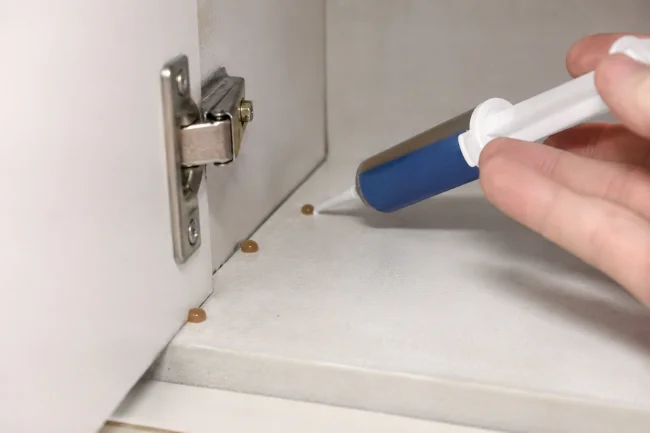
Gel Baits
This is genuinely the most effective method available to homeowners, and it’s the same approach professionals lean on. Small dots of gel bait placed in cupboard corners, hinges, and under appliances work because the cockroach doesn’t need to be sprayed directly — it eats the bait, returns to its hiding spot, and the effect spreads through the colony from there. Nymphs that never leave their harbourage still get exposed because adults carry contaminated droppings back to them.
Sprays and Surface Treatments
Sprays are useful for treating known cracks, skirting boards, and entry points, but they work best as a supporting treatment rather than the main event. One thing worth knowing: insecticide sprays are repellent to cockroaches, so spraying near a bait will actually push roaches away from the bait and reduce its effectiveness. Keep the two separated by room or area.
Foggers and Bombs
A fogger can knock down a visible, active infestation in a single room reasonably quickly, but it won’t reach inside wall cavities, behind appliance motors, or deep within electronics, which is where small cockroaches often retreat to survive.
Sealing Entry Points and General Sanitation
None of the above will hold long-term if the underlying conditions stay the same. Wiping up food residue before bed, storing pantry items in sealed containers, fixing minor leaks, and sealing gaps around pipework all remove the food and moisture sources that small cockroaches depend on.
When to Call a Professional
If you’ve baited, sprayed, and cleaned thoroughly and you’re still seeing activity after a few weeks, it usually means the colony’s main harbourage hasn’t been found yet — and that’s genuinely where a trained eye makes the difference. If you’d rather hand the whole problem over, our home improvement services cover professional pest inspections and treatments tailored to exactly this kind of infestation, rather than a generic spray-and-hope approach.
Keeping Small Cockroaches From Coming Back
Once a treatment has worked, the goal shifts to prevention. Keep an eye on anything coming into the house in cardboard, since it’s one of the most common ways German cockroaches first arrive. Run the dishwasher and rinse food scraps before they sit overnight. Check under the fridge and around the hot water system every few months, particularly heading into the warmer months between October and April when small cockroach activity in Australia tends to spike. A bit of regular vigilance goes a long way further than people expect.
Frequently Asked Questions
What attracts small cockroaches into a home?
Warmth, moisture, and easy access to food scraps are the biggest drivers, along with cardboard boxes that can carry eggs undetected.
Are small cockroaches more dangerous than large ones?
They’re not more venomous or aggressive, but their numbers and ability to hide make them far harder to eliminate and more likely to spread bacteria around food areas.
How fast do small cockroaches breed?
A single German cockroach egg case can hold up to 40 eggs, and a female can produce several cases in her lifetime, which is why numbers can explode within weeks.
Can small cockroaches live in a clean house?
Yes. Even a spotless kitchen can have an infestation if there’s a single consistent food or water source, like a dripping tap or pet food left out overnight.
How long does it take to get rid of small cockroaches?
With gel baiting, most infestations show a noticeable drop within two to three weeks, though full elimination of a larger colony can take a couple of months.
Final Thoughts
Small cockroaches are one of those pests that look harmless right up until you realise how established they’ve become behind your appliances and skirting boards. Catching the early signs, using gel baits in the right spots, and tightening up food and moisture sources around the house will deal with most infestations before they spiral. If you’ve tried the basics and you’re still finding droppings or shed skins weeks later, it’s worth getting a professional set of eyes on the problem rather than letting it drag on through another season.

I’m Salman Khayam, the founder and editor of this blog, with 10 years of professional experience in Architecture, Interior Design, Home Improvement, and Real Estate. I provide expert advice and practical tips on a wide range of topics, including Solar Panel installation, Garage Solutions, Moving tips, as well as Cleaning and Pest Control, helping you create functional, stylish, and sustainable spaces that enhance your daily life.