
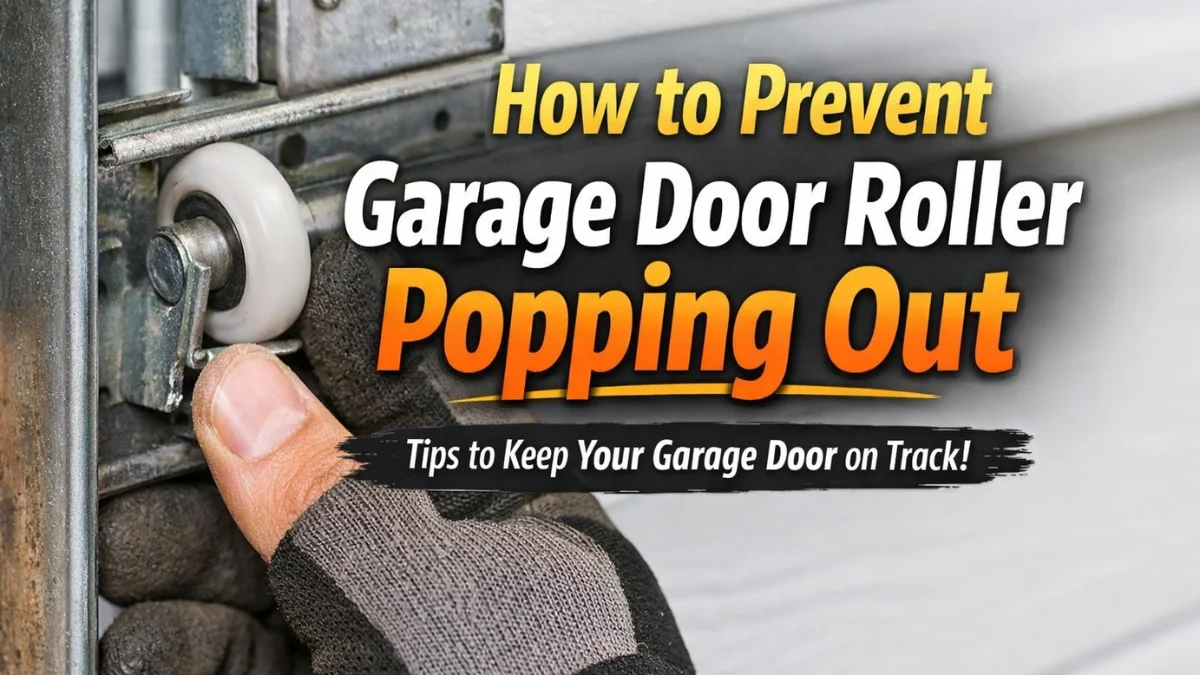
To prevent garage door roller popping out, homeowners need to maintain proper track alignment, lubricate rollers regularly, replace worn components promptly, and ensure the track brackets are firmly secured. A roller that repeatedly escapes the track signals an underlying issue — whether structural, mechanical, or related to routine neglect — that requires a targeted fix rather than a temporary patch.
Understanding Why Garage Door Rollers Pop Out
Garage door rollers operate inside a metal track system that guides the door through its full open-and-close cycle. When a roller jumps or pops out of the track, the door either stops moving, moves unevenly, or risks coming off entirely. This is one of the more common garage door problems American homeowners encounter, yet it is also one of the most preventable.
The root causes are rarely random. In most cases, a roller pops out because the track is bent, the brackets have loosened over time, the rollers themselves are worn or cracked, or the door has been placed under uneven stress. Understanding which factor is at play makes it far easier to address the problem at its source rather than forcing the roller back in and hoping it stays.
This guide covers the full picture: why rollers pop out, how to inspect your system, practical maintenance habits, and what to watch for before a minor issue becomes a major repair.
Common Causes of Garage Door Rollers Popping Out of Track
1. Misaligned or Bent Tracks
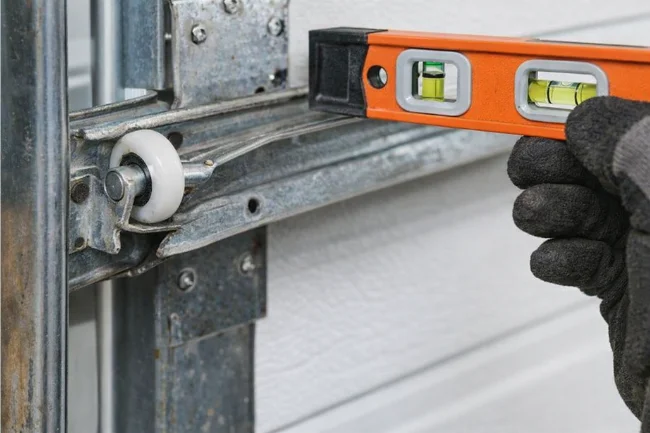
The track must remain perfectly plumb and parallel on both sides for rollers to stay seated. Over time, a minor impact from a vehicle, a shifting foundation, or improper installation can knock a section of track out of alignment. Even a quarter-inch gap or outward bow can cause rollers to skip or pull away from the rail under load.
To check alignment, visually inspect the vertical and horizontal sections of the track. Use a level on the vertical portions. If the gap between the track and the roller wheel varies significantly from one side to the other, alignment is likely the culprit.
2. Loose or Damaged Track Brackets
Brackets anchor the track to the wall and ceiling of the garage. When the lag screws that hold these brackets loosen — which happens gradually through vibration — the track can shift just enough to let rollers escape. Inspecting brackets every six to twelve months and re-tightening any loose hardware is one of the simplest and most effective ways to prevent garage door roller popping out.
3. Worn or Cracked Rollers
Standard steel rollers last roughly five to seven years under average use. Nylon rollers can last longer and operate more quietly, but they still degrade over time. A cracked roller stem, a flat spot on the wheel, or a seized bearing creates uneven movement and increases the chance the wheel will jump the track. Visually inspect rollers every season and replace them at the first sign of cracking, wobbling, or excessive wear.
4. Damaged or Rusted Track
Rust buildup along the inside of the track creates friction hotspots and causes rollers to snag or skip. In humid climates or garages that lack adequate ventilation, this can develop surprisingly quickly. Mild rust can often be removed using household methods. Resources like this guide from
Apartment Therapy on removing rust removing rust from metal surfaces, and this technique from Fine Woodworking using lemon juice and salt offer practical approaches for tackling light corrosion before it worsens. For severe rust that has pitted or warped the track, replacement is the better option.
5. Broken or Improperly Tensioned Springs
Garage door springs counterbalance the weight of the door. When a torsion or extension spring breaks or loses tension, the door becomes heavier on one side or harder to lift evenly. This uneven load places added stress on rollers, which can force them out of the track. Spring repair involves high tension and should be handled by a qualified technician.
6. Obstruction in the Track
Dirt, debris, or a small object lodged in the track can cause a roller to abruptly stop and then pop free when the door continues moving. Regular cleaning of the track interior with a dry cloth or vacuum prevents this kind of obstruction-related failure.
Step-by-Step: How to Prevent Garage Door Roller Popping Out
Step 1 – Inspect the Track Alignment
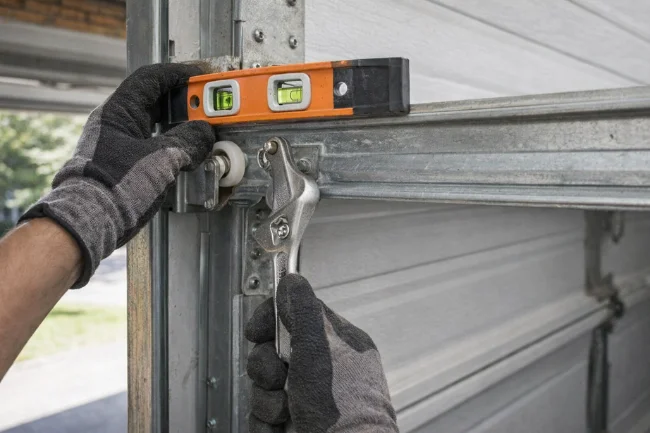
Close the garage door and stand inside the garage facing the door. Look at both vertical tracks from floor to ceiling. They should appear perfectly straight with no visible bends, gaps, or sections that bow inward or outward. Then open the door halfway and observe both tracks again. The gap between the track flange and the roller should be consistent — typically about a quarter inch — all the way up.
If you notice an inconsistency, use two adjustable wrenches or channel-lock pliers to carefully loosen the mounting bracket screws and nudge the track into the correct position before re-tightening. For significant bends, track replacement is more reliable than attempting to straighten the damaged section.
Step 2 – Tighten All Hardware
With the door closed, go over every bracket, bolt, and mounting screw using the appropriate socket or wrench. Pay particular attention to the brackets at the base of the vertical track and those that support the horizontal sections above. Loose hardware is one of the leading contributors to roller displacement and is quick to address.
Step 3 – Lubricate Rollers and Tracks
Lubrication reduces friction and keeps rollers moving smoothly through the track. Use a lithium-based grease or a spray lubricant specifically formulated for garage doors. Apply it to the roller stems and bearings, not the track itself. The track interior should remain clean — lubricating it only collects dirt.
A light application two to four times per year is generally sufficient for most climates. In colder regions where temperature extremes affect metal components, lubricating in early fall before winter is especially important.
Step 4 – Replace Worn Rollers Promptly
If a roller is cracked, wobbly, or obviously flat on one side, replace it before it causes the door to derail. Replacement rollers are widely available at hardware stores and online. Nylon rollers with sealed bearings are a popular upgrade because they operate more quietly than standard steel and tend to last longer with less maintenance.
To replace a roller, disconnect the door from the opener, clamp the track above the roller to be replaced, and then carefully pry the bracket outward just enough to free the roller stem. Slide the new roller in and close the bracket. Work methodically and avoid forcing any component.
Step 5 – Keep the Track Clean
Once or twice a year, wipe the inside of the track with a clean rag to remove dust, grime, and any dried lubricant buildup. For tracks with light rust, a fine steel wool pad or a mixture of common household acids can break down oxidation before it advances. Once clean, dry the track thoroughly before applying any fresh lubricant to the rollers.
Step 6 – Test the Door Balance
Disconnect the automatic opener and manually lift the door to waist height. Release it and observe what happens. A properly balanced door will stay roughly in place. A door that drops rapidly or rises on its own is out of balance, meaning the springs are not providing even counterbalancing. An unbalanced door places disproportionate strain on rollers and tracks. If the door fails this balance test, have a professional evaluate the spring tension.
Garage Door Roller Maintenance at a Glance
When to Call a Professional
Some garage door repairs are appropriate for experienced DIYers. Tightening hardware, cleaning tracks, lubricating rollers, and replacing individual rollers fall within the scope of most homeowners with basic tools. However, certain situations call for a trained technician.
Spring repair and replacement, in particular, involves components under extreme tension that can cause serious injury if mishandled. If the door balance test reveals a spring problem, or if a spring visibly appears broken or separated, a professional should be called. Similarly, if the track is severely damaged, the door is visibly warped, or the cable system appears frayed or off the drum, professional service is the right call.
It is also worth noting that repeated roller pop-outs — even after a homeowner has addressed the obvious causes — may indicate a structural issue with the door itself, such as a warped panel that creates uneven pressure on the track system. A technician can assess whether panel replacement or a full door replacement is the more cost-effective path.
Choosing the Right Replacement Rollers
Not all rollers are created equal, and selecting the right replacement can make a meaningful difference in how long the repair holds. Garage door rollers are generally available in three main types.
Steel rollers are the most basic and least expensive option. They tend to be noisy and require more frequent lubrication, but they are durable and widely available. Nylon rollers operate far more quietly, which makes them popular for attached garages where noise travels into living spaces. They also tend to require less lubrication. Nylon rollers with sealed ball bearings are considered the premium option — they combine quiet operation with extended service life.
When selecting replacement rollers, match the stem length and wheel diameter to the existing hardware. Standard residential rollers typically use a 2-inch wheel, though larger and heavier doors may require a 3-inch wheel. Check the manufacturer’s specifications for the door system when in doubt.
Preventing Roller Issues in the Long Run
The most effective way to prevent garage door roller popping out is to treat it as a scheduled maintenance item rather than something addressed only when a problem appears. A door that opens and closes dozens of times per week accumulates significant mechanical stress over a year. Components that appear functional may be approaching failure.
Building a simple checklist into seasonal home maintenance — spring and fall are natural times for a full inspection — catches most issues before they escalate. The cost difference between a roller replacement and a full track repair is substantial, and the safety difference between a properly maintained door and one that derails unexpectedly is even more significant.
For homeowners who are uncertain about any aspect of the inspection or repair process, consulting a garage door service professional for a tune-up every few years is a practical way to keep the system running reliably without taking on risks beyond one’s comfort level.
FAQs
1
Why does my garage door roller keep popping out of the track?
Repeated roller displacement typically points to one or more underlying causes: a misaligned or bent track, loose mounting brackets, worn or cracked rollers, or broken spring tension creating uneven door weight. Addressing the symptom without identifying the cause will result in the problem recurring. A thorough inspection of the track, hardware, rollers, and spring system usually reveals the source.
2
Is it safe to put a garage door roller back on the track myself?
Reseating a roller that has come off the track is possible for experienced DIYers, but it requires disconnecting the opener and clamping the track to prevent unexpected movement. If the roller came off due to a spring problem or significant track damage, professional help is the safer route. Never attempt to force a roller back onto the track while the door is under spring tension.
3
How often should garage door rollers be replaced?
Standard steel rollers typically last five to seven years under normal residential use. Nylon rollers with sealed bearings can last ten years or more. The actual lifespan depends on usage frequency, lubrication habits, and exposure to moisture. Inspect rollers every six months and replace them when you notice cracking, wobbling, flat spots, or any visible damage to the stem or wheel.
4
What type of lubricant should be used on garage door rollers?
A white lithium grease or a spray lubricant specifically formulated for garage door systems works best. These products resist moisture, tolerate temperature extremes, and do not attract dirt the way general-purpose oils tend to. Apply lubricant to the roller stems, bearings, and hinges. Avoid applying it inside the track, as this creates a sticky surface that collects grime over time.
5
Can a bent garage door track be straightened, or does it need to be replaced?
Minor bends in a track can sometimes be carefully straightened using pliers and a rubber mallet, particularly if caught early and the metal has not been significantly weakened. However, tracks with sharp bends, kinks, or sections that have been compressed are better replaced. A warped track will continue to cause roller problems even after attempted straightening, and replacement is generally more cost-effective long-term.
Final Thoughts
Preventing garage door roller popping out comes down to consistent attention rather than any single fix. A well-maintained track system, properly lubricated and structurally sound, will run reliably for years without the inconvenience of a door that derails or stops mid-cycle.
Start with the basics: inspect hardware twice a year, lubricate rollers every three to four months, and replace worn components before they fail. Keep an eye on track alignment and address rust early. If the door balance seems off or spring tension is a concern, bring in a professional rather than attempting repairs that carry real physical risk.
For homeowners looking to get ahead of potential issues, scheduling a professional garage door tune-up every two to three years is a practical step that can identify wear patterns before they become costly problems.
You May Also Read: Off-Track Garage Door Repair North Las Vegas
For broader information, visit Wellbeing Makeover

I’m Salman Khayam, the founder and editor of this blog, with 10 years of professional experience in Architecture, Interior Design, Home Improvement, and Real Estate. I provide expert advice and practical tips on a wide range of topics, including Solar Panel installation, Garage Solutions, Moving tips, as well as Cleaning and Pest Control, helping you create functional, stylish, and sustainable spaces that enhance your daily life.