
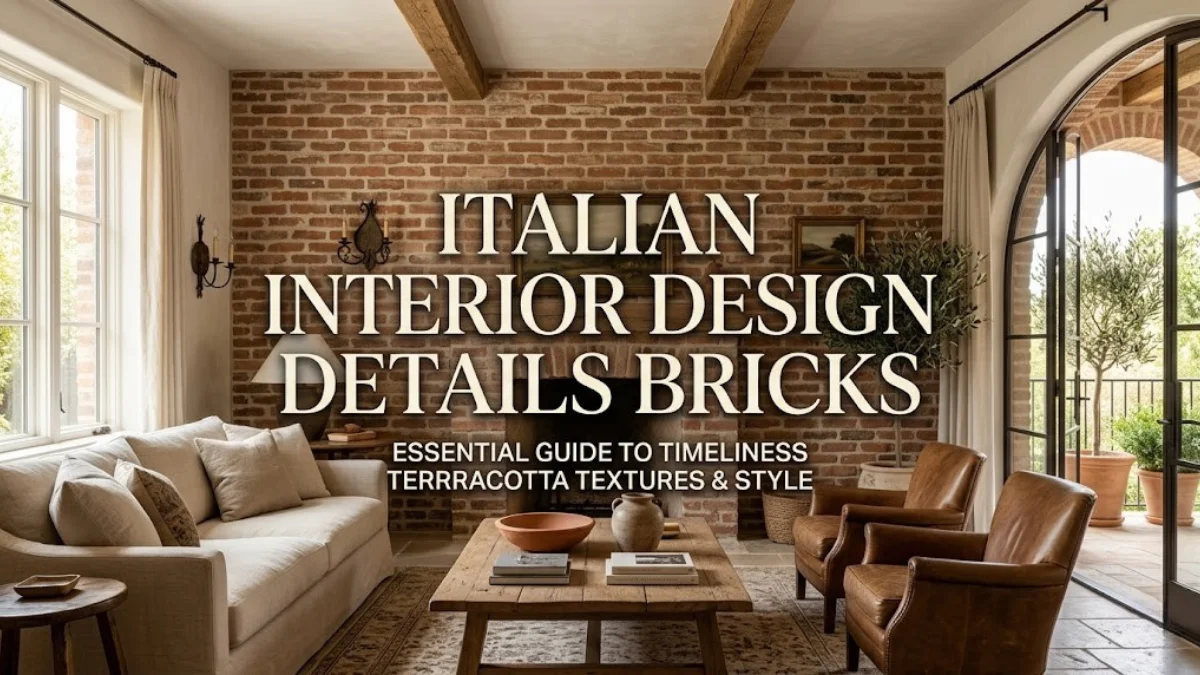
The first time I walked into a home with a raw, exposed terracotta brick wall anchoring the living room, I understood immediately why Italian interior design details bricks have endured for centuries. It wasn’t just the color — that deep, warm sienna that seemed to hold sunlight even at dusk — it was the feeling the wall created. The room breathed differently. It had weight, story, and an unhurried confidence that no paint color or wallpaper could replicate.
Italian brick architecture draws from millennia of building tradition, particularly from the regions of Tuscany, Umbria, and Emilia-Romagna, where brick and stone were not luxury choices but practical ones — locally available, thermally intelligent, and beautiful by accident. When contemporary designers bring those same principles indoors, the results are spaces that feel simultaneously ancient and entirely livable.
This guide walks through everything you need to know: from understanding the different types of Italian brick details, to knowing where they work best, to avoiding the common mistakes that turn a beautiful material into a heavy-handed design statement.
What Makes Italian Interior Design Details Bricks Different From Standard Brick Design
Not all exposed brick reads the same. A converted industrial loft in New York and a Florentine farmhouse kitchen might both feature brick walls, but they feel nothing alike. The difference lies in how Italian design philosophy treats brick — and understanding Italian interior design details bricks means recognizing brick not as a raw structural statement but as a textural material with cultural memory.
In Italian interior design, brick is rarely the loudest voice in the room. It sits in relationship with aged plaster, travertine, rough-hewn oak beams, and woven linen. The Italian approach values proportion and restraint. A single exposed brick wall in a kitchen carries far more elegance than four brick walls trying to do too much.
Key qualities that define Italian brick details include warm terracotta and earth-red tones that shift across the day with natural light, irregular handmade textures that resist uniformity, aged mortar with a matte finish, and a studied imperfection that comes from centuries of craft rather than machine production. These qualities are worth keeping in mind, whether you’re sourcing real reclaimed brick or high-quality thin brick veneers.
Italian Interior Design Brick Details: Traditional Tuscan vs. Modern Linear Styles
Within Italian-inspired interiors, there are two primary design languages when it comes to brick, and understanding which one suits your space is essential before making any decisions.
Traditional Tuscan Brick: The Original Italian Interior Design Detail
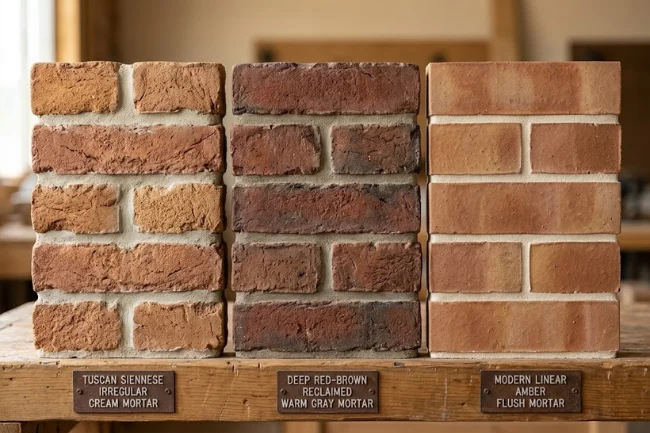
This is the rough-hewn, visibly mortared style you’d find in a centuries-old farmhouse in the Chianti hills. Bricks are irregular in size and color, mortar joints are wide, and often a warm gray or cream, and the overall effect is deeply tactile and rustic. Traditional Tuscan brick pairs naturally with wooden ceiling beams, terracotta tile floors, and forged iron hardware.
This style works beautifully in living rooms, kitchens with country or transitional aesthetics, and dining rooms where you want warmth and conviviality built into the architecture itself. It demands a room with enough square footage and natural light to carry it without feeling oppressive.
Modern Linear Brick Details in Italian Interior Design
Contemporary Italian designers have adapted the tradition into something sleeker. Linear brick — thin tiles or veneers arranged in perfectly uniform horizontal rows — brings the warmth and texture of brick into minimalist and transitional interiors without the rustic weight. Mortar joints are tight and often white or light gray, emphasizing the geometry of the pattern.
This approach suits apartments, modern kitchens, bathroom accent walls, and any space where you want visual texture without visual noise. It reads as architectural rather than decorative, which is part of its appeal in clean-lined contemporary rooms.
Comparison: Italian Interior Design Details Bricks — Traditional Tuscan vs. Modern Linear
Where to Use Italian Brick Details in Your Home
Placement matters as much as material. Italian interior design details bricks work in almost every room of the house, but the approach — scale, finish, and pairing materials — changes dramatically depending on the context.
Living Rooms: Where Italian Brick Design Details Shine Most
An exposed brick feature wall behind the sofa or framing a fireplace is the most classic application, and for good reason. It creates an immediate focal point that grounds the room without requiring a single additional decorative element. I’d recommend pairing it with neutral linen upholstery, aged leather, and natural wood furniture. Avoid painting the adjacent walls the same tone as the brick — instead, use a warm off-white or soft plaster finish to give the brick room to breathe.
Kitchens: Italian Interior Brick Details With Rustic Character
A brick backsplash between countertop and cabinetry adds enormous character to a kitchen without the structural commitment of a full wall. Cream or white cabinetry lets terracotta brick pop without competing. For a more dramatic approach, a full brick chimney breast or range hood surround can anchor the entire kitchen design. Seal kitchen brick properly — unsealed brick in a cooking environment traps grease and odors quickly.
Bedrooms: Subtle Italian Brick Interior Design Details
A brick in a bedroom needs a lighter touch. A single wall behind the bed headboard works beautifully when the brick is whitewashed or lime-washed to reduce its visual weight. Soft linens in ivory, sage, and dusty rose sit beautifully against aged terracotta tones. Avoid full brick walls in smaller bedrooms — the material’s thermal mass and visual density can make the space feel enclosed.
Bathrooms: Italian Design Brick Details Done Right
Modern linear brick tiles are the right choice for bathrooms. They need to be thoroughly sealed, and the grout must be waterproof. A feature wall behind a freestanding tub or as a shower surround can be striking — especially when paired with brushed brass fixtures, which pick up the warm undertones in the brick.
Outdoor Transitions: Italian Brick Interior Details That Flow Outside
Italian homes traditionally blur the boundary between inside and outside. Brick details on a covered loggia wall, an indoor-outdoor fireplace, or an entryway floor in terracotta tiles extend the visual language of the home’s exterior into its interior seamlessly.
How to Choose and Source Italian Interior Design Details Bricks
The quality of the material determines everything. Cheap brick tiles with printed surfaces read as fake almost immediately — the uniformity gives them away. When sourcing Italian interior design details bricks, look for hand-molded thin brick veneers with variation in tone and slight surface irregularity. Reclaimed brick salvaged from old buildings carries the most character but requires careful cleaning and occasional re-pointing.
Terracotta tones should range between warm amber, sienna, and deep red-brown. Bricks that skew too orange or too uniformly red tend to look mass-produced. The mortar color is equally important: a cream or warm gray mortar reads as Italian; a bright white mortar tips toward Scandinavian; a dark gray mortar reads industrial. Choose based on the overall direction of your interior.
According to the Brick Industry Association, properly installed and sealed brick in interior applications has a lifespan of 50 to 100 years with minimal maintenance, making it one of the most cost-effective finish materials over the long term.
Practical Tips for Using Italian Interior Design Details Bricks Successfully
Start With One Brick Feature Wall — The Italian Interior Design Rule
The most common mistake in brick-forward interiors is using too much of it. One well-chosen wall makes a stronger statement than three or four covered surfaces. Commit fully to one feature wall and let every other surface defer to it.
Balance Rough Brick Details With Smooth Italian Interior Finishes
Brick is textural and visually active. It needs smooth, quiet counterparts to rest against. Polished plaster, smooth painted drywall, flat-front cabinetry, and large-format stone tile all provide the contrast that makes brick sing rather than shout.
Light Italian Interior Brick Design Details With Intention
Natural light transforms brick. If your brick wall catches afternoon sun, the terracotta tones will glow in ways that feel almost theatrical. For rooms with less natural light, add wall-mounted sconces positioned close to the brick surface — the raking light across the texture creates beautiful shadow play that flat surfaces can never achieve.
Consider the Thermal Behavior of Italian Interior Design Bricks
Real brick has significant thermal mass — it absorbs heat during the day and releases it slowly at night. In warmer climates, this can actually help regulate room temperature. In colder climates, an interior brick wall that is part of an exterior structure needs proper insulation behind it to avoid moisture and condensation issues.
Seal Brick Details in Italian Interior Design Strategically
In kitchens, bathrooms, and any area exposed to moisture or cooking, apply a penetrating sealer to the brick surface after installation. A good sealer is invisible and doesn’t change the brick’s appearance, but it prevents staining and moisture infiltration. In low-traffic, dry areas like a living room feature wall, sealing is optional — many designers prefer the unsealed look for its rawness and authentic aging.
Materials That Pair Beautifully With Italian Interior Design Brick Details
Italian interior design details bricks reach their full potential when they’re part of a considered material palette. Working with brick in isolation — without thinking about what surrounds it — is where most design efforts fall short.
Aged oak brings warmth that complements rather than competes with terracotta tones. Travertine, with its creamy fossil-pocked surface, creates a layered stone-and-brick combination that feels deeply Mediterranean. Iron — forged, matte black, or aged to a rust patina — adds structural drama in hardware, light fixtures, and furniture frames. Linen and wool textiles in undyed or naturally dyed tones give brick walls a soft counterpoint. And plaster, particularly limewash or tadelakt, offers a surface that feels equally handmade and historic alongside exposed brick.
What doesn’t work: glossy surfaces in the same warm tones (they compete), high-contrast modern black and white interiors (the disconnect feels jarring), and glass-and-chrome minimalism (too cold for brick’s warmth to carry).
Common Mistakes to Avoid With Italian Interior Brick Design Details
Overcovering is the most frequent error — brick on every wall, every surface, floor to ceiling. The result is a space that feels like a pizza oven, not a home. Use a brick as punctuation, not as the entire sentence.
Ignoring mortar color is another common misstep. The mortar can make up 15 to 20 percent of the visible surface area of a brick wall. A mortar tone that clashes with the brick — or doesn’t match the design intent — undermines the entire installation. Test several mortar colors on sample sections before committing.
Using low-quality veneer brick that has a printed, laminated surface rather than a genuine fired surface is a mistake that shows immediately. Under different light conditions, printed surfaces reveal their flatness. Always request physical samples before purchasing and evaluate them in your actual space under natural and artificial light.
Finally, skipping the sealer in wet or high-use areas creates long-term maintenance problems. An unsealed brick in a kitchen backsplash position will absorb oil, steam, and splatter within months, becoming difficult or impossible to clean without stripping and resealing.
Care and Maintenance of Italian Interior Design Details Bricks
One of brick’s great advantages is how little it demands once properly installed. For sealed brick in kitchens or bathrooms, wipe down with a damp cloth and mild dish soap as needed. Avoid acidic or abrasive cleaners — they can erode mortar and dull the brick’s surface over time.
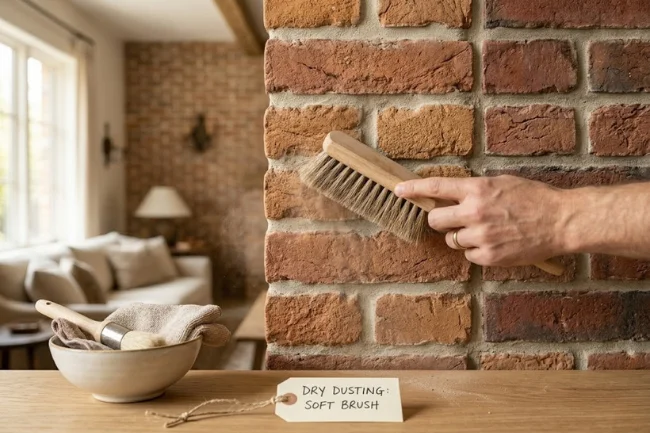
For unsealed brick in dry areas, occasional dry dusting with a soft brush is usually sufficient. If a sealed brick wall starts to show water marks or staining, re-applying a fresh coat of penetrating sealer restores its protection without changing its appearance.
Re-pointing mortar — replacing deteriorated mortar between bricks — is only necessary when mortar crumbles or gaps become visible. The durability of Italian interior design details bricks in interior applications, with stable humidity and temperature, means this should rarely be needed within the first several decades of installation.
Frequently Asked Questions
1. Is real brick or thin brick veneer better for interior design?
Both work well in different contexts. Real reclaimed brick offers unmatched texture and thermal mass, but requires structural consideration. High-quality thin brick veneers offer nearly identical visual results with easier installation and far less weight, making them practical for most renovation projects.
2. What colors pair best with Italian terracotta brick?
Creamy whites, warm off-whites, soft sages, olive greens, and aged wood tones work beautifully. Avoid stark cool whites or high-contrast black, which fight against the brick’s warmth rather than complementing it.
3. Can I use Italian brick details in a small apartment?
Absolutely. A single brick accent wall or a brick tile backsplash delivers high visual impact in a compact space. Opt for lighter tones or a whitewashed finish to keep the room feeling open rather than enclosed.
4. How do I lighten a traditional brick wall without removing it?
Lime-washing or whitewashing with a diluted paint mixture softens and lightens brick significantly while preserving its texture. This is reversible with time and creates a fresher, more Scandinavian-Tuscan hybrid look that suits lighter contemporary interiors.
5. Do brick walls affect room temperature?
Real brick has thermal mass, meaning it absorbs and slowly releases heat, which can help regulate temperature in well-insulated homes. Thin brick veneers over drywall have minimal thermal effect. In either case, proper insulation behind exterior-facing brick walls is essential in colder climates.
Final Thoughts on Italian Interior Design Details Bricks
Italian interior design details bricks have remained compelling across centuries, not because they’re trendy but because they connect a room to something real — the earth the clay came from, the hands that shaped it, the centuries of buildings that stood on the same principles. When you bring that into a home thoughtfully, the result is a space that feels both personal and permanent.
Start with a single wall. Choose materials honestly. Let natural light do the heavy lifting. And resist the urge to fill every surface — restraint is the most Italian design principle of all.
If you’re ready to explore specific materials, sourcing options, or room layouts for your own project, the interior design category has detailed guides for every stage of the process. And if you have a specific room or challenge in mind, sharing it in the comments often leads to recommendations tailored to your actual space and constraints.
Read Also: Tech Lighting Essence Tape Light

I’m Salman Khayam, the founder and editor of this blog, with 10 years of professional experience in Architecture, Interior Design, Home Improvement, and Real Estate. I provide expert advice and practical tips on a wide range of topics, including Solar Panel installation, Garage Solutions, Moving tips, as well as Cleaning and Pest Control, helping you create functional, stylish, and sustainable spaces that enhance your daily life.