
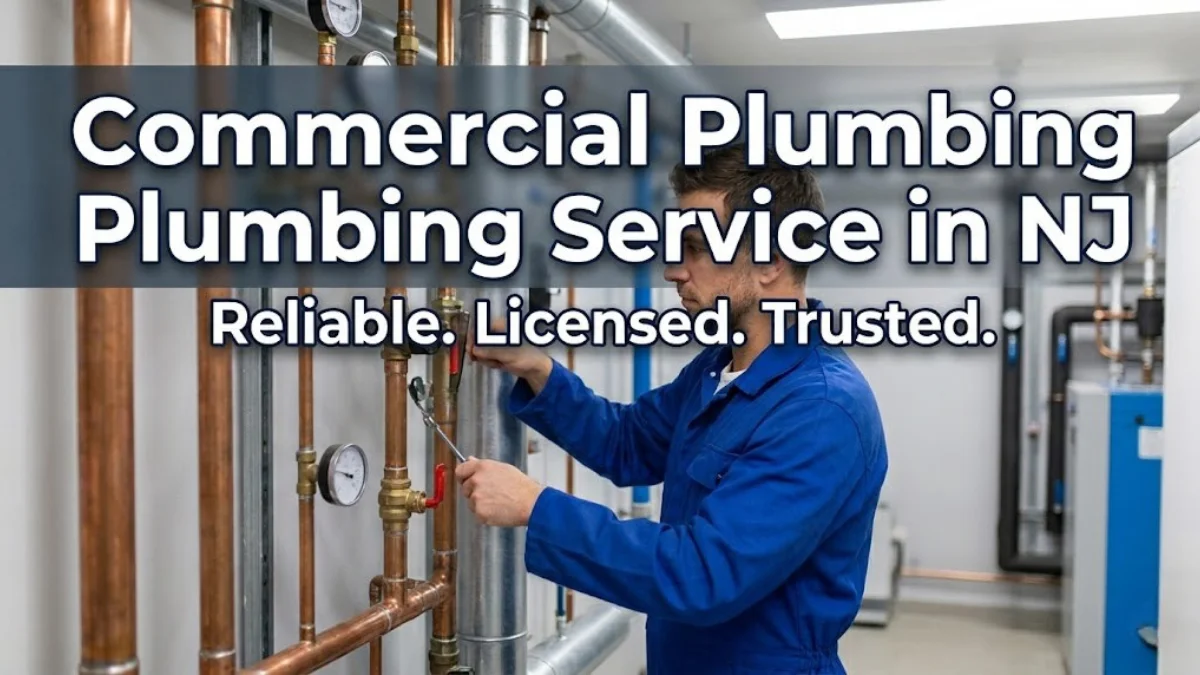
When I talk to business owners across New Jersey, one topic keeps coming up that doesn’t get nearly enough attention until something goes wrong — commercial plumbing. Whether you run a restaurant in Newark, a medical office in Princeton, or a warehouse facility in Edison, having access to a reliable commercial plumbing service in NJ isn’t just a convenience. It’s the difference between a functioning operation and a shuttered one.
Plumbing in a commercial setting is a completely different beast from residential work. The pipe networks are larger, the water demand is heavier, the code requirements are stricter, and the cost of downtime is measured in lost revenue. That’s why understanding what separates a quality commercial plumber from a general handyman — and knowing what to look for when hiring — is knowledge worth having before you need it.
Why Commercial Plumbing Service in NJ Is Its Own Specialty
Most people assume that plumbing is plumbing. It isn’t. A licensed residential plumber might be excellent at swapping out a bathroom faucet or snaking a kitchen drain, but commercial systems are engineered differently from the ground up.
Scale and Complexity of NJ Commercial Plumbing Systems
Commercial buildings handle dramatically higher water volumes. A mid-size office building of 50 employees uses far more water daily than a single-family home — and a restaurant kitchen or hotel property multiplies that demand exponentially. The pipe sizing, pressure requirements, and drainage capacity all have to be calculated with that load in mind.
Commercial systems also tend to have multiple floors, mechanical rooms, backflow prevention assemblies, grease traps, fire suppression integrations, and industrial-grade fixtures. Diagnosing problems in these systems requires specialized training and tools that go well beyond what a residential crew typically carries.
Code and Compliance for Commercial Plumbing in New Jersey
In New Jersey, commercial plumbing work must comply with the New Jersey Uniform Construction Code (UCC), which incorporates the International Plumbing Code as its foundation. Commercial projects require permits, inspections, and licensed master plumbers overseeing the work. If your building is in a sector like food service, healthcare, or hospitality, there are additional regulatory layers from bodies like the NJ Department of Health and local health departments.
Failing to meet these standards isn’t just a paperwork issue — it can result in failed inspections, fines, or forced closures. A qualified commercial plumbing contractor in NJ will be familiar with all of this and will pull the necessary permits without you having to ask.
Common Commercial Plumbing Services in New Jersey
A full-service commercial plumber covers a wide range of needs. Here’s what typically falls under their scope:
Commercial Water Line Repairs and Replacements in NJ
Whether it’s a burst main line, corroded galvanized piping, or a slow leak that’s been hiding behind drywall for months, water line issues demand fast attention. In commercial properties, even a small leak can saturate structural materials, promote mold growth, and drive up utility bills. Experienced NJ commercial plumbers use leak detection equipment — including acoustic sensors and thermal imaging cameras — to locate problems without tearing up your facility unnecessarily.
Commercial Drain Cleaning and Sewer Services in New Jersey
Grease buildup, foreign material, root intrusion, and pipe scale are the leading causes of commercial drain blockages in New Jersey. High-pressure hydrojetting is now the industry standard for clearing commercial lines thoroughly without damaging the pipe interior. For sewer line issues, video camera inspection allows technicians to see exactly what’s happening underground before any digging begins.
Backflow Prevention — A Required NJ Commercial Plumbing Service
New Jersey regulations require commercial properties to install and annually test backflow prevention devices. These assemblies protect the public water supply from contamination if pressure differentials allow wastewater or chemicals to reverse into the main supply line. A licensed commercial plumbing service in NJ will handle both the installation of these devices and their required annual certified testing.
Water Heater and Boiler Services for NJ Commercial Properties
Commercial water heating systems — whether tank-style, tankless, or large-capacity boilers — require different expertise than residential units. Sizing matters enormously here. An undersized system in a restaurant or hotel will fail to meet demand, while an oversized one wastes energy and money. NJ commercial plumbers work with both gas and electric systems, and many are experienced with energy-efficient heat pump water heater installations that qualify for state and federal rebates.
Fixture Installations and Upgrades by Your NJ Commercial Plumber
From commercial-grade toilets and urinals in office restrooms to specialized prep sinks and dishwasher connections in commercial kitchens, fixture installation in a commercial environment requires knowledge of ADA compliance standards as well as local code. Many NJ businesses are also upgrading to low-flow fixtures as part of water conservation programs — a move that cuts operating costs while meeting sustainability goals.
Emergency Commercial Plumbing Response Across NJ
Burst pipes, sewage backups, and non-functioning restrooms don’t happen on a schedule. Most reputable commercial plumbing companies in NJ offer 24/7 emergency response because they understand what’s at stake when your business goes down. Fast response time and a fully stocked service vehicle are what separate a true emergency plumber from someone who’ll put you on tomorrow’s schedule.
Comparing Commercial vs. Residential Plumbing Services
Understanding the difference helps you choose the right contractor for your business needs.
What to Look for When Hiring a Commercial Plumbing Service in NJ
Not every plumber who answers the phone is qualified to handle your commercial facility. Here’s what I’d recommend evaluating before signing anything.
Licensing and Insurance for NJ Commercial Plumbing Contractors
In New Jersey, anyone performing plumbing work on a commercial property must hold the appropriate state license. Look for a company that employs or is owned by a licensed master plumber in New Jersey. Additionally, they should carry general liability insurance and workers’ compensation coverage. Don’t take their word for it — ask for certificates.
Proven Commercial Plumbing Experience and Portfolio in New Jersey
Ask specifically about commercial projects they’ve completed in your industry. A plumber with deep restaurant experience understands grease trap requirements, three-compartment sink codes, and high-temperature dishwasher connections. One who primarily works on office buildings may not. Relevant experience isn’t a nice-to-have; in commercial plumbing, it’s essential.
Response Time Commitments from Your NJ Commercial Plumber
Before a crisis, ask how quickly they respond to after-hours emergencies. A company that can commit to a two-hour response window for a major leak is worth more than a slightly cheaper one that can’t guarantee someone shows up the same day.
Local Municipality Knowledge — Critical for Commercial Plumbing in NJ
New Jersey has 564 municipalities, and permit requirements, inspection schedules, and local code amendments can vary between them. A commercial plumbing contractor who regularly works in your town or county will move through the permitting process more efficiently than one who has to figure it out as they go.
Transparent Pricing for Commercial Plumbing Services in New Jersey
Commercial plumbing quotes should be itemized. Be cautious of lump-sum bids with no breakdown. Understanding what you’re paying for — labor, materials, permit fees, equipment rental — protects you if the scope of work changes and gives you a basis for comparison across bids.
Preventive Maintenance: The Smartest Commercial Plumbing Service in NJ
One of the most overlooked aspects of commercial property management is preventive plumbing maintenance. Most business owners only call a plumber when something breaks. The smarter approach is scheduling routine inspections that catch problems before they escalate.
A typical commercial plumbing maintenance program in NJ covers annual backflow device testing, periodic drain camera inspections, water heater flushing and anode rod checks, fixture inspections for leaks and wear, and review of water pressure throughout the building.
The cost of this kind of program is modest compared to what an emergency repair — or worse, property damage from a flood or sewage backup — would run. According to the Environmental Protection Agency (EPA), commercial water leaks account for billions of gallons of wasted water annually in the United States, most of which goes undetected for months.
Source: EPA WaterSense Program
Industries That Rely on Commercial Plumbing Service in NJ
A full-service commercial plumbing company in NJ typically serves a broad range of industries, each with its own specific demands:
- Restaurants and Food Service — Grease trap installation and pumping, three-compartment sinks, hood suppression tie-ins, and health department compliance are all part of this work.
- Healthcare Facilities — Medical offices, clinics, and outpatient surgery centers need sterile-environment plumbing, backflow prevention on all water supplies, and medical gas line coordination in some cases.
- Retail and Office Buildings — Restroom maintenance, water line management, HVAC condensate drainage, and fixture upgrades keep these properties operating smoothly.
- Hotels and Hospitality — High-demand water heating systems, pool and spa plumbing, laundry connections, and constant-use restroom fixtures make hospitality properties some of the most demanding commercial plumbing environments.
- Industrial and Manufacturing — Process piping, floor drain maintenance, high-capacity water supplies, and chemical-resistant drainage materials are often required.
- Property Management Companies — Managing plumbing across multiple commercial tenants requires a responsive contractor with the capacity to handle multiple sites.
New Jersey’s Water Infrastructure and Your Commercial Plumbing System
New Jersey’s aging municipal water infrastructure is worth mentioning because it affects commercial properties directly. Many parts of the state — particularly older urban centers like Trenton, Camden, and parts of Newark — still have aging cast iron and lead service lines feeding commercial buildings. The New Jersey Department of Environmental Protection (NJDEP) has ongoing programs related to lead service line replacement, and business owners should be aware of whether their building’s supply line has been updated.
Source: NJDEP Lead Service Line Replacement
If your building was constructed before 1986, having a commercial plumber assess your service line is a worthwhile investment — both for water quality and for long-term property value.
The Real Cost of Skipping Commercial Plumbing Service in NJ
I want to be direct about this: deferred plumbing maintenance in commercial buildings is one of the most expensive decisions a property owner can make. A small pipe joint that weeps water behind a wall for six months doesn’t stay small. By the time visible damage appears, you may be looking at mold remediation, drywall replacement, flooring repair, and potential regulatory liability if the leak affects a tenant or customer.
The same logic applies to slow drains, inconsistent water pressure, and aging water heaters that haven’t been serviced. These are warning signs, not acceptable baseline conditions. A qualified commercial plumbing service in NJ will assess your system honestly and give you a clear picture of what’s deferred risk versus what’s genuinely low priority.
Frequently Asked Questions
1. How is commercial plumbing service in NJ different from residential service?
Commercial plumbing involves larger pipe systems, heavier water demand, stricter code compliance, and mandatory permitting — residential work generally doesn’t require the same level of licensing, inspection, or regulatory oversight.
2. How often should commercial drains be professionally cleaned in New Jersey?
For most businesses, especially restaurants and food service operations, professional drain cleaning every three to six months is recommended — office buildings can typically go twelve months between services depending on usage.
3. Are backflow prevention devices legally required for commercial properties in NJ?
Yes. New Jersey requires annual testing and certification of backflow prevention assemblies on commercial properties by a licensed backflow tester — failure to comply can result in fines or water service interruption.
4. What qualifies as a plumbing emergency for a commercial property?
Burst or actively leaking pipes, sewage backups, non-functional restrooms in a public-facing business, and loss of water supply all qualify as emergencies warranting an immediate after-hours service call.
5. Can a residential plumber legally work on my NJ commercial property?
Not without the proper commercial licensing and permits — New Jersey law requires that commercial plumbing work be overseen by a licensed master plumber, and permits must be pulled through the appropriate local construction office.
Wrapping Up
Running a business in New Jersey means managing a lot of moving parts, and your plumbing system shouldn’t be the one that catches you off guard. Whether you’re dealing with a grease trap that’s overdue for service, a water heater that’s losing efficiency, or a pipe issue you’ve been meaning to address for months, the right commercial plumbing service in NJ will handle it with the expertise, licensing, and accountability your property deserves.
If you haven’t already, now is a good time to schedule a commercial plumbing assessment for your facility. A professional walk-through takes an hour or two and can identify issues before they become emergencies. Reach out to a licensed NJ commercial plumber in your area, ask for a detailed inspection report, and use it to build a maintenance plan that protects your investment for years to come.
Read Also: Plumber Call Answering Service

I’m Salman Khayam, the founder and editor of this blog, with 10 years of professional experience in Architecture, Interior Design, Home Improvement, and Real Estate. I provide expert advice and practical tips on a wide range of topics, including Solar Panel installation, Garage Solutions, Moving tips, as well as Cleaning and Pest Control, helping you create functional, stylish, and sustainable spaces that enhance your daily life.