
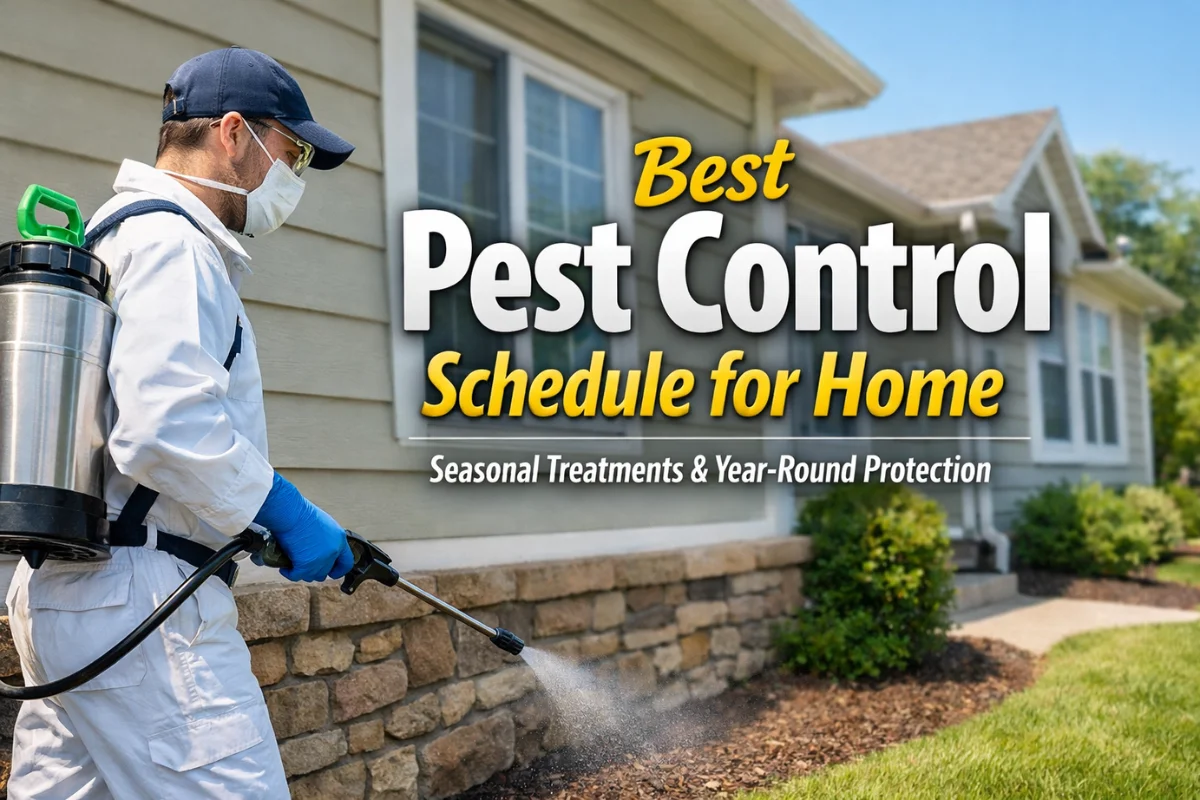
The best pest control schedule for home maintenance typically involves a quarterly professional treatment combined with monthly DIY inspections. This seasonal approach targets specific pest life cycles—addressing ant and termite activity in spring, stinging insects in summer, spiders in autumn, and rodent exclusion during the winter months.
Maintaining a pest-free environment is less about reactive spraying and more about consistent, strategic management. When homeowners wait until they see a cockroach in the kitchen or a trail of ants on the windowsill, the infestation is often already established within the walls or foundation. A proactive schedule shifts the focus from “extermination” to “prevention,” saving money on structural repairs and protecting the hygiene of the living space.
Understanding the nuances of the best pest control schedule for home protection requires looking at the intersection of local climate, property type, and the biological habits of common household invaders.
Why Consistency Matters in Pest Management
Pesticides and organic deterrents have a finite lifespan. Most professional-grade residual treatments are designed to remain effective for approximately 60 to 90 days. As these barriers break down due to UV exposure, rain, and natural degradation, the “shield” around a home weakens.
A consistent schedule ensures that the protective barrier is refreshed before it disappears entirely. Furthermore, different pests emerge at different times of the year. A one-time treatment in July will do little to stop a mouse looking for warmth in November or a subterranean termite colony swarming in April.
The Quarterly Gold Standard
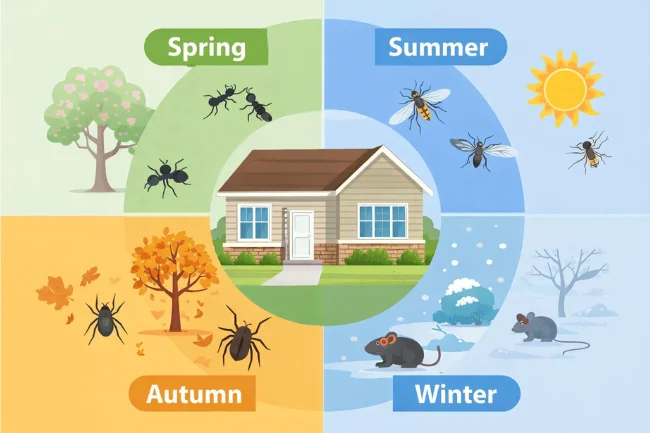
Most pest control experts recommend a quarterly service plan as the baseline for the average suburban home. This frequency aligns with the four seasons, each of which presents unique biological challenges.
Spring: The Season of Awakening
As temperatures rise and moisture levels increase, pests emerge from dormancy. Spring is the primary time for “clean-out” services.
-
Focus Pests: Ants, termites, and flies.
-
Action Items: Professionals focus on identifying termite swarms and applying pre-emergent barriers. This is also the time to treat the perimeter for ants that are searching for new food sources after the winter thaw.
Summer: Peak Activity
High heat and humidity accelerate the metabolic rates of insects, leading to rapid reproduction.
-
Focus Pests: Mosquitoes, stinging insects (wasps/hornets), and fleas.
-
Action Items: Treatment often extends further into the yard. Technicians will check under eaves for developing nests and treat standing water or dense foliage where mosquitoes breed.
Autumn: The Great Inward Migration
As the air turns crisp, pests seek the temperature-controlled environment of a human home.
-
Focus Pests: Spiders, stink bugs, and cockroaches.
-
Action Items: The emphasis shifts to “exclusion.” This involves sealing cracks, checking door sweeps, and applying treatments to entry points like windowsills and dryer vents to prevent bugs from overwintering inside the walls.
Winter: Rodent Reinforcement
While insect activity slows down outdoors, rodents become the primary threat as they seek food and shelter.
-
Focus Pests: Mice, rats, and wildlife (squirrels/raccoons).
-
Action Items: Inspections focus on the attic, crawl space, and basement. Bait stations are checked, and any new entry points created by gnawing animals are reinforced.
Annual Pest Control Overview Table
The following table breaks down the optimal frequency and focus for a comprehensive home protection plan.
Factors That May Require a Monthly Schedule
While quarterly visits are sufficient for many, certain variables necessitate a more aggressive monthly pest control schedule.
High-Moisture Environments
Homes located in tropical climates or near bodies of water face constant pressure from damp-loving insects. In regions like the Southeast United States, the sheer volume of palmetto bugs and mosquitoes can overwhelm a 90-day treatment cycle in just four or five weeks.
Older Structures
Historical homes often have settled foundations, original wood siding, and architectural gaps that are impossible to seal completely. These “leaky” buildings require more frequent monitoring to ensure that pests haven’t found a new way inside through shifting floorboards or aging masonry.
Previous Infestation History
If a property has a history of German cockroaches or bed bugs, a quarterly schedule is insufficient. These specific pests require intensive, frequent follow-ups—often every two weeks initially—until the breeding cycle is completely broken.
The Homeowner’s Monthly Checklist (DIY Maintenance)
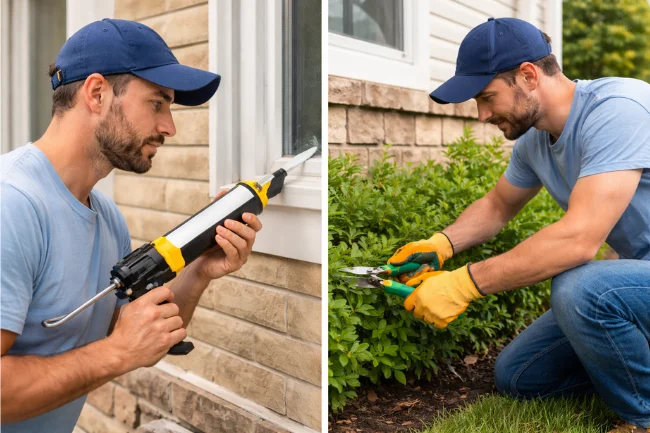
Professional services provide the chemical and structural expertise, but the best pest control schedule for home longevity relies heavily on the resident’s habits between professional visits.
Interior Sanitation
Pests enter homes for three reasons: food, water, or harborage. By removing these, the home becomes less attractive.
-
Deep Clean Appliances: Crumbs behind the stove or under the refrigerator can sustain a roach colony for months.
-
Manage Moisture: Fix leaky faucets and ensure under-sink areas are bone-dry.
-
Store Food Properly: Move grains, cereals, and pet food into airtight glass or plastic containers.
Exterior Landscaping
The area immediately surrounding the foundation is the “front line” of pest control.
-
Trim Vegetation: Branches should be at least two feet away from the roofline to prevent “ant bridges.”
-
Clear Debris: Remove leaf litter and mulch from directly against the foundation, as these provide perfect hiding spots for centipedes and silverfish.
-
Gutter Maintenance: Clogged gutters create pools of water that are prime breeding grounds for mosquitoes and can lead to wood rot that attracts termites.
Understanding the “Initial Service” vs. “Regular Maintenance”
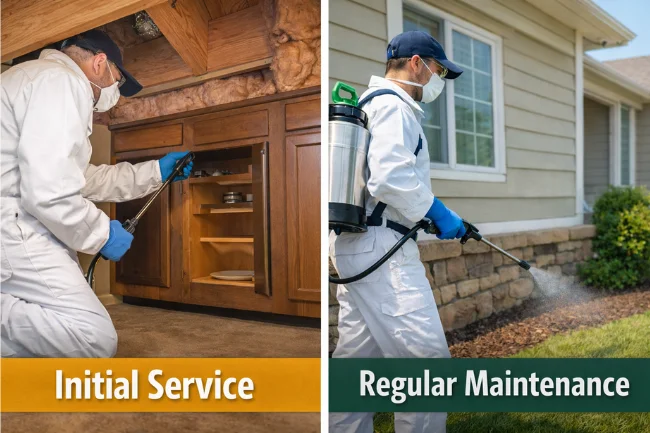
When establishing the best pest control schedule for home needs, it is important to distinguish between the first visit and subsequent ones.
The initial service is usually the most intensive. It often involves flushing out existing pests from hiding spots, which can actually lead to an increase in visible pest activity for 7–10 days as they flee the treated areas.
The regular maintenance visits are designed to sustain the barrier. If the initial service was successful, these visits should be relatively quick, focusing on the exterior perimeter to ensure no new populations can establish themselves.
Integrated Pest Management (IPM) Principles
A modern, authoritative approach to pest scheduling follows the principles of Integrated Pest Management (IPM). This strategy prioritizes the least toxic methods first and uses chemicals as a targeted tool rather than a blanket solution.
IPM involves four steps:
-
Inspection: Identifying exactly what pests are present.
-
Identification: Understanding the biology of the pest to treat it effectively.
-
Action: Using mechanical traps or exclusion before moving to sprays.
-
Evaluation: Monitoring the results to adjust the schedule as needed.
By following an IPM-based schedule, homeowners reduce their exposure to unnecessary chemicals while achieving more effective, long-term results.
The Role of Professional Inspections
While many products are available at hardware stores, professional inspections are a critical component of a successful schedule. Professionals are trained to spot “conducive conditions” that the untrained eye might miss—such as the specific mud tubes created by subterranean termites or the subtle pheromone trails left by carpenter ants.
An annual termite inspection, in particular, should be a non-negotiable part of any home maintenance calendar, regardless of whether a general pest service is in place. Structural damage from wood-destroying organisms is rarely covered by standard homeowners’ insurance, making the cost of a scheduled inspection a vital investment.
Environmental and Seasonal Adjustments
A rigid schedule must sometimes be flexible based on weather anomalies. An unusually warm winter may cause insects to emerge early, requiring an “early spring” treatment in February rather than March. Similarly, a period of heavy flooding may wash away exterior liquid barriers, necessitating a mid-cycle “touch-up” visit to reinforce the perimeter.
Homeowners should look for a service provider that offers “re-service guarantees.” This means if pests return between scheduled quarterly visits, the company will return to address the issue at no additional cost. This provides a safety net that accounts for the unpredictability of nature.
FAQ: Common Questions About Pest Control Timing
1. How often should I have pest control done if I don’t see any bugs?
Even without visible activity, a quarterly schedule is recommended. Pest control is primarily preventative; the goal is to maintain a chemical and physical barrier that stops infestations before they start. By the time you see pests, they have likely already established a nest within the structure.
2. Does rain wash away a professional pest control treatment?
Most modern professional treatments are “rain-fast” once they have dried, which usually takes about 30 minutes. Some granular treatments actually require water to activate them. However, if a torrential downpour occurs immediately after a liquid application, a reputable company will usually offer a free re-treatment.
3. Is a monthly pest control schedule better than quarterly?
Monthly service is generally only necessary for commercial properties or homes with severe, active infestations. For the average residential property, a quarterly schedule is the most cost-effective and efficient way to manage seasonal life cycles without over-applying chemicals.
4. What is the best time of day to schedule a pest treatment?
For exterior treatments, dry conditions are ideal, so mid-morning or early afternoon is often best. For specific pests like mosquitoes, treatments are most effective when applied during the day when they are resting in the shade of foliage.
5. Can I skip pest control in the winter?
It is a common misconception that pests “die off” in winter. While many go dormant, rodents and certain insects seek the warmth of your home. Winter is the most critical time for rodent exclusion and interior monitoring to prevent a spring “population explosion.”
Establishing Your Long-Term Strategy
Finding the best pest control schedule for home protection is a balance of professional expertise and homeowner diligence. A quarterly professional cycle provides the heavy-duty defense needed to combat seasonal shifts, while monthly DIY inspections ensure that the home remains a “hard target” for opportunistic invaders.
By viewing pest control as a standard utility—much like electricity or water—rather than an emergency service, you protect your property’s value and your family’s health. Consistency is the most powerful tool in the arsenal of modern pest management.
For broader information, visit Wellbeing Makeover

I’m Salman Khayam, the founder and editor of this blog, with 10 years of professional experience in Architecture, Interior Design, Home Improvement, and Real Estate. I provide expert advice and practical tips on a wide range of topics, including Solar Panel installation, Garage Solutions, Moving tips, as well as Cleaning and Pest Control, helping you create functional, stylish, and sustainable spaces that enhance your daily life.