
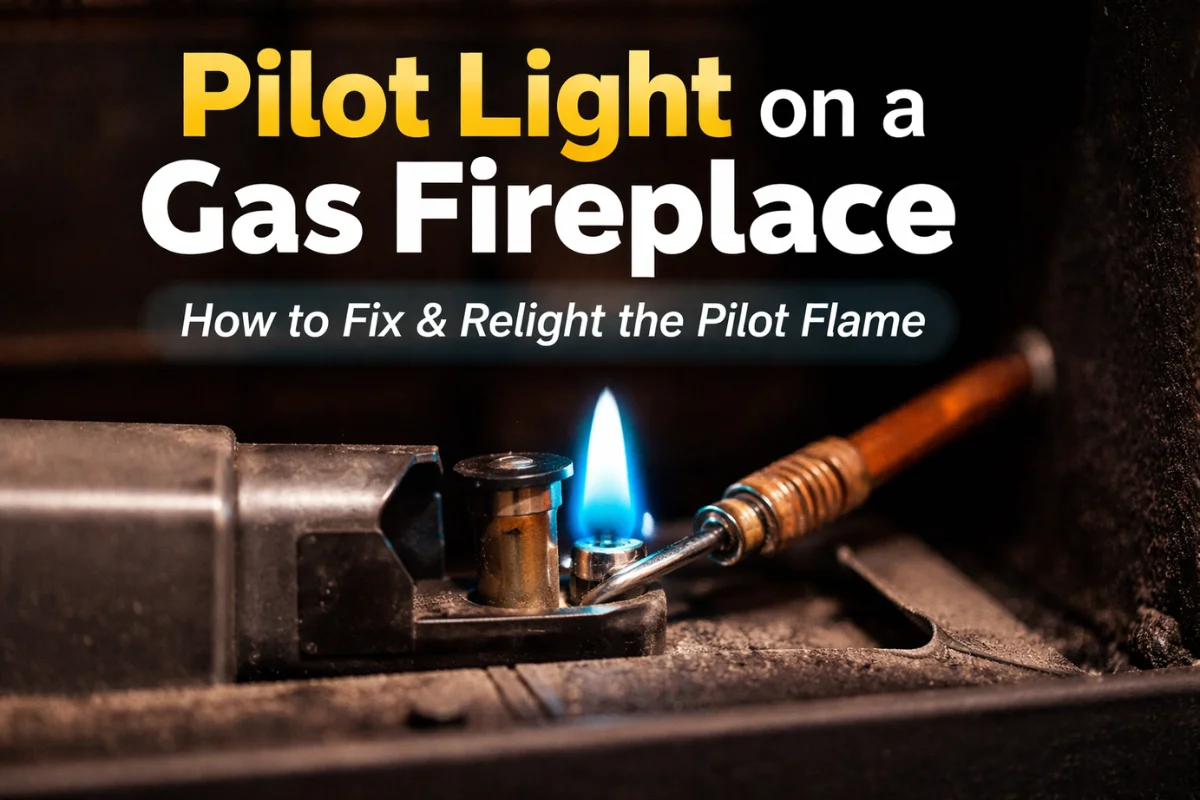
If you’ve ever walked into your living room on a cold evening, reached for the remote or switched to fire up your gas fireplace, and gotten nothing — no flame, no warmth, just silence — there’s a good chance the pilot light on your gas fireplace has gone out. It’s one of the most common issues homeowners face with gas fireplaces, and yet it’s also one of the most misunderstood. I’ve spent years helping people troubleshoot their home heating systems, and the pilot light question comes up more than almost anything else.
This guide covers everything from what a pilot light actually is and how it works to relighting it safely, understanding when something is genuinely wrong, and knowing when to call a professional. Whether you have a standing pilot or an electronic ignition system, this is the resource I wish more homeowners had before the first cold snap of the season.
What Is a Pilot Light on a Gas Fireplace?
A pilot light is a small, continuously burning flame that serves as an ignition source for your gas fireplace’s main burner. When you turn on your fireplace, that pilot flame ignites the larger flow of gas that creates the fire you actually see. Without it, the main burner has no way to light — and your fireplace simply won’t work.
Most traditional gas fireplaces use what’s called a standing pilot light, meaning the flame burns 24/7, even when the fireplace itself is off. This constant flame keeps a component called the thermocouple or thermopile heated, which in turn sends a small electrical signal to the gas valve, telling it that it’s safe to allow gas flow.
Modern gas fireplaces, particularly those built after the mid-2000s, increasingly use intermittent pilot ignition (IPI) systems. These spark the pilot only when you call for heat, which is more energy-efficient but can be more sensitive to voltage fluctuations or battery failure.
How the Gas Fireplace Pilot Light System Actually Works
Understanding the mechanics here helps you diagnose problems far more accurately. The pilot assembly consists of three main components:
- The pilot burner is a small brass or steel nozzle that receives a trickle of gas and maintains the small flame.
- The thermocouple is a safety device — a metal probe that sits directly in the pilot flame. Heat from the flame generates a small millivolt current that holds the gas valve open. If the flame goes out, the thermocouple cools, the current stops, and the gas valve closes automatically. This is a deliberate safety feature to prevent unburned gas from accumulating in your home.
- The thermopile performs a similar function but generates more voltage and is often used in fireplaces with wall switches or remote controls. It powers the control circuitry rather than just the gas valve.
When a pilot light won’t stay lit, it’s almost always one of these three components — or the gas supply itself — that’s the culprit.
How to Relight the Pilot Light on a Gas Fireplace
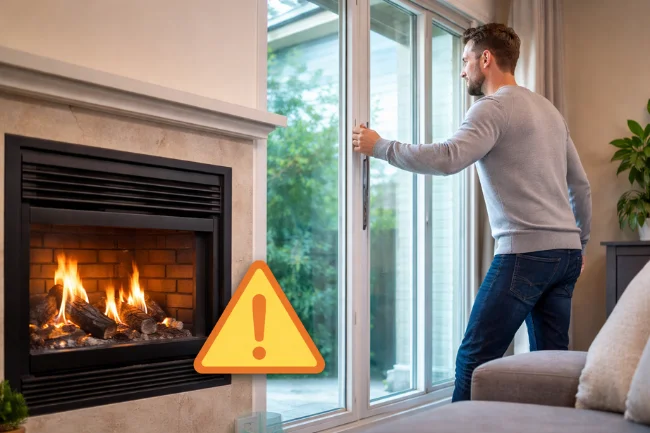
Before doing anything, give the area around your fireplace a few minutes to air out. If you smell strong gas, leave the house immediately and call your gas utility — don’t attempt to relight anything.
Assuming there’s no gas smell and your fireplace simply isn’t working, here’s how I approach relighting a pilot light:
Step 1: Locate the Gas Fireplace Control Valve
Most gas fireplaces have a control knob or valve, usually located behind the front panel or inside the firebox area. It typically has three settings: OFF, PILOT, and ON (sometimes labeled HIGH/LOW instead of ON).
Step 2: Set the Knob to PILOT Position
Turn the gas control knob to the PILOT position. This routes a small amount of gas directly to the pilot burner without engaging the main burner.
Step 3: Press and Hold the Pilot Knob
Press the control knob down while holding it in the PILOT position. This bypasses the thermocouple safety, allowing gas to flow to the pilot even before the thermocouple has heated up.
Step 4: Ignite the Gas Fireplace Pilot Flame
While holding the knob down, use the igniter button (usually a red or black button nearby) to spark the pilot. If your model doesn’t have a built-in igniter, use a long-reach lighter. You should see a small blue flame at the pilot burner.
Step 5: Hold for 30–60 Seconds to Seat the Pilot Light
Keep the knob pressed down for at least 30 seconds after the flame lights. This is the part people skip, and it’s exactly why the pilot goes right back out. The thermocouple needs time to heat up and generate enough current to hold the valve open on its own.
Step 6: Release and Test the Fireplace Pilot
Slowly release the knob. The flame should stay lit. If it does, turn the knob to ON and test your fireplace normally.
If the pilot light won’t stay lit after holding it for a full minute, you likely have a thermocouple issue rather than a simple relighting problem.
Why Does the Pilot Light on a Gas Fireplace Keep Going Out?
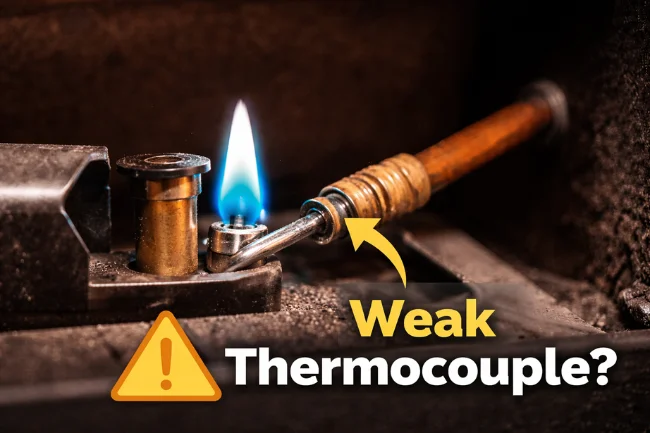
This is the question I get most often. A pilot light that relights fine but won’t stay on is telling you something specific. Here are the most common reasons:
Weak or Failing Thermocouple (Most Common Pilot Light Problem)
This is the number-one cause. Thermocouples are inexpensive and wear out over time — typically after 5–10 years of continuous use. If the thermocouple isn’t generating enough millivolt output, the gas valve will close even with the flame burning. You can test thermocouple output with a multimeter; a reading below 25 millivolts usually indicates replacement is due. Replacement thermocouples for most fireplace brands cost $10–$30 and are a straightforward DIY fix for those comfortable around gas appliances.
Dirty Pilot Orifice on the Gas Fireplace
The tiny opening that feeds gas to the pilot can become clogged with dust, spider webs, or debris — especially if the fireplace has been sitting unused for months. A clogged orifice produces a weak, flickering flame that can’t heat the thermocouple adequately. Cleaning the orifice with compressed air (not a needle or pin, which can enlarge the hole) often resolves this immediately.
Draft or Airflow Blowing Out the Pilot Flame
Strong drafts coming down the chimney or through the firebox can extinguish even a properly burning pilot flame. If you notice the pilot goes out more often on windy days, a damaged or missing chimney cap, or poor fireplace sealing, is likely the issue.
Low Gas Pressure Affecting the Pilot Light
If other gas appliances in your home are also running below normal capacity, you may have a gas supply pressure issue. This requires a call to your gas utility rather than a DIY fix.
Faulty Gas Valve Preventing Pilot Ignition
If the thermocouple tests fine and the pilot orifice is clean, the gas valve itself may be defective. This is less common but more expensive to repair — a replacement valve can run $150–$400 including labor.
Comparison: Standing Pilot Light vs. Intermittent Pilot Ignition (IPI)
| Feature | Standing Pilot Light | Intermittent Pilot Ignition (IPI) |
|---|---|---|
| Always on? | Yes — burns 24/7 | No — ignites on demand |
| Energy use | ~1 therm/month of natural gas | Minimal — only runs when needed |
| Reliability | Very reliable, simple system | More complex; sensitive to power/battery issues |
| Power required | None (millivolt system) | Yes — batteries or 120V AC |
| Works in power outage? | Usually yes (millivolt) | No (requires power) |
| Common failure points | Thermocouple, dirty orifice | Igniter module, batteries, control board |
| Ease of relighting | Manual — simple process | Usually automatic; rarely needs manual relighting |
| Typical lifespan of system | 15–20+ years | 10–15 years (electronic components) |
| Best for… | Reliability-focused homeowners | Energy-efficiency focused homeowners |
If you live in an area with frequent power outages, a standing pilot system is genuinely more dependable — your fireplace will still work when the lights go out. If energy costs are a concern, IPI saves you the equivalent of a small gas appliance running continuously all winter.
When to Call a Professional About Your Gas Fireplace Pilot Light
I’m all for DIY where it’s appropriate, but gas appliances deserve a healthy amount of caution. Here are the situations where I’d always recommend calling a certified fireplace technician or HVAC professional:
- Gas smell without a visible flame. Never attempt to relight anything if you smell gas. Leave the home, leave the door open behind you, and call your gas utility’s emergency line.
- The pilot lights but the main burner won’t ignite. This could be a gas valve issue, a faulty thermopile, or a problem with the fireplace’s control module — all of which benefit from professional diagnosis.
- You’ve replaced the thermocouple twice and it still won’t hold. At this point the gas valve itself is likely defective.
- The fireplace hasn’t been serviced in more than three years. Routine maintenance by a certified technician — cleaning the burner, inspecting the venting, checking for carbon monoxide leaks, and testing the gas connections — is worth every dollar, particularly if the fireplace is used heavily.
According to the National Fire Protection Association (NFPA), heating equipment (including fireplaces) is the second leading cause of home fires in the United States, with failure to clean and maintain being a primary contributing factor. (Source: NFPA, “Home Fires Involving Heating Equipment,” 2023 Report)
Seasonal Maintenance Tips for Your Gas Fireplace Pilot Light
Most issues with the pilot light on a gas fireplace are entirely preventable with a bit of routine attention.
- Before the heating season begins, turn on the pilot and let the fireplace run for 15–20 minutes. Listen for unusual sounds, check that the flame color is a crisp blue (yellow or orange flame can indicate incomplete combustion), and make sure the thermocouple is properly positioned directly in the flame path.
- If you turn off the pilot for summer, know that relighting in fall may take a few extra attempts — air pockets in the gas line are normal after a period of non-use and will clear after a few ignition cycles.
- Keep the area around the pilot clean. Dust accumulates inside fireplaces even when they’re not in use. A gentle pass with compressed air around the pilot assembly and burner at the start of each season goes a long way.
- Check your batteries annually if you have an IPI system. Most manufacturers recommend replacing them every 12 months regardless of whether the igniter is showing signs of weakness. It’s cheap insurance.
- Schedule a professional inspection every one to three years, depending on how heavily you use the fireplace. A certified chimney sweep or fireplace technician can spot early signs of component wear that most homeowners wouldn’t notice.
Gas Fireplace Pilot Light Flame Color: What Each Shade Means
The color of your pilot flame is one of the easiest diagnostic tools you have.
- A steady, blue flame is exactly what you want. It indicates complete combustion and a properly calibrated gas-to-air ratio. The tip of the flame should just touch the thermocouple probe.
- A yellow or orange flame suggests incomplete combustion, often caused by a dirty pilot orifice, incorrect gas pressure, or a clogged air intake. This produces more carbon monoxide than a clean blue flame and should be addressed.
- A weak or flickering flame that can’t seem to stay steady often points to a partially blocked orifice or a draft issue.
- A flame that’s too tall could mean gas pressure is running slightly high, or the pilot orifice has been accidentally enlarged — something that can happen if someone uses a sharp object to clean it.
Gas Fireplace Pilot Light Safety and Carbon Monoxide Awareness
A properly functioning pilot light on a gas fireplace is part of a broader safety system, but it’s not the whole picture. Carbon monoxide (CO) is an odorless, colorless byproduct of combustion that poses a serious risk if venting is blocked or the fireplace is malfunctioning.
Every home with a gas fireplace should have a carbon monoxide detector installed within 10 feet of the fireplace and on every sleeping floor of the home. The U.S. Consumer Product Safety Commission (CPSC) estimates that over 400 Americans die from CO poisoning each year, with heating appliances among the most common sources. (Source: CPSC, Carbon Monoxide Safety Information)
If your CO detector sounds while the fireplace is running, turn off the fireplace, open windows, get everyone outside, and call 911. Don’t re-enter until emergency responders have cleared the home.
Wrapping Up
The pilot light on a gas fireplace is a small but genuinely critical component — and once you understand how it works, most problems become far less mysterious. In most cases, a pilot that goes out is solved by a patient relight, a $15 thermocouple, or a five-minute cleaning of the pilot orifice. The key is taking the time to understand what each symptom is telling you rather than guessing.
If your fireplace has been inconsistent this season, now is a good time to run through the diagnostics covered here before temperatures drop further. And if anything ever involves a persistent gas smell or a CO alarm, always treat it as an emergency — there’s no diagnostic worth more than your family’s safety.
For more complex issues, reach out to an NFPA-certified fireplace technician or your local gas utility. Investing in a proper professional service appointment every couple of years will extend the life of your fireplace significantly and give you the peace of mind that it’s running safely.
FAQs
1. How long should I hold the pilot button when relighting a gas fireplace?
Hold it for at least 30 to 60 seconds after the flame appears. This gives the thermocouple time to heat up and generate enough voltage to keep the gas valve open on its own.
2. Why does my pilot light keep going out even after I relight it?
The most common cause is a failing thermocouple — it’s worn out and no longer generates enough current to hold the gas valve open. It’s an inexpensive and relatively simple part to replace.
3. Is it safe to leave the pilot light on all summer?
Yes, a standing pilot is designed to burn continuously and is safe to leave on year-round. However, turning it off in warm months saves a small amount of gas and reduces wear on the thermocouple.
4. Can I relight my gas fireplace pilot myself, or do I need a technician?
Relighting a pilot is something most homeowners can do safely by following the manufacturer’s instructions. However, if you smell gas, the pilot won’t stay lit after multiple attempts, or you’re uncomfortable working near gas, call a professional.
5. What does a yellow pilot flame mean on my gas fireplace?
A yellow or orange pilot flame indicates incomplete combustion, usually from a dirty orifice or incorrect gas-to-air mixture. It produces more carbon monoxide than a healthy blue flame and should be cleaned or inspected promptly.

I’m Salman Khayam, the founder and editor of this blog, with 10 years of professional experience in Architecture, Interior Design, Home Improvement, and Real Estate. I provide expert advice and practical tips on a wide range of topics, including Solar Panel installation, Garage Solutions, Moving tips, as well as Cleaning and Pest Control, helping you create functional, stylish, and sustainable spaces that enhance your daily life.