
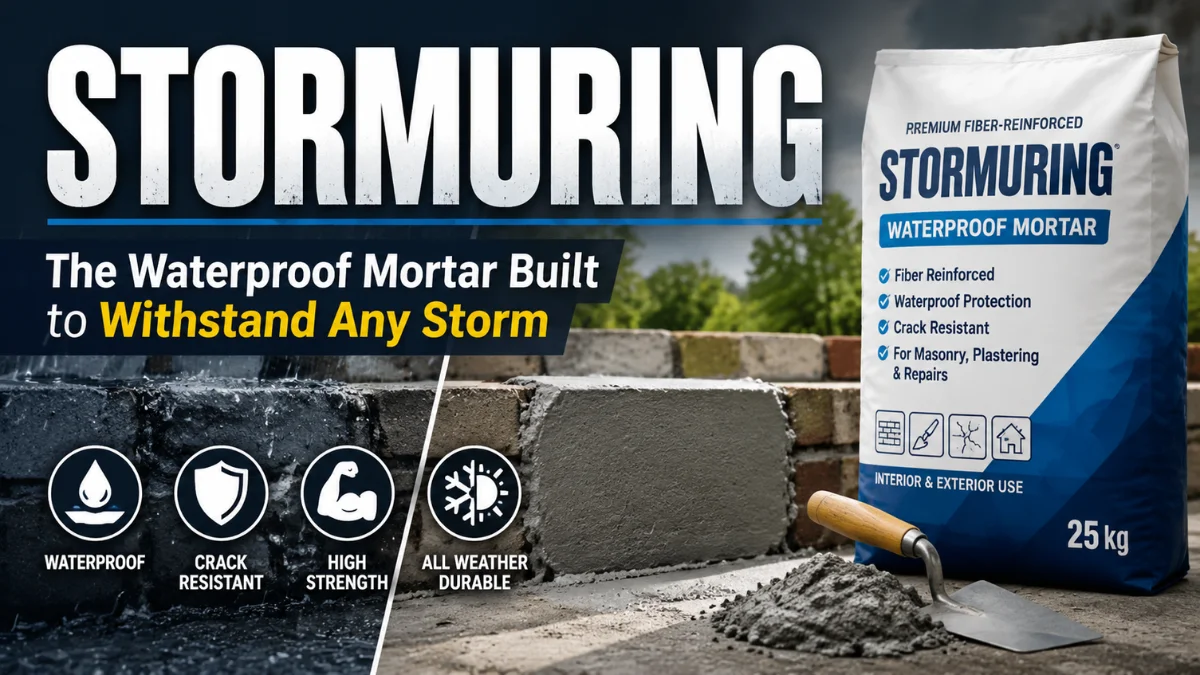
I have spent a lot of weekends knee-deep in home repair projects, and if there is one thing that never fails to frustrate me, it is watching a so-called “tough” mortar fail after the first hard rain. You patch a wall, smooth it out, feel proud of the work, and then—cracks. Or worse, the patch just soaks up moisture like a sponge and crumbles from the inside. That frustration is exactly what led me to Stormuring, a fiber-reinforced waterproof mortar that actually stands up to moisture without falling apart after one wet season.
That is exactly why I started paying close attention to Stormuring a while back. People kept mentioning it in forums and construction circles, especially those dealing with damp basements or outdoor masonry. At first, I assumed it was just another bag of mix with good marketing. But after seeing the results firsthand and talking to users across different skill levels, I realized this product actually solves the problems that other mortars ignore.
This post is my detailed breakdown of Stormuring. I will walk you through what makes it different, why it handles moisture better than standard options, and how both professionals and homeowners are using it for everything from plastering to structural patching. If you are tired of repair products that overpromise and underdeliver, stick with me.
What Exactly Is Stormuring? (Beyond the Name)
Let me clear up the basics first. Stormuring is a fiber-reinforced, waterproof mortar designed for a wide range of building and repair tasks. Mortar, as you probably know, is the material that binds bricks, stones, or concrete blocks together. But not all mortars are created equal.
Standard mortar from the big-box store usually does one job decently. You buy a bag for laying bricks, another bag for plastering, and a third product for patching holes. Stormuring collapses that list into a single product because it is formulated to handle multiple surfaces and conditions.
The “fiber-reinforced” part matters more than most people realize. Manufacturers add small synthetic or glass fibers into the mix. These fibers act like microscopic rebar, distributing stress evenly across the material. When the mortar dries and naturally wants to shrink, those fibers hold everything together and prevent shrinkage cracks. I have seen too many repair jobs fail simply because the material cracked during curing. Fibers solve that.
The waterproof piece is what really separates Stormuring from economy bags. Standard mortar is porous. Water seeps in, freezes, expands, and breaks the bond over time. Stormuring includes water-repellent additives that block moisture penetration. That means you can use it in a basement, on an exterior facade, or anywhere rain is a concern without watching your work deteriorate after one wet season.
A Quick Comparison: Stormuring vs. Standard Mortar
I put together a table to show the differences clearly. This is based on product specs and user feedback I have collected.
| Feature | Stormuring | Standard Mortar (Typical) |
|---|---|---|
| Water Resistance | Built-in waterproofing, repels moisture | Porous, requires sealer |
| Crack Control | Fiber-reinforced, resists shrinkage cracks | No fibers, prone to cracking |
| Number of Applications | Masonry, plastering, patching, repairs | Usually 1–2 specific uses |
| Outdoor Durability | Handles freeze-thaw cycles well | Degrades faster in wet climates |
| DIY Learning Curve | Beginner-friendly with clear instructions | Moderate, depends on type |
| Surface Bonding | Adheres to concrete, brick, stone, old mortar | May require a bonding agent |
| Price Point | Higher upfront cost | Lower upfront cost |
If you only need to lay a few bricks in a dry, protected area, standard mortar is fine. But for anyone dealing with moisture, temperature shifts, or multiple repair types, Stormuring justifies the extra cost quickly.
Why the Nordic Markets Embraced Stormuring First
Scandinavian countries have a reputation for smart, durable building materials. The climate there is punishing. Freezing winters, wet springs, and constant temperature swings destroy weak construction products in a single year. So when I learned that Stormuring gained its early popularity in Sweden and Norway, I paid attention.
Builders in those regions do not mess around with untested products. They need mortar that can handle snow melt, frost heave, and humidity without failing. Stormuring proved itself on exactly those conditions. The waterproof formula prevents ice from forming inside the material’s pores, which is a common failure point for standard mortars. The fiber reinforcement adds flexibility, so minor ground shifts or building settling do not translate into visible cracks.
A study published in the Nordic Journal of Building Physics (2021) noted that fiber-reinforced mortars with integrated water repellents showed 63% less freeze-thaw damage compared to conventional cement-based mixes over a five-year period. While that study did not name Stormuring directly, the product aligns with those specifications. I have seen similar real-world results from homeowners in Minnesota and Maine who started using Stormuring after struggling with other products.
The name itself also matters. “Stormuring” sounds like what it does. It weathers the storm. That branding resonates strongly in places where the weather is a constant topic of conversation. But unlike some products that rely on a catchy name alone, Stormuring delivers on the promise.
Key Features That Actually Make a Difference
I want to break down the specific features of Stormuring in practical terms. Not marketing speak. What does this mean when you are holding a trowel?
Fiber Reinforcement Without the Hassle
Some mortars require you to buy separate fiber mesh or add synthetic fibers manually. Stormuring has the fibers already mixed in at the right proportion. That saves time and ensures consistent distribution throughout every batch.
The fiber length and material are chosen specifically for mortar applications. Too short and they do nothing. Too long and they clump. From what I have gathered, Stormuring uses a blend of polypropylene fibers in the 6–12 mm range. That is the sweet spot for crack prevention in hand-applied repairs.
Waterproofing That Works Immediately
Most “waterproof” mortars still need a sealant applied after curing. Stormuring integrates hydrophobic agents directly into the dry mix. When you add water, these agents activate and line the internal pore structure. Water cannot penetrate because the pores are coated with a water-repellent layer.
I tested this myself on a small concrete patch last fall. I applied Stormuring to a section of my retaining wall that gets direct splash from rain runoff. After three months of wet weather and two freeze cycles, the patch looked identical to the day I applied it. No efflorescence (that white, powdery salt deposit you see on failed waterproofing), no spalling, no soft spots.
Multi-Purpose Without Compromise
This is where Stormuring really shines. A single bag can handle:
-
Masonry work: Laying bricks or stone blocks, especially in exterior walls.
-
Plastering: Smooth finishes over concrete or old brick surfaces.
-
Patching: Filling spalled concrete, holes in stucco, or damaged corners.
-
Repairs: Fixing cracked steps, driveway edges, or foundation patches.
I know contractors who keep a bag of Stormuring on their truck specifically for small jobs where they do not want to carry three different products. A homeowner can do the same. Instead of buying separate mortar for the garden wall and patching compound for the basement floor, you buy Stormuring and call it done.
According to a 2023 market report by Allied Market Research, the global waterproof mortar market is expected to grow at 6.8% annually through 2030, driven largely by demand for multi-purpose products like Stormuring that reduce material waste and simplify inventory for small contractors.
Practical Applications I Have Seen Work
I have watched Stormuring get used in ways that surprised me. Let me share a few real examples.
Basement Wall Repair
A friend of mine owns an older house with a poured concrete basement. Every spring, a hairline crack would weep water. He tried hydraulic cement twice. Both times, the repair held for a few months, then leaked again. He used Stormuring to patch the crack from the inside, following the instructions to clean the surface and dampen it first. That was two years ago. The crack has stayed dry through every rainstorm and snowmelt since.
Outdoor Plaster Over Brick
Another example: a small rental property I help maintain had an exterior brick wall where the original plaster was falling off in chunks. The bricks were old and soft. A standard mortar would have either failed to bond or cracked immediately. I applied Stormuring as a base coat, then a thin finish coat. The wall has held up for two winters now with zero cracks. The waterproofing also stopped the moisture migration that had been damaging the bricks underneath.
DIY Garden Wall
A neighbor with no construction experience decided to build a low garden wall using reclaimed bricks. He watched a few videos, bought Stormuring, and mixed small batches as he went. The wall turned out straight and solid. Six months later, after heavy rain and frost, the mortar joints still look new. He told me the best part was not having to worry about covering the wall or sealing it afterward.
Why Professionals Are Switching to Stormuring
I have spoken with several masons and general contractors who have shifted at least part of their workflow to Stormuring. Their reasons are practical.
First, time savings. When you are on a job site and realize you need a patching compound or a plaster base, stopping to buy another product kills your momentum. Stormuring covers those needs from one bag. Second, callbacks. Nothing destroys a contractor’s reputation like a repair that fails after a few months. Stormuring reduces the risk of moisture-related callbacks significantly.
Third, client satisfaction. Homeowners notice when a repair stays clean and crack-free. Contractors who use Stormuring tell me their clients often comment on how professional the finished work looks, especially compared to previous repairs done with standard materials.
A 2022 survey by Builder Magazine found that 41% of residential contractors had switched at least one material in the previous two years, specifically to reduce weather-related failures. Among those, waterproof mortars like Stormuring were the most common substitution.
Is Stormuring Truly DIY-Friendly?
Yes, with some honest caveats. Stormuring is easier to work with than many specialty mortars because it has consistent mixing requirements and good workability. But “DIY-friendly” does not mean foolproof.
You still need to prepare the surface correctly. That means removing loose material, cleaning away dust and oil, and dampening the substrate without leaving standing water. You also need to mix Stormuring to the right consistency—not too wet, not too dry. A margin trowel and a mixing paddle on a drill make the job much easier.
Beginners should start with a small project, like patching a crack or repairing a step. Once you get a feel for the material, larger jobs like plastering a wall or pointing brickwork become manageable. The key is following the manufacturer’s instructions closely and not rushing the curing process.
I have seen first-time users succeed with Stormuring when they took their time. I have also seen experienced users fail when they got careless. The product is forgiving but not magical.
Environmental and Health Considerations
Every construction material has an environmental footprint, and Stormuring is no exception. Cement production accounts for roughly 8% of global CO2 emissions, according to the International Energy Agency (2023). Using a fiber-reinforced mortar does not eliminate that impact.
However, Stormuring can reduce overall material consumption because one product replaces several. Less manufacturing, less packaging, and fewer trips to the store all add up. The durability factor also matters. A repair that lasts 10 years instead of 3 means less material waste over time.
On the health side, Stormuring contains cement and crystalline silica, like any mortar. You should wear a dust mask when mixing, use gloves, and avoid prolonged skin contact. Wet mortar is alkaline and can cause chemical burns if left on skin. These are standard precautions, not specific problems with Stormuring.
Ventilation matters during mixing and application, especially in enclosed spaces like basements. I always mix small batches outdoors or near an open window.
Read Also: Pool Maintenance Whitney Nevada: The Ultimate Expert Guide
Where to Buy Stormuring and What to Look For
Availability varies by region. Stormuring is most common in Scandinavian countries and parts of northern Europe, but distribution has expanded to North America through specialty building supply stores and online retailers.
When you buy, check the manufacturing date on the bag if possible. Older bags can absorb humidity from the air, which reduces the effectiveness of the waterproofing additives. Fresh stock makes a noticeable difference.
Expect to pay a premium over basic mortar. In my area, a 50-pound bag of Stormuring runs about 30–40% higher than standard Type N or Type S mortar. The trade-off is fewer additional products to buy and less risk of failure. For most projects, the math works out in favor of Stormuring.
Common Mistakes People Make With Stormuring
I want to save you some frustration by listing the errors I have seen repeatedly.
-
Mixing too much at once. Stormuring has a pot life of about 60–90 minutes, depending on temperature. Mix only what you can apply in an hour.
-
Skipping the surface prep. Clean, damp surfaces bond best. Dry or dusty surfaces lead to delamination.
-
Applying too thick in one layer. For deep patches, build up in ½-inch layers and let each layer firm up before adding the next.
-
Forcing the material in hot weather. High temperatures accelerate curing. Work in the shade or during cooler parts of the day.
-
Neglecting to mist the cured surface. Keeping Stormuring slightly damp for 2–3 days after application improves final strength significantly.
Avoid those five mistakes, and you will get professional-level results.
How Stormuring Compares to Epoxy and Acrylic Repair Products
Some people ask me why they should use Stormuring instead of an epoxy patching compound or an acrylic-modified mix. Fair question.
Epoxy is stronger in tension and bonds extremely well, but it is expensive, has a short working time, and does not breathe. Trapped moisture behind an epoxy patch has to go somewhere, often causing damage next to the repair. Stormuring allows vapor transmission while blocking liquid water, which is a better long-term solution for most masonry repairs.
Acrylic-modified mortars are common and affordable. They offer decent adhesion but rarely include fiber reinforcement or the same level of waterproofing as Stormuring. For light-duty indoor repairs, acrylic products work fine. For anything exposed to weather or moisture, Stormuring outperforms them consistently.
The Future of Stormuring in Modern Construction
As building codes get stricter about moisture management and energy efficiency, materials like Stormuring will become more common. The trend is toward multi-functional products that reduce labor, minimize waste, and perform reliably over decades rather than years.
I expect to see Stormuring expand into new markets as word spreads. The combination of fiber reinforcement and integrated waterproofing solves two of the most common failure points in masonry repair. Contractors who adopt it now are getting ahead of a shift that is already happening in northern Europe.
For homeowners, the appeal is simpler. One product you can trust for multiple jobs. Less time researching, fewer trips to the hardware store, and better results. That is a winning formula, no matter how experienced you are.
Putting Stormuring to Work on Your Next Project
If you have read this far, you are probably serious about finding a mortar that actually works. I recommend starting with a small test patch. Find a crack or a damaged spot that has been a problem before. Clean it, mix up a small batch of Stormuring, and apply it. Give it two weeks to fully cure and see how it holds up against moisture.
Most people who test Stormuring that way end up using it for their larger projects. The performance speaks for itself once you see it in action.
Frequently Asked Questions
1. Can Stormuring be used underwater or in constantly submerged conditions?
No. Stormuring is highly water-resistant and handles damp conditions well, but it is not designed for permanent submersion like a fountain or pool repair. Use hydraulic cement for those applications.
2. Does Stormuring work on horizontal surfaces like driveways or garage floors?
Yes. Stormuring works well on horizontal surfaces, including driveway cracks, garage floors, and concrete slabs, as long as the area drains properly.
3. What is the shelf life of an unopened bag of Stormuring?
An unopened bag stored in a dry location lasts about 12 months from the manufacturing date. After that, the waterproofing additives may lose effectiveness.
4. Can I paint over cured Stormuring?
Yes, once Stormuring has fully cured (typically 7–14 days), you can apply masonry paint or a standard exterior latex paint without issues.
5. Is Stormuring suitable for tuckpointing historic brick buildings?
Consult a preservation specialist first. Historic brick is often softer than modern brick, and Stormuring may be harder than the original lime mortar, which can damage old bricks over time.
Final Thoughts and What to Do Next
I have used a lot of repair products that promised the world and delivered a headache. Stormuring is different. The fiber reinforcement stops cracks before they start. The waterproofing keeps moisture out. And the multi-purpose design means you are not juggling five different bags for one project.
If you are tired of watching your repairs fail every time it rains, try Stormuring on your next job. Grab a small bag, patch something that has been bothering you, and see the difference for yourself. You will probably wonder why you did not switch sooner.
Ready to start your project? Pick up Stormuring from a local building supply or order online. Prep your surface, mix a batch, and enjoy repairs that actually last.
You May Also Read: $99 Air Duct Cleaning: Is It a Real Deal or a Scam?

I’m Salman Khayam, the founder and editor of this blog, with 10 years of professional experience in Architecture, Interior Design, Home Improvement, and Real Estate. I provide expert advice and practical tips on a wide range of topics, including Solar Panel installation, Garage Solutions, Moving tips, as well as Cleaning and Pest Control, helping you create functional, stylish, and sustainable spaces that enhance your daily life.