
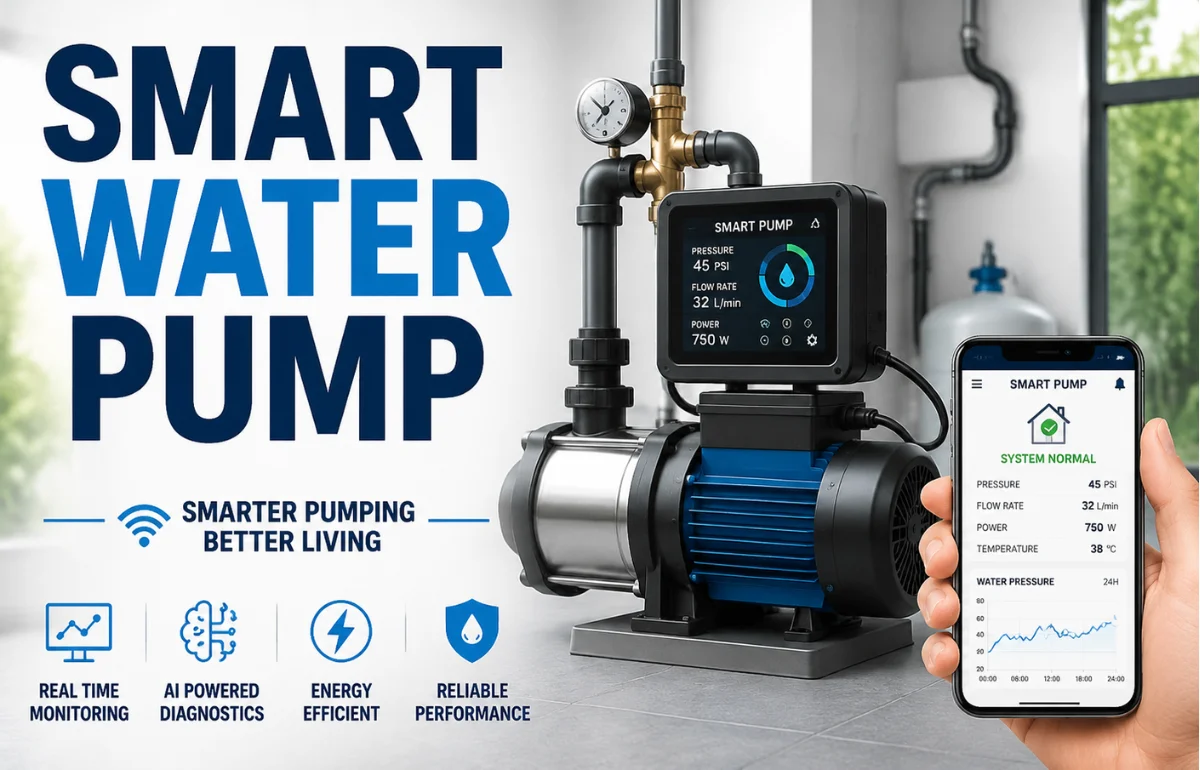
Reliable water delivery is essential for every home, whether it supports household plumbing, irrigation, or water pressure systems. In 2026, advances in smart technology are transforming water pump systems into intelligent, energy-efficient solutions that provide homeowners with greater reliability, lower operating costs, and proactive maintenance capabilities. Artificial intelligence, predictive diagnostics, and connected monitoring are redefining how modern water pumps operate and how homeowners respond to performance issues.
As residential technology becomes more connected, homeowners are looking beyond simple repairs and focusing on systems that provide long-term efficiency and dependable performance. Smart water pumps now communicate with mobile devices, monitor operating conditions in real time, and alert homeowners before small issues become expensive failures.
A common concern many homeowners face is that a water pump stops working unexpectedly. While this situation can interrupt daily routines, modern diagnostic technologies are making it easier than ever to identify potential causes quickly and restore normal operation.
Intelligent Monitoring Is Transforming Water Pump Systems
Modern water pumps are equipped with advanced sensors that continuously monitor pressure, water flow, motor temperature, vibration, and electrical performance. Artificial intelligence analyzes this information to identify patterns that may indicate declining efficiency or developing mechanical problems.
Instead of relying solely on visible warning signs, homeowners now receive alerts through mobile applications when abnormal operating conditions are detected. This early notification allows maintenance to be scheduled before major failures occur.
Real-time monitoring also helps improve overall system performance by ensuring pumps operate within optimal efficiency ranges throughout the year.
These innovations are significantly reducing unexpected equipment failures in residential properties.
Predictive Maintenance Prevents Costly Breakdowns
Predictive maintenance has become one of the most valuable developments in residential mechanical systems. Rather than waiting until equipment completely fails, intelligent monitoring platforms evaluate system health continuously.
Motor performance, pressure consistency, electrical current, operating temperature, and pump efficiency are analyzed using advanced diagnostic software. Artificial intelligence recognizes unusual trends and recommends maintenance before significant damage develops.
When a water pump stopped working, technicians can often access diagnostic information before arriving at the property. This allows them to identify likely causes more efficiently, prepare replacement components if necessary, and reduce repair time.
Predictive maintenance minimizes service interruptions while extending equipment lifespan and reducing long-term ownership costs.
Energy Efficiency Continues Driving Innovation
Energy efficiency remains one of the primary priorities for modern water pump manufacturers. Variable-speed motor technology has dramatically improved system performance by allowing pumps to adjust output according to actual household demand.
Unlike traditional pumps that operate at full capacity regardless of water usage, variable-speed systems automatically increase or decrease motor speed based on changing conditions.
This intelligent operation reduces electricity consumption, minimizes mechanical wear, lowers operating noise, and improves pressure consistency throughout the home.
Many residential water pumps also include automatic sleep modes and adaptive control algorithms that further reduce unnecessary energy use during periods of low demand.
These innovations help homeowners achieve meaningful utility savings while maintaining dependable water delivery.
Connected Homes Improve Equipment Management
Water pumps are becoming important components of connected home ecosystems. Integration with mobile applications, home automation platforms, leak detection systems, and smart plumbing controls provides homeowners with unprecedented visibility into system performance.
Remote monitoring allows users to review operating data, receive maintenance alerts, track water pressure trends, and monitor energy consumption from virtually anywhere.
Some systems can even notify homeowners of unusual water usage patterns that may indicate hidden leaks or plumbing concerns.
Connected technology enables faster response times and more informed maintenance decisions, improving both convenience and long-term reliability.
Sustainability Supports Smarter Water Management
Environmental responsibility continues to shape residential mechanical systems. Modern water pumps are designed to reduce electricity consumption while supporting more efficient water usage throughout the home.
High-efficiency motors, improved hydraulic designs, and intelligent control software minimize wasted energy while maintaining consistent performance.
Many systems also integrate with rainwater harvesting, irrigation management, and water conservation technologies that help homeowners reduce environmental impact.
As sustainability becomes increasingly important, manufacturers continue investing in environmentally responsible engineering that benefits both homeowners and natural resources.
Digital Diagnostics Improves Professional Service
Technology is also transforming professional maintenance. HVAC and plumbing professionals now utilize cloud-based diagnostic platforms, remote monitoring systems, and digital reporting tools that improve service quality.
Historical operating data allows technicians to understand equipment performance before arriving at the property, reducing troubleshooting time and improving repair accuracy.
Digital maintenance records also provide homeowners with valuable insights regarding equipment history, helping support better long-term maintenance planning.
These technological advancements create a more efficient service experience while improving overall customer satisfaction.
Conclusion
Residential water pump technology continues advancing through artificial intelligence, predictive maintenance, connected automation, and energy-efficient engineering. These innovations are transforming water delivery systems into intelligent mechanical platforms capable of maximizing reliability while minimizing operating costs.
Throughout 2026 and beyond, homeowners who invest in advanced water pump technology will benefit from improved efficiency, lower utility expenses, enhanced reliability, and proactive maintenance support.
As connected homes continue evolving, intelligent water management systems will become increasingly valuable components of modern residential infrastructure. Their ability to monitor performance, reduce energy consumption, and prevent unexpected failures demonstrates how innovation continues to improve everyday homeownership while creating more sustainable and resilient living environments.

I’m Salman Khayam, the founder and editor of this blog, with 10 years of professional experience in Architecture, Interior Design, Home Improvement, and Real Estate. I provide expert advice and practical tips on a wide range of topics, including Solar Panel installation, Garage Solutions, Moving tips, as well as Cleaning and Pest Control, helping you create functional, stylish, and sustainable spaces that enhance your daily life.