
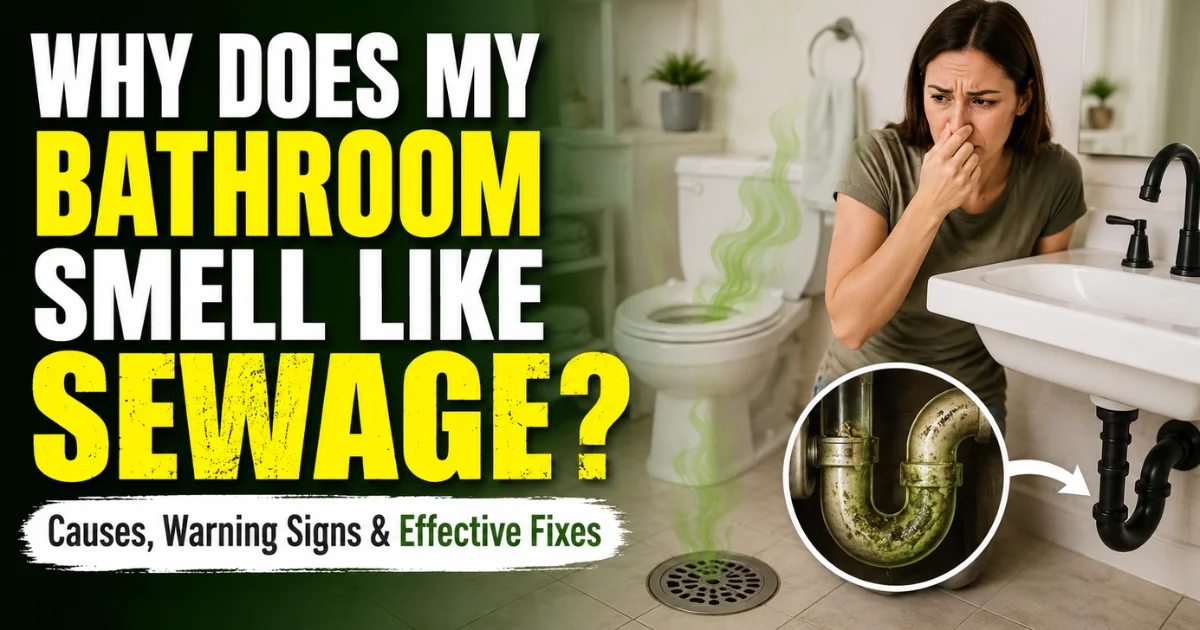
If you’re asking yourself, “Why does my bathroom smell like sewage?” — the short answer is that sewer gases, primarily hydrogen sulfide, methane, and ammonia, are finding a way into your living space through a compromised, dried-out, or blocked plumbing component. In plain terms, something that’s supposed to keep those gases locked inside your drain system is no longer doing its job. The smell is distinctive — that rotten egg or musty, damp odor you can’t ignore — and while it may seem like a minor nuisance, it’s worth treating seriously. Sewer gas isn’t just unpleasant; at high enough concentrations, it can cause real health problems and, in rare cases, even become a fire hazard.
I’ve worked with enough homeowners over the years to know that “why does my bathroom smell like sewage?” is one of those questions that seems deceptively simple. People assume it’s a cleaning problem. They scrub the toilet, bleach the grout, spray half a bottle of air freshener, and wonder why the smell comes back an hour later. The truth is, if your bathroom has a persistent sewage odor, the source is almost always hidden — inside your pipes, beneath your toilet, or somewhere in the ventilation system you’ve probably never thought about.
This article covers every major cause, explains what’s actually happening inside your plumbing when each one occurs, and tells you what you can realistically fix yourself versus when you need professional help.
The Most Common Reasons Your Bathroom Smells Like Sewage
A Dry P-Trap: The #1 Reason Bathrooms Smell Like Sewage
This is the single most common cause of a sewer smell in bathrooms, and it’s also the easiest to fix. Every drain in your bathroom — the sink, the shower, the bathtub — has a P-trap directly beneath it. It’s that curved U-shaped section of pipe you can see under the sink. It holds a small reservoir of water at all times, and that water acts as a physical barrier between your home and the sewer system below.
When a bathroom goes unused for a few weeks — a guest bathroom, a vacation home, or even a shower drain you don’t use regularly — that water can simply evaporate. Once it’s gone, there’s nothing stopping sewer gases from rising straight up through the drain and into your bathroom.
The fix here takes about 30 seconds. Run the water in every drain for 20–30 seconds to refill the trap. If you have a bathroom you rarely use, make a habit of running each drain briefly every two to three weeks.
One thing worth knowing that most articles skip over: P-traps can also fail by slow evaporation, even in bathrooms you use daily if there’s a crack in the trap itself or a loose joint that allows the water to drip out. In that case, running water temporarily fixes the smell, but it keeps returning. If you notice the smell comes back within a day or two after running the taps, a cracked or leaking P-trap is worth checking.
A Failing Toilet Wax Ring Letting Sewage Smell Into Your Bathroom
Your toilet doesn’t sit directly on the floor. Between the base of the toilet and the drain flange below it, there’s a wax ring — a thick, pliable seal that prevents both water leaks and sewer gas from escaping around the toilet base.
Over time, this wax ring compresses, dries out, or shifts if the toilet rocks even slightly. When it no longer forms a complete seal, sewer gases can seep up around the base of the toilet into the bathroom air. You might not see any water on the floor (water leaks only become visible if the wax ring is severely compromised), but you’ll definitely smell the gas.
Signs the wax ring may be the culprit: the toilet rocks when you sit on it, even slightly; you notice a faint odor that seems strongest right near the toilet base; or the area around the toilet base looks slightly discolored or stained.
Replacing a wax ring is a manageable DIY project for someone comfortable with basic plumbing. It requires removing the toilet, replacing the ring, and resetting the toilet level. If that sounds like too much, a plumber can handle it in under an hour.
Clogged or Dirty Drain with Biofilm Buildup
This one gets misidentified constantly. People smell something foul from the drain and assume it’s sewer gas coming from deep in the pipe. Often, it’s actually biofilm — a slimy layer of bacteria, soap scum, hair, and organic matter that accumulates inside the drain pipe just below the drain cover.
Biofilm is particularly nasty because the bacteria breaking down that organic material release sulfur compounds as a byproduct, which smells nearly identical to sewer gas. So when you’re asking yourself “why does my bathroom smell like sewage?”, there’s a decent chance the answer is a lot closer to the surface than you think.
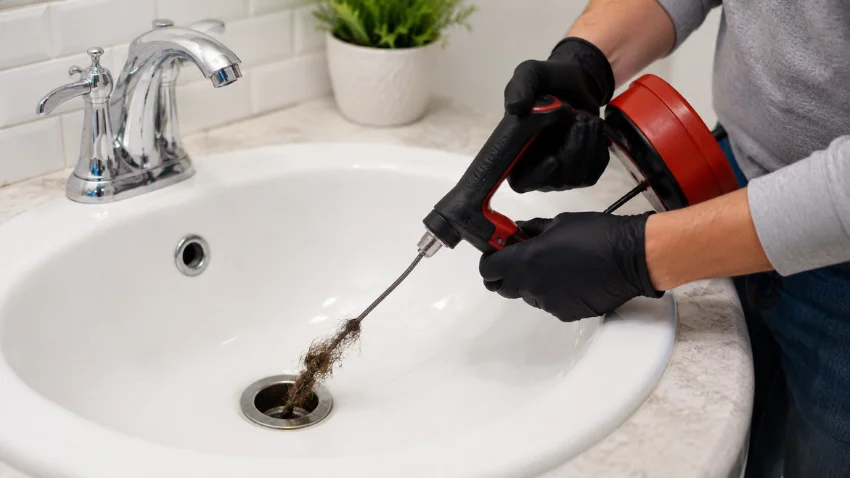
Pouring boiling water down the drain followed by a mixture of baking soda and white vinegar often breaks up surface-level biofilm. For heavier buildup, a drain snake or a zip-it drain cleaning tool can physically remove the accumulated material. Enzyme-based drain cleaners are also worth keeping on hand — they digest organic matter without damaging pipes the way chemical drain cleaners sometimes can.
Blocked or Damaged Vent Pipes That Push Sewer Smells Back Into the Bathroom
Your plumbing system has a ventilation network that runs from your drain pipes up through the roof of your house. These vent pipes serve two purposes: they allow air into the drain system so water flows smoothly, and they allow sewer gases to escape safely out of the building rather than accumulating inside.
When a vent pipe gets blocked — by leaves, a bird’s nest, ice in winter, or debris — sewer gases can’t escape upward. They take the path of least resistance instead, which is back down through your drains and into your bathroom. Gurgling or bubbling sounds when you flush the toilet or drain the sink are a telling sign that your vent pipe may be blocked, because air is being forced through the water in the trap rather than escaping through the vent.
Vent pipe blockages sometimes require going onto the roof to clear the opening, which is a job most people understandably prefer to leave to a professional. If you notice gurgling sounds consistently accompanying the sewer smell, a blocked vent pipe is the likely culprit.
Damage to the vent pipe — cracks, breaks, or disconnected sections hidden inside your walls — is more serious and requires camera inspection to diagnose.
A Sewage Backup or Main Line Blockage Making the Bathroom Smell Like Sewage
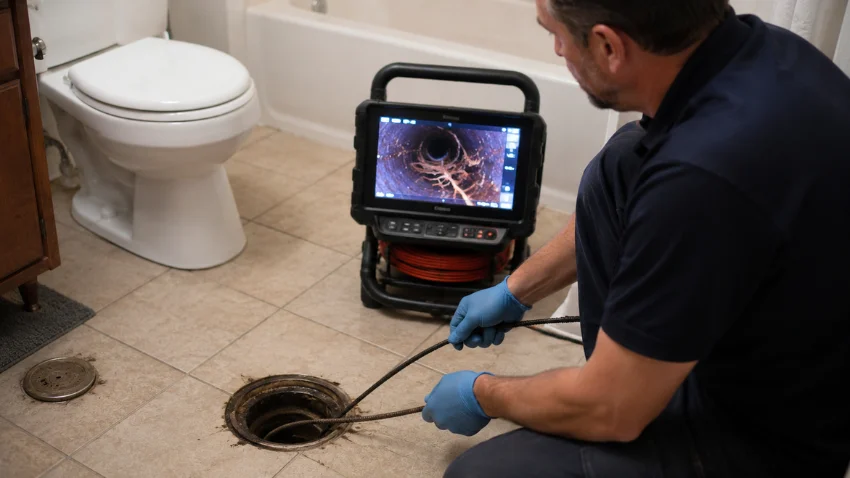
A sewage backup is a more urgent situation. If the sewer smell is accompanied by slow-draining fixtures, water backing up in the tub when you flush the toilet, or visible sewage accumulation in a floor drain, you’re likely dealing with a blockage or damage in the main sewer line.
Tree roots are a very common culprit in older homes. Roots seek out the moisture and nutrients inside sewer pipes and, over time, infiltrate the joints in clay or cast iron pipes, causing partial or complete blockages. Grease accumulation, flushed wipes, and general debris buildup can also create significant mainline blockages.
A main line issue requires professional diagnosis — typically a sewer camera inspection — to pinpoint whether the problem is a clog or actual pipe damage. This is not a DIY situation.
A Cracked Sewer Pipe: The Hidden Source of Bathroom Sewage Odor
One cause that rarely gets enough attention: a cracked or separated sewer pipe that’s hidden inside your walls or beneath your bathroom floor. You can’t see it, you can’t smell a single obvious source, and it doesn’t show up as a visible leak because waste gases escape through the crack before liquid has a chance to build up.
This type of problem tends to produce a sewage smell that’s diffuse — you can’t quite pinpoint it, it seems to permeate the entire room, and it’s often worse in humid weather or after rain (which can cause slight ground movement that temporarily affects underground pipes). A professional camera inspection or smoke test (where harmless smoke is introduced into the drain system to detect where it escapes) can locate these hidden cracks.
A Full or Overloaded Septic Tank Causing Sewage Smell in the Bathroom
If your home runs on a septic system rather than municipal sewer, a sewage smell in the bathroom can mean the tank is full or the drain field is failing. Other signs include slow-draining fixtures throughout the house, unusually green or wet patches in the yard above the drain field, and gurgling sounds from multiple drains at once.
Septic tanks generally need to be pumped every 3–5 years, depending on household size and usage. If you’re overdue, that’s worth addressing promptly — a backed-up septic system is a health hazard and can cause significant damage.
Where Is the Sewage Smell Coming From? A Bathroom Fixture Diagnostic Guide
Health Risks of Sewer Gas: Why a Sewage-Smelling Bathroom Isn’t Just a Nuisance
Most discussions about bathroom sewage smell focus entirely on the odor, but the health implications deserve real attention. Sewer gas is not a single substance — it’s a mixture of several gases, including:
Hydrogen sulfide is the one responsible for the rotten egg smell and is detectable by humans at very low concentrations. At higher concentrations, however, it can cause headaches, dizziness, nausea, and in extreme cases — in enclosed, poorly ventilated spaces — serious respiratory effects.
Methane is odorless and noncombustible at low concentrations, but in confined spaces with enough accumulation, it becomes flammable. This is a rare scenario in residential homes, but it’s a real risk in spaces with significant, unaddressed sewer gas infiltration.
Ammonia, carbon dioxide, and sulfur dioxide round out the mixture and all carry their own irritant properties at elevated concentrations.
The practical takeaway: a faint, intermittent sewer smell in a well-ventilated bathroom is unlikely to cause acute health problems. But a persistent, strong sewage odor — especially in a small, enclosed bathroom — is worth addressing quickly, not just for comfort but for the health of everyone in the home.
How to Get Rid of Sewage Smell in the Bathroom: DIY Fixes That Actually Work
There are a handful of things you can do yourself that genuinely address the root cause rather than masking it:
Running all drains regularly, particularly in unused bathrooms, is the most underrated preventive habit. Most dry P-trap situations are entirely preventable with a 30-second routine every couple of weeks.
Cleaning the drain thoroughly — not just the surface but using a drain snake or zip-it tool to physically remove hair and biofilm from inside the pipe — addresses the most common cause of drain odor that gets misidentified as a sewer smell.
Checking the toilet for rocking or instability is something most homeowners never do until there’s a visible problem. A toilet that rocks even a small amount is wearing down the wax ring. Shimming the toilet and resetting it with a new wax ring early prevents the seal from failing completely.
What doesn’t work: air fresheners, scented candles, and bleach poured down the drain. These mask the symptom temporarily. If the underlying cause isn’t addressed, the smell returns — often stronger as the biofilm or dry trap issue worsens over time.
When to Stop DIYing and Call a Professional
There’s a point where persistence becomes counterproductive. If you’ve addressed the P-trap, cleaned the drains, checked the toilet, and the sewage smell persists or keeps returning, it’s time to call a licensed plumber. Specifically:
A smell that’s diffuse and impossible to pinpoint suggests a cracked pipe or failed vent — neither of which you can diagnose or repair without specialized equipment. Gurgling drains throughout multiple fixtures, slow drainage across the whole house, or sewage appearing in floor drains are signs of a main line problem that needs professional intervention immediately. A smell that’s stronger in the morning (when the house has been closed up overnight) or after rain suggests something structural in the drain system that surface-level fixes won’t reach.
If you’re unsure where to start or need guidance working through home maintenance decisions that intersect with your overall wellbeing and home environment, feel free to contact Wellbeing Makeover — we offer support and resources to help you navigate both the practical and personal dimensions of keeping your living space healthy.
One Thing Most Articles Miss: The Overflow Drain on Your Sink
There’s a small hole near the top of most bathroom sinks — just below the rim — called the overflow drain. Its purpose is to prevent the sink from flooding if the faucet is left running. What most people don’t know is that this overflow channel can accumulate a significant amount of biofilm and bacteria over time. It’s hidden, it’s rarely cleaned, and the smell it produces is remarkably similar to sewer gas.
If you can’t figure out why your bathroom sink smells like sewage, no matter how thoroughly you clean the drain, this is worth checking. You can clean it by inserting a small flexible brush (a bottle brush works) into the overflow hole, scrubbing inside the channel, and flushing it with a diluted bleach solution or enzyme cleaner.
This is one of those small details that makes a disproportionate difference — and it’s almost never mentioned in standard plumbing advice.
Preventing the Problem Before It Starts
Prevention here is genuinely straightforward once you know what causes the problem:
Run every drain in the house — including guest bathrooms, laundry sinks, and floor drains — for 30 seconds at least twice a month. Use a hair catcher over the shower and tub drains; it dramatically reduces the biofilm accumulation inside the pipe. Have your plumbing vents inspected as part of any roof inspection. Schedule regular septic tank pumping if you’re not on municipal sewer. If your home is more than 30 years old and has original cast iron or clay drain pipes, a periodic camera inspection is worth the cost — hidden cracks are common and catch people completely off guard.
Frequently Asked Questions
Why does my bathroom smell like sewage at night but not during the day?
Sewer gases tend to accumulate in enclosed, unventilated spaces. If your bathroom door is closed overnight and the ventilation fan isn’t running, gases from a dry P-trap or minor vent issue build up and become noticeable by morning.
Can a sewage smell in the bathroom make you sick?
At low concentrations, sewer gas is primarily an irritant. Persistent exposure in a poorly ventilated space can cause headaches, nausea, and dizziness, primarily from hydrogen sulfide and ammonia content.
Why does my bathroom smell like sewage only when it rains?
Rain can cause minor ground movement that shifts aging or cracked sewer pipes, temporarily allowing more gas to escape. It can also raise the water table, which pushes gases up through the drain system faster than usual.
How do I know if it’s a P-trap issue or something more serious?
If the smell disappears or significantly reduces after running water in all drains for 30 seconds, it’s almost certainly a dry P-trap. If the smell persists despite fully functioning drains, the issue is likely deeper in the plumbing system.
Is it safe to keep using a bathroom that smells like sewage?
For brief, intermittent exposure in a well-ventilated bathroom, the risk is low. But it’s not something to leave unaddressed indefinitely. Open a window, run the exhaust fan, and investigate the cause as soon as possible.
Wrapping Up
The answer to “why does my bathroom smell like sewage?” almost always comes down to one of a handful of fixable plumbing issues — a dry P-trap, a failing wax ring, a biofilm-loaded drain, a blocked vent, or something more serious in the main sewer line. The key is diagnosing the actual source rather than defaulting to air fresheners and hoping for the best.
Start with the simplest possibilities — run all the drains, clean thoroughly, including that often-overlooked overflow drain — and work your way toward the more complex causes if the smell persists. Know when to bring in a professional, because some issues genuinely require camera inspection and specialized tools to address safely and effectively.
If you want to explore more resources around home health and wellbeing, take a look at our services at Wellbeing Makeover — we’ve built a space for people who want practical guidance that goes beyond surface-level advice.
Other Plumbing Resources
- What Does FIP Mean in Plumbing? Explained Clearly
- Aguaris: Sustainable Water Treatment Solutions
- RY New Orleans Plumbing And Drain Cleaning Guide

I’m Salman Khayam, the founder and editor of this blog, with 10 years of professional experience in Architecture, Interior Design, Home Improvement, and Real Estate. I provide expert advice and practical tips on a wide range of topics, including Solar Panel installation, Garage Solutions, Moving tips, as well as Cleaning and Pest Control, helping you create functional, stylish, and sustainable spaces that enhance your daily life.