
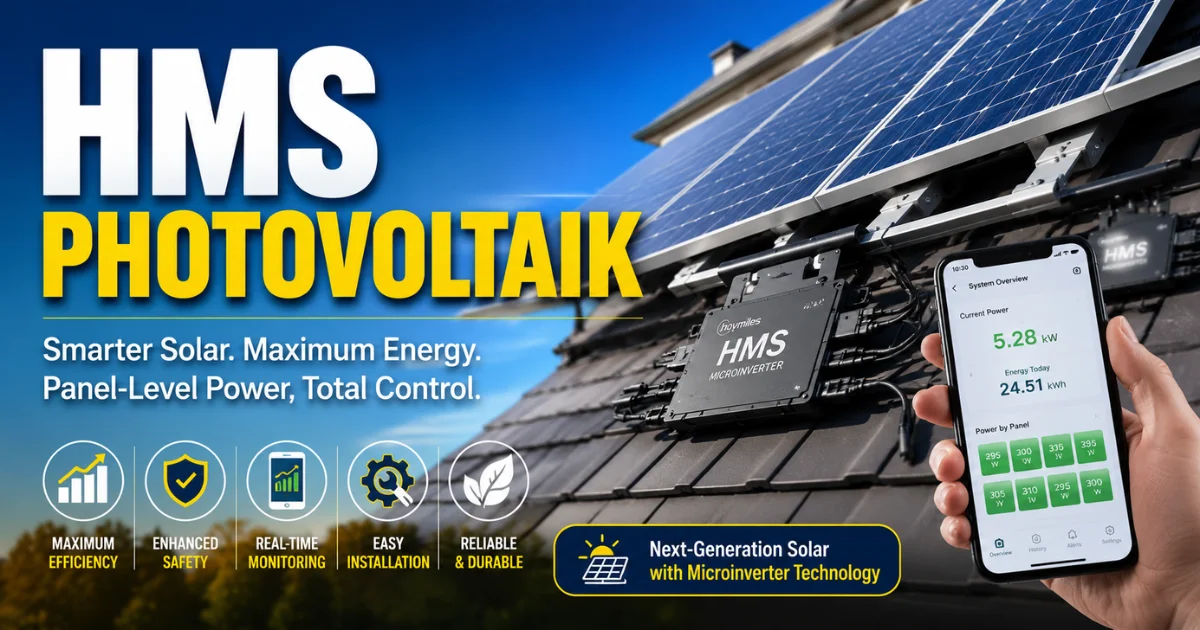
What Is HMS Photovoltaik?
HMS Photovoltaik refers to a category of solar energy systems built around microinverter technology, most commonly associated with the Hoymiles HMS series, where each solar panel gets its own small inverter instead of relying on one large central inverter for the whole array. I came across the term while researching solar setups for my own home, and what struck me immediately was how different the logic is from the systems most of us grew up seeing on rooftops.
With HMS Photovoltaik, every panel converts its own direct current (DC) into alternating current (AC) right where it sits, which means shade, dirt, or a faulty panel on one corner of your roof doesn’t drag down the output of the rest. It’s a smarter, more resilient way to capture sunlight, and it’s quickly becoming the standard for homeowners and small businesses who want more from their solar investment.
My First Real Encounter With HMS Photovoltaik
I’ll be honest, the first time a friend mentioned “HMS Photovoltaik” to me, I assumed it was some kind of brand name I hadn’t heard of, like a German solar company I’d somehow missed. It took me a few conversations with installers and a fair bit of reading before I understood that HMS isn’t really a company in the way Tesla or LG is. It’s a product line and, more broadly, a technology approach. Once that clicked for me, the whole topic became a lot less intimidating.
What I found genuinely useful was sitting down with an installer who walked me through an actual HMS microinverter, holding it in his hand, showing me the size (smaller than I expected, honestly, about the size of a paperback book), and explaining how it bolts directly underneath a solar panel. That hands-on moment did more for my understanding than any spec sheet ever could.
If you’re at the stage where you’re trying to figure out whether HMS Photovoltaik is right for your roof, I’d genuinely recommend asking your installer for the same kind of demonstration. Seeing the hardware in person changes how you think about the whole system.
Breaking Down the Technology Behind HMS Photovoltaik
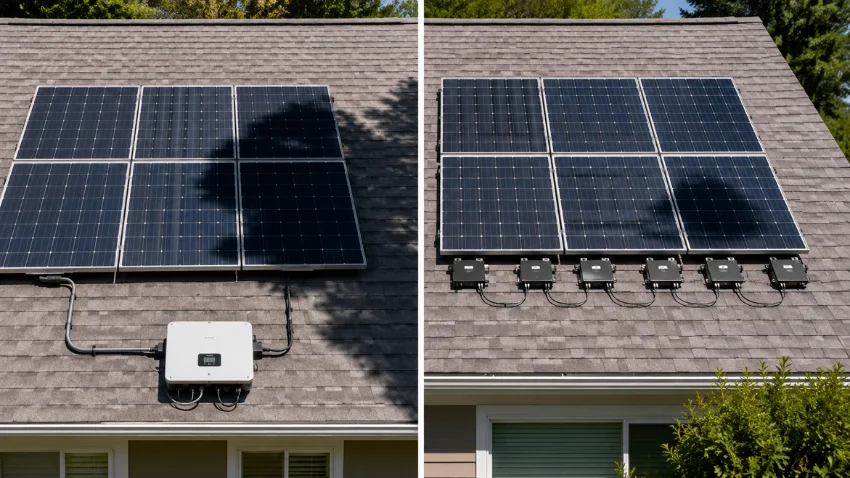
Microinverters vs. String Inverters
To understand why HMS Photovoltaik has gained so much traction, you need to understand the alternative it’s replacing, or at least competing with: the string inverter.
In a traditional string inverter setup, multiple panels are wired together in a series, like old-school Christmas lights, and they all feed into one central inverter, usually mounted in a garage or utility room. That single inverter converts all the DC electricity from the whole string into usable AC power for your home.
The problem with this approach is that the entire string only performs as well as its weakest panel. If one panel is shaded by a chimney, covered in bird droppings, or simply ages faster than the others, it limits the output of every panel connected to it in that string. It’s a bit like a relay race where the whole team’s time is decided by the slowest runner.
HMS Photovoltaik flips this on its head. Each panel has its own microinverter, so each one operates independently. A shaded panel only affects itself, not the panels around it. I’ve seen this play out on a relative’s house where a tall tree casts a shadow over part of the roof in the late afternoon.
With a string inverter, that shadow would have dragged down the whole array’s output during those hours. With the HMS setup they installed, only the shaded panels dipped in production while the sunlit ones kept performing at full capacity.
Core Components of an HMS Photovoltaik System
An HMS Photovoltaik system typically includes a handful of core parts working together:
- Solar panels, usually monocrystalline modules, which capture sunlight and generate DC electricity
- HMS microinverters, attached to the back of each panel or pair of panels, converting DC to AC on the spot
- A monitoring gateway or data transfer unit (DTU), which collects performance data from each microinverter
- A mobile app or web dashboard, where you can see real-time and historical energy production
- Optional battery storage, which lets you store excess solar energy for use later
What I appreciate about this setup is how transparent it makes everything. You’re not just trusting that your solar panels are “working.” You can open an app and see, panel by panel, how much energy each one produced today, this week, or this month. That level of visibility is something older solar systems simply didn’t offer.
How Sub-1G Wireless Communication Fits In
One detail that doesn’t get talked about enough is the communication technology behind HMS Photovoltaik systems. Many models use Sub-1G wireless protocols to send data from the microinverters to the gateway. This matters more than it sounds like it should.
Older microinverter systems often relied on power line communication or standard Zigbee, both of which can run into interference issues, especially in homes with a lot of electronics or in larger commercial buildings with thick walls and metal structures. Sub-1G wireless operates at a lower frequency, which gives it better range and more stable performance through walls and over longer distances.
In practical terms, this means fewer dropped readings, more reliable monitoring, and better diagnostics if something does go wrong. For a homeowner, that translates to peace of mind. For a business managing a larger rooftop array, it can mean the difference between catching a failing microinverter within a day versus not noticing reduced output for weeks.
How HMS Photovoltaik Actually Works, Step by Step
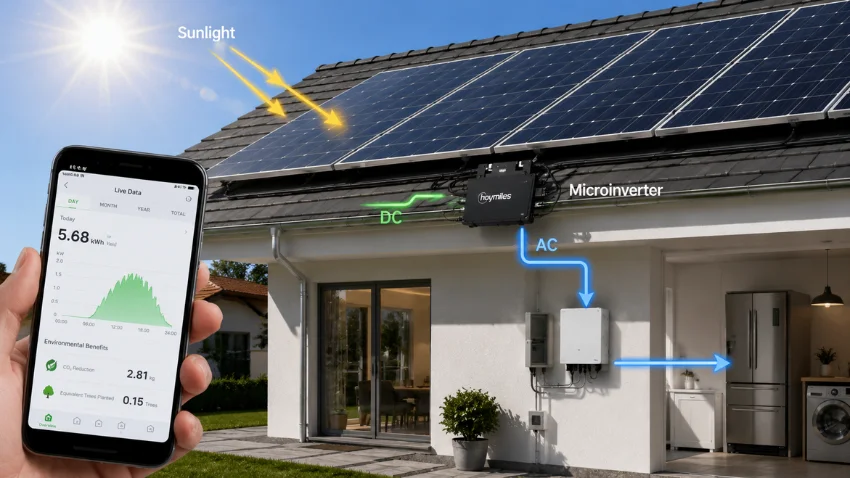
Let me walk through what actually happens when sunlight hits a panel in an HMS Photovoltaik system, because understanding this sequence helped me a lot when I was deciding whether the technology was worth the extra cost.
First, sunlight strikes the photovoltaic cells in each solar panel, and the photovoltaic effect generates direct current electricity. This is the same basic physics behind any solar panel, nothing unique to HMS yet.
Second, instead of that DC electricity traveling down to a central inverter, it goes straight into the microinverter attached to that specific panel. The microinverter converts it into alternating current immediately, right there on the roof.
Third, the AC electricity flows into your home’s electrical system or, if you’re generating more than you need, out to the grid (or into a connected battery, if you have one).
Fourth, throughout this entire process, the microinverter is also sending performance data wirelessly to the gateway, which then relays it to your monitoring app.
What I find genuinely clever about this is that the “intelligence” isn’t centralized. Each microinverter is making its own micro-decisions about voltage, current, and conversion efficiency based on the conditions that the specific panel is experiencing. It’s a distributed system, similar in spirit to how a modern car has dozens of small computers managing individual functions rather than one giant computer trying to control everything.
Why HMS Photovoltaik Has Become So Popular
Efficiency Gains That Actually Show Up on Your Bill
Numbers get thrown around a lot in the solar industry, and I’ve learned to be skeptical of round figures like “save 50% on your bills.” But with HMS Photovoltaik, the efficiency gains are rooted in something concrete: panel-level optimization.
Because each panel operates independently, you’re not losing potential output to underperforming panels dragging down the group. Depending on your roof’s layout, shading patterns, and panel orientation, this can translate to a meaningful bump in total annual energy production compared to a string inverter system of the same size.
I’d encourage anyone comparing quotes to ask installers for a production estimate based on your specific roof, not a generic average. A roof with multiple angles, partial shading from trees or neighboring buildings, or sections facing different directions tends to benefit more from HMS Photovoltaik than a simple, fully south-facing, unobstructed roof.
Safety Improvements With Lower DC Voltage
This is something that doesn’t get nearly enough attention in consumer-facing articles, but it matters a lot, especially for firefighters and emergency responders.
In a traditional string inverter system, DC voltage can run quite high, sometimes several hundred volts, because it’s the combined voltage of an entire string of panels. That high-voltage DC runs along your roof and down to the inverter, and it remains live as long as sunlight is hitting the panels, even if the main breaker is switched off.
With HMS Photovoltaik, because conversion to AC happens at each individual panel, the DC voltage present in the system at any given point is dramatically lower, typically under 60 volts per panel. This reduces the risk of dangerous DC arcing and makes the system inherently safer to work on, both for installers and for emergency services responding to a fire.
I think this safety angle is genuinely underrepresented in marketing materials, and it’s one of the more compelling, fact-based reasons to consider HMS Photovoltaik over older string-based designs, particularly for densely built urban areas or properties close to neighbors.
Modular Design and Future Expansion
One thing I wish someone had explained to me earlier in my own research is just how much easier it is to expand an HMS Photovoltaik system later on. Because each panel and microinverter pair functions as its own unit, adding more panels down the line doesn’t require redesigning your entire electrical setup or replacing a central inverter sized for your old capacity.
If you’re someone who’s planning to add an extension to your home, considering an electric vehicle in the next few years, or just want to start smaller and scale up as your budget allows, this modularity is worth factoring into your decision now, even if you don’t need the extra capacity yet.
HMS Photovoltaik vs. Traditional String Inverter Systems
Here’s a comparison table I put together based on what I’ve learned through research, conversations with installers, and reviewing technical documentation. I think seeing these side by side makes the trade-offs much clearer than reading about them in separate paragraphs.
Looking at this table, my honest takeaway is that HMS Photovoltaik tends to make the most sense when your roof isn’t a perfect, uninterrupted, south-facing rectangle, which, in my experience, describes most real homes. If you happen to have that ideal roof and your budget is tight, a string inverter system might still serve you fine. But for the majority of properties I’ve looked at, the panel-level independence of HMS Photovoltaik pays for itself in both performance and peace of mind.
Integrating HMS Photovoltaik With Battery Storage
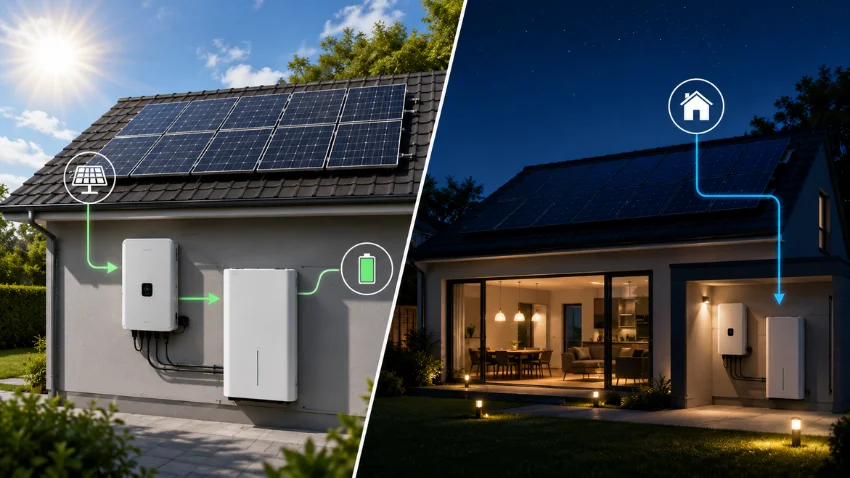
Solar panels alone solve half the puzzle. They generate electricity during daylight hours, but most households use a significant chunk of their energy in the evening, when the sun has gone down. This is where battery storage becomes relevant, and HMS Photovoltaik systems are generally designed with this integration in mind from the start.
When paired with a compatible battery system, excess solar energy generated during the day, energy you’re not using in real time, gets stored rather than sent back to the grid for a relatively small credit. That stored energy then powers your home in the evening, overnight, or during a grid outage if your system is configured for backup power.
From what I’ve gathered, talking to people who’ve made this leap, the combination of HMS Photovoltaik with battery storage tends to significantly increase self-consumption rates, meaning a higher percentage of the electricity you use comes directly from your own solar generation rather than the grid. For households in regions where electricity prices spike during peak hours, or where feed-in tariffs for exported solar energy have dropped, this shift toward self-consumption can make a real difference in monthly bills.
If you’re trying to figure out whether your home is a good candidate for this kind of pairing, it really comes down to your daily usage pattern. If most of your electricity use happens during the day (you work from home, run a business with daytime hours, or have a household that’s active during daylight), you might get most of the benefit from solar alone. If your usage skews toward evenings and nights, like most working families, adding storage to your HMS Photovoltaik setup tends to make the economics more favorable.
Real-World Considerations Before Choosing HMS Photovoltaik
Roof Condition and Compatibility
Before getting excited about the technology itself, it’s worth stepping back and looking at your roof honestly. HMS Photovoltaik systems, like any solar installation, need a roof that’s structurally sound and not due for replacement within the next several years. Installing panels on a roof that needs reroofing within five years means you’ll likely face the additional cost and hassle of removing and reinstalling the system later.
I’d also point out that while microinverters are compact, they do add a small amount of weight and complexity to the mounting process compared to panels alone. A reputable installer should factor this into their assessment, but it’s a fair question to raise during your initial consultation.
Understanding the Cost Breakdown
Costs vary significantly based on location, system size, and local labor rates, but generally speaking, HMS Photovoltaik systems carry a higher per-watt cost than basic string inverter setups, primarily because you’re paying for multiple microinverters instead of one central unit.
For a typical residential installation, you might expect the microinverter portion of the system to add a noticeable percentage to the overall equipment cost compared to a string inverter of equivalent capacity. However, this needs to be weighed against the potential for higher energy yield, reduced maintenance costs over time, and the value of detailed performance monitoring.
When I was comparing quotes, I found it useful to ask installers to break down the cost into panels, inverters or microinverters, mounting hardware, electrical work, and any monitoring or app subscription fees. This breakdown made it much easier to compare apples to apples between different proposals, especially when one installer was quoting a string inverter system, and another was quoting HMS Photovoltaik.
Climate and Weather Considerations
Something I haven’t seen discussed much elsewhere is how HMS Photovoltaik systems perform in regions with significant temperature swings. Microinverters are mounted directly underneath solar panels, which means they’re exposed to whatever temperature the panel itself reaches, and solar panels can get quite hot under direct sun, sometimes 30-40 degrees Celsius above ambient air temperature.
Reputable HMS microinverters are designed and rated to handle these temperature ranges, but if you live somewhere with extreme heat for extended periods, it’s worth asking your installer specifically about the temperature ratings of the microinverters they’re proposing and whether any additional ventilation or mounting considerations apply to your situation. This is a detail that can affect long-term reliability, and it’s the kind of question that separates a thorough installer from one just trying to close a sale.
Maintenance and Longevity of HMS Photovoltaik Systems
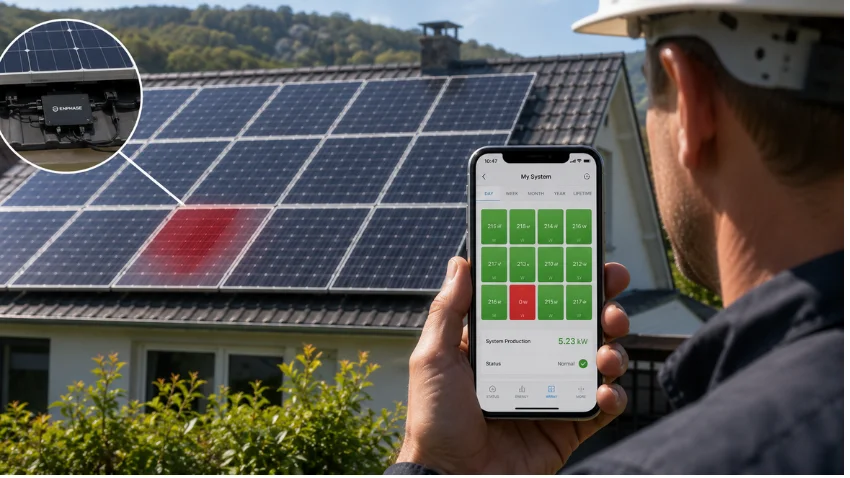
One of the quieter advantages of HMS Photovoltaik that I’ve come to appreciate is how much easier maintenance becomes when something does go wrong. Because the monitoring app shows you data for each individual panel, you don’t have to guess which part of your system is underperforming.
In my own experience helping a family member troubleshoot a dip in their system’s output, we were able to identify within minutes, just by looking at the app, that one specific panel’s microinverter was reporting zero output while every other panel was performing normally. That kind of precision saved what would otherwise have been a frustrating and potentially expensive diagnostic visit from an installer poking around the whole roof.
In terms of lifespan, solar panels themselves are typically rated for 25 to 30 years of useful life, with gradual efficiency degradation over time. HMS microinverters are generally rated for similarly long lifespans, often 20 to 25 years, which is a notable improvement over older string inverters that frequently need replacement after 10 to 15 years due to the heat and electrical stress a central unit endures.
Routine maintenance for an HMS Photovoltaik system mainly involves occasional panel cleaning (frequency depends on your local environment, dust, pollen, bird activity, and so on) and periodically checking the monitoring app to confirm everything is performing as expected. Beyond that, these systems are largely designed to be left alone.
Where HMS Photovoltaik Is Headed Next
Looking ahead, a few developments seem likely to shape how HMS Photovoltaik evolves over the next several years.
Artificial intelligence is increasingly being layered onto monitoring platforms, with systems learning your household’s usage patterns and adjusting battery charging and discharging schedules automatically to maximize savings. Rather than you manually deciding when to draw from the battery versus the grid, the system makes that call based on real-time electricity pricing and weather forecasts.
Vehicle-to-grid technology is another area worth watching. As electric vehicles become more common, the idea of using your car’s battery as additional storage capacity for your home, charging it during the day from solar and drawing from it in the evening, could integrate naturally with HMS Photovoltaik setups that already include smart monitoring and battery management.
Community and neighborhood-level energy sharing is also gaining traction in some regions, where homes with HMS Photovoltaik systems and excess generation can share power with nearby properties through localized microgrids, reducing strain on the broader grid during peak demand periods.
None of these developments is a reason to delay a decision if you’re considering solar now, but they’re worth keeping in mind when choosing a system. Opting for HMS Photovoltaik with its modular, monitoring-first design tends to leave you better positioned to adopt these future features as they become more widely available, compared to older, less flexible string inverter systems.
Making the Right Decision for Your Situation
After spending considerable time researching this topic, both for my own curiosity and to help people close to me make informed decisions, my honest perspective is that HMS Photovoltaik represents a genuinely meaningful step forward for most residential and small commercial solar installations, not just a marketing buzzword.
The panel-level independence solves real problems that string inverters have struggled with for decades. The safety improvements from lower DC voltage are not hypothetical, they’re a tangible reduction in risk. And the detailed monitoring transforms solar from a “set it and forget it, hope it’s working” investment into something you can actually track and understand.
That said, every roof and every household is different, and the right choice depends on factors like your roof’s shading, your budget, your long-term plans for the property, and how you use electricity throughout the day. If you’re feeling overwhelmed by the technical details, that’s completely normal. This is genuinely complex technology, and even people in the industry sometimes use terms loosely or interchangeably.
If you’d like personalized guidance on whether HMS Photovoltaik fits your home’s specific situation, or if you’re navigating a broader decision about sustainable upgrades to your property and lifestyle, you can contact Wellbeing Makeover, and we’ll talk through your options without any pressure. We also offer our online services designed to help you make confident, well-informed decisions about sustainability and home improvement projects, and if you’d rather build up your own knowledge at your own pace, our courses cover related topics in depth so you can approach conversations with installers feeling prepared rather than overwhelmed.
Frequently Asked Questions
What does HMS stand for in HMS Photovoltaik?
HMS most commonly refers to the Hoymiles HMS series of microinverters, though it’s also used more broadly to describe hybrid, high-management solar systems with panel-level monitoring.
Is HMS Photovoltaik better than a regular solar inverter system?
For roofs with shading, multiple angles, or future expansion plans, HMS Photovoltaik generally outperforms traditional string inverters in output and monitoring detail.
Can HMS Photovoltaik work during a power outage?
Only if paired with battery storage and configured for backup power; without a battery, most grid-tied systems shut down automatically during outages for safety.
How long do HMS Photovoltaik microinverters last?
HMS microinverters are typically rated for 20 to 25 years, often outlasting traditional central string inverters by a decade or more.
Is HMS Photovoltaik worth the higher upfront cost?
For most homes with partial shading or complex roof layouts, the higher initial cost is often offset over time by increased energy yield and lower maintenance expenses.
More Solar Panel Resources
- Solar Panel Lighthouse: Complete Guide to Marine Power
- Oil Palm Self-Cleaning Street Light Project Innovation
- Solar Panel Cleaning Equipment – Best Tools for Efficient Maintenance

I’m Salman Khayam, the founder and editor of this blog, with 10 years of professional experience in Architecture, Interior Design, Home Improvement, and Real Estate. I provide expert advice and practical tips on a wide range of topics, including Solar Panel installation, Garage Solutions, Moving tips, as well as Cleaning and Pest Control, helping you create functional, stylish, and sustainable spaces that enhance your daily life.