
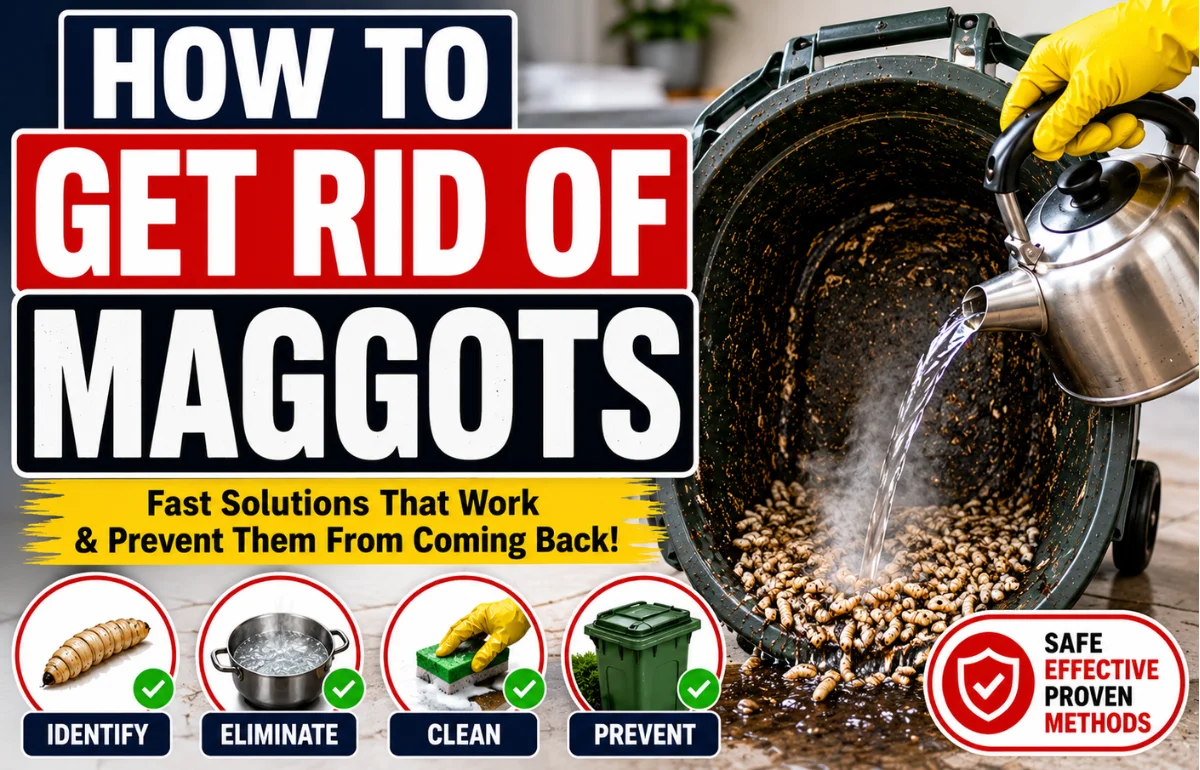
If you’ve found small, pale, wriggling larvae in your bin or under the sink, you’re dealing with maggots, and the fastest way to get rid of them is to remove their food source, then kill them directly with boiling water, a vinegar and salt solution, or diatomaceous earth, followed by a thorough clean with hot soapy water.
Maggots are simply fly larvae that hatch from eggs laid on rotting food, rubbish, or animal waste, usually within eight to twenty hours in our climate. Once you understand how to get rid of maggots properly, the whole process takes less than an hour for most household cases, though severe or hidden infestations often need a professional pest controller to find the source and stop them coming back.
I’ve dealt with maggots more times than I’d like to admit, both in my own kitchen during a particularly brutal Queensland summer and while helping a mate sort out a wheelie bin that had been forgotten about for two weeks over the Christmas break.
It’s not a pleasant job, but it’s also not as complicated as the panic in the moment might suggest. What I’ve learned is that most people make the process harder than it needs to be because they treat the symptom, not the source.
What Maggots Actually Are and Why They Show Up
Maggots are the larval stage of flies. A female fly can lay anywhere from 75 to 150 eggs in a single batch, and she’ll go looking for warm, moist, decaying organic matter to lay them on. That could be food scraps in your kitchen bin, a dead rodent under the house, pet faeces in the backyard, or even fermenting fruit that’s fallen from a tree and been left on the lawn.
In Australian conditions, especially through spring and summer, the fly’s life cycle moves fast. Warmth speeds everything up. Eggs can hatch into maggots within half a day, and those maggots can pupate into adult flies in as little as five to seven days when temperatures sit above 25 degrees. That’s the part most articles gloss over, but it’s the reason an infestation that looks minor on a Monday can be a full-blown problem by Friday if you ignore it.
Knowing how to get rid of maggots starts with accepting that you’re not just cleaning up larvae, you’re interrupting a breeding cycle that’s already moving quickly.
How to Get Rid of Maggots Fast: Methods That Actually Work
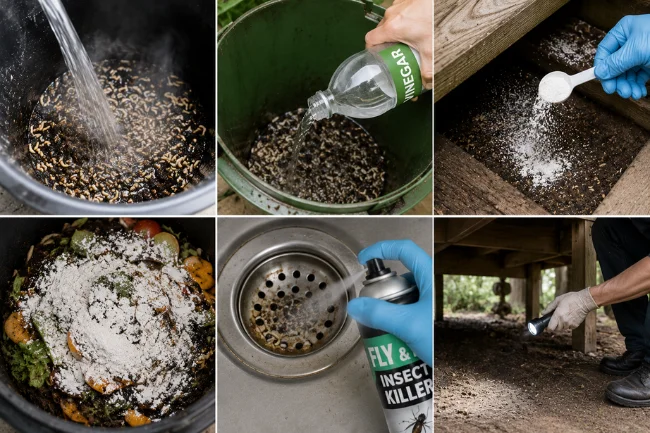
There isn’t one single best method here. What works in a kitchen bin won’t necessarily be the right call for a compost heap or a spot under the deck where something has died. I’ll run through what I’ve used personally and where each one fits best.
Boiling Water
This is my first move every time, and it’s the one I recommend to almost everyone because it’s free, instant, and doesn’t involve chemicals near food preparation areas. Pour boiling water directly over the maggots and the surface they’re sitting on. It kills them on contact through heat shock.
The only caution I’d add, because I’ve made this mistake myself, is to avoid pouring boiling water straight into a hard plastic bin in one go on a cold morning. The sudden temperature change can crack thinner bins. Pour it gradually, or let the bin sit in the sun for ten minutes first.
Vinegar and Salt Solution
Mix equal parts white vinegar and salt, sometimes with a splash of hot water to help it spread, and pour it over the affected area. The acidity dehydrates the maggots and also helps cut through the bacterial film that builds up in bins and drains. I tend to use this one for kitchen bins and drains specifically, because it also deals with the smell, which boiling water alone doesn’t always fix.
Diatomaceous Earth
This is a fine powder made from fossilised algae, and it works mechanically rather than chemically. It’s sharp at a microscopic level, so it damages the waxy outer layer of the maggot’s body and causes it to dehydrate. I like this option for carpeted areas, under pet bedding, or anywhere you can’t easily pour liquid. The catch is that it stops working the moment it gets wet, so it’s not much use outdoors if rain is forecast.
Garden Lime
Builders lime or garden lime, sprinkled generously over maggots in compost piles or outdoor bins, raises the pH and dries them out. It’s a method a lot of older Australian households still swear by, particularly anyone who grew up with a compost heap or a chook pen. Wear gloves and avoid breathing it in, since it can irritate the skin and lungs.
Insecticide Sprays
For larger or recurring infestations, a household insecticide labelled for fly larvae will kill maggots on contact and offer some residual protection. I’d treat this as a last resort rather than a first step, mainly because it introduces chemicals into spaces where food is often nearby, and because it doesn’t address why the flies were drawn there in the first place. If you’re using one, ventilate the area properly and keep kids and pets well away until it’s dry.
Comparison Table: Choosing the Right Maggot Removal Method
Where Maggots Tend to Turn Up in Australian Homes
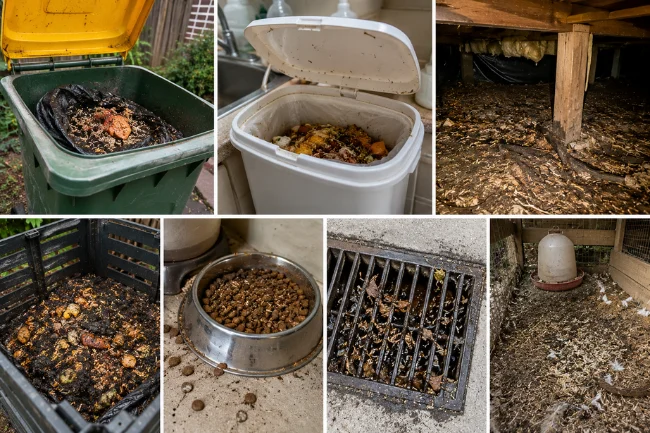
Wheelie bins are the most common offender by a wide margin, especially in the two weeks over Christmas and New Year when council collections slow down, and household waste sits out in the heat. Kitchen bins, particularly the ones with a lid that doesn’t seal properly, are next. I’ve also seen them in:
- Under decking or in subfloor areas where a possum, rat, or bird has died and gone unnoticed
- Compost bins that have too much wet, nitrogen-rich material and not enough dry matter mixed through
- Garage corners where pet food is stored in an unsealed container
- Outdoor drains and grates that collect organic debris after rain
- Around chook pens or rabbit hutches, if bedding isn’t changed often enough
Anywhere warm, moist, and rich in decaying matter is fair game. If you’re trying to work out how to get rid of maggots for good rather than just today, tracing the smell back to its source is non-negotiable.
Maggots themselves don’t travel far from where the eggs were laid, so if you’re finding them in a particular corner of the garage repeatedly, there’s almost certainly something dead or rotting close by that hasn’t been found yet.
Flystrike: The Australian Health Risk Most Articles Skip
Most general advice on this topic focuses on human hygiene risks, which matter, but if you’ve got pets or livestock, there’s a more specific and genuinely dangerous issue worth knowing about: flystrike, or cutaneous myiasis. Blowflies are drawn to moist, soiled fur or wool, particularly around the rear end of dogs with longer coats, and they’ll lay eggs directly on the animal.
The maggots that hatch feed on living tissue, not just dead matter, and this can progress from unnoticed to life-threatening within 24 to 48 hours in hot weather.
This is far more commonly discussed in sheep farming circles than in household pest control content, but it’s just as relevant to a family dog left in a backyard over a humid weekend, especially breeds with thick or matted coats, or any pet recovering from a wound or surgery.
If your dog suddenly seems distressed, is excessively licking or chewing at one spot, or you notice a strong odour combined with visible larvae in their fur, that’s a vet visit, not a DIY fix.
I mention this because it’s the one genuine gap I’ve noticed across most maggot articles online, and it’s the kind of detail that matters a lot more in Australia than in cooler climates where blowfly activity is lower.
Stopping Maggots From Coming Back
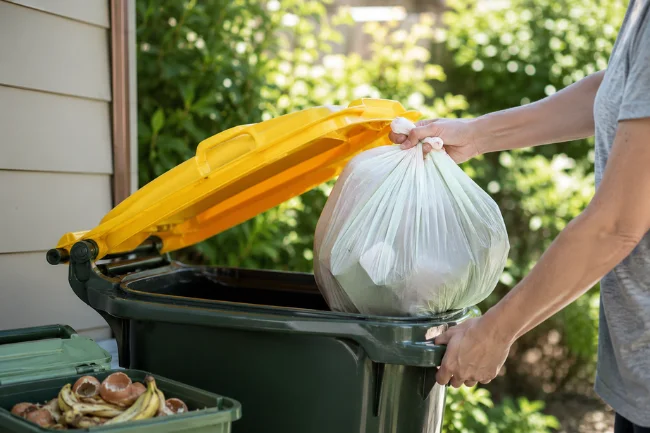
Killing the maggots you can see solves today’s problem. Keeping them from returning is a different job, and it’s the part people tend to skip once the immediate grossness is dealt with.
Tighten Up Your Bin Routine
Rinse kitchen and outdoor bins regularly, not just when they start to smell. A capful of disinfectant or a vinegar rinse once a week through summer makes a real difference. If your council collection is fortnightly, consider freezing particularly smelly scraps like meat trimmings until collection day rather than letting them sit in a warm bin.
Seal, Don’t Just Store
Pet food, compost additions, and any food waste destined for the bin should go into sealed containers rather than loose bags. Flies can detect decaying organic matter from a surprising distance, and a loosely tied bag isn’t much of a deterrent.
Check the Areas You Can’t See
Subfloor spaces, wall cavities, and roof voids are the classic blind spots. If you’ve ruled out every obvious source and the smell or the maggots persist, something has likely died somewhere out of sight. This is genuinely one of the more common calls pest controllers get in Australia, particularly in older homes with raised flooring or accessible subfloor areas where possums and rodents like to nest.
Fly Screens and Door Seals
It sounds basic, but a fly screen with even a small tear, or a back door that doesn’t seal properly, is an open invitation. I replaced a single torn screen on my own laundry door a couple of years back and noticed a genuine drop in fly activity inside within days.
When It’s Time to Call a Professional
DIY methods handle the majority of household cases, but there are a few situations where I’d stop trying to manage it yourself. If the source of the infestation is inside a wall cavity, under flooring, or somewhere structurally inaccessible, a pest professional has the tools and experience to locate it without tearing your home apart guessing. The same goes for recurring infestations in the same spot despite repeated cleaning, which usually points to a hidden source rather than a hygiene issue.
It’s also worth knowing that severe infestations, particularly ones involving a dead animal that’s gone undiscovered for a while, can leave behind damaged flooring, subfloor timber, or insulation that needs replacing once the pest issue itself is resolved. In those cases, beyond just clearing the infestation, you may also want expert renovation assistance to repair the affected areas properly and stop any lingering odour or structural issues from causing problems down the track.
A professional visit typically costs more upfront than a bottle of vinegar, but it comes with the advantage of actually finding the root cause, which is the difference between a problem that’s solved and one that just keeps reappearing every few weeks.
Frequently Asked Questions
Does fly spray kill maggots?
Yes, most fly sprays contain insecticides that kill maggots on contact, but the spray alone won’t stop them returning unless you also remove the rotting material attracting the flies.
How long does it take to get rid of maggots completely?
Visible maggots can usually be killed within an hour using boiling water or vinegar, but full elimination, including eggs and the food source, can take a day or two of consistent cleaning.
Can maggots come back after cleaning?
Yes, if any trace of the original food source or a dead animal remains nearby, adult flies will keep laying new eggs in the same spot within days.
Are maggots dangerous to touch?
Maggots themselves don’t bite or sting and pose minimal risk from brief contact, though gloves are recommended due to the bacteria they carry from decaying matter.
What attracts maggots to a home in the first place?
Rotting food, overflowing rubbish bins, pet waste, and any dead animal in an enclosed space are the most common triggers, especially during warm, humid weather.
Final Thoughts
Maggots are unpleasant to deal with, but they’re rarely a sign of anything more serious than a missed bin day or a forgotten container at the back of the pantry, unless you’ve checked every obvious spot and still can’t find the source. In that case, trust your instincts and get someone qualified to look further.
I’ve found that the households who never deal with repeat infestations are the ones who treat prevention as a routine task rather than a reaction to a bad smell. Stay on top of your bins, seal up food waste, and check the spots you can’t see every few months, and you’ll rarely need to think about how to get rid of maggots again.
If you’re dealing with a stubborn infestation or suspect structural damage behind it, getting a professional assessment sooner rather than later will save you both time and money.
More Pest Control Resources
- When Is Spider Season in Australia? 7 Key Facts
- Crazy Ants Pest Control: Complete Removal Guide
- Anticimex Oy / Indoor Quality Service Oy Yritysostostrategia: Finland’s 2026 Healthy Buildings Acquisition Strategy Explained

I’m Salman Khayam, the founder and editor of this blog, with 10 years of professional experience in Architecture, Interior Design, Home Improvement, and Real Estate. I provide expert advice and practical tips on a wide range of topics, including Solar Panel installation, Garage Solutions, Moving tips, as well as Cleaning and Pest Control, helping you create functional, stylish, and sustainable spaces that enhance your daily life.