
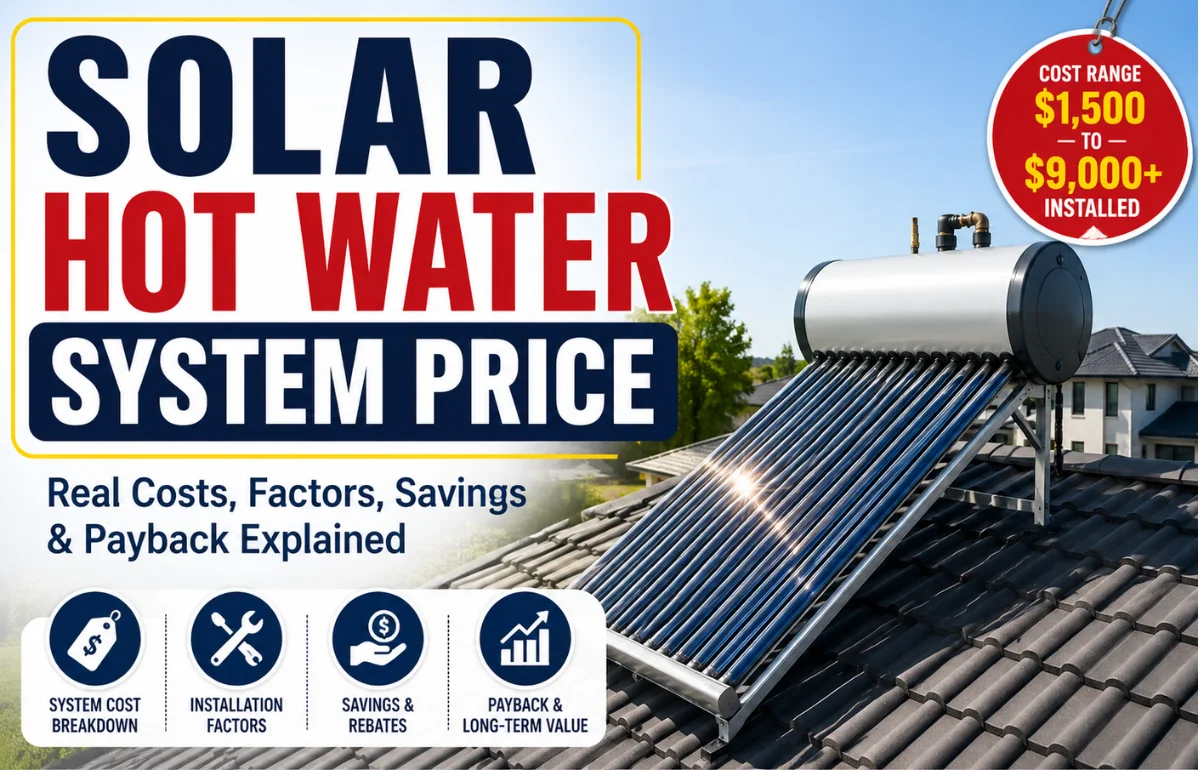
Solar hot water system price typically ranges between $1,500 and $9,000 installed, depending on the collector type, tank size, and the complexity of fitting it into your roof and plumbing. A basic batch or thermosiphon unit sits at the lower end, while a pumped evacuated tube system with a large storage tank and backup heating element lands at the higher end. Most homeowners I’ve spoken with end up paying somewhere between $3,000 and $5,500 once installation, permits, and a backup electric or gas booster are factored in. The final number depends heavily on where you live, how much hot water your household uses, and whether your roof needs extra structural work to hold the collectors.
I started looking into this seriously a few years ago when my parents’ old electric water heater finally gave out after almost fifteen years of service. What began as a quick comparison shopping exercise turned into weeks of calling installers, reading utility rebate fine print, and learning more about thermosiphon loops than I ever expected to know. That experience is the backbone of this guide, and I’ll walk you through everything that actually moves the price needle, not just the marketing numbers you see on manufacturer websites.
What Actually Determines Solar Hot Water System Price

Every quote I collected during my research varied for the same basic reasons. Once you understand these factors, you can predict roughly where your own quote will land before a single installer shows up at your door.
Collector Type
The solar thermal collector is the part that actually absorbs sunlight and heats the water, and it’s the single biggest cost driver. Flat plate collectors are simpler, cheaper to manufacture, and have been around for decades, which keeps their price relatively predictable. Evacuated tube collectors use a vacuum-insulated glass tube design that performs better in cold or cloudy climates, but that extra engineering adds to the sticker price.
Tank Size and Storage Capacity
A household of two doesn’t need the same storage tank as a family of six. Tanks generally range from 40 gallons up to 120 gallons or more for larger homes, and the price climbs steadily with capacity. I noticed that jumping from an 80-gallon to a 100-gallon tank added several hundred dollars to two separate quotes I received, even from the same installer.
Climate and Roof Orientation
If you live somewhere with hard freezes, your installer will likely recommend a closed-loop glycol system instead of a simple direct-circulation setup, and that antifreeze loop adds both equipment and labor cost. Roof pitch, orientation, and shading also matter. A south-facing roof with a clean run to the mechanical room is cheaper to work with than a north-facing roof that needs extra mounting hardware or a longer pipe run.
Installation Complexity
Labor is often underestimated. Running new plumbing lines, reinforcing roof trusses for tank weight, rewiring an electrical backup element, and pulling permits can add 30 to 50 percent on top of the equipment cost alone. I learned this the hard way when one installer’s “low price” quote ballooned once we factored in the additional roof bracing our specific house needed.
Average Solar Hot Water System Price by Type
Here’s a breakdown based on the quotes I personally gathered and cross-referenced with industry pricing data from several installers across different regions.
These figures are installed prices for a typical single-family home in the United States. If you’re shopping in a different country, expect the same relative spread, but local labor rates and import duties on imported collectors can shift the absolute numbers up or down.
Flat Plate vs Evacuated Tube: Which Costs More and Why
This is the comparison I got asked about most often when friends found out I’d spent a month researching solar water heaters, so it’s worth its own section.
Flat plate collectors are essentially an insulated box with a dark absorber plate and a glass or polycarbonate cover. They’re cheaper to produce, easier to install, and have a long track record. Their main weakness is reduced efficiency in very cold or overcast conditions, since heat can escape more easily through the flat surface.
Evacuated tube collectors house the absorber inside a sealed glass tube with a vacuum between two layers of glass, similar to a thermos. That vacuum drastically cuts heat loss, which is why these units outperform flat plates in winter and in regions with frequent cloud cover. The tradeoff is a higher solar hot water system price, more fragile glass components that can crack under hail or debris impact, and slightly higher long-term maintenance if a tube ever needs replacing.
If you live somewhere with mild winters and consistent sun, a flat plate system will usually save you money without sacrificing much performance. If you’re in a region with real winters, the extra upfront cost of evacuated tubes often pays for itself through better cold-weather output.
Installation Costs Beyond the Unit Itself
A lot of price comparisons online only list the equipment cost, which is misleading because installation labor frequently equals or exceeds the equipment price itself. Here’s what typically gets added on:
- Plumbing modifications to connect the new system to your existing hot water lines usually run $300 to $800, more if your home has an unusual layout or older pipe materials that need replacing along the way.
- Roof mounting hardware and any structural reinforcement needed to support collector weight and wind load can add $200 to $1,000, depending on your roof type and local building codes.
- Electrical work for the backup heating element, including a new circuit if your panel doesn’t have spare capacity, often costs $150 to $500.
- Permits and inspections vary wildly by municipality but generally fall between $50 and $300.
- A backup or auxiliary heater, if your system doesn’t already include one, can add another $300 to $1,200, depending on whether you go electric or gas.
When all of this gets bundled together, it’s not unusual for installation costs alone to land between $1,500 and $3,500 on top of the equipment price, which is exactly why two homeowners buying the same collector model can end up with very different final invoices.
Solar Hot Water System Price vs Traditional Water Heater Cost

I think the most useful comparison isn’t between different solar systems, it’s between solar and the conventional water heater you’d otherwise install. A standard electric tank water heater runs $400 to $1,500 installed, and a gas tank unit is similar. Tankless gas units run higher, often $1,500 to $3,500 installed.
So yes, the upfront solar hot water system price is almost always higher than a conventional unit, sometimes by a factor of three or four. The difference is what happens after installation. A conventional electric water heater can account for nearly a fifth of an average household’s total electricity bill, and that cost repeats every single month for the life of the unit. A solar system shifts most of that ongoing cost into the upfront purchase, then dramatically reduces your monthly utility bill for as long as the system keeps running, which for quality units is often 15 to 25 years.
Rebates, Incentives, and Tax Credits That Lower the Price
This is the part of my research that genuinely surprised me, because almost nobody talks about how much the effective solar hot water system price drops once incentives are applied.
In the United States, a federal residential clean energy credit applies to qualifying solar water heating systems, and it can knock a meaningful percentage off the total installed cost when you file your taxes. On top of that, many states, utilities, and even some municipalities offer their own rebates, ranging from a flat few hundred dollars to programs that cover a substantial chunk of the installation cost for income-qualified households.
What I found most useful was calling my parents’ utility company directly rather than relying on what installers told me, because installers don’t always know about every program their customers might qualify for. One rebate program we found wasn’t even listed on the utility’s main website, it was buried in a PDF from a sustainability initiative page. A little digging can genuinely shave thousands off the real out-of-pocket cost.
Outside the US, programs vary widely. Some countries offer outright subsidies that can cover close to half the installed price for residential solar water heaters, particularly in regions actively pushing households away from fossil-fuel water heating. It’s worth checking your country’s energy department or equivalent agency before assuming the sticker price is what you’ll actually pay.
How Long Until a Solar Hot Water System Pays for Itself
Payback period is where a lot of online calculators get sloppy, because they assume flat energy prices and ignore maintenance. Based on the real numbers I collected, here’s a more honest range.
For a household replacing an electric water heater with moderate to high hot water usage, a $4,000 installed solar system typically saves $300 to $600 a year on electricity, putting the payback period somewhere between 7 and 13 years. Households replacing gas water heaters usually see a longer payback period, often 10 to 18 years, since gas tends to be cheaper per unit of energy than electricity in most regions.
Where things get genuinely good is years after that breakeven point. Once the system has paid for itself, you’re essentially getting free hot water heating for the remaining lifespan of the equipment, which for a well-maintained system can be another decade or more.
Hidden Costs People Forget to Budget For
A few line items came up in my research that rarely make it into glossy brochure pricing.
Annual maintenance, including checking glycol fluid levels in closed-loop systems and inspecting collector seals, typically runs $100 to $250 a year if you hire someone rather than doing it yourself.
Insurance adjustments are sometimes necessary since adding roof-mounted equipment can occasionally affect your homeowner’s policy, though the change is usually minor.
Eventual component replacement matters too. Pumps, control valves, and backup heating elements have shorter lifespans than the collectors themselves, often 10 to 15 years, and replacing them can run a few hundred dollars each time.
Roof work timing is the one people kick themselves over most. If your roof needs replacing within the next five years, it makes far more financial sense to do that first, since removing and reinstalling solar collectors to accommodate new roofing adds unnecessary labor cost.
My Own Experience With Solar Hot Water Pricing
Going through this process with my parents taught me that the quoted solar hot water system price on a flyer or website is almost never the number you end up paying, in either direction. We received three quotes for what was theoretically the same evacuated tube system: $5,200, $6,800, and $7,400. The difference wasn’t the equipment, it was labor philosophy. The cheapest installer used a smaller local crew and was upfront about a longer install timeline. The most expensive one included a five-year extended warranty and a same-day backup heater swap if anything failed.
We ended up going with the middle quote, mostly because the installer answered every question clearly and didn’t pressure us into a same-day decision, which in hindsight was a better signal of reliability than the price itself. If you’re navigating a similar decision and want a second set of eyes on quotes, comparing notes with people who’ve handled similar home upgrades through professional home improvement services can save you from overpaying for the wrong reasons or underpaying for corners that shouldn’t be cut.
Tips to Get the Best Price Without Cutting Corners
Get at least three quotes from licensed installers, and ask each one to break down equipment versus labor separately so you can actually compare apples to apples.
Ask about manufacturer warranties separately from installer warranties, since a ten-year collector warranty means little if the installer’s workmanship warranty only covers one year.
Size the tank to your actual household usage rather than what an installer recommends by default, since oversizing is a common upsell tactic that inflates the solar hot water system price without proportional benefit.
Time your installation for shoulder seasons like early spring or fall when installers have more availability and are sometimes willing to negotiate on labor costs.
Check whether your existing roof or plumbing setup qualifies for any installer-specific discount, since some companies offer reduced rates for south-facing roofs that require minimal mounting hardware.
If your project is part of a larger renovation, it’s worth folding the solar water heater into broader plans through expert renovation assistance, since contractors coordinating multiple upgrades at once can often negotiate better combined labor rates than hiring separately for each piece.
When Replacing an Old System Makes More Sense Than Repairing
If your existing solar water heater is more than 15 years old and needs a major repair, like a cracked tank or a failed pump that costs more than 40 percent of a new system’s price to fix, replacement is almost always the better financial move. Older systems also tend to use less efficient flat plate technology compared to what’s available now, so a replacement can actually improve your hot water output even with a similarly sized unit.
On the other hand, if the issue is something minor like a faulty sensor or a worn gasket, repair costs are usually under $300 and extend the system’s life by several more years, making repair the clear winner.
Frequently Asked Questions
How much does a solar hot water system cost installed?
Installed solar hot water systems typically cost between $1,500 and $9,000, with most residential installations landing in the $3,000 to $5,500 range depending on collector type and tank size.
Is a solar hot water system worth the price?
Yes, for most households, since the typical payback period of 7 to 18 years is well within the system’s usable lifespan, after which hot water heating becomes essentially free.
What is the cheapest type of solar water heater?
Batch or thermosiphon systems are the cheapest options, often priced between $1,500 and $4,500 installed, though they work best in warmer climates without hard freezes.
Do solar hot water systems need a backup heater?
Most do, especially in climates with extended cloudy periods or cold winters, and that backup electric or gas element typically adds $300 to $1,200 to the total price.
How long does a solar hot water system last?
A well-maintained solar hot water system typically lasts 15 to 25 years, though individual components like pumps and backup heaters often need replacement around the 10 to 15 year mark.
Final Thoughts
Solar hot water system price isn’t a single number you can copy from a brochure, it’s the sum of your collector choice, tank size, climate, roof condition, and local labor rates, and every one of those variables can shift your final cost by thousands of dollars in either direction. The smartest move I made during my own research wasn’t finding the cheapest quote, it was understanding exactly what each line item represented so I could tell a fair price from a padded one.
If you’re weighing a solar water heater alongside other upgrades to your home, it rarely makes sense to plan it in isolation. Bundling it into a broader project through home upgrade services or getting professional guidance for your project before you sign anything can help you avoid costly mistakes and make sure every dollar you spend actually improves your home’s long-term value. Reach out to our team whenever you’re ready to map out the right plan for your property.
Other Resources
- Trina Solar Panels TSM-320PD14 Review: Specs & Performance
- 24V Solar Panel Diagram with Converter Charger and Inverter Diagram
- When Is the Best Time to Install Solar Panel Systems?

I’m Salman Khayam, the founder and editor of this blog, with 10 years of professional experience in Architecture, Interior Design, Home Improvement, and Real Estate. I provide expert advice and practical tips on a wide range of topics, including Solar Panel installation, Garage Solutions, Moving tips, as well as Cleaning and Pest Control, helping you create functional, stylish, and sustainable spaces that enhance your daily life.