
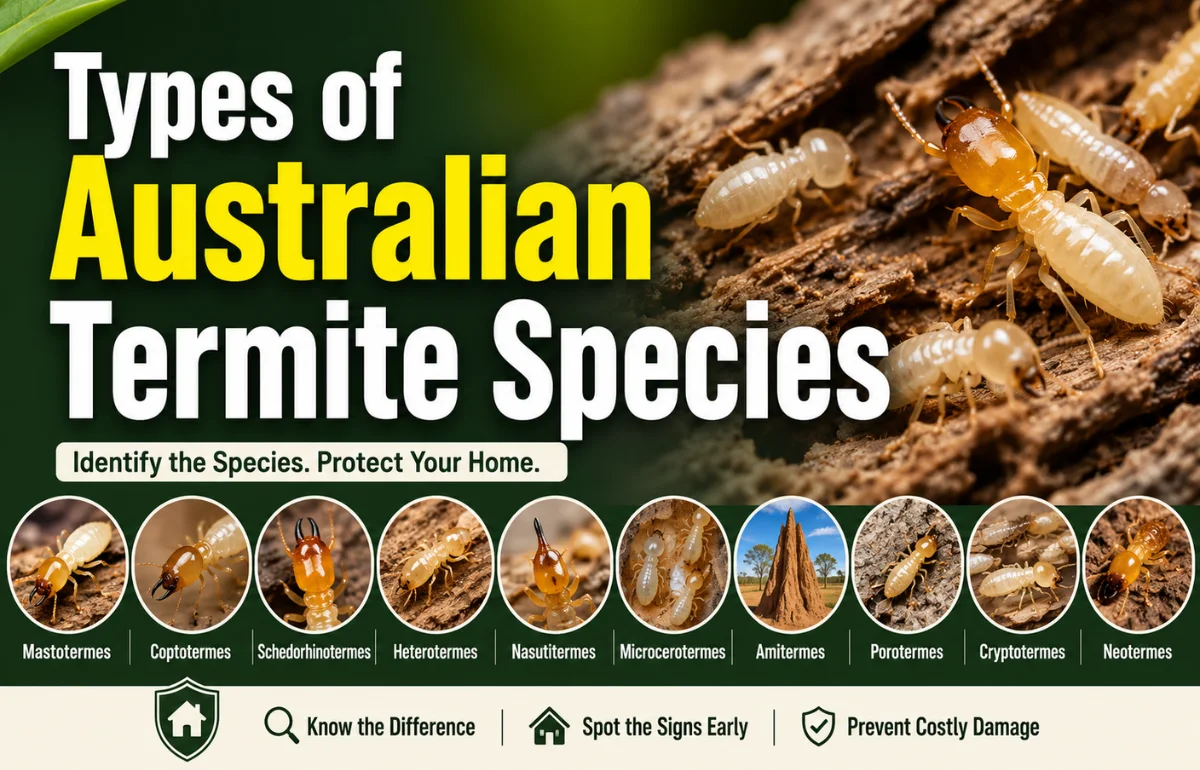
Types of Australian termite species fall into roughly ten genera that homeowners are likely to come across, out of the 300-plus species that exist nationwide. The main ones include Mastotermes, Coptotermes, Schedorhinotermes, Heterotermes, Nasutitermes, Microcerotermes, Amitermes, Porotermes, Cryptotermes and Neotermes. Each genus has its own feeding habits, nesting style, and level of risk to timber-framed homes. Coptotermes is generally considered the most destructive group nationally, while others, like Nasutitermes, are mostly harmless bushland dwellers. Knowing which type you’re dealing with changes everything about how the problem gets treated.
I’ve spent a fair chunk of my career writing about home maintenance issues that Australians genuinely lose sleep over, and termites sit right at the top of that list. A few years back, a friend of mine in Redcliffe found a sagging skirting board and assumed the worst — turned out to be a relatively low-risk Heterotermes colony nibbling at old decking, not the structural disaster she’d pictured. The species mattered enormously to how the pest controller approached it, and that’s really the point of this article.
Why It Actually Matters Which Termite Species You’ve Got
Most people lump all termites into one mental category: “white ants that eat houses.” Fair enough — from a distance, they do look similar. But the types of Australian termite species behave so differently from one another that misidentifying them can lead to the wrong treatment, wasted money, or worse, a false sense of security.
A colony of Mastotermes, for instance, can split off into satellite colonies that survive even after the main nest is treated. Cryptotermes, on the other hand, lives almost entirely inside the timber it’s eating, leaving barely a trace until the wood is structurally compromised. Treating these two the same way would be a mistake. This is part of why a proper inspection by someone trained to read the signs — mud tubes, frass, hollow-sounding timber, discarded wings — is worth far more than a guess based on a five-minute internet search.
The Main Types of Australian Termite Species
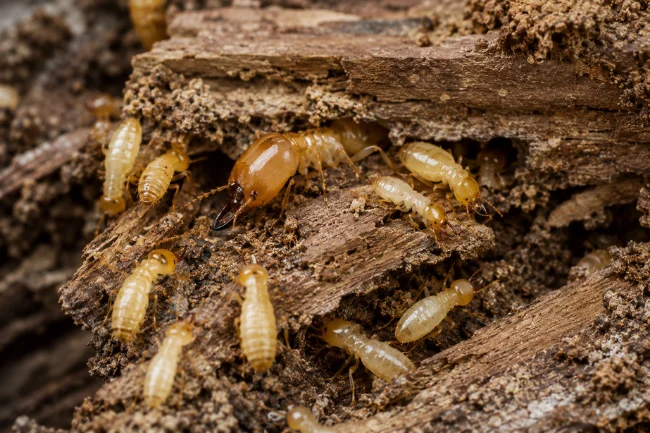
Mastotermes — The Giant Termite
Found across the tropical north, above the Tropic of Capricorn, Mastotermes darwiniensis is widely regarded as Australia’s most destructive termite. It isn’t fussy about what it eats — timber, shrubs, even underground cables and plastics have turned up in damaged structures. What makes this one particularly frustrating is its habit of “budding,” where a fertile female breaks away from the main colony and establishes a new one nearby. I’ve heard pest technicians describe treating a Mastotermes infestation as playing whack-a-mole, because the original nest might be gone while two or three satellites quietly carry on.
Coptotermes — The One Most Pest Controllers Worry About
Coptotermes is the genus responsible for the bulk of termite damage claims along the eastern seaboard, and it’s the one most building inspectors specifically check for. Colonies can exceed a million individuals, and foraging tunnels have been documented stretching 50 metres or more from the nest. They’re subterranean, meaning the nest itself is usually hidden underground or inside a tree stump, with mud-shelter tubes running up foundations, piers, or wall cavities to reach timber. If you’ve ever seen those vertical, pencil-thick mud trails climbing a brick pier, there’s a decent chance Coptotermes built them.
Schedorhinotermes
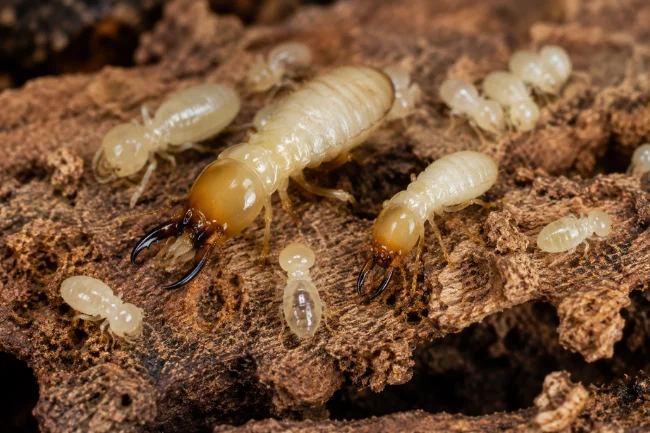
This genus nests in similar spots to Coptotermes — tree stumps, garden timbers, and occasionally right under a home’s foundations, drawn in by the warmth near fireplaces and slabs. Schedorhinotermes soldiers are distinctive because the colony produces two different soldier castes, one notably larger than the other, which is a handy clue for anyone trying to tell species apart from a sample.
Heterotermes
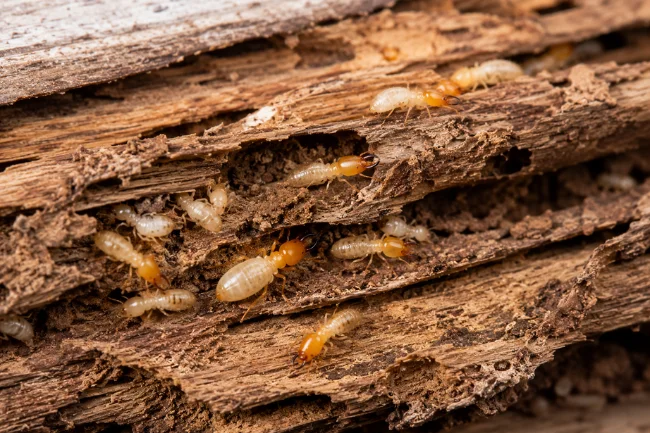
Heterotermes tends to go for weathered, partially decayed timber — old decking, fence posts, and structural softwood that’s already lost some integrity. Colonies are typically smaller than Coptotermes or Mastotermes, so the damage, while real, usually progresses more slowly. This was the culprit in my friend’s Redcliffe case, and it’s a reasonably common, lower-drama find during inspections.
Nasutitermes
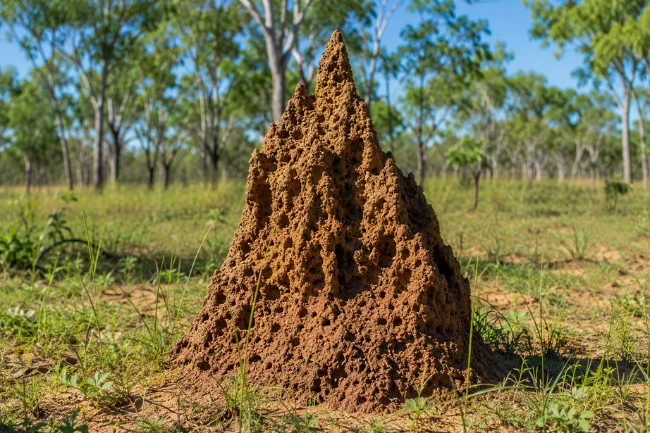
You’ll often see Nasutitermes mounds in bushland and rural paddocks rather than suburban backyards. Most species in this genus prefer dead wood, grass, and plant debris, and many pose little to no risk to a home. That said, a subset will move into structural timber if there’s enough rot and moisture present, usually linked to ongoing plumbing leaks or poor subfloor ventilation.
Microcerotermes
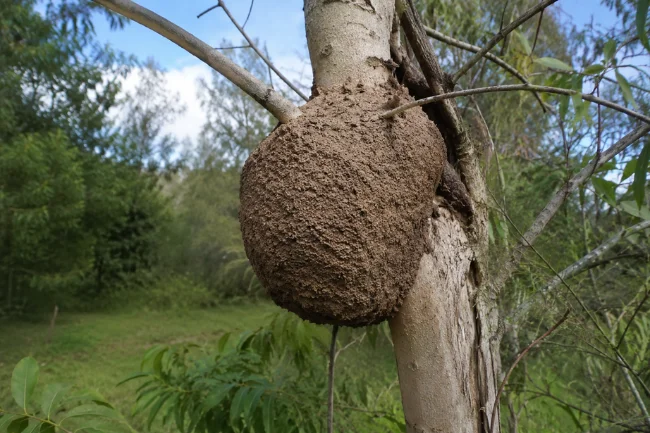
Common along the Queensland coast, Microcerotermes builds arboreal nests, meaning they’re constructed up in trees or on posts rather than purely underground. They can also form mounds both above and below the surface, which makes them a little trickier to pin down during a casual backyard check.
Amitermes — The Compass Termite
Anyone who’s driven through the Northern Territory has likely seen the wedge-shaped mounds Amitermes is famous for, some reaching three to four metres tall, deliberately oriented north-south to regulate internal temperature. It’s one of the more visually striking termite types in the country, even if it’s not the one keeping homeowners up at night in southern states.
Porotermes — Dampwood Termites
Porotermes specifically targets timber that’s already wet or decaying — think old fence posts, weatherboards in contact with soil, or telegraph poles. Homes with longstanding plumbing issues, particularly older Queenslanders with timber stumps, are more exposed to this species because damp, untreated wood is exactly what it’s after.
Cryptotermes — Drywood Termites
Cryptotermes doesn’t need soil contact or moisture the way subterranean species do, which makes it genuinely sneaky. It survives on small, dry pieces of timber — furniture, skirting boards, door frames — and because the entire colony can live inside the timber itself, there’s often no external sign at all until the wood starts to crumble or collapse under light pressure.
Neotermes — Ring-Ant Termites
Neotermes is mostly a tree-dweller and rarely causes structural issues, but it will move into water-damaged timber around leaking taps, gutters, or poorly sealed window frames. If you’ve got a persistent drip somewhere and ageing timber nearby, it’s worth keeping an eye on.
Comparison Table: Types of Australian Termite Species at a Glance
| Genus | Common Name | Typical Nest Location | Risk to Homes | Preferred Timber Condition |
|---|---|---|---|---|
| Mastotermes | Giant Termite | Subterranean, tree bases | Very high | Any, including living trees |
| Coptotermes | — | Underground, tree stumps, wall cavities | Very high | Sound and decayed timber |
| Schedorhinotermes | — | Underground near foundations, stumps | High | Structural timber |
| Heterotermes | — | Subterranean, smaller colonies | Moderate | Weathered, decaying timber |
| Nasutitermes | — | Mounds, dead wood | Low to moderate | Decaying wood, rotten structural timber |
| Microcerotermes | — | Arboreal, posts | Moderate | Posts, exposed timber |
| Amitermes | Compass Termite | Tall above-ground mounds | Low (rural areas) | Grass, debris |
| Porotermes | Dampwood Termite | Soil-contact timber | Moderate | Damp, decaying timber |
| Cryptotermes | Drywood Termite | Inside dry timber | High (hidden damage) | Dry, sound timber |
| Neotermes | Ring-Ant Termite | Trees, water-damaged timber | Low | Water-soaked timber |
Reading the Signs Most Homeowners Miss
One thing that doesn’t get covered enough is how much you can learn from a discarded termite wing or a soldier’s head shape without needing a microscope. Alate (winged) termites swarm after rain, usually in warmer months, and the wings they shed near windowsills or light fittings are often the first physical evidence a homeowner finds. Soldier termites, meanwhile, defend the colony and have distinctly shaped heads — some with elongated, scissor-like mandibles for biting, others, like Nasutitermes, with a pointed nozzle that sprays a sticky defensive fluid instead. If you ever do find a soldier and want to photograph it for a pest controller, get a close shot of the head from above; it genuinely speeds up identification.
Another detail rarely mentioned is regional clustering. Coptotermes and Schedorhinotermes dominate the inspection reports along Queensland’s coast and northern New South Wales, while Mastotermes is essentially a tropical-only concern. If you live south of Brisbane, your odds of encountering a Giant Termite colony are low, but your odds of encountering Coptotermes climb significantly the closer you get to older, established suburbs with mature trees and timber stumps.
What to Do If You Suspect Termite Activity
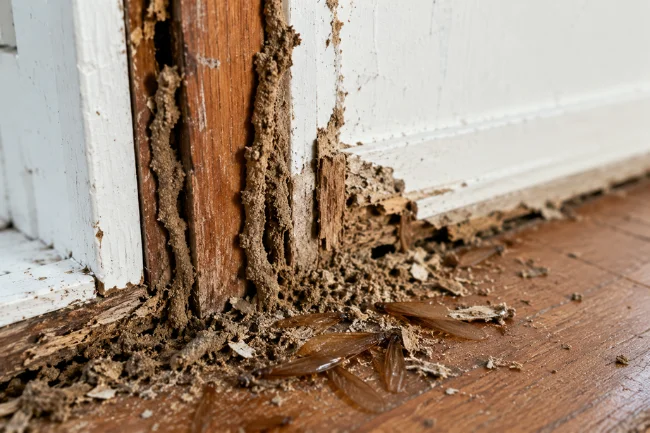
Spotting mud tubes, hollow-sounding skirting, discarded wings, or unexplained sagging in floors or door frames is reason enough to get a professional inspection rather than poking around with a screwdriver. Disturbing a colony without proper treatment can sometimes push it deeper into a structure or trigger budding behaviour in species like Mastotermes. If you’re weighing up broader maintenance and protection options for your property beyond just termites, it’s worth looking into property improvement solutions that cover preventative inspections, moisture control, and structural upkeep together, since termites rarely act alone — they tend to follow existing damp or decay issues in a home.
Frequently Asked Questions
What is the most destructive termite species in Australia?
Mastotermes darwiniensis, the Giant Termite, is generally considered the most destructive due to its broad diet and habit of forming satellite colonies.
How many termite species are there in Australia?
There are over 300 documented termite species in Australia, though only around ten genera commonly affect homes.
Can I identify termite species myself without a professional?
You can narrow it down using nest location, timber condition, and soldier head shape, but confirming species accurately usually requires an experienced inspector.
What time of year do termites swarm in Australia?
Most species swarm during warmer, humid months following rainfall, typically spring through early autumn, depending on the region.
Do all termite species damage homes?
No, several types, like many Nasutitermes and Amitermes species, mainly feed on dead wood, grass, or debris and rarely threaten structural timber.
Final Thoughts
Understanding the types of Australian termite species isn’t just trivia for pest nerds — it genuinely changes how a problem should be tackled, how urgent it is, and what kind of damage you’re realistically facing. If you’ve spotted anything resembling mud tubes, discarded wings, or soft, hollow timber around your property, don’t wait for it to get worse. Book a proper inspection, get the species confirmed, and deal with it before it turns into a far costlier repair job.

I’m Salman Khayam, the founder and editor of this blog, with 10 years of professional experience in Architecture, Interior Design, Home Improvement, and Real Estate. I provide expert advice and practical tips on a wide range of topics, including Solar Panel installation, Garage Solutions, Moving tips, as well as Cleaning and Pest Control, helping you create functional, stylish, and sustainable spaces that enhance your daily life.