
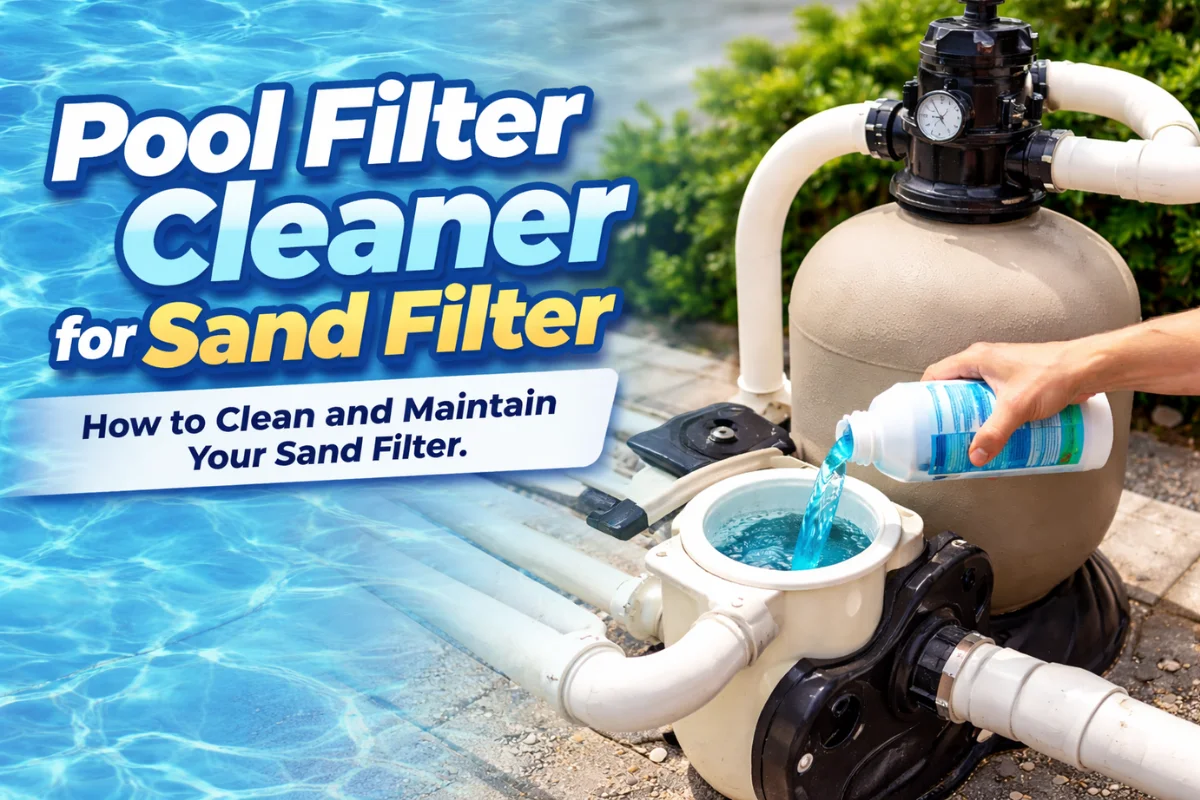
If you own a sand filter, you already know the basics: backwash regularly, keep your pressure gauge in range, and top off the sand every few years. But even the most diligent backwashing routine leaves behind something sand alone cannot shed — the oils, minerals, and baked-on biofilm that accumulate deep inside the filter bed. That’s where a dedicated pool filter cleaner for sand filter systems becomes one of the most underused yet highest-impact tools in your maintenance kit. I’ve been managing residential pools for over a decade, and the single biggest improvement I’ve seen in water clarity almost always traces back to one thing: a proper filter cleaning protocol, not just more chemicals tossed in the water.
This post covers how sand filters actually get dirty, which cleaners perform best for which problems, how to use them correctly, and the honest tradeoffs between the leading products on the market. No fluff, no vague advice.
Why Backwashing Alone Isn’t Enough
Backwashing reverses water flow through the filter to flush trapped debris out of the waste line. It handles particulate matter — dirt, algae clumps, dead bugs — reasonably well. But it does almost nothing for what pool professionals call non-particulate fouling.
Here’s what builds up in a sand filter bed that a backwash cycle won’t touch:
- Body oils and sunscreen residue — these form a greasy film that coats each sand grain and reduces filtration surface area over time.
- Calcium and mineral scale — especially in areas with hard water, calcium carbonate deposits bond to sand grains and reduce flow rates.
- Algae and biofilm — even after a shock treatment kills visible algae, organic residue can linger inside the filter bed and act as a nutrient source for future growth.
- Iron and manganese staining — common in well-water pools, these metals oxidize and bond to the filter media.
According to the Pool & Hot Tub Alliance (PHTA), sand filter media should be chemically cleaned at least once per season — twice if the pool sees heavy bather loads. Without it, you’re running water through a progressively dirtier filter, and no amount of chemical balancing compensates for that.
How a Pool Filter Cleaner for Sand Filter Systems Actually Works
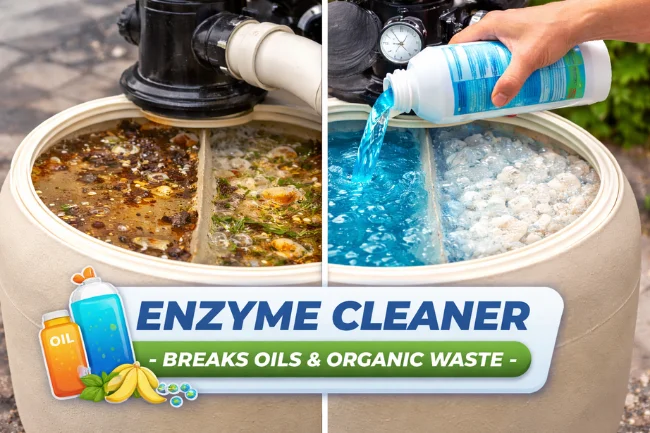
Most purpose-built sand filter cleaners fall into one of three chemical categories, each targeting a different type of fouling:
Enzyme-Based Cleaners
These use biological enzymes to break down organic compounds — oils, lotions, and bathroom waste. Enzyme cleaners are gentle on filter media, safe to handle, and can even be used as a regular maintenance dose added during the filtration cycle. They work slowly but are excellent for ongoing oil management.
Acid-Based Cleaners
Typically formulated with dilute muriatic or phosphoric acid, these target calcium scale, mineral deposits, and metal staining. They’re highly effective on the hard, crusty buildup that develops in pools with pH drift or high calcium hardness. Always handle these with gloves and eye protection. According to the American Chemistry Council, phosphoric acid-based products are generally gentler on equipment seals than muriatic acid alternatives.
Degreaser / Surfactant-Based Cleaners
These work similarly to industrial degreasers. Surfactants emulsify oils and allow them to be flushed out during the subsequent backwash. Many commercial sand filter cleaners are a blend of surfactants and enzymes for broad-spectrum cleaning.
Top Pool Filter Cleaners for Sand Filters: A Comparison
Here’s an honest side-by-side of the most widely used products on the market:
| Product | Type | Best For | Application Method | Frequency | Approx. Cost |
| Natural Chemistry Filter Perfect | Enzyme + Surfactant | Oils, organics, general fouling | Add to skimmer before backwash | Monthly | $15–$20 |
| BioGuard Kleen It | Surfactant/Degreaser | Heavy oil & grease buildup | Add to skimmer, soak, then backwash | Seasonal | $20–$25 |
| GLB Filter Brite | Acid-Based | Calcium scale, mineral deposits | Soak method in filter housing | Seasonal | $18–$22 |
| Rx Clear Filter Cleaner | Enzyme Blend | General maintenance cleaning | Add to skimmer before backwash | Monthly | $12–$16 |
| ProTeam Filter Magic | Enzyme + Chelant | Oils, metals, and organics | Add to skimmer, backwash after 8 hrs | Seasonal | $22–$28 |
| Doheny’s Sand Filter Cleaner | Surfactant | Basic degreasing, light buildup | Add to skimmer, backwash next day | Seasonal | $10–$14 |
Note: Prices are approximate retail estimates and may vary by region and retailer. Always check the current manufacturer’s label for the most accurate dosing instructions.
How to Use a Pool Filter Cleaner for Sand Filter Systems: The Right Protocol
Manufacturer instructions vary, but the general approach for most sand filter cleaners follows the same logic. Here’s what I actually do when cleaning a sand filter, based on years of field experience:
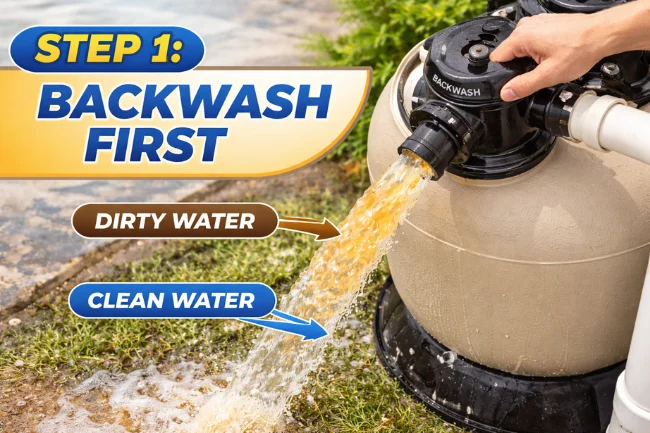
Step 1: Backwash First
Run a standard backwash cycle before applying any cleaner. This removes the loose particulate that would otherwise dilute or interfere with the cleaning agent. Backwash until the sight glass runs clear — typically 2 to 3 minutes.
Step 2: Return the Filter to Filter Mode
Switch back to the Filter setting. You’re now going to introduce the cleaner through the skimmer with the pump running.
Step 3: Add the Cleaner Through the Skimmer
Pour the recommended dose of your chosen pool filter cleaner directly into the skimmer basket with the pump running. This carries the product into the filter housing and distributes it through the sand bed. Most products recommend anywhere from 8 ounces to 32 ounces, depending on pool size and severity of fouling.
Step 4: Allow a Soak Period
This is where most people rush and get suboptimal results. Turn off the pump and let the cleaner soak in the sand bed for at least 8 hours — overnight is better. This gives the enzymes or surfactants time to penetrate and emulsify the built-up contamination. Skipping the soak is the most common mistake I see.
Step 5: Backwash Again
After soaking, run another full backwash cycle. This is when you’ll actually flush out what the cleaner has loosened. You may notice the backwash water appears darker or foamy — that’s the emulsified oils and organics leaving the filter. That’s a good sign.
Step 6: Rinse and Return to Service
Run the filter on Rinse for 30 seconds to a minute, then return it to Filter mode. Check your pressure gauge — a successful cleaning often drops the operating pressure by 2 to 5 PSI compared to the pre-cleaning reading.
Signs Your Sand Filter Needs a Chemical Cleaning — Right Now
There are a few red flags that tell me a filter is overdue for more than a backwash:
- Persistently cloudy water despite balanced chemistry and adequate runtime. If your sanitizer levels are correct and the water still won’t clear, the filter isn’t filtering.
- High filter pressure that doesn’t drop after backwashing. If your PSI reads high and backwashing doesn’t bring it back down to normal operating range, you likely have scale or grease coating the sand grains rather than loose debris.
- A strong chlorine or chemical odor from the pool despite normal free chlorine readings. Combined chlorines (chloramines) often persist in water that’s cycling through a biofilm-fouled filter.
- Frequent algae blooms that recur even after aggressive treatment. Algae can reseed from a contaminated filter bed.
- Sand channeling — when water finds the path of least resistance through the sand bed rather than filtering through it. A good chemical soak often breaks up the grease matrix, causing this.
Sand Filter Cleaning vs. Sand Replacement: How Do You Know Which You Need?
People sometimes ask me whether they should clean or replace their filter sand. Here’s my honest answer: chemical cleaning can extend the effective life of your filter sand significantly, but it doesn’t last forever. Sand replacement is typically recommended every 5 to 7 years for residential pools, though this varies based on usage and water chemistry.
If you’ve done a proper chemical cleaning and your filter still isn’t performing — pressure remains high, water clarity is poor — it may be time to replace the sand or switch to an alternative media like ZeoSand or FilterGlass. Both offer finer filtration than standard silica sand and can be cleaned with the same enzyme-based or surfactant cleaners.
A useful benchmark: if the filter pressure at clean startup keeps creeping higher each season, even after chemical cleaning, the sand is likely too fouled or worn to recover effectively.
Common Mistakes When Using a Pool Filter Cleaner
Using the Wrong Product for the Problem
An enzyme cleaner won’t do much for calcium scale, and an acid-based cleaner won’t touch bather oils effectively. Match the cleaner to the contamination type. If you’re not sure, a multi-formula blend (enzyme + surfactant) covers the most ground.
Skipping the Pre-Backwash
Applying cleaner to a filter full of debris dilutes its effectiveness and wastes product. Always backwash first.
Not Allowing Adequate Soak Time
I’ve said this once, but it’s worth repeating: the soak period is where the actual cleaning happens. Pouring product through the skimmer and immediately running the pump is essentially useless.
Overdosing and Not Rinsing Properly
More product doesn’t mean better results. Excess cleaner that isn’t flushed out thoroughly can introduce surfactants into the pool water, causing foaming. Always follow the manufacturer’s dose and backwash thoroughly after cleaning.
Ignoring pH Before Cleaning
If you’re using an acid-based cleaner, check your pool’s calcium hardness and pH first. Very low pH water combined with an acid cleaner can stress equipment seals and internal filter components. Balance your water before applying any aggressive cleaner.
Maintaining a Sand Filter Between Deep Cleanings
Chemical cleaning once or twice a season is the foundation, but a few additional habits keep a sand filter performing well between those sessions:
- Use an enzyme product monthly. Adding a small dose of enzyme cleaner to the skimmer once a month helps prevent oil accumulation from becoming a full-scale fouling problem.
- Maintain proper pH and alkalinity. Water that’s consistently out of range accelerates scale formation inside the filter. Keep pH between 7.4 and 7.6, and total alkalinity between 80 and 120 ppm.
- Backwash on pressure, not on schedule. Backwash when the filter pressure reads 8 to 10 PSI above the clean operating baseline — not every Tuesday. Premature backwashing can actually reduce filtration efficiency during the filter’s most effective stage.
- Clean the skimmer basket and pump basket regularly. Debris that bypasses these pre-filters places extra load on the sand and shortens the time between necessary cleanings.
Environmental and Safety Considerations
Most modern pool filter cleaners are formulated to be biodegradable and pool-safe when used correctly. That said, backwash water — especially after a chemical cleaning — should not be discharged directly into storm drains, waterways, or near sensitive landscaping.
Check your local municipality’s guidelines on pool backwash disposal. Many areas require backwash to flow to a sanitary sewer connection. The U.S. Environmental Protection Agency’s guidelines on pool water management note that untreated or chemically concentrated pool discharge can disrupt local aquatic ecosystems.
Acid-based filter cleaners require additional care: store in a cool, ventilated space, wear gloves and eye protection during application, and never mix with other pool chemicals.
The Bottom Line
A quality pool filter cleaner for sand filter systems isn’t an optional luxury — it’s the missing piece in most backyard pool maintenance routines. Your sand filter is doing the heavy lifting every time your pump runs, and like any hard-working component, it needs periodic deep cleaning to stay effective. Getting the right cleaner, using it correctly, and giving it adequate soak time makes a measurable difference in water clarity, chemical efficiency, and the long-term condition of your filter media.
If you haven’t chemically cleaned your sand filter this season, that’s the single most productive thing you can do for your pool right now. Pick up a good enzyme-surfactant blend or an acid-based cleaner if calcium is your issue, follow the soak protocol, and backwash thoroughly. You’ll likely notice clearer water within 24 to 48 hours.
Next step: Check your current filter pressure reading against your clean baseline. If it’s running 5 PSI or more above normal and your last backwash didn’t bring it down, it’s time for a chemical cleaning. Start there.
FAQs
1. How often should I use a pool filter cleaner on my sand filter?
At minimum, once per season — ideally twice for heavily used pools. Monthly enzyme maintenance doses between deep cleanings are also a smart habit.
2. Can I swim in the pool right after cleaning and backwashing the sand filter?
Yes, after a thorough backwash and rinse cycle, the pool is safe to swim in. The cleaner flushes out during backwashing and does not remain in the pool water at harmful levels.
3. My filter pressure is still high after a chemical cleaning — what now?
If pressure remains elevated after cleaning and backwashing, your sand may be severely fouled, channeled, or overdue for replacement. Consider replacing the sand or switching to an alternative filter media.
4. Are enzyme-based sand filter cleaners safe for all pool equipment?
Generally, yes — enzyme and surfactant cleaners are among the most equipment-friendly options. Always check the product label for compatibility with specific filter types, gaskets, and O-rings if you have an older system.
5. Can I use a pool filter cleaner if I have a saltwater pool?
Yes. Sand filters on saltwater pools benefit from chemical cleaning just as much as traditionally chlorinated systems. The same oil, scale, and biofilm buildup occur regardless of the sanitation method.

I’m Salman Khayam, the founder and editor of this blog, with 10 years of professional experience in Architecture, Interior Design, Home Improvement, and Real Estate. I provide expert advice and practical tips on a wide range of topics, including Solar Panel installation, Garage Solutions, Moving tips, as well as Cleaning and Pest Control, helping you create functional, stylish, and sustainable spaces that enhance your daily life.