
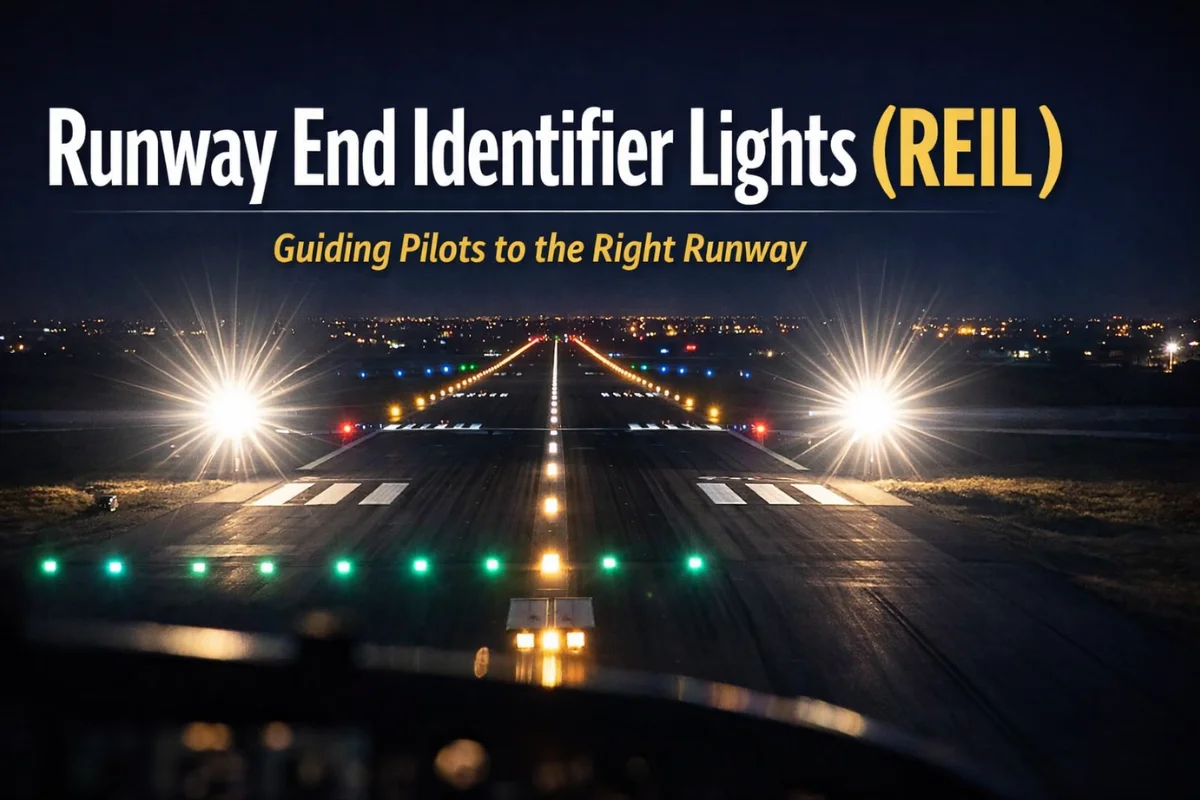
If you’ve ever landed at night or in low visibility, you already know how much the right lighting system can mean between a confident, stabilized approach and a tense one. Runway end identifier lights — REIL — are one of those systems that quietly do an enormous amount of work. I’ve spent enough time studying airport lighting that I’ve come to genuinely appreciate how much engineering and thought go into something that, from the cockpit, just looks like two flashing white strobes. But there’s a lot more going on. In this post, I’m going to break down exactly what runway end identifier lights REIL are, how they work, why they matter, and how they fit into the broader world of airport lighting systems.
What Are Runway End Identifier Lights REIL?
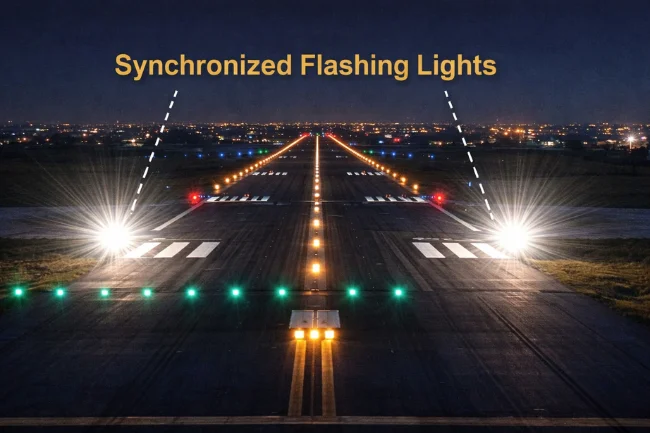
Runway end identifier lights REIL are a pair of synchronized flashing strobe lights installed on either side of the runway threshold — one on each side of the landing end of the runway. Their job is simple but critical: they make it easier for pilots to rapidly identify the approach end of a specific runway, particularly in conditions where visual contrast is poor.
According to the Federal Aviation Administration (FAA), REIL systems are particularly valuable during approaches when:
- The runway is surrounded by other bright lights (such as urban environments)
- Visibility is reduced due to rain, haze, or fog
- The pilot is transitioning from instrument to visual flight near minimums
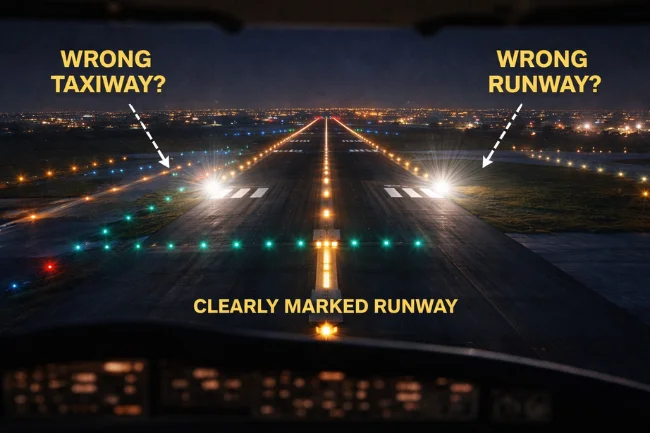
- The landing runway is hard to distinguish from adjacent runways or taxiways
The lights themselves flash in unison and are directional — they’re aimed toward the approach path, so they’re most visible to pilots on final approach. From the ground or from the side, they’re far less noticeable.
How Runway End Identifier Lights REIL Work: The Technical Side
REIL Basic Configuration and Flash Characteristics
A standard runway end identifier lights REIL installation consists of two omnidirectional or unidirectional strobe light units. Each unit is mounted on a low-profile base at the edges of the runway threshold, flush or near-flush with the surface to avoid being a hazard to aircraft that may veer slightly. The strobes are synchronized — they flash at the same time rather than alternating — and this synchronization is what makes them distinctive and immediately recognizable on approach.
The flash rate is typically around 60 to 120 flashes per minute, though this can vary by installation. The synchronization means a pilot sees both lights fire simultaneously, which the human eye picks up extremely well, even in cluttered visual environments.
Omnidirectional vs. Unidirectional REIL: Which Type Does More?
This is where runway end identifier lights REIL get a little more nuanced, and it’s worth understanding the difference between the two configurations.
- Omnidirectional REIL flash in all directions. They’re visible from a wide arc around the runway threshold, which is useful at airports where pilots may be approaching from unusual angles or making circling approaches.
- Unidirectional REIL are aimed specifically down the approach path — typically within a cone of about 10 to 15 degrees either side of the runway centerline extended. This focuses the light energy toward the approaching aircraft, making it appear brighter and more effective in the intended direction, but it’s less visible to traffic that isn’t on a direct final.
Many modern installations use unidirectional units specifically because they reduce light pollution into residential areas beyond the runway end while still delivering excellent intensity where it matters — in the eyes of the pilot on final.
How Pilots Control REIL Power and Intensity
REIL systems are typically tied into the airport’s Pilot Controlled Lighting (PCL) system or controlled directly from the control tower. At airports with an operating control tower, the tower controller can adjust REIL intensity or turn the system on and off based on conditions and pilot requests. At uncontrolled airports with PCL, pilots can key their microphone on the Common Traffic Advisory Frequency (CTAF) to activate the runway end identifier lights — typically three, five, or seven clicks within five seconds for low, medium, or high intensity settings.
The FAA Advisory Circular AC 150/5340-30 provides detailed guidance on airport lighting systems, including REIL installation standards.
Why Runway End Identifier Lights REIL Matter: The Safety Case
How REIL Solves the Visual Identification Problem
Runway incursions, unstabilized approaches, and wrong-runway landings are real problems in aviation, and visual identification of the correct runway — especially at night or in low visibility — plays a significant role in preventing them. The NTSB and FAA have both highlighted cases where pilots landed on taxiways or wrong runways partly because the intended runway was difficult to identify visually.
Runway end identifier lights REIL address this at a specific, critical point in the approach: that moment when you’re transitioning from instruments to visual reference, and you need to quickly confirm you’re lined up with the right piece of pavement. Two synchronized strobes firing at the edges of the threshold are one of the fastest ways to make that identification. Your eye is naturally drawn to flashing light, and having them in a specific spatial arrangement — one on each side — tells you immediately both which end of which runway you’re looking at and confirms your lateral alignment.
Why REIL Outperforms Steady Lights in Complex Visual Environments
This is the scenario where I think runway end identifier lights REIL earn their keep most convincingly. Picture landing at a mid-size airport near a city center at night. There are streetlights, car headlights, neon signs, parking lot floods, and probably another airport within 20 miles. Without a positive identification system like REIL, finding the runway threshold visually can take real cognitive effort at exactly the moment when you have the least attention to spare.
The strobes cut through that background noise in a way that steady-burning lights simply can’t. Pulsed light is neurologically distinctive — our visual systems evolved to prioritize moving and flashing stimuli. REIL leverages that hardwired response, which is exactly why it works so reliably across different environments and conditions.
Runway End Identifier Lights REIL vs. Other Airport Lighting Systems
To fully appreciate what runway end identifier lights REIL do, it helps to understand where they sit in the layered system of airport lighting.
| Lighting System | Purpose | Typical Location |
|---|---|---|
| Runway End Identifier Lights (REIL) | Rapid threshold identification | Either side of runway threshold |
| Approach Lighting System (ALS) | Guidance during final approach | Extended centerline, before threshold |
| Visual Approach Slope Indicator (VASI/PAPI) | Vertical guidance on glidepath | Side of runway, inbound of threshold |
| Runway Edge Lights | Define runway edges | Along both edges of runway |
| Threshold Lights | Mark the landing threshold | Green (approaching) / Red (departing) |
| Touchdown Zone Lights | Mark the touchdown zone | First 3,000 ft of runway, centerline |
| Runway Centerline Lights | In-runway guidance, especially low RVR | Embedded in runway pavement |
| Taxiway Edge Lights | Define taxiway edges | Blue lights along taxiways |
REIL is specifically designed to complement — not replace — the Approach Lighting System. At airports with a full ALS, runway end identifier lights REIL might seem redundant, but in practice, they serve different roles. The ALS provides glidepath and centerline guidance over a longer distance; REIL provides threshold identification at a shorter range and is particularly useful at runways where a full ALS is not installed.
The FAA notes that REIL is often one of the first lighting enhancements installed at smaller general aviation airports because it offers significant safety benefits at relatively low cost compared to a full ALS installation.
Runway End Identifier Lights REIL and Instrument Approach Procedures
How REIL Affects IFR Visibility Minimums
When you’re flying an instrument approach — an ILS, RNAV, VOR, or localizer approach — the visibility minimums listed in the procedure are directly tied to what lighting aids are available. The presence or absence of runway end identifier lights REIL can affect the approach minimums at some airports.
The FAA and ICAO (International Civil Aviation Organization) use a tiered system for lighting credit in instrument approach procedures. Airports with more extensive lighting systems are generally authorized lower minimums because there’s more visual guidance available at decision altitude or minimum descent altitude.
REIL itself typically provides a one-eighth-mile (200-foot) reduction in visibility minimums compared to having no threshold identification lights at all, depending on the specific approach and airport. That may sound small, but in instrument meteorological conditions (IMC), that difference can matter.
Pilot Controlled Lighting Protocols for REIL Activation
At airports without an operating control tower, runway end identifier lights REIL are typically part of the PCL system. The standard protocol in the U.S.:
- 3 clicks in 5 seconds: Low intensity (suitable for clear night conditions)
- 5 clicks in 5 seconds: Medium intensity
- 7 clicks in 5 seconds: High intensity (haze, fog, or low visibility)
The lights remain active for a set period (usually 15 minutes) before timing out, at which point the pilot needs to re-activate them. This is worth knowing if you’re on a long final — there’s nothing quite like having the runway lights drop out during a night approach.
REIL Installation Standards and Maintenance
FAA Certification Requirements for Runway End Identifier Lights REIL
Runway end identifier lights REIL must meet FAA standards outlined in Advisory Circular AC 150/5345-51, which covers the specification of visual and aural signal equipment. Key siting requirements include:
- Units must be placed at the ends of the threshold, symmetrically on either side of the runway centerline extended
- Minimum setback from the runway edge as specified for the aircraft design group using the airport
- Units must be protected against prop wash and jet blast
- Electrical systems must meet specific redundancy and fault tolerance requirements
The FAA also specifies minimum flash intensity levels to ensure runway end identifier lights are visible at the appropriate distances under the lighting conditions for which they’re rated.
Routine Maintenance of REIL Systems
Airport operations teams perform regular checks on runway end identifier lights REIL as part of their airfield lighting maintenance programs. Common maintenance items include checking flash synchronization (the units should fire simultaneously within a tight tolerance), replacing sealed strobe lamp assemblies as they age, inspecting and cleaning lenses, and verifying proper aiming angles on directional units.
Pilots who notice REIL units that appear out of synchronization or where one unit is not functioning should file a PIREP (Pilot Report) and notify airport operations so the discrepancy can be corrected.
Runway End Identifier Lights at International Airports: ICAO Standards for REIL
While the FAA governs runway end identifier lights REIL in the United States, the International Civil Aviation Organization sets standards for member states internationally. ICAO Annex 14 — Aerodromes — specifies runway threshold identification lights as a component of the aerodrome lighting system.
Under ICAO standards, threshold identification lights serve essentially the same function as REIL and must be:
- White flashing lights
- Installed on each side of the runway threshold
- Synchronized to flash simultaneously
- Visible over the required arc and at sufficient intensity for the airport’s category
The terminology and some specifics differ between FAA and ICAO standards, but the fundamental function and design philosophy are essentially the same. If you fly internationally, you’ll find runway end identifier lights at airports worldwide — they may be referred to differently in local documentation, but you’ll recognize them on approach.
Common Misconceptions About Runway End Identifier Lights REIL
Misconception 1: Runway End Identifier Lights REIL Are Only for Night Operations
Not true. While REIL are most conspicuous and arguably most valuable at night, runway end identifier lights provide real benefit during daytime operations in reduced visibility — low IMC ceilings with good horizontal visibility, rain showers, haze, or smoke. Any condition that makes visual contrast difficult benefits from having synchronized strobes at the threshold.
Misconception 2: All Runways Have REIL Installed
Also not accurate. Runway end identifier lights REIL are installed where there’s a demonstrated need — typically at runways that see night operations, instrument approaches, or where the visual environment makes threshold identification difficult. Many general aviation runways at smaller airports do not have REIL, particularly shorter runways used primarily for daytime VFR operations.
Misconception 3: REIL Marks the Touchdown Zone
This one comes up more often than you’d think. Runway end identifier lights REIL mark the threshold — the beginning of the usable runway — not the touchdown zone. The touchdown zone is further down the runway and is marked by touchdown zone lighting (white bar lights embedded in the runway surface) at airports equipped with that system.
The Future of Runway End Identifier Lights REIL: LED Technology
LED technology is rapidly replacing older xenon strobe lamps in REIL systems. LED-based runway end identifier lights offer several advantages: lower power consumption, longer service life (reducing maintenance costs and downtime), faster switching speeds for precise synchronization, and better resistance to vibration and thermal cycling. Several airport lighting manufacturers have introduced FAA-certified LED REIL units that meet or exceed the photometric performance of their xenon predecessors.
Additionally, integration with advanced airport lighting control systems allows for more granular management of runway end identifier lights REIL intensity — some installations now allow continuous dimming rather than simple high/medium/low steps, which can be useful for managing light pollution at noise-sensitive airports while maintaining appropriate visibility for pilots on approach.
A Practical Note for Pilots Using Runway End Identifier Lights REIL
If you’re planning a flight into an unfamiliar airport at night or in reduced visibility, it’s worth checking the Chart Supplement (formerly the Airport/Facility Directory) to confirm whether runway end identifier lights REIL are installed on your intended runway. This information is listed under the airport’s lighting section. Knowing what lighting is available ahead of time lets you set appropriate expectations and plan your visual transition from instruments accordingly.
If REIL is available and conditions warrant it, don’t hesitate to request it from ATC or activate it via PCL. These systems exist for your benefit — using them is good airmanship, not a sign of inexperience.
Conclusion
Runway end identifier lights REIL represent one of those elegant, purpose-built solutions that aviation does well — a straightforward answer to a real problem, executed with precision engineering and proven in thousands of approach-and-landing situations every day. Whether you’re a student pilot building your night currency, a flight instructor explaining airport lighting to your students, or an aviation enthusiast who wants to understand what those flashing white strobes at the runway ends actually do, I hope this breakdown has been useful.
If you want to dig deeper, the FAA’s Advisory Circular AC 150/5340-30 (Design and Installation Details for Airport Visual Aids) and AC 150/5345-51 (Specification for Discharge-Type Flashing Light Equipment) are the definitive technical references. Your local FSDO can also be a resource if you’re involved in airport planning or operations.
Next time you’re on final, and you spot those synchronized strobes at the threshold, you’ll know exactly what they’re doing for you — and why they matter.
FAQs About Runway End Identifier Lights REIL
1. What does REIL stand for in aviation?
REIL stands for Runway End Identifier Lights. These are synchronized strobe lights installed at the approach end of a runway to help pilots quickly identify and locate the runway threshold, especially in low visibility or visually complex environments.
2. Are runway end identifier lights REIL required at all airports?
No. REIL installation is not universally mandated. The FAA determines requirements based on factors including whether the runway supports night operations, instrument approaches, and the visual complexity of the surrounding environment. Many smaller VFR-only airports do not have REIL installed.
3. What color are runway end identifier lights?
Runway end identifier lights REIL are white. They are synchronized white strobe lights — consistent with FAA and ICAO standards — which distinguish them from the green threshold lights and red runway end lights that also mark the threshold area.
4. Can pilots control REIL intensity from the cockpit?
Yes, at airports with Pilot Controlled Lighting (PCL) and no operating control tower, pilots activate and adjust runway end identifier lights REIL intensity by keying their microphone on the CTAF — three clicks for low, five for medium, and seven for high intensity. At towered airports, the controller manages REIL settings.
5. How do runway end identifier lights REIL differ from an approach lighting system?
Runway end identifier lights REIL consist of just two strobe lights at the runway threshold for rapid threshold identification. An Approach Lighting System (ALS) is a far more extensive array extending from the threshold outward along the approach path, providing glidepath and centerline guidance during instrument approaches. Many runways have REIL but not a full ALS.
For broader information, visit Wellbeing Makeover

I’m Salman Khayam, the founder and editor of this blog, with 10 years of professional experience in Architecture, Interior Design, Home Improvement, and Real Estate. I provide expert advice and practical tips on a wide range of topics, including Solar Panel installation, Garage Solutions, Moving tips, as well as Cleaning and Pest Control, helping you create functional, stylish, and sustainable spaces that enhance your daily life.