

If you’ve ever lost part of your security deposit over damage that was already there before you moved in, you already know exactly why a California move-in inspection rental property process is not just a formality. It is one of the most protective tools available to both sides of a lease, and California law treats it that way. I’ve worked through a lot of landlord-tenant situations here in the state, and what I find consistently is that most disputes—the kind that end up in small claims court—trace back to a move-in inspection that was skipped, rushed, or never properly documented.
This guide covers everything: the legal requirements under California Civil Code Section 1950.5, what a solid rental property inspection checklist looks like, how tenants can protect themselves from unfair deductions, and how landlords can stay on the right side of the law from day one.
Why a California Move-In Inspection Rental Property Matters More Than Most People Realize
California has some of the strongest tenant-protection laws in the country. The state requires landlords to return a security deposit within 21 days of a tenant moving out, together with an itemized statement of any deductions. The critical constraint is that every deduction must be justified by damage beyond normal wear and tear that actually occurred during the tenancy. Without a documented baseline from a California move-in inspection rental property walk-through, proving that distinction is nearly impossible for either party.
For tenants, the protection runs in the other direction: without a written record of the property’s condition on day one, you are essentially trusting that the landlord will be fair when you leave. A signed move-in inspection checklist with timestamped photographs is the closest thing to an ironclad defense either side can have.
California Law and the Move-In Inspection Rental Property Requirement
California Civil Code Section 1950.5
Under California Civil Code Section 1950.5, landlords are required to give tenants a written statement of the property’s condition before or at the start of the tenancy. This applies to any tenancy involving a security deposit, which covers virtually every residential rental situation in the state. The law establishes that the rental property’s condition at move-in is the legal baseline against which all future damage claims must be measured.
The Pre-Move-Out Inspection Right Under California Law
Many tenants don’t know that California also gives them the right to request a pre-move-out inspection within 14 days of vacating. During that inspection, the landlord must provide an itemized statement of any repairs or cleaning they would charge for, giving the tenant the opportunity to correct those issues before the final move-out date. Landlords who fail to inform tenants of this right often find their deductions challenged successfully. According to the California Department of Consumer Affairs, landlords must notify tenants in writing of their right to request this inspection.
(Source: California Department of Consumer Affairs, “California Tenants: A Guide to Residential Tenants’ and Landlords’ Rights and Responsibilities,” 2024.)
Building a California Move-In Inspection Rental Property Checklist That Holds Up
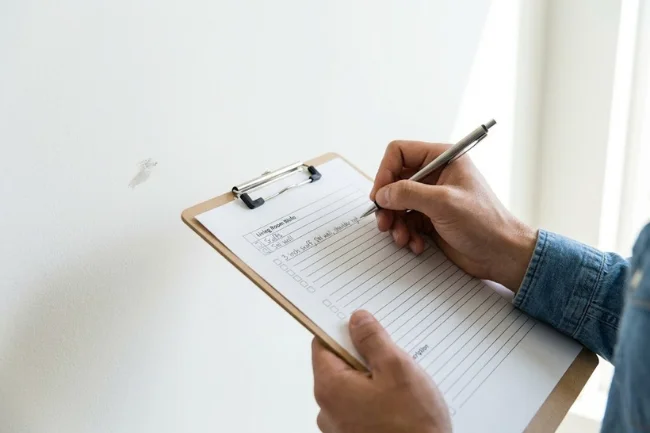
A thorough rental property condition checklist documents every visible element of the unit, room by room, so there’s no ambiguity about what existed before the tenancy began. Here’s how I structure it for California rentals:
Living Areas and Bedrooms
Note the condition of walls (paint, scuffs, nail holes), ceilings (stains, cracks), floors (carpet wear, scratches, tile chips), windows (operation, screens, locks), doors, light fixtures, and outlets. Specific language matters: “3-inch scuff on southwest wall at shoulder height” is far more defensible than “minor wall damage.”
Kitchen
Document every appliance individually: refrigerator (seals, shelves, ice maker), stove and oven (burners, ignition, interior), dishwasher (spray arms, door latch), and any microwave provided. Cabinets, countertops, sink, faucet, and the space under the sink (check for moisture or prior water staining) all need separate notations.
Bathrooms
Tile grout, caulking around the tub and shower, toilet function, vanity, mirror, exhaust fan, and any visible mold or water damage should all be documented. California landlords have specific mold disclosure obligations, and pre-existing mold absolutely must be in writing on the inspection checklist.
Exterior and Common Areas
For houses or units with private outdoor space, document the yard, fencing, garage door, driveway, and storage areas. For apartments, note any balcony or patio condition. Shared amenities that the tenant has access to should be listed separately so responsibility is clear.
Landlord vs. Tenant Responsibilities During a California Rental Property Move-In Inspection
Understanding who owns which part of the process prevents a lot of the confusion that leads to disputes later:
Both parties should leave the walk-through with a signed copy of the checklist. A checklist that only the landlord retains—and the tenant never signed—is a much weaker document in any dispute.
Photo and Video Documentation During a Rental Property Move-In Inspection
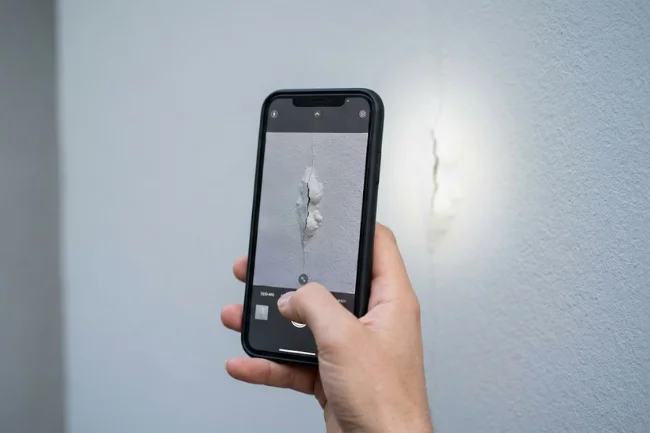
A written checklist is the legal foundation of the California move-in inspection rental property process. Photography and video are the proof that makes the checklist credible. I recommend that both landlords and tenants take timestamped photos and a short narrated video walk-through, even if it feels redundant. A video where you say on camera—”This is the bathroom on move-in day, and you can see existing discoloration around the tub caulk”—creates a record that is very difficult to dispute later.
Landlords: store inspection photos in a cloud service with automatic timestamps (Google Drive, Dropbox, iCloud) so there’s a verifiable audit trail. Tenants: email your photos to yourself immediately after the walk-through. That creates a timestamped record that exists entirely outside any system the landlord controls.
Security Deposits and the Role of the California Move-In Inspection
California limits security deposits to two months’ rent for unfurnished units and three months’ rent for furnished ones, under Civil Code Section 1950.5(c). That’s a meaningful amount of money. The move-in inspection is the primary mechanism for determining whether any portion of it can legitimately be withheld at move-out.
Permissible deductions cover unpaid rent, cleaning to return the unit to its move-in condition (accounting for normal wear and tear), and repair of damage beyond normal wear and tear. That phrase—normal wear and tear—is one of the most contested in California landlord-tenant law.
What Counts as Normal Wear and Tear in a California Rental Property?
The California Courts Self-Help Guide defines normal wear and tear as deterioration that results from ordinary, reasonable use of the property. (Source: California Courts, “Security Deposits,” courts.ca.gov.) Minor scuffs on walls, small nail holes, light carpet fading, and slightly loose door handles typically fall into this category. Broken fixtures, large holes, pet damage, and significant staining do not. A well-executed California move-in inspection rental property checklist removes all ambiguity from this distinction.
Common Mistakes That Turn a California Move-In Inspection Into a Liability
Mistakes Landlords Make on the Rental Property Inspection
The most damaging landlord mistake is treating the California move-in inspection rental property walk-through as a box to check rather than a protective measure. Handing a tenant a generic form and telling them to fill it out on their own—without conducting a joint walk-through—creates a document that neither party fully owns. A jointly conducted, mutually signed inspection is categorically more enforceable than a one-sided one.
A second common error is failing to provide the checklist in the tenant’s primary language when applicable. For landlords managing properties in areas with large non-English-speaking populations, having inspection documents available in Spanish or other commonly spoken languages is both legally prudent and good business practice.
Mistakes Tenants Make When Reviewing a Rental Property Inspection Checklist
Tenants most often hurt themselves by not reading the checklist carefully before signing. Signing a form that says “good condition” next to something you know has pre-existing damage effectively concedes that you caused any damage found at move-out. Read every line. Note every discrepancy. If the landlord won’t update the checklist to reflect actual conditions, write your own addendum, ask for it to be countersigned if possible, and keep a copy.
Tenants also frequently fail to follow up in writing after oral conversations. If a landlord says they’ll repair something noted during the walk-through, get that commitment in writing via text or email.
What Happens When There’s No California Move-In Inspection for a Rental Property
When a landlord skips the California move-in inspection rental property process entirely, their ability to make legitimate security deposit deductions is significantly weakened. California courts have consistently sided with tenants in cases where the landlord couldn’t establish that the claimed damage was not pre-existing. Without a baseline document, the burden effectively shifts toward the landlord to prove the damage didn’t exist before the tenancy began, which is extremely difficult to do.
Tenants who move into a unit without receiving an inspection checklist should document the property themselves immediately: timestamped photos and video on move-in day, followed by a written summary sent to the landlord via email or certified mail. This self-created record, while less ideal than a jointly signed checklist, provides meaningful legal protection.
Move Out Inspections and Closing the Loop on the Security Deposit
The California move-in inspection rental property process doesn’t end at move-in—it closes at move-out. The pre-move-out inspection (requested by the tenant within 14 days of vacating) gives both parties a preview of potential deductions before the unit is formally handed back. If the tenant addresses the flagged items, those deductions disappear.
After vacating, the landlord has 21 calendar days to return the security deposit with an itemized statement. Receipts or invoices must accompany any repair deductions. Missing this deadline can cost landlords the right to any deductions and, in cases of bad faith, expose them to liability for up to double the deposit amount under Civil Code Section 1950.5(l).
Digital Tools for Managing a California Rental Property Inspection
Property management platforms like Buildium, AppFolio, and TenantCloud offer inspection modules that allow landlords to create digital checklists, attach photos within the record, capture electronic signatures, and store everything in a searchable audit trail. For landlords managing multiple units, these tools reduce administrative overhead and legal exposure significantly.
Tenants can use simpler tools—a shared Google Doc, timestamped email thread, or even a dedicated folder in their phone’s photo app—to maintain their own inspection records. The tool matters far less than the documentation habit.
Frequently Asked Questions
1. Is a move-in inspection legally required in California?
California Civil Code Section 1950.5 requires landlords to provide tenants with a written statement of the rental property’s condition when a security deposit is collected, making a documented California move-in inspection rental property process effectively mandatory.
2. Can a landlord deduct from my deposit for damage that was already there when I moved in?
No. Deductions are only permissible for damage that occurred during your tenancy, beyond normal wear and tear. A signed move-in inspection checklist is your primary defense against illegitimate deductions.
3. What should I do if my landlord won’t conduct a joint move-in inspection?
Document the rental property’s condition yourself with timestamped photos and video on move-in day, then send a written summary to the landlord via email or certified mail so you have a dated record of your observations.
4. How long does a California landlord have to return a security deposit?
California law requires landlords to return the deposit—with an itemized statement of any deductions—within 21 calendar days of the tenant vacating the rental property.
5. Does the move-in inspection checklist need to be signed by both parties?
No statute explicitly requires dual signatures, but a mutually signed California move-in inspection rental property checklist is far more defensible in a dispute. Always request a signed copy for your own records.
Final Thoughts
A properly executed California move-in inspection rental property walk-through takes roughly an hour. A security deposit dispute can take months and cost both parties far more—in time, filing fees, and stress—than whatever was in question. Whether you’re a landlord with a single unit or a tenant signing a lease for the first time, a thorough, documented, jointly signed inspection at the start of the tenancy is one of the simplest and most effective things you can do to protect yourself under California law.
Landlords: build a standardized inspection checklist and make it a non-negotiable step in every lease signing. Tenants: never waive the walk-through, never sign a checklist you haven’t verified line by line against actual conditions, and always walk away with your own signed copy. The paper trail you create on day one is the thing that protects you on the last day.
Ready to take the next step? Download a California-specific rental property move-in inspection checklist, or connect with a licensed property manager in your county who knows the local legal landscape.
Read Also: Home-Buying Tips for Single Mothers USA

I’m Salman Khayam, the founder and editor of this blog, with 10 years of professional experience in Architecture, Interior Design, Home Improvement, and Real Estate. I provide expert advice and practical tips on a wide range of topics, including Solar Panel installation, Garage Solutions, Moving tips, as well as Cleaning and Pest Control, helping you create functional, stylish, and sustainable spaces that enhance your daily life.