
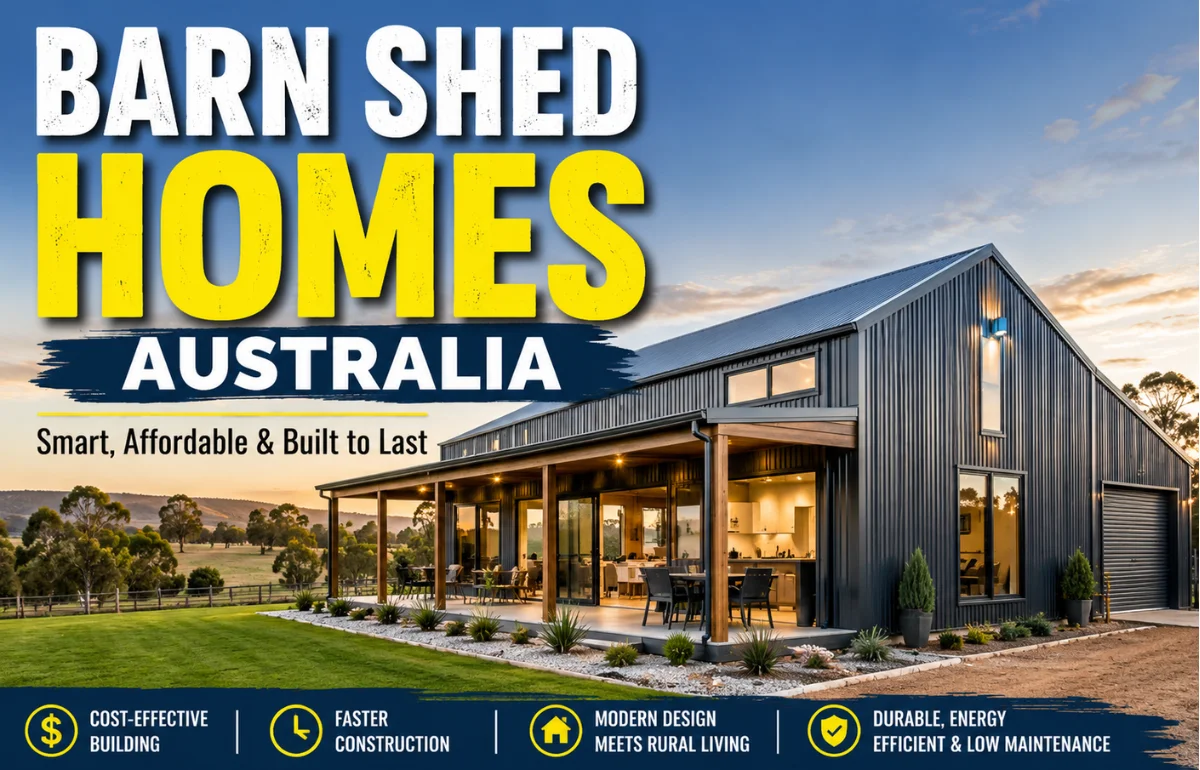
Barn shed homes Australia refers to a style of residential building that combines the rugged steel-and-cladding construction of a traditional farm shed with the floor plan, insulation, and finishes of a livable house. In simple terms, it’s a home built using shed-style construction methods — usually a steel frame with COLORBOND or similar cladding — but designed and fitted out so it functions as a full-time residence rather than a storage building. People choose this approach because it’s typically faster to build, more budget-friendly per square metre, and easier to customise than a conventional brick-and-tile home.
I’ve spent a fair bit of time looking into barn shed homes over the past couple of years, partly out of professional curiosity and partly because I was helping a family member work through their own build decision. What struck me immediately was how differently this category gets talked about depending on who you ask. A shed builder will tell you it’s basically a shed with insulation. An architect will tell you it’s a legitimate housing typology with its own design language. Both are sort of right, and neither tells the whole story.
So I want to walk through what barn shed homes in Australia actually involve, what they cost, where the approvals get tricky, and what I’d genuinely tell a friend who was thinking about going down this path.
What Exactly Is a Barn Shed Home?
A barn shed home is a dwelling built on a steel portal frame, similar to the frame you’d see in an agricultural shed, but designed from the ground up to be lived in. The exterior usually mimics the classic barn silhouette: a gable roof, often with that distinctive raised ridge line, and cladding in COLORBOND steel colours that read as rustic or contemporary depending on the palette.
Inside, though, it’s a proper home. Insulated walls and roof, plasterboard or timber lining, standard plumbing and electrical, kitchens, bathrooms, bedrooms — everything a brick veneer home has, just wrapped in a different shell.
There are three broad categories I keep coming across when I research this space:
- Kit barn homes — these arrive as a manufactured kit, with the steel frame, roofing, and cladding pre-cut and pre-engineered, ready for a builder (or in some cases, a confident owner-builder) to assemble on site.
- Custom-designed barn homes — typically commissioned through an architect or shed company that offers bespoke design services, where the barn shape is more of an aesthetic starting point than a fixed template.
- Converted livable sheds — a shed that was originally approved for one use (storage, machinery, a granny flat) and is later fitted out to Class 1a livable dwelling standard, which is the formal classification needed for a structure to be legally lived in full-time.
That third category is worth sitting with for a second, because it’s where I see the most confusion. A shed that looks liveable and a shed that’s been certified as a Class 1a dwelling are not the same thing, and that distinction has real consequences for finance, insurance, and resale.
Why Barn Shed Homes Have Taken Off Here
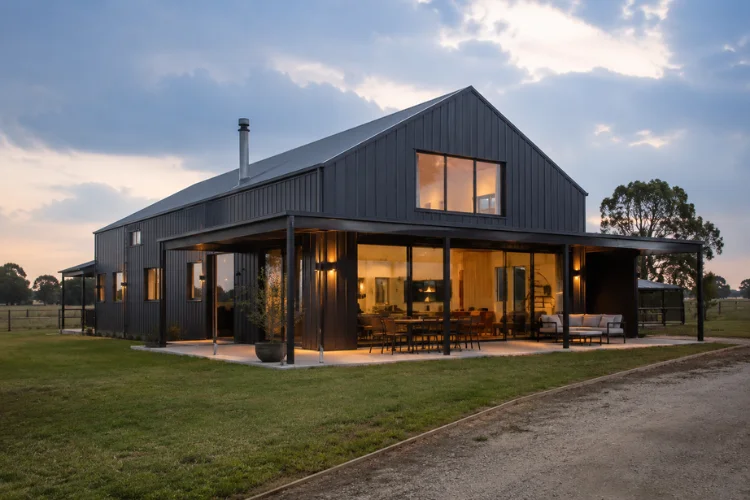
I think the appeal makes sense once you look at the numbers. Conventional home construction costs in Australia have climbed steeply, and a barn-style steel-frame home tends to come in well under a comparable brick build, often by a wide margin once you account for labour and time on site.
There’s also a cultural fit. Australia has a long-standing relationship with the shed — the Aussie shed is practically folklore at this point — so there’s less resistance to the idea of a home that looks like a barn than there might be in a country without that backyard-shed heritage. A barn shape on a rural block doesn’t look out of place; if anything, it looks like it belongs there.
Speed is another factor that gets undersold. Steel portal frame construction goes up quickly compared with traditional framing, and several manufacturers now offer engineered kit systems specifically aimed at getting a structure to the lock-up stage faster than standard methods. When you’re paying rent or a mortgage on an existing place while your new build drags on, that time saving is real money, not just convenience.
And then there’s the design freedom. Open-span steel frames don’t need internal load-bearing walls the way timber-framed homes often do, so floor plans can be more open, more flexible, and easier to reconfigure later if your needs change.
The Information Gap I Don’t See Addressed Often Enough
Most articles on this topic focus on cost and aesthetics. Almost none of them properly explain the regulatory pathway, which is honestly the part that trips people up the most. Here’s what I think deserves more attention.
Class 1a Certification Is Not Automatic
Building a structure that looks like a home and getting a council or private certifier sign-off as a Class 1a dwelling are two separate processes. To get that classification under the National Construction Code, the building generally needs to meet residential standards for things like ceiling height, natural light and ventilation in habitable rooms, energy efficiency ratings, fire separation if it’s close to a boundary, and wastewater and stormwater management.
A lot of “livable barn” projects I’ve come across are built to a stage where they could be certified, but the owner hasn’t actually gone through that final certification step. That matters enormously if you ever want to insure it as a primary residence, get standard home loan finance against it, or sell it later as a habitable home rather than an “as is” shed structure.
Finance Is Harder Than Most People Expect
Banks are still cautious about lending against barn shed homes, particularly kit builds on rural or semi-rural blocks. Construction loans usually require staged inspections and a registered builder, which rules out a chunk of the cheaper owner-build kit pathway unless you’re using cash or already own the land outright. If you’re planning to finance the build, it’s worth having that conversation with a lender before you fall in love with a particular design, because the finance pathway can dictate which builder and which design you’re realistically able to use.
Thermal Performance Needs Deliberate Design
Steel-clad buildings have a reputation, not always fair, for being hot in summer and cold in winter. That reputation comes from uninsulated agricultural sheds, not from a properly designed barn home. With the right insulation specification — typically a combination of reflective foil sarking, bulk insulation in the walls and roof, and thermal breaks where the steel frame meets the cladding — a barn shed home can perform just as well thermally as a conventional build. The difference is that this has to be specified deliberately. It’s not automatically included the way it might be assumed to be in a standard architectural home.
Resale Perception Varies Regionally
In rural and semi-rural markets, barn-style homes are increasingly normalised and don’t carry much of a resale penalty. In tightly held suburban markets, a barn shed home can still raise eyebrows with valuers and buyers who associate the aesthetic with sheds rather than houses, even when the build quality is excellent. If resale value matters to you, it’s worth researching how comparable properties have actually sold in your specific area, rather than assuming national trends apply locally.
How Barn Shed Homes Compare to Other Build Types
I find it easier to think about this in a straight comparison rather than in isolation, so here’s how barn shed homes generally stack up against the two build types people most often compare them with.
None of these is objectively “better.” It comes down to your block, your budget, your timeline, and how much you care about the visual identity of the finished home.
What a Realistic Budget Actually Looks Like
Pricing in this space is genuinely all over the place, which I think is part of why people get frustrated trying to research it. A bare kit for a small barn shell, frame, and cladding only, with no internal fit-out, can start in the tens of thousands of dollars. Once you add insulation, internal linings, plumbing, electrical, a kitchen, bathroom, flooring, and the labour to assemble and fit it all out, the all-up cost climbs substantially, often landing somewhere between a basic kit home and a full custom architectural build, depending on the finish level you choose.
The honest answer, and one I wish more articles gave plainly, is that the kit price you see advertised is rarely the number you’ll actually spend to move in. Site costs, slab or footings, council fees, connections to power and water, and internal fit-out routinely add as much again, sometimes more, on top of the advertised kit price. Treat the headline figure as a starting point for the shell, not a total project budget.
Designing a Barn Shed Home That Actually Feels Like a Home
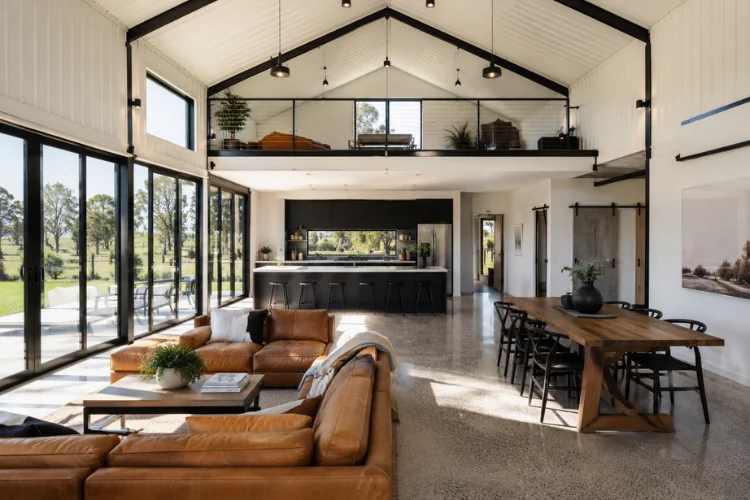
A mistake I see fairly often is treating the barn shape as the whole design and not thinking much further than that. The exterior silhouette is only the start. A few things genuinely change how lived-in and comfortable the finished space feels.
Window placement matters more in a barn home than in a conventional build because the simple rectangular form doesn’t naturally create the nooks and light variation that a more complex roofline gives you for free. Deliberately placing larger windows on the northern aspect, and adding a few smaller strategic windows elsewhere, does a lot of work to stop the interior from feeling like a single uniform shed space.
Ceiling height is another one. Because the portal frame structure often allows for a higher apex than standard residential framing, a lot of barn homes lean into that with raked ceilings or even a mezzanine level. It’s a genuinely lovely use of the structure, but it needs to be planned from the start because retrofitting a mezzanine into a finished shell is far more expensive than designing it in from day one.
Internal zoning is worth thinking about early, too. Because the open-span frame removes the need for internal load-bearing walls, it’s tempting to leave everything open-plan. That works beautifully for living areas but can leave bedrooms feeling exposed or noisy if you don’t deliberately plan some separation, whether that’s stud walls, sliding partitions, or simply smart placement of the bathroom and laundry as natural buffers between zones.
If you’re weighing up a full custom build against a kit, this is exactly the kind of detail where getting expert renovation assistance early in the planning stage saves you from costly redesigns once the slab is already down.
Council Approval: What Actually Slows People Down
The approval process for a barn shed home depends heavily on whether you’re building new or converting an existing shed, and on your specific council and state regulations, which do vary. That said, a few recurring sticking points come up again and again in the cases I’ve looked at.
Setback requirements catch people out regularly, particularly on smaller blocks where the barn footprint is larger than a typical house footprint and ends up closer to a boundary than expected. Bushfire attack level assessments matter a lot in rural and semi-rural zones, and they can significantly affect which cladding and window specifications are acceptable.
Wastewater management, especially septic systems on rural blocks without mains sewer, often needs its own separate approval and can take longer than the building approval itself. And energy efficiency compliance under the National Construction Code applies to barn homes the same way it applies to any other residential build, so insulation and glazing specs need to stack up on paper, not just in theory.
None of this should put you off. It just means budgeting realistic time for approvals, particularly if you’re on rural or semi-rural land, rather than assuming a steel kit build sails through faster than a conventional approval simply because the construction itself is quick.
A Few Things I’d Tell a Friend Considering This
If someone close to me were seriously weighing up a barn shed home, here’s roughly what I’d say. Get the Class 1a question sorted in writing with your council or certifier before you commit to a design, because it changes your finance options and your long-term flexibility.
Don’t choose your insulation package based on the cheapest line item in a kit quote; it’s the single easiest place for quality to quietly drop without you noticing until the first heatwave or cold snap. Get a real, written, all-up estimate that includes site works, connections, and fit-out, not just the kit shell price, before you compare quotes between builders.
And if you’re not confident managing the build yourself, factor a project manager or experienced builder into the budget from the start, rather than treating it as an optional extra you’ll decide on later.
If you’re at the earlier stage of just figuring out whether this is the right path for your situation, working through the layout and budgeting properly before you talk to a builder tends to put you in a much stronger negotiating position. That’s actually one of the reasons we built out our home makeover courses: to help people understand exactly this kind of planning groundwork before they’re standing in a shed company showroom trying to make decisions on the spot.
Maintenance and Longevity
One thing that doesn’t get discussed enough is what living in a barn shed home actually involves day to day, years after the build is finished. Steel cladding holds up extremely well against weather and pests, which is a genuine advantage over timber-clad alternatives, but it does need occasional washing down to prevent salt or dust buildup, particularly in coastal areas where corrosion risk is higher even with quality coated steel.
Roof and wall fasteners should be checked periodically, since a loose screw on a large steel sheet can eventually let water in, and that’s a much easier fix caught early than after months of slow leak damage. Guttering on a barn roofline tends to handle a high volume of water quickly, given the typically steep pitch, so oversized gutters and well-planned downpipes are worth the small extra cost at build time.
None of this is more demanding than maintaining a conventional home. It’s just a different maintenance rhythm, and knowing that going in helps avoid the slightly unfair assumption that steel buildings are maintenance-free forever.
Where I Land on All This
Barn shed homes in Australia aren’t a shortcut, and they aren’t a compromise either, they’re a legitimate, increasingly mainstream way to build a home that happens to be faster and often cheaper than the conventional alternative, provided you go in with clear eyes about certification, finance, and design detail. The aesthetic appeal is obvious, but the real value is in how much flexibility the steel-frame structure gives you to shape a floor plan around how you actually live, rather than around what a brick wall will allow.
If you’re seriously considering this path, the best next step is getting your specific block, budget, and council requirements properly assessed before you commit to a design or a builder. That early groundwork is where most of the expensive mistakes get avoided, and it’s exactly where professional guidance pays for itself.
Frequently Asked Questions
Are barn shed homes legal to live in across Australia?
Yes, provided the structure is certified to Class 1a residential standard under the National Construction Code and meets your local council’s approval requirements.
How much cheaper is a barn shed home than a standard house?
Costs vary widely, but kit and steel-frame builds are often significantly cheaper per square metre than brick veneer, mainly due to faster construction and lower labour costs.
Can I convert an existing shed into a livable barn home?
Often yes, but it requires formal certification to Class 1a standard, which can involve upgrading insulation, ventilation, and wastewater systems to meet residential requirements.
Do barn shed homes get hot in summer?
Only if poorly insulated. With proper bulk insulation, reflective sarking, and thermal breaks, a barn shed home performs comparably to a conventional home.
Is it harder to get a home loan for a barn shed home?
It can be, particularly for owner-built kit homes, since lenders typically prefer staged construction loans through a registered builder rather than self-managed builds.
More Resources
- Is a Barn an Architectural Feature? Key Insights
- Kings Kwiky Roof Top Tent: 2026 Honest Review Guide
- Granny Flat Builders: 7 Expert Tips Before You Build

I’m Salman Khayam, the founder and editor of this blog, with 10 years of professional experience in Architecture, Interior Design, Home Improvement, and Real Estate. I provide expert advice and practical tips on a wide range of topics, including Solar Panel installation, Garage Solutions, Moving tips, as well as Cleaning and Pest Control, helping you create functional, stylish, and sustainable spaces that enhance your daily life.