
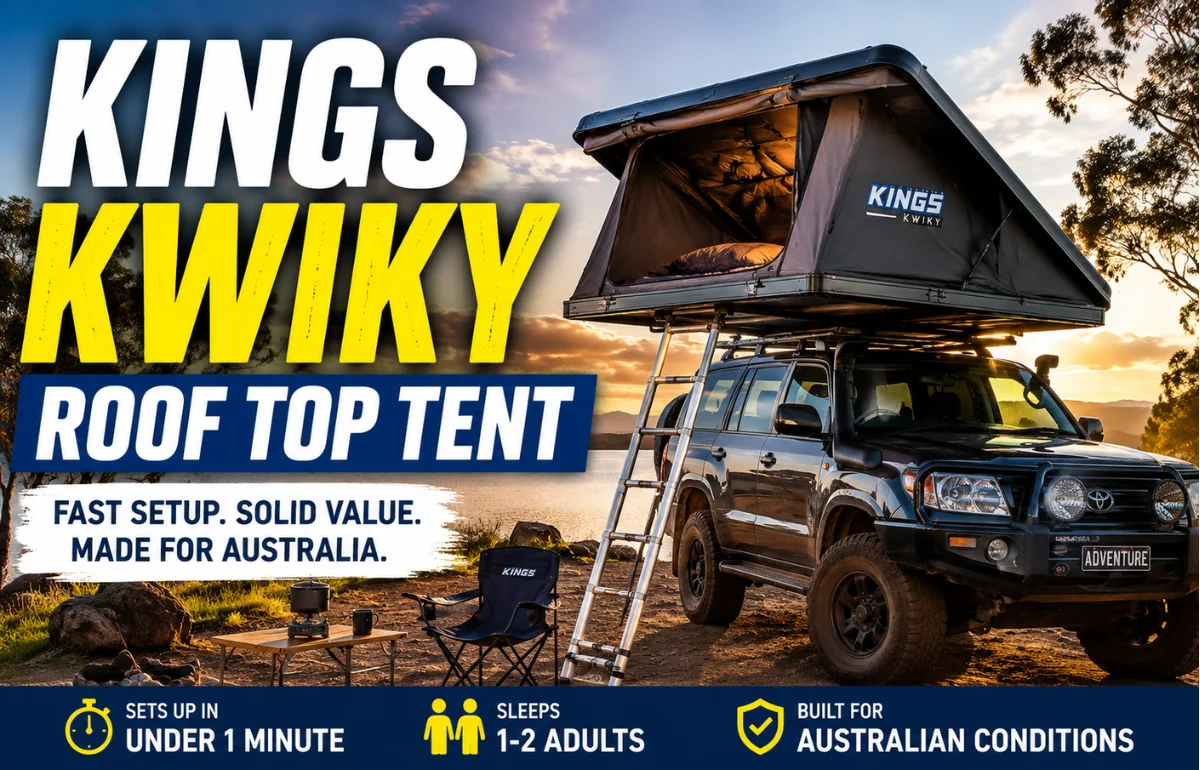
The kings kwiky roof top tent is a hard-shell rooftop tent manufactured by Adventure Kings, an Australian-owned outdoor gear brand sold through 4WD Supacentre. It mounts directly onto a vehicle’s roof rack, opens in under a minute via gas struts, and provides an elevated sleeping platform designed for couples or solo travellers heading into Australia’s rugged outback, national parks, or coastal drives.
If you’ve been scrolling through camping forums and keep seeing this tent pop up as a budget-friendly entry into rooftop camping, you’re not imagining things — it genuinely is one of the most affordable hard-shell options on the Australian market. But affordable and good don’t always mean the same thing, and that’s exactly what this article is here to unpack.
What Makes a Rooftop Tent Different from a Ground Tent?
Before getting into the specifics of the Kwiky, it’s worth understanding why rooftop tents have become such a fixture in Australian 4WD culture. When you’re camping in areas where the ground is wet, rocky, or home to things that crawl — which is basically most of regional Australia — sleeping elevated changes the experience entirely. You’re off the dirt, better ventilated, and far less exposed to insects, snakes, and moisture wicking up through your sleeping surface.
Ground tents require flat, clear ground, a decent mat, and a fair amount of setup time. A rooftop tent, by contrast, follows your vehicle. Wherever you park is your campsite. That flexibility is enormous if you do extended road trips or spontaneous overnight stays.
The hard-shell rooftop tent category — which is where the Kings Kwiky roof top tent sits — takes this one step further. Unlike soft-shell tents that fold out with a canvas body, hard-shell units have a rigid clamshell lid that opens and closes with gas-assisted struts. This makes them weather-resistant year-round and faster to deploy than virtually any other tent type.
Kings Kwiky Roof Top Tent: Model Breakdown
Adventure Kings has released multiple iterations of this tent. Here’s what you need to know about the lineup before making a decision:
The Original Kwiky
The first generation established the product’s reputation — for better and worse. It was cheap (by rooftop tent standards), quick to set up, and widely available through 4WD Supacentre stores across the country. However, early buyers reported corner cracking on the hard shell, particularly after repeated open-close cycles in warmer climates. Adventure Kings replaced many units under warranty, which speaks to their customer service responsiveness, though it doesn’t inspire full confidence in the original build.
The Kwiky MKII
The Mark II was the manufacturer’s response to those early quality concerns. The corners were reinforced, the seal improved, and the overall shell construction was tightened up. It’s currently the active model and what you’d receive if you purchased new today. From my own research and conversations with long-haul campers who’ve used both, the MKII is a meaningful improvement — not a luxury tent by any stretch, but much closer to what you’d expect for the price.
The Kwiky Tent Value Pack
This is a bundle offering from the same brand that pairs the self-inflating foam mattress, sleeping bags, a camping chair, and an LED fan/light into a single package — marketed as a complete camp kit at a combined discount. It’s a decent starting point for people who are kitting out from scratch, though the value of each individual item varies.
Specifications at a Glance
Here’s a comparison table covering the Kings Kwiky roof top tent alongside two competitors in the same price bracket, so you can see exactly where it sits:
The price gap between the Kwiky and its direct competitors is stark. If you’re comparing purely on setup speed, the hard-shell design is competitive with anything on the market. Where it falls behind is material quality and long-term durability, which the warranty period difference reflects.
Real-World Performance: What Campers Actually Experience
Having spoken with multiple Kwiky MKII owners across forums and review sites, a pattern emerges quite clearly.
Set Up Speed — The Genuine Highlight
Every single owner agrees on one thing: this tent opens fast. Gas struts do the heavy lifting, and the tent is typically fully deployed and ladder-in-place within 60 seconds. For people who stop for one-night stays or need to be camp-ready before sunset, this is a legitimate advantage. I’ve seen people describe the pack-down as slightly trickier — the canvas walls want to spill over the sides and need to be tucked back in before the lid closes properly — but it’s still faster than any ground tent I’ve used.
Sleeping Comfort — Mixed Results
The included mattress is functional but not exceptional. It’s a standard-density foam pad that works fine for single-night stops but starts to feel inadequate on longer trips. A number of owners upgrade to a custom-cut memory foam insert within the first few months — this is worth budgeting for if comfort is important to you. The internal space fits two adults, though tightly, and the corner latches that hold the shell open do eat into the usable width. A solo camper will find it genuinely comfortable.
Ventilation and Temperature Regulation
This is where the hard-shell design creates a real challenge in Australia’s climate. The clamshell lid is good at keeping rain out, but traps heat aggressively in summer. The Kwiky has mesh windows and vents, but they’re not sufficient in Queensland or Western Australian heat without a breeze. One owner mentioned sleeping through a 38-degree January night with the windows fully open and still finding it unbearably warm. If you camp primarily in hot regions, this is something to plan around — either by positioning the tent in shade or investing in a 12V fan for airflow.
In cooler months and at elevation, the hard shell excels. It keeps the cold out effectively, and condensation — a common complaint with soft-shell tents — is significantly reduced.
The Cracking Issue: Is It Resolved?
Honestly, not entirely. While the MKII addressed the worst of the early corner-cracking problems, isolated reports of micro-cracks appearing near the hinge points still surface, particularly for owners who drive on corrugated roads frequently. The good news is that these cracks, when they appear, don’t typically result in leaks — the sealing arrangement inside the lid is separate from the shell structure. Several owners have patched cracks successfully with Sikaflex, and the tent remains serviceable.
If you’re planning to drive extended outback tracks — the Oodnadatta Track, the Gibb River Road, hundreds of kilometres of corrugations — the vibration loading on any rooftop tent is significant. At this price point, I’d factor in the realistic possibility of shell maintenance.
Installation: What You Need Before You Buy
One thing that trips up first-time rooftop tent buyers is underestimating the mounting requirements. The Kings Kwiky roof top tent does not come ready to bolt onto a bare roof. You need:
A roof rack or platform rated to carry the tent’s weight (minimum 60 kg dynamic load rating), appropriate mounting feet or tracks to suit your vehicle’s roof profile, and a basic understanding of the dynamic vs. static load limits on your specific rack.
The tent itself uses standard T-slot mounting hardware, which is compatible with most aluminium platform racks sold in Australia. However, if you’re using a factory flush-mount rail system, you’ll need a rack first. Adventure Kings sells their own roof racks as a companion product, and while they’re not the most premium option on the market, they’re fit for purpose at a compatible price point.
Worth noting: installation is a two-person job. The tent is heavy and awkward to manoeuvre onto the roof, particularly on tall 4WDs like a 200 Series Land Cruiser or a Patrol. Plan to have a helper on hand.
Who Is the Kings Kwiky Roof Top Tent Actually For?
After everything I’ve read, researched, and discussed with people who own one, here’s my honest assessment:
This tent makes the most sense for weekend campers, people dipping their toes into rooftop camping for the first time, and budget-conscious adventurers who don’t want to spend $2,500 on an ARB or Darche before they know whether rooftop camping suits their lifestyle. It’s a legitimate entry point into the category, not a toy.
It does not make the most sense for people doing extended, remote outback touring where build quality and long-term reliability matter significantly. For those trips, the cost difference between the Kwiky and a premium unit is worth every dollar.
Accessories That Genuinely Improve the Experience
If you do commit to the Kings Kwiky roof top tent, a few additions will meaningfully improve your experience:
An aftermarket foam mattress topper or custom-cut layer cuts down considerably on the comfort gap. A 12V hanging fan (the same brand sells one as part of their value pack) makes summer camping tolerable. A quality ladder mat at the base of the telescopic ladder stops it from sinking into soft ground. And a small rubber door seal applied around the shell perimeter at purchase — before any cracking develops — is cheap insurance that proactive owners swear by.
Maintenance Tips That Extend the Life of Your Tent
The canvas components of the tent need UV protection and occasional re-waterproofing, particularly if the tent lives on the roof year-round and is exposed to direct sunlight. Australian sun degrades canvas and PVC coatings faster than most manufacturers test for. A canvas conditioner applied every six months adds years to the fabric’s life.
The gas struts should be checked annually. If they start to feel sluggish or fail to hold the lid open fully, replacement struts are inexpensive and available through most camping stores. The telescopic ladder’s locking pins should be cleaned and lightly lubricated after sandy or coastal trips.
For anyone new to vehicle-mounted accessories and wanting to better understand how maintenance fits into broader vehicle and outdoor setups, there are some solid renovation training resources that cover outdoor living modifications and how they integrate with your living or vehicle space.
How the Kings Kwiky Compares for Australian Conditions Specifically
Australia throws a lot at camping gear: salt air from coastal camps, red dust from inland tracks, UV intensity unlike most northern hemisphere conditions, and temperature swings that can see you shivering at 4 am after sweating through a 40-degree afternoon.
The Kwiky’s hard shell handles dust and moisture well, which is a genuine advantage over soft-shell tents that accumulate red dust in their canvas folds. The sealing is adequate in normal rainfall, though owners who’ve camped through heavy, sustained rain report some moisture ingress around the windows if not properly secured.
For families considering their setup more holistically — thinking about how rooftop camping fits into a broader outdoor lifestyle upgrade — it’s worth reviewing home makeover services that extend to outdoor living areas and vehicle setups, particularly if you’re looking to build a comprehensive adventure-ready lifestyle rather than just adding one product.
Comparison Table: Kings Kwiky MKII vs. Competing Hard-Shell Tents Under $2,000
What You Should Ask Before Buying Any Rooftop Tent
Regardless of which model you’re considering, these are the questions that save you from a regretful purchase:
What is the dynamic load rating on my current roof rack? If you don’t know this, find out before you buy the tent. A tent that weighs 60 kg at rest places considerably higher stress on the rack at highway speeds, particularly on rough roads.
How often will I actually use this tent? If the honest answer is four to six nights a year, the Kwiky may genuinely be the right call. If you’re planning month-long trips through the Northern Territory, the maths shift.
Where will I primarily camp? Hot, dry inland Australia — weight the ventilation problem heavily. Wet coastal and highland areas — weight the sealing and canvas quality.
Frequently Asked Questions
How long does it take to set up the Kings Kwiky roof top tent?
Setup takes under 60 seconds — gas struts open the shell automatically, and the telescopic ladder drops into place with minimal effort.
Can two adults sleep comfortably in the Kings Kwiky MKII?
Two adults fit, but the space is snug. The interior is best suited for a couple comfortable sleeping close together; solo campers will find it genuinely comfortable.
Does the Kings Kwiky roof top tent leak in heavy rain?
In normal and moderate rainfall, it performs adequately. In sustained heavy rain, some owners report minor moisture ingress around window seams if the tent is not properly sealed.
What roof racks are compatible with the Kings Kwiky roof-top tent?
The tent uses standard T-slot mounting compatible with most aluminium platform roof racks. It is not suitable for direct installation on factory rail systems without an additional platform.
Is the Kings Kwiky roof top tent worth buying in 2026?
For a first rooftop tent or a budget-conscious buyer doing occasional trips, yes. For extended remote touring where durability matters most, the price difference for a higher-spec tent is worth considering seriously.
Final Thoughts
The Kings Kwiky roof top tent occupies a very specific and legitimate space in the Australian camping market. It isn’t trying to be an ARB Simpson, and evaluating it as though it were sets it up to fail. Taken for what it is — an affordable, fast-deploying, hard-shell rooftop tent designed to get Australians off the ground on a budget — it delivers on its core promise.
The cracking issue has improved with the MKII, the setup speed is genuinely impressive, and the value proposition for new rooftop campers is real. Where it earns caution is on long, remote, corrugated tracks where build integrity matters most, and in Australia’s most intense summer heat, where airflow is critical.
If you’re ready to explore the rooftop camping lifestyle, start by making sure your vehicle setup, storage, and living space are working as hard as your outdoor gear. That means looking at the full picture — not just the tent, but how your vehicle and home base are configured to support an adventure-ready lifestyle.
Other Resources
- Granny Flat Builders: 7 Expert Tips Before You Build
- Gutter Replacement Cost Australia: 2026 Pricing Guide
- Roof Replacement Cost Australia 2026 Guide: Prices & Factors Explained

I’m Salman Khayam, the founder and editor of this blog, with 10 years of professional experience in Architecture, Interior Design, Home Improvement, and Real Estate. I provide expert advice and practical tips on a wide range of topics, including Solar Panel installation, Garage Solutions, Moving tips, as well as Cleaning and Pest Control, helping you create functional, stylish, and sustainable spaces that enhance your daily life.