
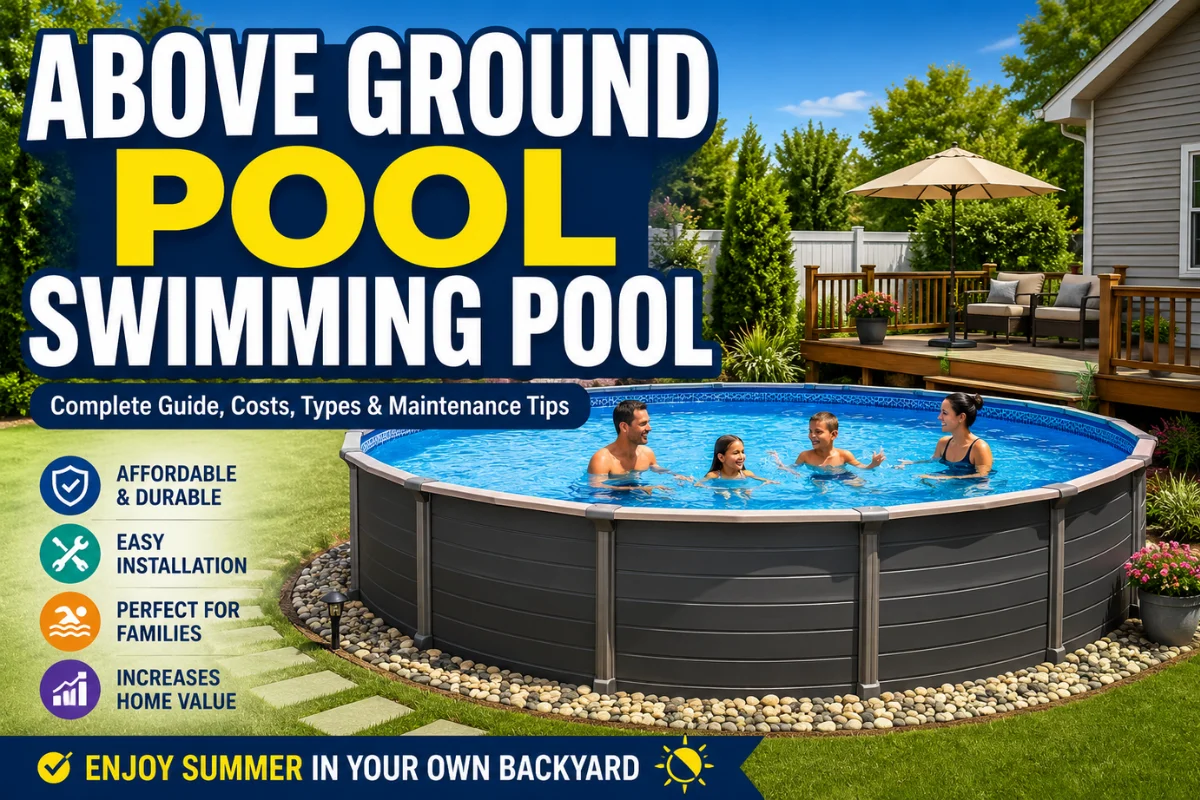
An above ground pool swimming pool is a freestanding, pre-fabricated pool structure installed on top of the ground rather than excavated into the earth. Unlike inground pools, which require major construction and landscaping work, an above ground pool sits on a flat surface — your backyard, patio, or even a deck — and can be set up in a matter of hours or days, depending on the size and style. These pools come in round, oval, and rectangular configurations, range from inflatable splash pools to steel-framed semi-permanent structures, and typically cost a fraction of what an inground installation demands.
I’ve spent years helping people make smart backyard decisions, and the above ground pool swimming pool category is one of the most misunderstood yet genuinely rewarding investments a homeowner can make.
Why Above Ground Pools Are Having a Major Comeback
When I first started advising clients on backyard wellness setups, above ground pools carried a stigma. People thought of them as temporary, cheap-looking, or suburban eyesores. That was then. The designs available today are architecturally interesting, structurally sound, and — with the right setup — indistinguishable from something far more expensive at a glance.
The post-pandemic surge in home improvement spending reshaped the market permanently. Families who couldn’t access public pools discovered that an above ground pool swimming pool gave them a private retreat without a second mortgage. Supply chains caught up with demand, and manufacturers responded by upgrading everything: the steel, the liners, the filter systems, and the overall aesthetics.
Beyond aesthetics, the economics are impossible to ignore. A full inground pool installation in North America can cost anywhere from $35,000 to $100,000 or more. A quality above ground swimming pool — the kind that lasts 15 to 20 years with proper maintenance — typically runs between $1,500 and $7,500, including installation costs.
Types of Above Ground Pool Swimming Pools

Not all above ground pools are created equal, and the differences matter more than most buyers realize.
Inflatable and Soft-Sided Pools
These are the entry-level option — products like the Intex Easy Set or Bestway ClearView series. They’re inflatable around the top ring and use water pressure to expand and hold their shape. They’re inexpensive, portable, and easy to drain and store. But they’re also the most fragile. I’d recommend these for young children or anyone testing the waters (no pun intended) before committing to a larger structure.
Steel-Walled Pools
This is the backbone of the above ground pool swimming pool market. A steel-walled pool consists of a galvanized or coated steel wall panel, a resin or steel top rail, and a vinyl liner that holds the water. They’re semi-permanent structures that typically require some assembly time — usually four to eight hours for a crew — and can last 10 to 20 years when properly maintained.
The Doughboy, Wilbar, and Radiant pool brands dominate this space. Steel-walled pools can accommodate deeper depths, ranging from 48 inches up to 54 inches, making them genuinely swimmable for adults rather than just wading space.
Resin Pools
Resin pools replace the metal components with high-density resin, which resists rust and UV degradation more effectively than steel. They’re more expensive upfront but reduce long-term maintenance costs, particularly in humid climates or areas with saltwater systems. If you’re planning to use a saltwater chlorinator — which I highly recommend for skin comfort and long-term chemical savings — a resin or resin-hybrid pool is the better investment.
Hybrid Pools
Hybrid pools combine resin top rails and uprights with steel wall panels. They offer a balance between cost and durability that suits most homeowners well. This is what I’d call the “sweet spot” category for the majority of buyers.
Semi-Inground Pools
A lesser-discussed but genuinely useful variation, semi-inground pools can be partially buried — typically between 12 and 24 inches into the ground — to reduce the visual footprint, allow easier entry and exit, and provide better insulation. They require sturdier panels and specific site preparation, but they bridge the gap between above ground affordability and inground aesthetics remarkably well.
Choosing the Right Size and Shape

Size decisions should factor in three things: how many people will use the pool regularly, the dimensions of your yard, and local zoning regulations.
Round vs. Oval vs. Rectangular
Round pools are structurally the most stable because the walls distribute water pressure evenly in all directions. They’re the easiest to install and generally the most affordable at any given diameter.
Oval pools offer more swimming length, which matters if you want to actually swim laps or if your yard is long and narrow. However, oval pools require buttress supports on the sides, which eat into usable yard space.
Rectangular above ground pools exist but are less common. They’re harder to manufacture structurally and cost significantly more. If you need a rectangular shape, a semi-inground or a deck-integrated design is usually the cleaner solution.
Depth Matters More Than Diameter
Here’s something that gets overlooked: depth affects usability more than surface area for adult swimmers. A 24-foot round pool that’s only 48 inches deep is barely swimmable for a six-foot adult. If you want a pool that actually accommodates lap-style swimming or water sports, prioritize a 52-inch or 54-inch wall height, even if it means going slightly smaller in diameter.
Above Ground Pool Comparison Table: Key Categories at a Glance
Installation: What They Don’t Tell You on the Box
I’ve seen more above ground pool projects derailed by site preparation than any other single factor. The box makes installation sound simple, but the ground work underneath the pool matters enormously.
Ground Preparation
The site needs to be level — within two inches across the entire footprint — before anything else happens. An unlevel site causes uneven water pressure on the walls, accelerated liner wear, and in worst cases, catastrophic structural failure. I’ve personally seen a 24-foot steel-walled pool buckle on one side because it was installed on a site that sloped even slightly.
Options for base material include:
- Sand (2–3 inches) — traditional, affordable, but can shift and erode over time
- Foam pool cove and pad — better liner protection and more stable than sand
- Vermiculite — a professional-grade option typically poured and smoothed on-site
- Concrete pads — ideal for permanent installations
Permits and Local Regulations
Many municipalities require a permit for any above ground pool swimming pool over a certain size or depth — typically 24 inches. Beyond permits, fence requirements are universal in most jurisdictions. A four-foot fence with a self-closing, self-latching gate around the pool area is the baseline legal standard in most parts of the United States, Canada, and Australia. Check your local ordinances before purchasing.
Electrical Considerations
Any pool with a pump, lighting, or heating element must be connected to GFCI-protected electrical outlets, located a minimum distance from the water’s edge (typically 5 to 10 feet, depending on your local code). Hiring a licensed electrician for the electrical hookup isn’t optional — it’s both a safety and legal requirement.
Pool Maintenance: The Real Cost Nobody Talks About
The purchase price is one thing. What keeps above ground pool ownership affordable or expensive is ongoing maintenance.
Water Chemistry
Maintaining balanced water chemistry is non-negotiable. pH should stay between 7.2 and 7.6, alkalinity between 80 and 120 ppm, and chlorine between 1 and 3 ppm. A digital water testing kit beats test strips for accuracy, and I check my pool’s chemistry three times per week during peak swimming season.
Saltwater chlorination systems have genuinely changed the above ground pool experience. Instead of manually adding chlorine tablets or granules, a saltwater generator converts dissolved pool salt into chlorine continuously. The water feels softer on skin and eyes, and the long-term chemical costs are lower once you absorb the upfront cost of the generator itself.
Filtration
The pump and filter system is the heart of any above ground pool. Sand filters are the traditional choice — relatively low maintenance, backwash when pressure builds, replace sand every five to seven years. Cartridge filters require more frequent cleaning but offer finer filtration. DE (diatomaceous earth) filters offer the finest filtration of all but come with more maintenance complexity.
Under-sizing the filter is one of the most common mistakes buyers make. Match your pump and filter to the volume of your pool, and then size up slightly. A system that cycles the entire pool volume in eight hours is the baseline minimum.
Liner Care
Vinyl liners need attention. They’re susceptible to UV degradation, chemical imbalance, and physical punctures. A pool cover — ideally a solar cover during swimming season and a solid winter cover in the off-season — dramatically extends liner life. When I replaced my own liner after nine years of use, I found that the solar cover I’d used religiously was the single biggest factor in its longevity.
Heating Your Above Ground Pool

An unheated above ground pool swimming pool is comfortable for roughly two to three months of the year in most temperate climates. Extending that season is entirely possible.
Solar covers alone can raise water temperature by 8 to 10 degrees Fahrenheit. Dedicated solar heater panels — connected to your existing pump — are an inexpensive, energy-free option for climates with reliable sun. Gas heaters heat water fastest and can make even a chilly evening swim comfortable, but the operating costs add up quickly. Heat pumps are the most efficient electrical option, using ambient air temperature to heat the water, and they’re increasingly popular for medium-to-large above ground pools.
Decking and Integration: Making It Look Like It Belongs
One of the most effective ways to elevate an above ground pool is thoughtful decking. A partial or full deck around the pool serves multiple purposes: it makes the pool safer (no ladder climbing over the edge), it dramatically improves the aesthetics, and it expands usable outdoor living space.
Composite decking materials — Trex, TimberTech, and similar brands — are the preferred choice around water. They resist moisture, don’t splinter, and hold up without annual refinishing. The cost of a deck can equal or exceed the cost of the pool itself, but the transformation in livability and curb appeal is substantial.
For anyone who wants to explore broader home wellbeing upgrades alongside their pool project, our online services cover a range of guidance on creating restorative home environments that genuinely support physical and mental health.
Above Ground Pools and Physical Wellbeing

Swimming is one of the most complete forms of physical exercise available. It’s low-impact, cardiovascular, and works muscle groups across the entire body simultaneously. For people with joint conditions, arthritis, or recovering from injury, an above ground pool swimming pool in the backyard removes the access barriers that prevent regular aquatic exercise.
I’ve seen clients who purchased a pool primarily for their children discover that they themselves became the most consistent users — early morning swims before work, evening cooldowns after stressful days. There’s something about having the water 30 feet from your back door that erases the friction between intention and action.
The psychological benefits are equally real. Regular time in or near water is associated with reduced cortisol levels, improved sleep quality, and lower reported stress. For families, the shared experience of a backyard pool creates a specific kind of low-screen social time that’s increasingly rare.
If you’re interested in how home environment choices connect to long-term wellbeing outcomes, I’d genuinely encourage you to contact Wellbeing Makeover — we work with people at exactly this intersection of home design and personal health.
Common Mistakes First-Time Above Ground Pool Buyers Make
After years in this space, a few mistakes come up again and again.
Buying too small is the most common regret. A pool that seems generous on paper quickly feels cramped once kids and adults are sharing it. If you’re deciding between sizes, go larger.
Skipping the base preparation is the fastest way to void warranties and damage your liner within the first season. Take the extra day to level and prep the ground properly.
Buying a cheap pump to save money is counterproductive. An undersized or poorly built pump runs constantly, wears out faster, and fails to keep the water clean despite the running costs. Invest in a quality variable-speed pump — it’ll save money on electricity over time and last significantly longer.
Neglecting winter closure is another avoidable problem. Improper winterization — leaving water in the filter, failing to lower the water level correctly, or using an inadequate winter cover — can destroy equipment and damage the liner in a single freeze cycle.
What the Internet Gets Wrong About Above Ground Pool Swimming Pools

Most articles focus heavily on budget-level inflatables and treat above ground pools as purely temporary or starter products. The reality is that a well-chosen, properly installed, and regularly maintained steel or resin above ground pool is a legitimate, long-term backyard asset. Families have owned the same pool for 15 to 20 years with nothing more than liner replacements and pump upgrades.
The other gap in most online coverage is the semi-inground category, which genuinely closes the visual gap between above ground and inground pools while remaining dramatically more affordable than a full inground install. If aesthetics have been your primary hesitation, this category deserves serious research.
Wrapping Up: Is an Above Ground Pool Swimming Pool Right for You?
If you want private access to a swimming pool without the six-figure commitment of an inground installation, the above ground pool swimming pool category offers more quality, variety, and longevity than most people expect. The key is making informed decisions at every step: choosing the right type for your climate and use case, preparing the site properly, investing in a quality filtration system, and maintaining water chemistry consistently.
The payoff — in physical fitness, family time, stress relief, and sheer backyard enjoyment — is real and lasting. Start by measuring your available space, checking your local permit requirements, and reading the comparison table above to identify which pool category fits your priorities. Then take the next step toward building a backyard that genuinely supports your wellbeing.
Frequently Asked Questions
How long does an above ground pool last?
A quality steel-walled or resin above ground pool swimming pool can last 10 to 20 years with proper maintenance, though the vinyl liner typically needs replacement every 7 to 12 years.
Do I need a permit for an above ground pool?
Most municipalities require a permit for above ground pools over 24 inches deep, and nearly all require fencing that meets local safety codes — always check with your local authority before purchasing.
Can I use a saltwater system with an above ground pool?
Yes, saltwater chlorination systems are compatible with most steel and resin above ground pools, though you should verify compatibility with your specific pool model since salt can accelerate corrosion in lower-grade steel components.
How much does it cost to run an above ground pool per month?
Monthly operating costs typically range from $50 to $150, covering electricity for the pump, chemicals, and occasional filter maintenance, with variable-speed pumps significantly reducing the electrical portion of that cost.
What is the best base to put under an above ground pool?
A 2–3 inch layer of masonry sand is the most common base, but a foam pool pad over leveled ground offers better liner protection and more consistent support across the pool floor.
Other Resources
- Pool Maintenance Whitney Nevada: The Ultimate Expert Guide
- Pool Cleaning in Spring Valley, Nevada Guide
- Calcium Nodules in Pool: Causes & Fixes

I’m Salman Khayam, the founder and editor of this blog, with 10 years of professional experience in Architecture, Interior Design, Home Improvement, and Real Estate. I provide expert advice and practical tips on a wide range of topics, including Solar Panel installation, Garage Solutions, Moving tips, as well as Cleaning and Pest Control, helping you create functional, stylish, and sustainable spaces that enhance your daily life.