
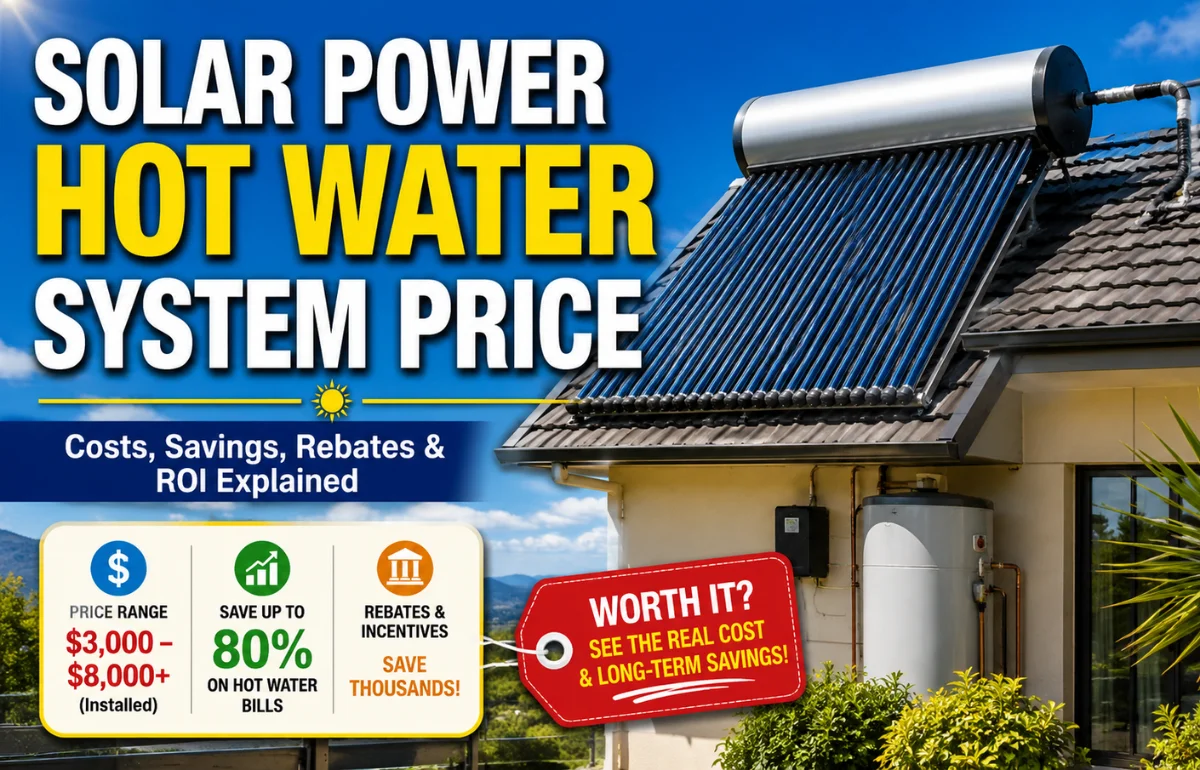
I remember the first time I looked into a solar power hot water system price. It was one of those moments where you think you’re getting a simple answer, and suddenly you’re drowning in jargon about evacuated tubes, differential controllers, and collector arrays. If you’re reading this, you’re probably in the same boat—wondering whether this is a smart investment for your home or just another expensive green gadget. Let’s cut through the noise.
The solar power hot water system price generally ranges from $3,000 to $8,000 for a complete, installed system in many Western markets, with the UK averaging around £6,000. This isn’t just a one-size-fits-all sticker price. It’s a package deal that includes the solar collectors (usually on your roof), a storage tank, piping, and the labour to put it all together.
The final number depends heavily on whether you choose a roof-mounted unit, a split system with a ground-level tank, or a more advanced evacuated tube collector setup. This upfront cost is the biggest hurdle, but it’s also the gateway to slashing your energy bills for decades.
In this article, I’m going to walk you through exactly what goes into that price, the hidden savings you might not have considered, and the mistakes I wish I’d known to avoid before I got my first quote. By the end, you’ll know exactly what questions to ask and what numbers to look for, empowering you to make an informed decision.
What Shapes Your Solar Power Hot Water System Price?

When I got my first quote, I was shocked at the variance. I called three companies, and the prices were miles apart. Why? Because the solar power hot water system price is a sum of different parts, and those parts can be swapped out like LEGO bricks.
The collector’s choice is the first major fork in the road. You’ve got flat plate collectors, which look like heavy-duty glass boxes and are fantastic in sunnier climates. They’re usually cheaper and more durable. Then you have evacuated tube collectors, which look like a row of glass thermoses.
They are more efficient in cooler, cloudier weather and can reach higher temperatures, but they cost a premium—often pushing the price past the $6,000 mark. I’ve seen plenty of folks in northern climates swear by the tubes because they work even when the sun is playing hide-and-seek.
Then, there’s the tank. If you already have a modern, twin-coil hot water cylinder, you’re golden. But if your existing tank is ancient, you’ll need to add the cost of a new cylinder to your project. This can add a significant chunk, often anywhere from $500 to $1,500, depending on size and material.
Here’s the kicker: the installation. The price on the box isn’t the price in your home. If you have a complex roof that’s tough to access, or if you live in a multi-story building where scaffolding is required, the labour costs can skyrocket. I’ve been in situations where the hardware was a third of the bill, and the rest was just getting it safely onto the roof.
How Much Does a Solar Hot Water System Cost by Type?
To make this really clear, here is a breakdown of how the different system types compare based on my research and experience. This should give you a solid snapshot of the market.
Comparison Table: Types of Solar Hot Water Systems
As you can see, the solar power hot water system price is intrinsically linked to performance in your specific climate. Don’t just buy the cheapest option; buy the right option for where you live.
Hidden Factors That Affect Your Solar Water Heater Cost

Here is the part that most articles gloss over, and it’s the part that can make or break your decision. The sticker price is high, but the solar power hot water system price is often subsidized heavily by government incentives.
In countries like Australia, the government issues Small-scale Technology Certificates (STCs) for eligible systems. The more energy your system saves, the more certificates you get. You can sell these certificates to electricity retailers, who apply them to reduce your upfront cost. Depending on your location and the size of the system, this discount can be thousands of dollars. I’ve seen it knock a full third off the initial quote.
The same logic applies in the US with the federal solar tax credit, and there are similar schemes across Europe and Canada. You need to check your local and federal government websites to see what rebates are available in your area. The effective price you pay is often much lower than the “retail price” listed on the quote.
There’s also the return on investment (ROI). A typical solar water heater can cut your water heating bills by 50% to 80%. On average, households save between $200 and $600 annually on utility bills. If you spend $5,000 on a system and save $400 a year, you’re looking at a payback period of about 12.5 years. That’s just the arithmetic, though.
Understanding Your Long-Term Savings on Hot Water
I want to emphasize that the return on investment isn’t just about the solar power hot water system price or the money saved. It’s about hedging against rising energy costs. Natural gas and electricity prices are volatile. By investing in solar thermal now, you’re locking in a significant portion of your hot water cost at a fixed price (the initial installation). When I look at my own energy bills, the portion that goes to heating water is now a tiny fraction of what it used to be, regardless of what’s happening in the wider energy market.
Decoding the Technical Specs Behind the Quotation

When you start getting quotes, the salesperson will throw out efficiency numbers and technical specs. Understanding a few of these can help you justify the price.
Solar Fraction is the big one. This is the percentage of your hot water needs that the sun will provide over a year. In the UK, for example, a typical system provides about 50% of annual demand, with the backup boiler or immersion heater handling the rest. In sunnier places like parts of Australia or the Middle East, you can see solar fractions of 70% to 90%.
The solar fraction directly impacts the solar power hot water system price you should be willing to pay. A system that covers 70% of your needs might be more expensive than one that covers 50%, but it’s going to save you more money every month. You need to balance the upfront cost of that extra efficiency with the long-term savings.
Flow Rate and Pressure are also important, especially if you’re looking at split systems with pumps. Make sure your installer checks your water pressure. If your pressure is too low, the system might not perform well, and you might need an additional pump, which adds to the cost.
My Personal Experience with Solar Hot Water Pricing
I want to share a quick anecdote here. When I had my first system installed, I made the rookie mistake of not checking the orientation of my roof. I assumed “south-facing” was the rule everywhere, but I didn’t account for shade. A massive oak tree on my neighbor’s property meant that from 3 PM onwards, my collectors were in the shade.
My solar fraction was much lower than advertised. I had to call the installer back to reposition the collectors slightly, which cost me extra labour fees. It was a costly lesson in site assessment. When you’re getting quotes, make sure the installer does a proper shading analysis—don’t just rely on a glance from the ground. This is where getting a second opinion from a professional is invaluable. If you’re in the planning stages and want to ensure you’re on the right track—including understanding the best time to install solar panels—you can always get professional recommendations to help you navigate these pitfalls.
Are There Commercial Applications for This Technology?

It’s worth noting that this technology isn’t just for houses. I’ve been fascinated by how solar thermal is being scaled up. For instance, there are studies showing the feasibility of using large arrays of flat-plate collectors to supply hot water for massive water parks, with some systems supplying around 30% of the heat required and saving hundreds of tons of CO2 emissions annually.
There is also research into systems that can reach temperatures well over 100°C for industrial processes, with costs estimated as low as $622 per kWt for some concentrated designs. That’s incredible when you think about the potential for reducing fossil fuel use in manufacturing. While this is a bit beyond the typical homeowner’s scope, it reinforces that the technology is mature, robust, and heavily researched.
Ongoing Costs After Your Solar Water Heater Installation
Let’s talk about upkeep. A quality solar hot water system isn’t a “set it and forget it” appliance, but it’s close.
Most systems have a lifespan of 20 to 25 years. The main maintenance tasks usually involve:
-
Checking the antifreeze: Closed-loop systems use a glycol mix to prevent freezing. This needs to be checked and topped up or replaced every few years.
-
Inspecting the pump: The circulating pump has moving parts and might need replacement after 10-15 years.
-
Cleaning the collectors: Depending on your area, dust and bird droppings can reduce efficiency. A simple wash with a hose once a year is usually enough.
The maintenance cost is usually low—a few hundred dollars every few years. This is a tiny fraction of what you’re saving on your energy bills.
Conclusion

Deciding to install a solar hot water system is a significant decision, but it is one of the most effective ways to reduce your carbon footprint and your utility bills simultaneously. I’ve been through the process, made my mistakes, and ultimately reaped the benefits of having essentially free hot water on sunny days.
The main takeaway? Don’t get caught up in the anxiety of the solar power hot water system price alone. Look at the lifetime value. Factor in the rebates and incentives. Get multiple quotes and ask specific questions about solar fraction and shading. This is a long-term investment, and like any good investment, it requires research.
If you are ready to start your journey towards a more efficient home, don’t hesitate to explore the resources available. Sometimes the best first step is just getting expert advice. You can find a range of options and support in our home makeover courses designed to help you transform your property into a modern, sustainable space.
FAQs About Solar Hot Water System Costs
How much does a solar hot water system cost to install on average?
The average solar power hot water system price ranges from $3,000 to $8,000 installed, depending on system type, collector choice, and your location.
Are there government rebates available for solar water heaters?
Yes, most countries offer incentives like tax credits, STCs in Australia, or other rebates that can significantly reduce your upfront solar water heater cost.
How long does it take to recoup the cost of a solar hot water system?
The payback period is typically 10 to 15 years, depending on your energy usage, local utility rates, and the initial solar power hot water system price you paid.
Do solar hot water systems work in cloudy or cold climates?
Yes, especially evacuated tube systems, which are designed to perform efficiently even in low-light conditions, though they may require a backup booster.
What maintenance does a solar water heater need?
Annual checks on the antifreeze level, pump inspection, and collector cleaning are usually sufficient, with minimal ongoing costs.
Other Resources
- Solar Panel Hot Water System: Benefits, Costs & Guide
- Solar Hot Water System Price Guide: Costs & Savings
- Trina Solar Panels TSM-320PD14 Review: Specs & Performance

I’m Salman Khayam, the founder and editor of this blog, with 10 years of professional experience in Architecture, Interior Design, Home Improvement, and Real Estate. I provide expert advice and practical tips on a wide range of topics, including Solar Panel installation, Garage Solutions, Moving tips, as well as Cleaning and Pest Control, helping you create functional, stylish, and sustainable spaces that enhance your daily life.