
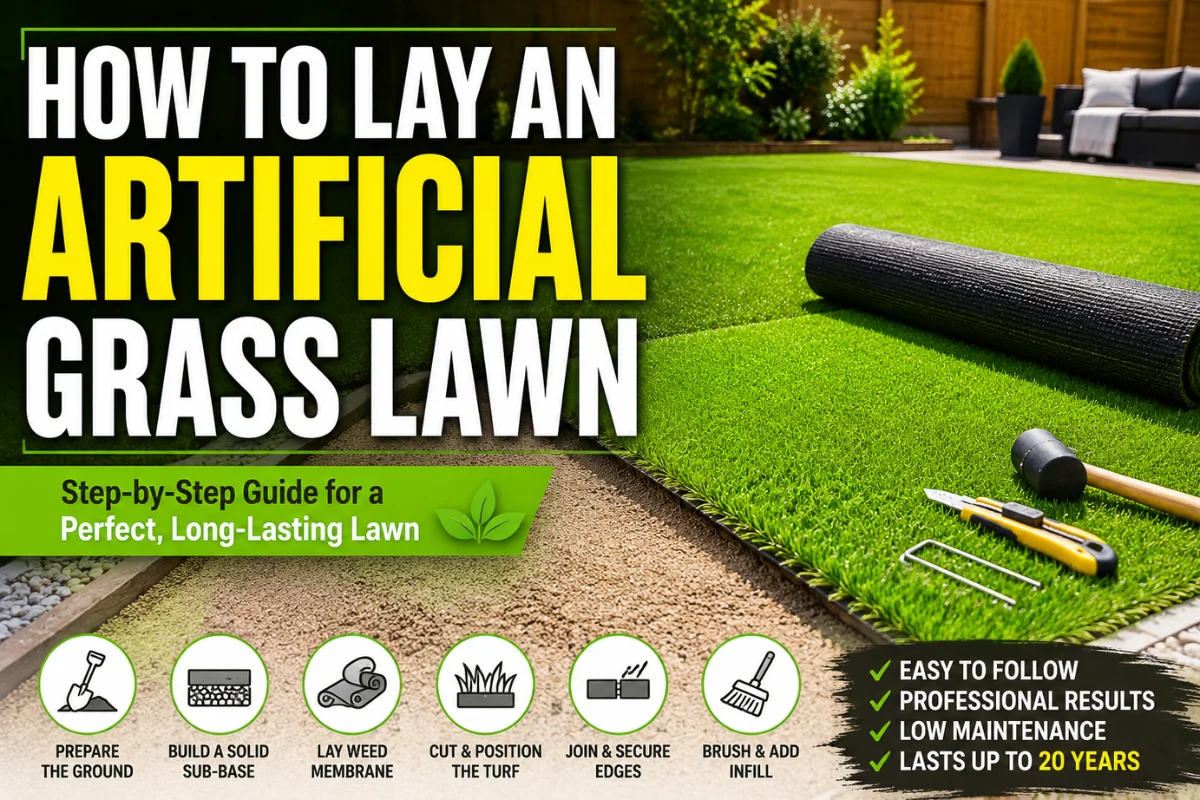
Knowing how to lay an artificial grass lawn is simpler than most people expect — and the results can completely transform an outdoor space. Artificial grass installation involves preparing a stable sub-base, laying a weed membrane, cutting the turf to fit your space, securing the edges, and brushing the pile upright.
Whether you have a muddy backyard, a shaded area where real grass refuses to grow, or a rooftop terrace, synthetic turf is a practical, low-maintenance solution that lasts up to 20 years when installed correctly.
I’ve laid artificial grass in three different gardens over the past several years, and every time the same truth holds: the quality of your preparation determines the quality of your result. Skipping steps in the groundwork phase is where most DIY installations go wrong.
Why More Homeowners Are Choosing to Lay an Artificial Grass Lawn
Before getting into the practical side of how to lay an artificial grass lawn, it’s worth understanding why the demand for synthetic turf has surged so dramatically. Drought restrictions in many regions have made maintaining a real lawn increasingly difficult. Water bills have climbed. Families want usable outdoor space without dedicating weekends to mowing, fertilising, and patching bare patches.
The modern generation of artificial grass is also nothing like the flat, plastic-looking carpet of the 1980s. Today’s products feature multi-tonal yarn blends, varying pile heights, and a naturalness underfoot that genuinely surprises visitors. I’ve had neighbours stand in my garden and ask which seed mix I used — that’s the quality difference a decade of product improvement makes.
That said, artificial grass is not a magic carpet you simply roll out. Done properly, it requires real preparation. Done sloppily, it leads to drainage issues, lumps, and turf that lifts at the edges within a season.
What You’ll Need Before You Lay an Artificial Grass Lawn

Gathering your materials and tools before starting your project saves a significant amount of time and frustration. Anyone planning to lay an artificial grass lawn should have everything on site before starting — running out of adhesive mid-join or discovering your membrane is the wrong type on day one costs far more than a little upfront organisation. Here’s what a standard installation requires:
Materials:
- Artificial grass turf (measure your area and add 10% for cutting waste)
- Sharp sand or crushed granite (for the sub-base layer)
- MOT Type 1 hardcore aggregate (for larger or uneven areas)
- Weed control membrane
- Fixings: galvanised nails, joining tape, and artificial grass adhesive
- Kiln-dried silica sand (for infill)
Tools:
- Spade and wheelbarrow
- Plate compactor or garden roller
- Craft knife or a specialist turf cutter
- Chalk line and tape measure
- Stiff brush or power broom
One thing I’d add from personal experience: invest in a quality craft knife and replace the blade regularly. Blunt blades cause the turf backing to fray rather than cut cleanly, and messy cuts are visible once the grass is down — especially on joins.
Preparing the Ground Before You Lay an Artificial Grass Lawn

Removing Existing Turf and Vegetation
The first stage of learning how to lay an artificial grass lawn is clearing the existing surface. Use a spade or a sod cutter to strip out natural grass, removing it to a depth of around 75–100mm (3–4 inches). This gives you enough room for your sub-base without the finished surface sitting too high relative to patios, fences, or edging.
Remove all roots you can find. Perennial weeds like couch grass and bindweed will push through if you leave root systems in place — and they will find a way through even a weed membrane if given enough time. Be thorough here.
Installing the Sub-Base
This is the stage that most online guides gloss over, yet it’s the single most important factor in a long-lasting installation. If you want to lay an artificial grass lawn that still looks perfect in year ten, the sub-base is where that outcome is either secured or compromised.
Pour a layer of MOT Type 1 hardcore to a depth of approximately 50mm and compact it using a plate compactor (available from most hire shops for around £60–80 per day). This creates a stable, load-bearing foundation.
On top of the hardcore, add a 25mm layer of sharp sand or crushed granite fines. Rake this layer level using a screed board and check it with a spirit level. The surface must slope very slightly — approximately 1:80 gradient — to allow rainwater to drain away from the house or toward a suitable drainage point. This is the detail most DIY guides miss entirely: without a deliberate drainage gradient, water pools under the turf and creates the musty smell that gives artificial grass a bad reputation.
Compact the sand layer lightly with a roller or the back of a rake, then dampen it slightly and compact again. You want a firm, level surface that doesn’t shift underfoot.
Laying the Weed Control Membrane for Artificial Grass
Roll out a high-quality, permeable weed membrane across the entire prepared area. Overlap joins by at least 150mm and pin the membrane at the edges. The membrane does two jobs: it suppresses weed growth from below, and it adds a small amount of cushioning between the aggregate and the turf backing.
Don’t substitute standard plastic sheeting here. It must be permeable so that water drains through rather than pooling under the grass.
Laying the Artificial Grass
Cutting and Positioning Your Artificial Grass Turf
Unroll your artificial grass and let it settle for at least one to two hours before cutting. Synthetic turf has a memory — it’s been tightly rolled and needs time to relax and flatten out before you can accurately judge its position.
When positioning the turf, always ensure that the pile direction (the way the fibres lean) faces the same direction across your entire lawn area. The best visual effect comes from having the pile lean away from the main viewing point — typically your house or patio door. This reflects light in the most natural-looking way. Running your hand across the surface tells you which way the pile faces: smooth going with the pile, slightly resistant going against it.
Mark your cutting lines with chalk. Cut from the backing side, not the face, using a sharp craft knife. Keep the blade at a shallow angle and follow the line of the backing rows to avoid cutting through any tufts.
Handling Joins in Artificial Grass
If your lawn is wider than a single roll of turf (typically 2m, 4m, or 5m widths), you’ll need to join two pieces together. This is where many DIY installations become visibly obvious.
Butt the two edges together and check that the pile direction is identical on both pieces. Trim the selvedge (the bare backing edge of each roll) so the tufted rows sit flush against each other with no gap and no overlap.
Slide a strip of joining tape underneath the join, adhesive side up. Apply artificial grass adhesive to the tape according to the manufacturer’s instructions, then fold both turf edges down onto the tape and press firmly. Weigh the join down with timber or heavy objects for the period specified — usually 30–60 minutes. Once cured, a correctly made join is genuinely invisible.
Fixing the Perimeter
Fold back the turf edges and apply a line of adhesive along the perimeter of the prepared area, then fold the turf back down and press firmly. For additional security, particularly on high-traffic edges or areas exposed to strong wind, use galvanised nails or fixings spaced every 150–200mm around the border. Drive nails through the backing and into timber edging boards or the sub-base.
Trim any final excess with your craft knife, cutting neatly along fences, walls, and patio edges. A clean edge is one of the hallmarks of a professional-looking installation.
Finishing Touches After You Lay an Artificial Grass Lawn

Applying Infill Sand to Your Artificial Grass Lawn
Kiln-dried silica sand is brushed into the grass pile as infill — it adds weight to the turf (preventing it from lifting or shifting), protects the yarn fibres at the base, and helps the pile stand upright. Spread the sand evenly across the surface using a spreader or by hand, then use a stiff brush or power broom to work it down into the pile.
The standard application rate is approximately 4–6kg of sand per square metre, though this varies by pile height. Denser, longer pile grass requires more infill.
This step is consistently skipped by impatient installers. The grass looks fine immediately after laying — the infill seems optional. But within weeks, the pile begins to flatten in high-traffic areas, and the turf feels less stable underfoot. The sand is not optional.
Brushing the Pile
After the infill is applied, brush the entire lawn against the pile direction using a stiff-bristled brush. This lifts the fibres and creates that fresh, upright look. This is also something you’ll repeat periodically throughout the lawn’s life — a quick brush every few weeks keeps the grass looking its best.
Artificial Grass Lawn Installation: DIY vs Professional Compared
One of the most common questions people ask before deciding to lay an artificial grass lawn themselves is whether a professional would do it better, faster, or at a comparable cost. The table below compares DIY against professional installation across several important factors.
For straightforward rectangular lawns under 30 square metres, DIY is absolutely achievable. For awkward shapes, slopes, or areas with drainage challenges, professional installation is worth the premium.
Common Mistakes When Laying an Artificial Grass Lawn
Having made some of these errors myself on my first installation, I can say with confidence that the following mistakes are entirely avoidable:
Inadequate compaction. A sub-base that isn’t properly compacted will settle unevenly over time, causing dips and soft spots in your lawn. Hire a plate compactor — don’t rely on foot pressure alone.
Ignoring drainage gradient. A perfectly level surface sounds ideal, but actually causes waterlogging. The slight fall I mentioned earlier is essential.
Cutting against the backing rows. Always cut between rows of tufts, not through them. Cutting through tufts creates bald lines that catch the eye immediately.
Leaving joins unfilled with adhesive. Joints held only by mechanical pins tend to open over time with temperature fluctuations. Adhesive is what keeps joins invisible for years.
Using non-permeable membrane. Any impermeable layer beneath the turf creates a reservoir for standing water and the unpleasant odour that comes with it.
Aftercare Once You’ve Laid an Artificial Grass Lawn

One of the primary appeals of synthetic grass is reduced maintenance — but “low maintenance” is not the same as “no maintenance.” Here’s a realistic upkeep schedule that keeps your lawn performing well through years of use.
- Weekly: Brush high-traffic areas lightly to redistribute infill and keep the pile upright. Areas around garden furniture legs, doorways, and children’s play zones flatten fastest — pay particular attention to those spots.
- Monthly: Rinse the surface with a garden hose to flush away dust, pollen, and surface debris. Remove fallen leaves before they decompose; tannins from decomposing organic matter can cause discolouration over time, particularly in autumn. A plastic leaf blower works well without damaging the fibres.
- Annually: Top up kiln-dried sand infill — it migrates and compacts over time, particularly in high-traffic areas. A top-up of 2–3kg per square metre annually is usually sufficient. Check perimeter fixings while you’re at it, and press down any lifting edges immediately with adhesive rather than leaving them to get worse.
- As needed: Remove pet waste promptly and rinse the area thoroughly with a diluted enzymatic cleaner designed for artificial turf. These cleaners break down the organic compounds responsible for odour rather than simply masking them. Pet-friendly artificial grass products with built-in antimicrobial coatings are widely available now and are worth the small additional cost for any household with dogs. I switched to an antimicrobial pile product on my most recent installation, and the difference in odour management over time is genuinely noticeable.
- Occasionally: If the pile becomes severely compacted in a heavily used area, a power brush or a stiff-bristled broom worked vigorously against the pile direction can restore much of the original upright appearance. Some professional companies also offer artificial grass rejuvenation services — worth considering every five or six years for a lawn that sees heavy use.
When to Get Professional Help Laying an Artificial Grass Lawn

There are scenarios where knowing how to lay an artificial grass lawn in theory is genuinely less useful than picking up the phone. Steep slopes, drainage-challenged clay soils, areas with significant tree root systems, and lawns over 100 square metres are all situations where professional groundwork expertise pays dividends. If you want to explore what professional-grade support looks like before committing to a DIY project, you can contact Wellbeing Makeover to discuss your specific situation and get pointed in the right direction.
A Note on Sustainability
This is a topic that rarely appears in installation guides but genuinely matters, and I think any responsible homeowner considering synthetic turf should engage with it honestly. Most artificial grass is made from polyethylene or polypropylene — petroleum-derived plastics. It is not biodegradable, and disposal at end-of-life is a growing challenge in the industry. Landfill is still the dominant disposal route for old turf in most countries, which is a genuine problem that the industry needs to solve.
However, the environmental equation is more nuanced than it first appears. Natural grass lawns require pesticides, herbicides, fertilisers, and frequent mowing (petrol mowers produce disproportionately high emissions per hour of use relative to the area covered). Water consumption for a healthy, natural lawn in a dry summer is substantial. When all inputs are accounted for across a full 15-year lifecycle, the carbon footprint of a well-maintained natural lawn is not obviously better than synthetic turf — the comparison is genuinely complex and depends heavily on your local climate and water sources.
Some manufacturers now offer turf made partly from recycled materials, including reclaimed fishing nets and post-consumer polyethylene. Take-back recycling schemes are beginning to emerge in some regions where old turf can be returned to be reprocessed into new products rather than going to landfill. It’s worth asking your supplier about this option before purchasing — both because it’s better for the environment and because it signals to the industry that consumers care about end-of-life solutions.
FAQs
How long does it take to lay artificial grass on a typical garden?
For a straightforward rectangular lawn of around 20–30 square metres, a capable DIYer working alone should expect to spend one to two full days, including ground preparation.
Do I need planning permission to lay artificial grass?
In most residential gardens, no planning permission is required, but you should check local authority guidelines if you’re covering a front garden or a listed property.
Can artificial grass be laid over concrete or decking?
Yes — concrete and decking are actually excellent bases as they’re already flat and drain well. You can lay turf directly over concrete with a thin layer of shock pad for comfort, skipping the sub-base stage entirely.
How do I stop artificial grass from smelling bad, especially with pets?
The smell usually comes from pet urine trapped in a poorly draining sub-base. Regular rinsing, enzymatic cleaners, and ensuring good drainage from the outset are the most effective prevention methods.
What is the lifespan of artificial grass?
A quality artificial grass product that has been correctly installed and regularly maintained typically lasts between 15 and 25 years before the fibres show significant wear.
Final Thoughts
Understanding how to lay an artificial grass lawn properly comes down to one principle: the preparation is the project. The turf itself goes down relatively quickly — it’s the groundwork, the compaction, the drainage gradient, and the joins that determine whether your lawn looks and performs beautifully for two decades or starts causing problems within two seasons.
Take your time on the sub-base. Buy a quality product from a reputable supplier. Cut carefully, join correctly, and finish with infill. Follow those steps, and you’ll end up with a lawn that genuinely impresses — one that stays green through summer heat and winter rain without a single session of mowing.
If you’d like more expert guidance on home improvement, outdoor living, or wellbeing projects, explore our online services at Wellbeing Makeover, where we connect you with the expertise you need to get the results you want — first time.
Other Resources
- Above Ground Pool Swimming Pool: Complete Buyer’s Guide
- How Many Bundles of Shingles for an 8×10 Roof Guide

I’m Salman Khayam, the founder and editor of this blog, with 10 years of professional experience in Architecture, Interior Design, Home Improvement, and Real Estate. I provide expert advice and practical tips on a wide range of topics, including Solar Panel installation, Garage Solutions, Moving tips, as well as Cleaning and Pest Control, helping you create functional, stylish, and sustainable spaces that enhance your daily life.