
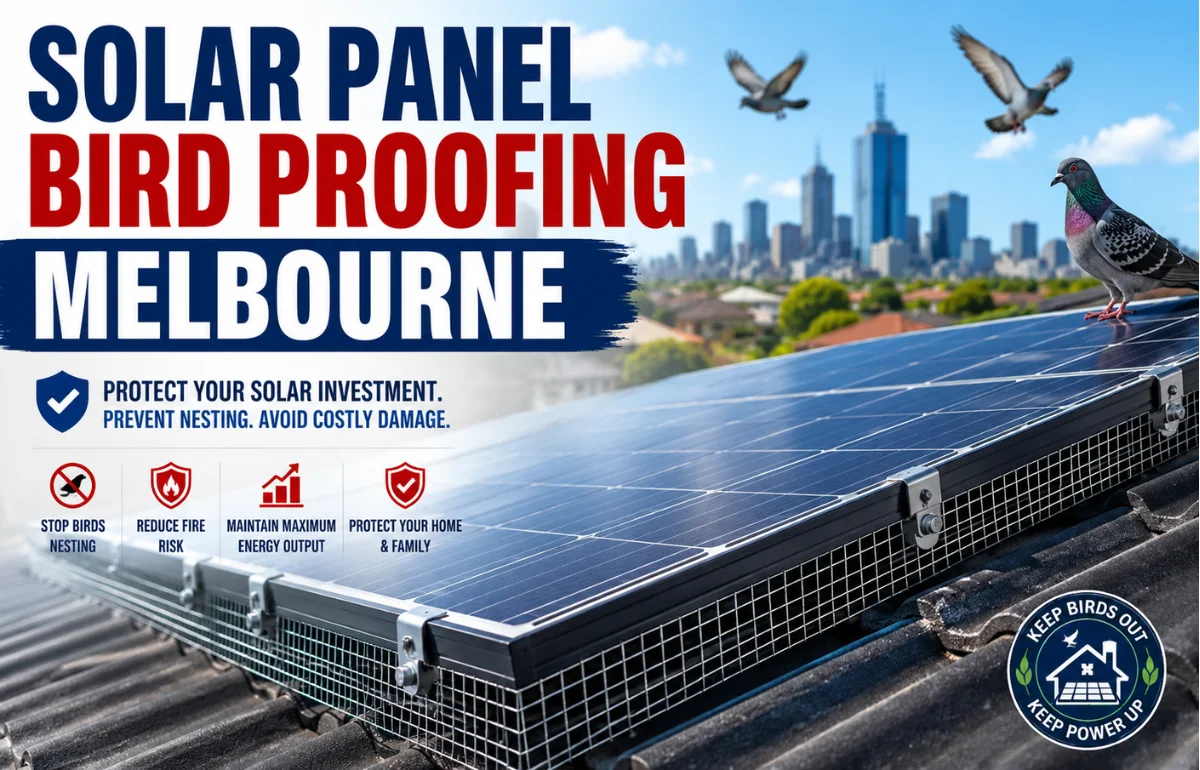
Solar panel bird proofing Melbourne is the process of installing physical barriers — typically stainless steel mesh or spikes — around the edges of rooftop solar panels to prevent birds, especially pigeons, from nesting or roosting underneath them. In Melbourne’s suburban landscape, where solar adoption rates are among the highest in Australia, this has become one of the most quietly urgent home protection measures a property owner can take. The goal is straightforward: keep birds out of the warm, sheltered gap between your panels and the roof, so your solar investment stays clean, safe, and working at full capacity.
I’ve seen firsthand what happens when this is ignored. A property I visited in Melbourne’s western suburbs had pigeons nesting under three rows of panels for two seasons straight. By the time the owner called for help, there was a fire hazard from dried nesting debris, damaged wiring insulation, and a significant drop in energy output. What could have been a few hundred dollars in prevention had turned into a repair bill that hurt.
Why Birds Are Drawn to Solar Panels in the First Place
Understanding bird behaviour around solar panels matters more than most people realise. Pigeons are not random in their nesting choices — they’re strategic. The cavity between a solar panel and a tiled roof offers everything a nesting bird looks for: elevation, warmth radiated from the panel surface, protection from wind and rain, and a natural shield against predators like hawks.
Melbourne’s climate makes this worse. During the cooler months from May through August, the thermal warmth that panels absorb and radiate downward becomes particularly attractive. Breeding cycles in urban pigeon populations peak in late winter and spring — right when Melbourne homeowners are relying most heavily on their solar systems to offset energy costs.
It’s also worth knowing that once a pair of pigeons selects a nesting site, they will return to it season after season. Even after the birds are removed, the pheromone traces and nest debris left behind act as a signal to the same pair and other birds. This is why a one-time bird removal without proper proofing almost never solves the problem permanently.
The Real Damage Birds Do to Solar Panels
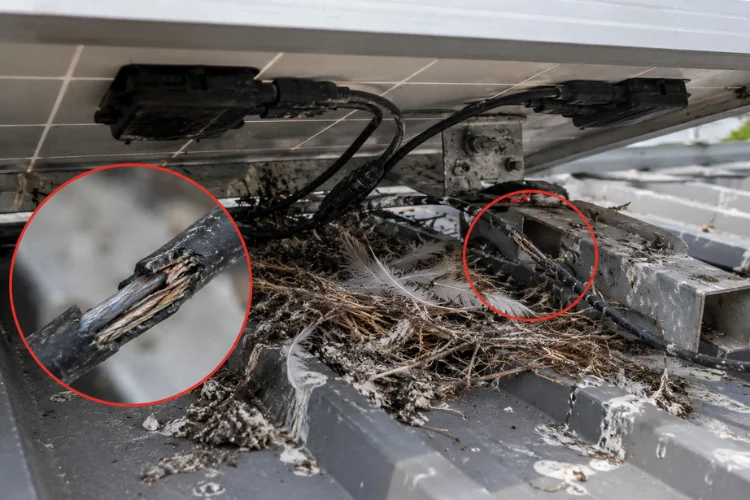
This is where many homeowners underestimate the problem. Bird damage to solar installations isn’t just cosmetic.
Wiring and Component Damage
The underside of a solar panel system contains DC wiring, connectors, junction boxes, and inverter cables that run between panels. Nesting birds pull at insulation material for nesting purposes, and their activity — combined with the abrasive nature of dried droppings — can strip wire insulation over time. Exposed DC wiring is a serious fire risk. In a worst-case scenario, this can cause arcing faults that are notoriously difficult to detect and potentially catastrophic.
Reduced Energy Output
Bird droppings on the surface of panels cause what solar technicians call partial shading. Even a small patch of droppings over one cell in a panel can drag down the output of an entire string of panels in systems that aren’t fitted with micro-inverters or DC optimisers. Studies from European solar research institutions have found that heavy soiling from bird activity can reduce system output by 15–30%, depending on the configuration.
Roof and Gutter Damage
Nesting debris — twigs, feathers, grass, egg shells — is often pushed by rain into gutters, causing blockages and water overflow. Pigeon droppings are highly acidic, with a pH that attacks roof tile coatings, mortar, and the zinc coatings on guttering over time.
Health Hazards
Bird droppings carry a range of pathogens, including Cryptococcus neoformans (the fungus responsible for Cryptococcal Meningitis), Salmonella, Histoplasma, and various mites. When dry droppings break down into airborne particles near roof-level air vents or open windows, the health risk to household occupants is real — particularly for children, elderly residents, and anyone with respiratory conditions.
What Solar Panel Bird Proofing in Melbourne Actually Involves
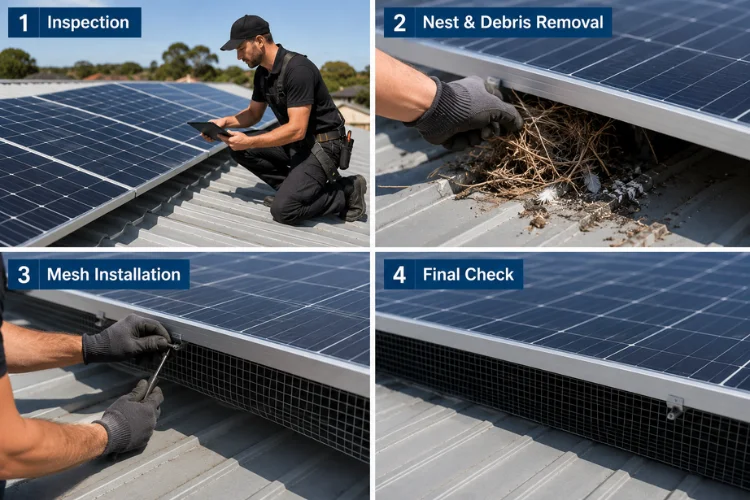
Professional solar panel bird proofing in Melbourne is not simply stapling mesh to a roof. When done properly, it follows a structured process that protects both the roof and the solar system.
Initial Inspection
A qualified technician first assesses the roof layout, the number and arrangement of panels, and the degree of existing bird activity. They look for entry points, signs of nesting, visible droppings, and any damage to wiring or components that needs to be addressed before proofing is installed.
Nest and Debris Removal
Any existing nests, eggs, feathers, and droppings need to be cleared before the mesh is installed. This is usually done with a combination of leaf blowing, careful manual removal, and targeted cleaning of panel undersides. In some cases — particularly where droppings have accumulated over multiple seasons — a full panel cleaning and sanitisation may be recommended as a separate service. I always tell people: don’t skip this step. Installing mesh over an active or recently vacated nest locks debris in and can worsen fire and hygiene risks.
Mesh or Spike Installation
The most commonly used solution in Melbourne for residential properties is UV-resistant, powder-coated galvanised steel mesh (often referred to as solar mesh or bird barrier mesh). This is cut and shaped to run along all four sides of each panel row and secured to the panel frame using purpose-made, non-invasive clips.
It is critical that no drilling is done into the panel frame itself. Most solar panel manufacturers include warranty clauses that are voided if the frame is drilled or mechanically altered. Professional installers use clip systems specifically designed for the most common panel rail profiles — including Suntech, REC, LG, Jinko, Canadian Solar, and others.
Bird spikes are occasionally used along ridge caps, fascias, and chimney areas where pigeons roost outside the panel footprint. These are more limited as a standalone solution for under-panel nesting, but work well as a complementary perimeter deterrent.
Post-Installation Check
A responsible installer checks that all edges are sealed, there are no gaps wider than approximately 25mm (the space through which a juvenile pigeon can squeeze), and that the mesh sits flush without creating any new debris catchment areas. They should also confirm that airflow beneath the panels remains unrestricted, as thermal ventilation underneath is important for panel efficiency and longevity.
Comparing Bird Proofing Solutions: What Works and What Doesn’t
Not all bird proofing methods deliver the same results. Here’s a direct comparison of the most common approaches:
The clear winner for under-panel protection is professionally installed stainless steel mesh. Everything else either degrades too quickly in Melbourne’s UV environment, lacks coverage at edges and corners, or risks warranty issues through improper attachment.
How Much Does Solar Panel Bird Proofing Cost in Melbourne?
Pricing varies based on a few factors: roof pitch and accessibility, the number of panels, the presence of existing nesting, and whether cleaning is included.
As a general guide for Melbourne residential properties:
- Small systems (6–10 panels, single-storey, easy access): roughly $350–$600
- Medium systems (12–20 panels, single or double-storey): roughly $500–$900
- Large systems (20+ panels, complex roof layout or steep pitch): $800–$1,400+
These are installation-only figures. If existing nests need removal and the area beneath panels requires cleaning and sanitisation, that typically adds $100–$250, depending on severity.
What I tell anyone considering the expense: a single solar panel inverter replacement can cost $800–$2,000. A wiring fault caused by bird damage that isn’t caught early can cascade into damage to the inverter, the switchboard, and in extreme cases the roof structure. The cost of bird proofing is, in most cases, recovered through avoided damage within 12–24 months — and then it pays for itself in maintained panel efficiency year after year.
The Melbourne Context: Solar Adoption and Bird Pressure
Victoria has one of the highest residential solar penetration rates in Australia, with over 30% of eligible homes now carrying rooftop PV systems. Melbourne’s suburban sprawl — particularly growth corridors in the north and west like Craigieburn, Tarneit, Wyndham Vale, and Point Cook — features dense rows of newer homes, many of them built with 6.6kW to 10kW systems as standard inclusions.
These newer estates also tend to have higher urban pigeon populations because construction activity disrupts natural habitats and concentrates food sources. The combination of widespread solar adoption and high bird pressure in the same postcodes is why solar panel bird proofing has grown significantly as a service category in Melbourne over the past five years.
Older, established suburbs — particularly in Melbourne’s inner north and east — face a slightly different challenge. Older roof profiles and more mature trees nearby mean that not just pigeons but also starlings and mynas may be involved. These smaller birds can enter gaps that standard pigeon mesh might not block, so mesh gauge selection matters and should be assessed by an experienced technician.
DIY vs. Professional Installation: An Honest Assessment
I understand the appeal of saving money with a DIY approach. Hardware stores stock bird deterrent kits, shade cloth, and basic plastic spikes. But there are real reasons why DIY bird proofing for solar panels tends to fail within a season or two.
First, working on a roof with solar panels requires proper safety equipment and roof access protocols. Falls from residential rooftops are one of the leading causes of serious injury in home improvement contexts. This isn’t fear-mongering — it’s a genuine workplace health consideration that even experienced tradespeople plan carefully around.
Second, DIY materials rarely offer the mesh gauge, UV resistance, and edge-sealing precision that a professionally installed system provides. Birds will find the gaps. A partial barrier that leaves even one accessible corner can render the entire installation useless within weeks.
Third — and this is the point most people miss — improper installation can void your solar panel warranty. If you’re using staples, cable ties, zip ties, or any method that places pressure on or penetrates the panel frame, you may be jeopardising your manufacturer’s warranty and any performance guarantee from your installer.
If you’re the type of person who prefers to understand what’s involved before calling a professional, you can learn home improvement skills through structured guides that cover everything from roof safety to understanding solar system components, which genuinely helps you make more informed decisions even when you’re hiring someone else.
Choosing the Right Solar Panel Bird Proofing Service in Melbourne
Not every company offering this service has the same level of experience or product quality. Here’s what to look for when evaluating providers:
Check that they use stainless steel or powder-coated galvanised mesh — not plastic or shade cloth variants. Ask for the product specification directly.
Confirm they use clip-based attachment systems — no drilling, no self-tapping screws into panel frames.
Ask whether they include nest removal and cleaning or whether that is quoted separately. A transparent quote should cover all phases.
Look for a workmanship guarantee — reputable providers typically offer a 12-month minimum guarantee on their installation, with many offering longer coverage on the mesh itself.
Check for liability insurance and, ideally, working at heights certification — anyone working on your roof should carry both.
Ask about their experience with your specific panel brand — some rail profiles require specific clip types, and installers who work across a wide range of brands will be more familiar with these variations.
For broader home protection and maintenance decisions, our home improvement services can help you connect with vetted professionals across a range of residential service categories, including solar protection.
Signs You Need Bird Proofing Right Now
If any of the following are present, don’t delay:
Cooing or scratching sounds coming from your roof, particularly in the early morning, are almost always birds in the nesting cavity under panels. Feathers, twigs, or dry grass appearing in gutters or downpipes — even in small amounts — indicate active nesting activity. A drop in solar output that your inverter monitoring app can’t explain through weather alone is worth investigating. Visible droppings accumulating on the roof surface, particularly concentrated around panel edges, mean birds are roosting regularly. Any evidence of damaged or frayed wiring at the panel junction boxes means a professional needs to assess the system immediately.
A Note on Wildlife Regulations in Victoria
It’s worth knowing that under the Wildlife Act 1975 (Victoria), most native birds — including common mynas (in some interpretations), starlings, and house sparrows — are classified differently from European pigeons (Columbia livia), which are considered pest species. Native species like rainbow lorikeets, rosellas, and magpies that occasionally perch near solar panels cannot be trapped, relocated, or harmed without appropriate permits.
This matters practically: if the bird activity at your property involves native species rather than pigeons, the approach to deterrence may need to differ. A professional service provider should be able to identify the species involved and advise accordingly.
Frequently Asked Questions
How long does solar panel bird proofing last in Melbourne?
Professionally installed stainless steel mesh typically lasts 10–15 years or more, and many products carry a manufacturer’s warranty of 10 years against UV degradation and corrosion.
Will bird proofing void my solar panel warranty?
No — provided the installation uses non-invasive clip systems and no drilling is done into the panel frame. Always confirm this with your provider before work begins.
How do I know if birds are nesting under my solar panels?
Early signs include scratching or cooing sounds from the roof in the morning, feathers and debris in gutters, concentrated droppings around panel edges, and unexplained drops in system energy output.
Can I install bird proofing mesh myself?
Technically, yes, but the risks are significant — roof falls, improper installation that leaves gaps, and the potential to void your panel warranty mean that professional installation is strongly recommended for most homeowners.
How often should I have my solar panels inspected for bird activity?
An annual inspection is a reasonable baseline for most Melbourne properties. Properties in high bird-pressure suburbs or those with previous nesting history may benefit from a check every six months, particularly before and after the main pigeon breeding season (August to November).
Where to Go From Here
Solar panel bird proofing in Melbourne is not a luxury maintenance item — it’s a practical investment in the longevity and safety of a system that most households are relying on to reduce energy costs over 20–25 years. The cost of professional bird proofing is modest relative to the value of the solar system it protects, and the window to act early is always shorter than it seems once birds have established themselves.
If your system is unprotected, or if you’ve noticed any of the warning signs covered here, the right move is to arrange an inspection before the next nesting season begins. A thorough assessment costs nothing and gives you an accurate picture of what’s needed — and what it will cost to do it properly.
More Solat Panel Resources
- Best Time to Use Solar Power: 7 Ways to Save More
- Solar Battery Cost Australia: 2026 Price Guide & Savings
- Solar Panel Maintenance Cost: 7 Smart Ways to Save

I’m Salman Khayam, the founder and editor of this blog, with 10 years of professional experience in Architecture, Interior Design, Home Improvement, and Real Estate. I provide expert advice and practical tips on a wide range of topics, including Solar Panel installation, Garage Solutions, Moving tips, as well as Cleaning and Pest Control, helping you create functional, stylish, and sustainable spaces that enhance your daily life.