
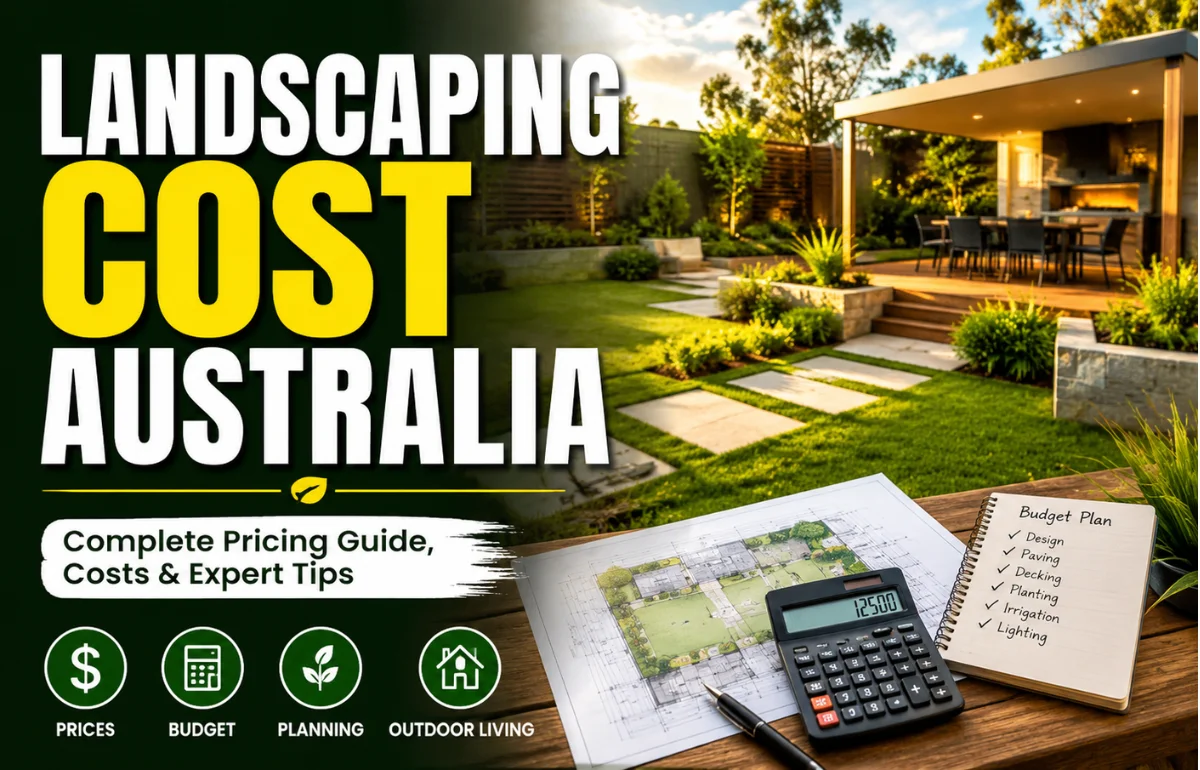
If you’ve been searching for a straight answer on landscaping cost in Australia, here it is: most residential landscaping projects run anywhere from $5,000 to $50,000+, depending on the size of the outdoor space, the complexity of the design, and the materials involved. For smaller jobs — think a garden tidy-up, new turf, and basic planting — you might spend as little as $2,000 to $5,000.
Full backyard transformations with decking, retaining walls, irrigation, and bespoke paving can push well past $80,000 in major cities. The average landscaping cost in Australia sits around $10,000 to $25,000 for a mid-size residential backyard. Those numbers shift based on where you live, who you hire, and what you actually want built.
I’ve spoken with homeowners across Sydney, Melbourne, Brisbane, and Perth about their experiences pricing up landscaping projects — and the number one thing they all say is: “I had no idea it would be that different from quote to quote.” This article breaks down exactly why that happens, and what you can do to budget realistically.
Jump to:
ToggleWhy Landscaping Costs in Australia Are Harder to Pin Down Than You’d Think
The challenge with landscaping cost in Australia isn’t a lack of information — it’s that most guides give you a range and leave you to figure out where your project sits within it. A “$5,000 to $50,000” range is technically accurate but practically useless if you don’t understand what moves the needle.
Here’s what I’ve found actually drives the variation:
Site conditions are the silent budget killer. A flat, well-drained block is cheap to work on. A sloping block in the Sydney Hills District or Perth’s outer suburbs? That’s excavation, compaction, drainage engineering, and potentially council permits — all before a single plant goes in the ground. I’ve seen sloping block prep add $8,000 to $15,000 to a project that would have been $20,000 on a flat lot.
Labour rates vary significantly by state. In Sydney and Melbourne, landscapers typically charge $75 to $130 per hour. In Brisbane and Adelaide, you’re looking at $60 to $90 per hour. Regional areas can be cheaper in theory, but tradespeople are in shorter supply, and travel costs often close the gap.
Material sourcing and timing matter more than people realise. Sandstone paving sourced locally in New South Wales is cheaper than the same look achieved with imported bluestone in Queensland. Native plants adapted to your climate are not only more affordable upfront, they dramatically reduce long-term maintenance costs — something many landscape quotes conveniently don’t factor in.
Average Landscaping Costs by Project Size
Rather than a single average, it’s more useful to think in project tiers. Here’s what the Australian market looks like in 2025:
- Small projects ($2,000 – $8,000): This covers garden clean-ups, lawn installation or re-turfing, basic planting, mulching, and minor irrigation tweaks. If you’re refreshing an existing garden rather than building from scratch, this is your range.
- Medium projects ($10,000 – $30,000): The most common residential scope. Expect turf, garden beds with planting schemes, basic paving or a small deck, automated irrigation, and boundary planting. This is where most suburban backyards in Australia are.
- Large or complex projects ($35,000 – $100,000+): Full outdoor transformations: pools, custom decking, pergolas, outdoor kitchens, feature retaining walls, lighting systems, and complete landscape design. In premium suburbs of Sydney, Melbourne, or Perth, projects regularly exceed $100,000.
- Landscaping cost per square metre: For standard softscaping and basic hardscaping, expect $40 to $100 per m². Premium installations with high-end materials run $150 to $300+ per m². Landscape designers often use this metric to scope a project early, before detailed quoting.
Landscaping Feature Costs: A Comparison Table
This is where the money goes. When you break down landscaping cost in Australia by individual feature, the numbers look very different from a single project quote. Here’s a realistic breakdown across Australia in 2025:
| Feature | Low Estimate | High Estimate | Notes |
|---|---|---|---|
| Turf installation (per m²) | $20 | $40 | Varies by grass variety and site prep |
| Garden beds (per bed) | $150 | $800+ | Size, edging, plants, and soil quality |
| Retaining walls (per linear m) | $200 | $500+ | Material choice (concrete, timber, stone) is the main variable |
| Paving (per m²) | $60 | $200+ | Concrete pavers vs. natural stone |
| Timber decking | $3,500 | $15,000+ | Size, timber species, and substructure |
| Pergola or alfresco structure | $5,000 | $30,000+ | Open vs. roofed; materials vary |
| Irrigation system | $1,500 | $6,000 | Area size and controller type |
| Garden lighting | $800 | $5,000+ | Low-voltage vs. mains-powered |
| Outdoor kitchen | $8,000 | $40,000+ | Appliances, materials, plumbing, and gas |
| Landscape design fee | $1,500 | $6,000 | Depends on designer’s level of detail |
| Water feature | $1,200 | $10,000+ | Pre-built vs. custom stone or concrete |
| Pool (in-ground) | $35,000 | $120,000+ | Shape, finish, size, and associated fencing |
One thing this table doesn’t capture: the cost of combining features. A deck and pergola quoted separately may overlap in labour when built together, saving 10–15%. A good landscaper will account for this. A less experienced one might not.
State-by-State: How Landscaping Prices Differ Across Australia
This is a gap I rarely see covered properly, so I want to be specific. Landscaping cost in Australia doesn’t follow a single national rate — where you live can shift your budget by 20–30% or more.
- New South Wales (Sydney metro): Sydney consistently posts the highest landscaping costs in the country. Labour is expensive, and in heritage or bushfire-affected zones, council requirements add compliance costs. A mid-tier backyard makeover in Western Sydney will typically run $18,000 to $35,000. Add waterfront views or a premium suburb, and that jumps fast.
- Victoria (Melbourne metro): Melbourne’s landscaping market is competitive, with a large pool of qualified designers and contractors. That competition keeps mid-market pricing reasonable — $15,000 to $30,000 for a medium backyard. Melbourne homeowners tend to invest heavily in outdoor entertaining areas, which pushes average project values up.
- Queensland (Brisbane and surrounds): Brisbane’s subtropical climate means plant costs can be lower (things grow fast and readily), but pest management and drainage requirements are more significant. A comparable project to Melbourne might come in 10–15% cheaper on labour, but with additional costs for drainage and insect-resistant materials. North Queensland projects involving cyclone-rated structures add a meaningful premium.
- Western Australia (Perth): Perth is an interesting market. Land sizes are generally larger, which means outdoor spaces are bigger and the project’s scope increases accordingly. Landscaping in Perth often starts at $15,000 for a small suburban yard and can easily reach $80,000 to $150,000 for a full block transformation. Water scarcity makes irrigation design particularly important, and local landscapers here often prioritise water-wise planting as standard.
- South Australia (Adelaide): Adelaide tends to sit slightly below Sydney and Melbourne on labour rates, but material sourcing can add costs for speciality items. A medium landscaping project in Adelaide typically runs $12,000 to $25,000.
The 5–10% Rule — and When It Doesn’t Apply
You’ve probably read that you should spend 5–10% of your property’s value on landscaping. That rule is a reasonable starting benchmark, but it has real limits.
If your home is worth $1.2 million and you’re landscaping a 60m² courtyard, spending 5% ($60,000) would be wildly overcapitalising. If you’re in a $500,000 property on a 700m² block with a completely bare yard, $25,000 (5%) might actually be tight.
A better approach: think about what your outdoor space is actually for. Entertaining, privacy, children’s play, resale appeal, or low-maintenance retirement living all call for different investments. A family in Brisbane with three kids and a dog needs a very different landscape from a couple in Melbourne preparing a property for sale.
Resale return on landscaping investment in Australia averages around 10–12% of total property value when done well, according to industry data. That means a $25,000 landscaping cost in Australia on a $700,000 home could theoretically add $70,000 to $84,000 in value — but only if the design is right for the market.
Hidden Costs Most Quotes Won’t Tell You About
This is the section I wish someone had written before I started asking around. These are the costs that regularly catch Australian homeowners off guard — and that rarely appear in a standard landscaping cost Australia quote.
Soil remediation. Clay-heavy soil in most of Melbourne and many Sydney suburbs needs amendment before planting. Expect $500 to $2,500 for soil preparation alone on a medium block.
Tree removal. If your project requires clearing existing trees, factor in $800 to $2,500 per tree, depending on size and location. Add another $300 to $700 for stump grinding. Some councils require permits for the removal of established trees.
Council permits. Retaining walls over 700mm typically require building approval in most Australian states. Pools almost always require approval. Budget $500 to $2,000 for permit application costs, plus compliance costs if drawings are required by a structural engineer.
Waste removal. Landscaping generates significant green waste, soil, and rubble. Skip bin hire runs $300 to $600 per bin; large projects need multiple bins or a waste removal contractor.
Post-project establishment care. New planting needs water, sometimes staking, and often a follow-up visit at 6 weeks to adjust or replace plants that haven’t taken. Many quotes don’t include this. Ask specifically.
DIY vs. Hiring a Professional: Where to Draw the Line
There are parts of a landscaping project that genuinely suit a capable DIYer: mulching, basic planting, painting fences, and laying simple garden edging. These tasks can save $500 to $2,000 off a quote without requiring trade skills.
Then there are the parts where DIY is a false economy. Retaining walls that fail structurally are expensive to rebuild and can create safety and drainage issues. Irrigation systems installed without proper pressure testing waste water and damage plants. Electrical garden lighting requires a licensed electrician, regardless of how handy you are.
My honest take: if your project involves any structural elements, drainage engineering, or a total area over about 100m², hire a professional. For those wanting to build their own knowledge before jumping into a full project, exploring some property improvement training can help you understand what to look for in a landscaper’s quote and avoid costly mistakes.
The middle ground — doing some prep work yourself before the tradesperson arrives — is often the smartest financial decision. Clearing the existing garden, sourcing your own plants, or doing your own painting after the hard landscaping is done can meaningfully reduce the total cost without putting structural work at risk.
How to Get Accurate Quotes (And Spot the Red Flags)
Getting three quotes is standard advice. Here’s what most articles don’t tell you: quotes are only useful for comparison if they’re scoped the same way.
When you request a quote, provide every landscaper with the same written brief. Include: the area in square metres, what existing features are staying, what you want removed, your priority features in order, and your budget range. Yes, share your budget. Landscapers who know your ceiling can design for it rather than guessing.
Red flags in a landscaping quote:
- No breakdown between labour and materials
- No reference to site preparation costs
- A suspiciously low price with vague line items
- No mention of council compliance or permits for walls or pools
- Payment terms that require more than 50% upfront
Green flags: detailed specifications for materials (including brands and grades), a staged payment schedule tied to project milestones, and references or a portfolio of completed work in your area.
If you’re looking for broader guidance on managing this kind of investment across multiple aspects of your home, there are some excellent property improvement solutions that can help you approach the project with a clearer strategy rather than simply reacting to quotes.
Landscaping Maintenance Costs: The Long Game
A landscaping project isn’t a one-time spend. When people research landscaping cost in Australia, they tend to focus on the build — but the ongoing cost of maintaining what you’ve built matters just as much, especially if you’re on a tight budget.
Lawn mowing and basic garden maintenance: $80 to $150 per visit, depending on size and frequency. Monthly professional maintenance on a medium backyard typically costs $800 to $1,500 per year.
Native and drought-tolerant planting schemes can reduce watering costs by 30–50% compared to exotic species. This is worth raising with your landscaper before finalising a plant selection — the difference in water bill over five years can easily exceed the cost difference in plants.
Irrigation systems, when properly installed and maintained, reduce long-term water costs and labour. An annual irrigation service inspection runs $100 to $250 and prevents the slow leaks and controller failures that waste water silently over months.
Getting the Best Value From Your Landscaping Budget
After talking to dozens of homeowners and several experienced landscapers across Australia, here’s what the data and the stories consistently show about getting the best landscaping cost in Australia for your money:
Projects staged over two or three years cost more in total but are easier to budget for and easier to adjust if your priorities change. Projects done all at once benefit from combined labour efficiency. Neither is universally better — it depends on your financial position and how urgent the transformation is.
Investing in quality landscape design upfront — even at $2,000 to $5,000 — almost always saves money overall. A good plan avoids expensive changes mid-project and ensures everything from drainage to planting to hardscaping works together.
And perhaps most practically: book your landscaper in the off-season (late autumn to winter) if your climate allows. Many landscapers offer better pricing in quieter periods, and availability means more care and attention to your project.
Frequently Asked Questions
How much does landscaping cost per square metre in Australia?
Standard residential landscaping runs $40 to $100 per m² for combined soft and hard landscaping; premium installations with high-end stone or complex features can reach $200 to $300+ per m².
What is a realistic budget for a full backyard landscaping project in Australia?
For a complete mid-size backyard (around 150–200m²), expect $15,000 to $35,000 for a quality result that includes turf, planting, paving, and some hardscaping features.
Do I need council approval for landscaping work in Australia?
Generally, yes — for retaining walls over 700mm, pools, significant earthworks, or removal of protected trees. Requirements vary by state and local council, so check before starting any structural work.
How long does a typical landscaping project take in Australia?
Small projects take one to two weeks. Medium projects typically run four to eight weeks. Large-scale transformations involving pools, structures, and complex design can take three to six months from planning to completion.
Is landscaping worth the investment for resale value?
Yes — well-executed landscaping consistently delivers strong returns at sale time. Australian real estate data suggests that quality outdoor improvements can add 10–15% to a property’s perceived value, though the return varies by suburb and market conditions.
Wrapping Up
Landscaping cost in Australia varies enormously — and understanding why that is puts you in a far stronger position than simply collecting quotes and hoping for the best. Know your site conditions, be clear on your priorities, plan for the hidden costs, and invest in good design early.
Whether you’re budgeting $5,000 for a garden refresh or $80,000 for a complete outdoor transformation, the fundamentals are the same: get detailed quotes, compare like-for-like, and work with professionals who understand both your climate and your goals.
The outdoor space you create has the potential to meaningfully improve how you use and enjoy your home every day — and that’s an investment worth making thoughtfully.
Other Resources

I’m Salman Khayam, the founder and editor of this blog, with 10 years of professional experience in Architecture, Interior Design, Home Improvement, and Real Estate. I provide expert advice and practical tips on a wide range of topics, including Solar Panel installation, Garage Solutions, Moving tips, as well as Cleaning and Pest Control, helping you create functional, stylish, and sustainable spaces that enhance your daily life.