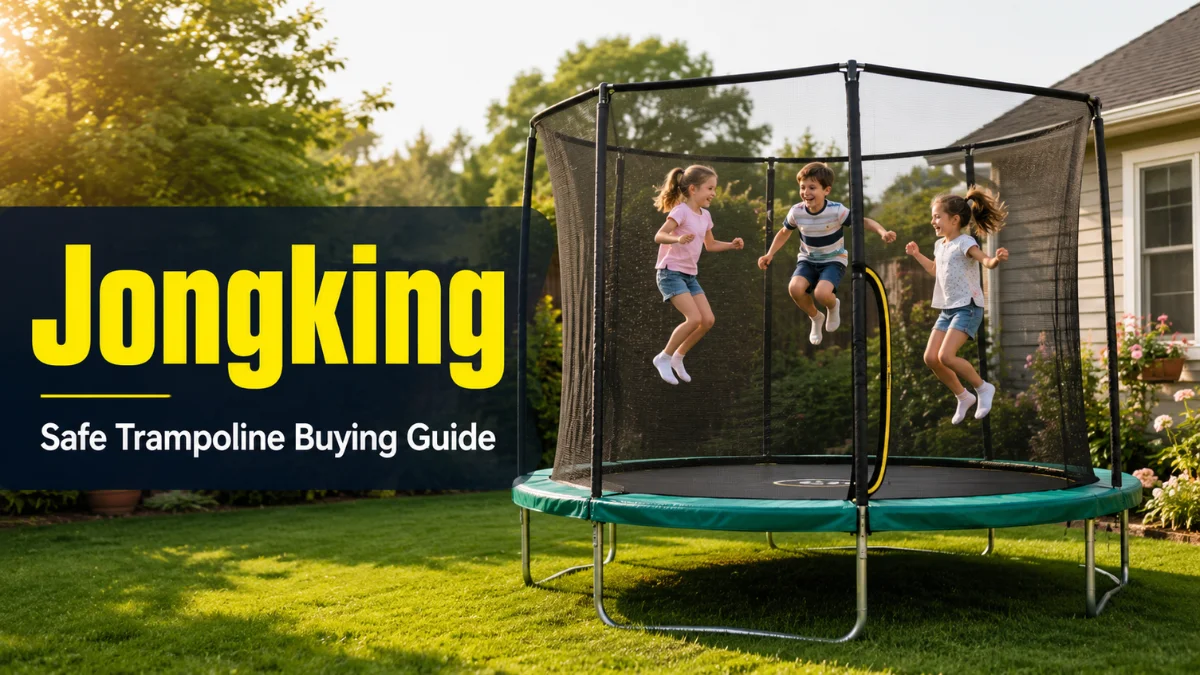
When I see people searching for Jongking, I usually understand the intent before I worry about the spelling. Most searchers are not looking for a dictionary definition. They are trying to find a strong, safe, and enjoyable trampoline that feels similar to a JumpKing-style outdoor trampoline. The word “Jongking” may be typed as a brand variation, a spelling mistake, or a product-style keyword, but the buying goal is clear: families want a backyard trampoline that gives children fun, supports active movement, and does not fall apart after one season.
That is why I would not treat Jongking as a meaningless keyword. I would treat it as a real buyer-intent search. People using this term are often comparing trampoline size, safety net quality, frame strength, spring performance, padding thickness, weather resistance, and price. Some are parents buying their first trampoline. Others may already own one and want replacement parts, care advice, or safety tips. Either way, the keyword points toward a simple question: what makes a trampoline worth buying?
A trampoline can look exciting in photos, but the real value is hidden in its construction. A weak frame, thin padding, poor stitching, or cheap enclosure net can turn a fun backyard purchase into a regret. On the other hand, a well-built trampoline can become one of the most-used outdoor items in a family home. Children get fresh air. Parents get a safer way to encourage movement. The backyard becomes more useful instead of sitting empty.
In this guide, I’ll explain what Jongking means, why people search for it, what features matter most, and how I would compare trampolines before buying one.
What Does Jongking Mean?
Jongking is best understood as a search term connected to trampolines, especially JumpKing-style trampolines and similar backyard bouncing equipment. Many people type product names quickly, misremember brand spellings, or search by sound. That is common with outdoor equipment, toys, tools, appliances, and sports gear. Search engines often connect these words with the closest product intent.
So, when someone types Jongking, they are usually not asking for a random word meaning. They are most likely looking for trampoline information. That may include trampoline reviews, buying guides, safety features, replacement parts, outdoor play equipment, or family fitness ideas.
I would describe Jongking as a user-intent keyword. It tells you what the person wants, even if the spelling is not perfect. The intent is connected to backyard fun, safe bouncing, strong trampoline frames, spring systems, enclosure nets, weatherproof padding, and family-friendly outdoor activity.
This matters because online searches are not always clean and exact. A shopper may type Jongking trampoline because they heard the name from a friend. Another may type it after seeing a product listing somewhere. Someone else may mean JumpKing, but enter the spelling wrong. The spelling may vary, but the need is still practical.
They want to know whether this type of trampoline is safe, strong, and worth the money.
Why People Search for Jongking Trampolines
When I look at a keyword like Jongking, I do not only focus on the word itself. I focus on the reason behind the search. People searching this term are usually in one of three groups.
The first group is still learning. They may not know much about trampoline brands, sizes, weight limits, or safety enclosures. They want a simple explanation before they compare products.
The second group is ready to buy. These people may already have decided that they want a backyard trampoline. Now they need to compare frame materials, bounce quality, safety nets, padding, and price.
The third group already owns a trampoline. They may be looking for maintenance tips, parts, weather protection advice, or safety recommendations.
That makes Jongking a useful keyword for content because it covers the full buyer journey. It can attract beginners, serious shoppers, and existing trampoline owners. But the content must be genuinely helpful. A thin article that only repeats “Jongking trampoline” again and again will not help anyone. A strong article should explain the real features that affect safety, comfort, durability, and long-term value.
Jongking Trampoline Features That Matter Most
A trampoline has many parts, but not all parts carry the same weight in the buying decision. Some features affect comfort. Some affect safety. Some affect how long the trampoline will last in outdoor weather.
If I were buying a Jongking-style trampoline, I would look closely at the frame, springs, jumping mat, safety enclosure, padding, ladder, anchor system, and weather resistance. These are the parts that decide whether the trampoline feels stable or cheap.
Frame Strength
The frame is the backbone of any trampoline. If the frame is weak, nothing else can fully save the product. A strong trampoline frame usually uses galvanized steel because it resists rust better than untreated metal. This matters because trampolines live outside. They face rain, sunlight, dust, temperature changes, and regular movement.
A poor-quality frame may bend, wobble, or rust too quickly. That creates safety concerns and shortens the trampoline’s life. A stronger frame gives the trampoline better balance, especially when children jump often.
I would look for thick steel tubing, a stable leg design, a rust-resistant coating, and solid connection points. If the frame looks thin or poorly joined, I would not trust it for long-term use.
Spring Quality
Springs control the bounce. Many buyers focus only on trampoline size, but spring quality can change the whole experience. Good springs provide smoother energy return. Poor springs can feel stiff, uneven, or weak.
A trampoline with strong springs usually gives a more controlled bounce. That does not mean higher bounce is always better. For children, controlled bouncing is safer than wild bouncing. The goal is not just excitement. The goal is balance, comfort, and predictable movement.
When comparing Jongking trampoline options, I would check the spring count, spring length, material quality, and corrosion resistance. Rusty or weak springs can reduce bounce quality and create safety issues over time.
Jumping Mat Quality
The jumping mat carries the user’s weight again and again. It must handle repeated stretching, impact, sunlight, and weather exposure. A cheap mat may fade, weaken, or tear faster than expected.
A good trampoline mat should be tightly woven, UV-resistant, and firmly stitched around the edges. The stitching matters because the springs pull from the mat constantly. If the stitching fails, the trampoline becomes unsafe.
I would not judge the mat only by appearance. A clean black jumping surface can look fine in product photos, but durability depends on material quality and edge reinforcement.
Safety Enclosure
The safety enclosure is one of the most important features for families. I would not buy a trampoline for children without a secure enclosure net. The net helps keep jumpers inside the trampoline area and reduces the chance of falling off the edge.
A good enclosure should be tall enough, firmly attached, and made from durable mesh. The entrance should close securely, usually with a zipper, clips, or an overlap design. If the entrance stays loose, children may accidentally bounce toward an opening.
Parents often underestimate enclosure quality. They assume any net is fine. That is a mistake. A weak net can tear, sag, or detach. A strong net adds real safety value.
Padding Thickness
Padding covers the springs and frame edges. This area is easy to ignore until someone lands near the edge. Thick padding protects jumpers from metal parts and reduces impact risk.
Thin padding may look acceptable at first, but it can flatten quickly. Once padding loses shape, it no longer protects properly. Weather-resistant padding is better because outdoor trampolines face sunlight and rain.
For a Jongking-style trampoline, I would check whether the padding fully covers the springs, whether it ties down securely, and whether the outer material feels durable. Loose padding can shift during jumping, which defeats its purpose.
Ladder and Entry Design
A trampoline ladder sounds simple, but it matters for children. Without a proper ladder, children may climb onto the frame, pull on the net, or use unsafe objects to get in. A sturdy ladder makes access easier and safer.
The entry design also matters. A zippered net entrance should be easy to open and close, but not so loose that it stays open during play. Some families overlook this detail, then struggle with daily use.
A trampoline that is easy to enter, exit, and close properly is more likely to be used safely.
Weather Resistance
Outdoor trampolines do not live in perfect conditions. They face heat, rain, wind, dust, and sometimes snow, depending on location. Weather resistance is not a luxury feature. It affects product life.
I would look for galvanized steel, UV-resistant jumping mat, weatherproof padding, and strong net stitching. If the trampoline will stay outside year-round, weather resistance becomes even more important.
A cheap trampoline may save money at purchase, but if the mat cracks, the net tears, or the frame rusts quickly, the real cost becomes higher.
Jongking Trampoline Feature Comparison Table
Here is a simple comparison table I would use before choosing a Jongking-style trampoline.
This table makes the buying process more practical. Instead of choosing by price or size alone, it helps compare the parts that affect safety and long-term value.
Jongking Trampolines for Family Fitness
A trampoline is often sold as outdoor fun, but it can also support family fitness. Children usually do not think of bouncing as exercise. They see it as play. That is the advantage. Movement becomes natural instead of forced.
Jumping can support balance, coordination, leg strength, rhythm, and body control. It also gives children a reason to go outside. In homes where screens dominate free time, a trampoline can make outdoor activity more attractive.
Adults can also use a trampoline for gentle movement, depending on the size and weight capacity. Light bouncing may help with coordination and low-impact activity. Of course, every person should use common sense and stay within safe limits. A trampoline is not a gym replacement, but it can make movement more enjoyable.
I like the idea of a trampoline as a family activity because it creates shared time. Parents can supervise while children play. Siblings can take turns. Friends can gather outdoors. The backyard becomes a place people actually use.
Jongking and Child Development
Children develop through movement. Running, climbing, jumping, balancing, and landing all teach the body how to coordinate. A trampoline can support this development when used safely.
Bouncing helps children understand timing. They learn how their body moves in the air and how to land with control. It can also build confidence. A child who feels nervous at first may slowly become more comfortable with movement.
That said, supervision is not optional. A trampoline should not become a place where children do whatever they want without rules. Safe use matters. One jumper at a time is usually the safest approach, especially for younger children. Rough play, flips, pushing, and bouncing near the edge increase risk.
A Jongking-style trampoline can support an active childhood, but the adults in the home must create safe habits from day one.
How to Choose the Right Jongking Trampoline Size
Size is one of the biggest buying decisions. Bigger is not always better. The right size depends on yard space, user age, safety clearance, and budget.
A small trampoline may suit younger children and smaller yards. It is easier to place and may cost less. A larger trampoline gives more jumping room, but it needs more outdoor space and stronger safety planning.
I would never place a trampoline tightly between walls, fences, trees, or hard surfaces. There should be an open space around it. The ground should be level. The area above the trampoline should also be clear of branches, wires, or roof edges.
Before buying, measure the yard properly. Do not guess. Many buyers imagine the trampoline will fit, then realize it dominates the whole garden or sits too close to a wall.
Small Trampolines
Small trampolines can work well for younger children or compact spaces. They are usually easier to manage and may feel less intimidating. However, they offer less jumping room. If several children will use the trampoline over time, a small model may feel limited.
Medium Trampolines
Medium trampolines are often a balanced choice for families. They provide enough room for enjoyable bouncing without taking over the entire yard. For many homes, this is the most practical size range.
Large Trampolines
Large trampolines suit bigger yards and older children. They offer more space, but they also require more careful setup. A larger trampoline may catch more wind and needs stronger anchoring in exposed areas.
Weight Capacity and User Safety
Weight capacity is not just a technical detail. It is a safety limit. Every trampoline should have a clear maximum user weight or total weight rating. Ignoring this rating can damage the frame, springs, mat, and enclosure.
Some people assume that if a trampoline looks large, it can handle anything. That is wrong. Size and weight capacity are related, but they are not the same. A large trampoline with weak materials may support less than a smaller trampoline made with stronger parts.
I would check the manufacturer’s stated weight capacity before buying. I would also consider who will use the trampoline now and in the future. Children grow. Family members may want to join. Buying with a little future planning can prevent disappointment.
Price Versus Value
The cheapest Jongking trampoline option is rarely the smartest choice. Price matters, but value matters more.
A low-cost trampoline may look attractive because the first payment is smaller. But if the net tears, springs rust, padding cracks, or the frame weakens quickly, the buyer ends up spending more on repairs or replacement.
A better-value trampoline does not have to be the most expensive model. It should offer a fair balance of safety, durability, comfort, and weather resistance.
When comparing prices, I would ask these questions:
- Does the frame use rust-resistant steel?
- Is the safety enclosure strong and secure?
- Is the padding thick enough?
- Are replacement parts available?
- Is the weight capacity clear?
- Does the trampoline suit the yard size?
- Will it survive outdoor weather?
These questions cut through marketing noise. They help focus on what the buyer actually gets for the money.
Installation Tips for a Jongking Trampoline
Proper installation affects safety from the first day. A good trampoline can become risky if it is placed badly or assembled carelessly.
The surface should be flat and stable. Grass is often better than concrete because it provides a softer surrounding area. The trampoline should not be placed near fences, walls, garden furniture, trees, sheds, or hard landscaping.
The assembly should follow the product instructions carefully. Springs must be fitted correctly. The frame should be fully locked into place. The safety net should be attached properly. Padding should cover the springs without gaps.
I would also check the trampoline after the first few uses. Sometimes bolts, joints, or net fittings settle after initial use. A quick inspection can catch small problems early.
Ground Placement
Level ground is essential. A trampoline on uneven ground may shift, lean, or feel unstable. If the ground slopes, the trampoline should be moved to a safer spot rather than forced into position.
Clearance Space
There should be clear space around the trampoline. Even with an enclosure net, surrounding hazards matter. A jumper should never be near sharp objects, walls, low branches, or hard surfaces.
Anchoring
In windy areas, anchors are worth considering. Large trampolines can move during storms or strong gusts. Anchoring helps keep the trampoline more secure, especially if it stays outdoors all year.
Jongking Maintenance Tips
Maintenance is where many trampoline owners fail. They buy the trampoline, assemble it, and then forget about it until something breaks. That approach shortens the product’s life.
I would inspect a trampoline regularly, especially during heavy-use seasons. The frame should be checked for rust, bent parts, and loose connections. Springs should be checked for stretching, rust, or missing hooks. The mat should be inspected for tears, thinning, or damaged stitching. The net should be checked for holes, weak seams, and zipper problems.
Padding also needs attention. If padding shifts, cracks, or becomes too thin, it should be fixed or replaced. Exposed springs are a clear safety concern.
Cleaning also helps. Dust, leaves, moisture, and dirt can build up on the mat and padding. A simple cleaning can prevent wear and keep the trampoline looking better.
Caring for a Jongking Trampoline During Bad Weather
The weather can damage trampolines quickly if owners ignore it. Rain can encourage rust on exposed metal. Strong sunlight can weaken plastic, padding, and net material. Wind can move the trampoline if it is not secured.
During storms or high winds, I would secure the trampoline or remove vulnerable parts if the product instructions allow it. Some families remove the safety net or padding during harsh seasons to extend their lives. Others use covers, although covers must be used correctly to avoid trapping moisture.
After bad weather, inspect the trampoline before use. Check the frame, mat, springs, net, and padding. Do not assume everything is fine because it looks normal from a distance.
Safety Rules Every Family Should Follow
Even the strongest Jongking-style trampoline needs safe behavior. Equipment reduces risk, but it does not remove responsibility.
The first rule I would set is supervision. Children should not use the trampoline without an adult nearby, especially younger children. The second rule is one jumper at a time. Multiple jumpers increase the chance of collisions, awkward landings, and falls.
Flips and risky tricks should be avoided unless someone has proper training and suitable conditions. Most backyard trampolines are not designed for careless stunts. The enclosure should stay closed while jumping. Shoes, sharp objects, toys, and food should stay off the trampoline.
The trampoline should also be dry before use. A wet mat can become slippery. Jumping in the rain may look fun, but it increases risk.
Simple rules protect the investment and the people using it.
Common Mistakes Buyers Make
I see several mistakes when people shop for trampolines. The first is buying only by price. A cheap trampoline can become expensive if parts fail quickly.
The second mistake is ignoring yard size. Buyers sometimes choose a large trampoline without measuring the space. That can lead to unsafe placement near walls or fences.
The third mistake is overlooking the enclosure net. A weak net should not be dismissed as a minor issue. For families with children, the safety enclosure is one of the most valuable parts.
The fourth mistake is forgetting maintenance. Outdoor equipment needs care. A trampoline is not different.
The fifth mistake is allowing unsafe play. Even a premium trampoline cannot protect children from reckless behavior.
Jongking Replacement Parts and Long-Term Ownership
Before buying a trampoline, I would check whether replacement parts are easy to find. Mats, nets, pads, springs, ladders, and pole caps may need replacement over time. If parts are difficult to source, the trampoline may become useless after one damaged component.
Long-term ownership is not only about the first purchase. It is about how easy the product is to maintain. A trampoline with available replacement parts can last longer and provide better value.
This is especially relevant for Jongking searches because people may be looking for a specific style, brand variation, or compatible part. Buyers should confirm model size, shape, and part compatibility before ordering replacements.
Round, Rectangular, or Oval Jongking-Style Trampoline?
Shape affects the bounce and placement. Round trampolines are common for family backyards because they tend to guide jumpers toward the center. They are often easier to find and may suit general use.
Rectangular trampolines are often preferred by more serious jumpers because they can offer a different bounce pattern. They may also fit certain yard layouts better. However, they can cost more and may require stronger construction.
Oval trampolines sit somewhere between the two. They can provide more length than round models while still feeling family-friendly.
For most families searching Jongking, a round or medium-sized trampoline is often the practical choice. But the right answer depends on yard shape, budget, user age, and safety needs.
Is Jongking a Good Keyword for Trampoline Content?
From an SEO point of view, Jongking is useful because it captures real search behavior. People do not always use perfect brand spelling. They search the way they speak, remember, or type quickly.
A good article around this keyword should not pretend the word exists in isolation. It should connect the keyword to trampoline buying intent. That means covering JumpKing-style trampolines, outdoor play equipment, backyard fitness, trampoline safety, enclosure nets, spring quality, weather resistance, and maintenance.
The content should also help readers make decisions. Search engines are better at recognizing helpful content than they used to be. A page that explains real buyer concerns will perform better than a page stuffed with repeated keywords.
That is why I would build Jongking content around usefulness first and keyword placement second.
Who Should Buy a Jongking-Style Trampoline?
A Jongking-style trampoline may suit families who want outdoor fun, active play, and a practical backyard feature. It can be a good fit for homes with enough space, children who enjoy physical activity, and parents willing to supervise safe use.
It may not be right for every home. If the yard is too small, uneven, or crowded with hard surfaces, buying a trampoline may create more risk than value. If adults are not willing to maintain the trampoline, the product may wear out faster. If children are likely to ignore safety rules, the family should think carefully before buying.
A trampoline is enjoyable, but it is still outdoor equipment. It needs space, care, and rules.
Final Thoughts on Jongking
Jongking may look like a simple search term, but it reveals a clear need. People using this keyword are usually searching for a safe, durable, and enjoyable trampoline for family use. They want strong frames, reliable springs, secure enclosure nets, thick padding, weather-resistant materials, and good value for money.
If I were choosing a Jongking-style trampoline, I would not rush the decision. I would measure the yard, compare safety features, check the frame and mat quality, review the weight capacity, and think about maintenance before buying. A trampoline should bring fun, movement, and family time, not stress or regret.
The next smart move is simple: compare the features before comparing the price. A cheaper trampoline is not a bargain if it fails early. A safer, stronger, and better-supported trampoline is usually the better investment for any family that wants long-term backyard fun.
Learn about Attrities

Julian Vane is a versatile writer at Wellbeing Makeover covering tech, health, and global culture. With years of experience across various industries, Julian brings a well-rounded perspective to lifestyle and business, helping readers stay informed and inspired in an ever-changing world.