
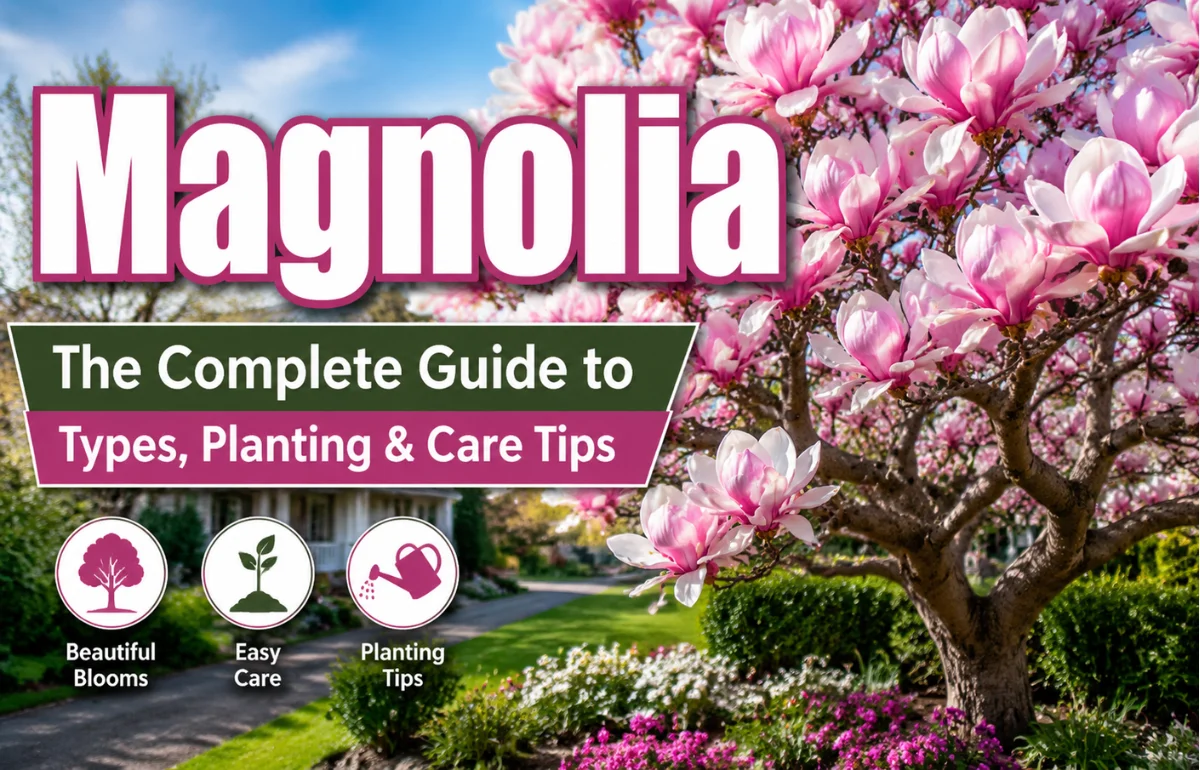
Magnolia is a genus of flowering trees and shrubs known for its large, fragrant blooms that appear in shades of white, pink, purple, and soft yellow, often before the leaves even open. I’ve spent years around gardens that revolve entirely around the seasonal drama of a single magnolia tree, and I can tell you there’s nothing quite like watching those thick, waxy buds crack open after a long winter.
Botanically, magnolias belong to the family Magnoliaceae, and the genus includes over 200 species, ranging from compact shrubs barely two metres tall to towering specimens that stretch past 20 metres. Some are deciduous, dropping their leaves in autumn, while others stay evergreen year-round.
What makes magnolia genuinely remarkable, though, is its age: this is one of the oldest flowering plant genera on Earth, having evolved before bees existed, which is why its flowers are pollinated by beetles instead.
Why Magnolia Has Outlived Almost Every Other Flowering Plant
I find this part genuinely fascinating, and most articles skip right past it. Magnolia fossils date back roughly 95 million years, and some researchers place certain magnolia ancestors even earlier than that. Bees hadn’t evolved yet when magnolia flowers first appeared, so the plant developed tough, leathery petals (technically called tepals, since the sepals and petals look identical) specifically to withstand being crawled over by beetles without bruising or tearing.
That detail isn’t just trivia. It explains why magnolia flowers feel almost rubbery to the touch compared to a rose or tulip, and why they hold their shape so well even in wind or light rain. When I’m advising someone on plant selection for a garden that needs resilience, I always mention this. A flower built to survive beetles for 95 million years is a flower built to survive your backyard.
The Two Main Types of Magnolia You’ll Actually Encounter
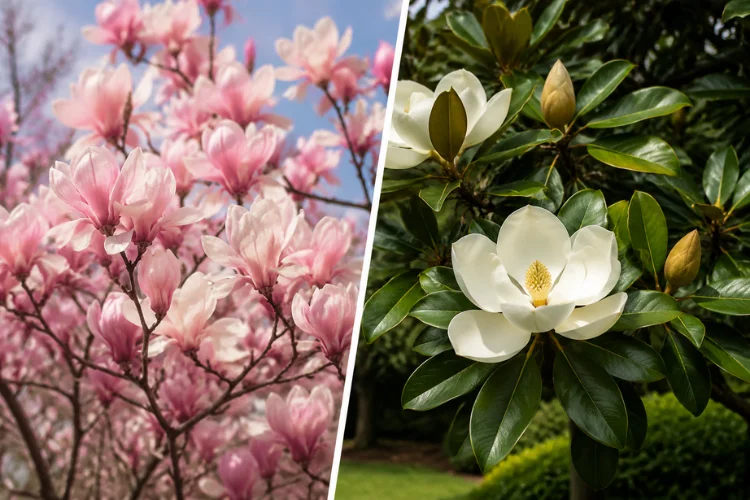
Most homeowners narrow their choice down to two broad categories, and understanding the difference upfront saves a lot of confusion later.
Deciduous Magnolias
These are the showstoppers of late winter and early spring. Species like Magnolia stellata (star magnolia), Magnolia soulangeana (saucer magnolia), and Magnolia denudata (Yulan magnolia) drop their leaves in autumn and bloom on bare branches before any foliage appears. The effect is striking: a tree that looks completely dormant suddenly explodes into hundreds of pink, white, or purple blossoms with nothing else competing for attention. I’ve planted star magnolias outside front entrances specifically because that bare-branch bloom creates a focal point no other plant can match in that window.
Evergreen Magnolias
Magnolia grandiflora, commonly called the southern magnolia, is the classic example here. It keeps its dark green, glossy leaves all year and produces large, creamy white, lemon-scented flowers through spring and summer. Evergreen varieties tend to grow larger and are often used for screening, hedging, or as a single statement tree, since they offer privacy and structure twelve months of the year, not just during bloom season.
Magnolia Comparison Table: Choosing the Right Type for Your Space
I get asked constantly which magnolia “is best,” and the honest answer is that it depends entirely on your space, climate, and what you want the tree to do for you. Here’s a breakdown I put together based on the varieties I see recommended and planted most often.
| Variety | Type | Mature Height | Bloom Season | Best Use | Sun Needs |
|---|---|---|---|---|---|
| Magnolia stellata (Star Magnolia) | Deciduous | 3–4.5m | Late winter–early spring | Small gardens, entrances | Full sun to part shade |
| Magnolia soulangeana (Saucer Magnolia) | Deciduous | 6–9m | Early–mid spring | Specimen tree, lawns | Full sun |
| Magnolia grandiflora (Southern Magnolia) | Evergreen | 12–20m+ | Spring–summer | Screening, large feature tree | Full sun to part shade |
| Magnolia grandiflora ‘Little Gem’ | Evergreen (dwarf) | 4–6m | Spring–autumn | Small yards, narrow spaces | Full sun to part shade |
| Magnolia liliiflora (Lily Magnolia) | Deciduous | 3–4m | Mid spring | Borders, shrub form | Full sun |
| Magnolia virginiana (Sweetbay Magnolia) | Semi-evergreen | 6–9m | Late spring–summer | Wet or boggy soil areas | Full sun to part shade |
If you’re working with a smaller block or a courtyard, a dwarf evergreen like Little Gem or a compact deciduous variety like the star magnolia will give you the magnolia look without the magnolia footprint. If you’ve got room and want a true centrepiece tree, Magnolia soulangeana or grandiflora are the ones people stop and photograph.
How to Plant Magnolia the Right Way
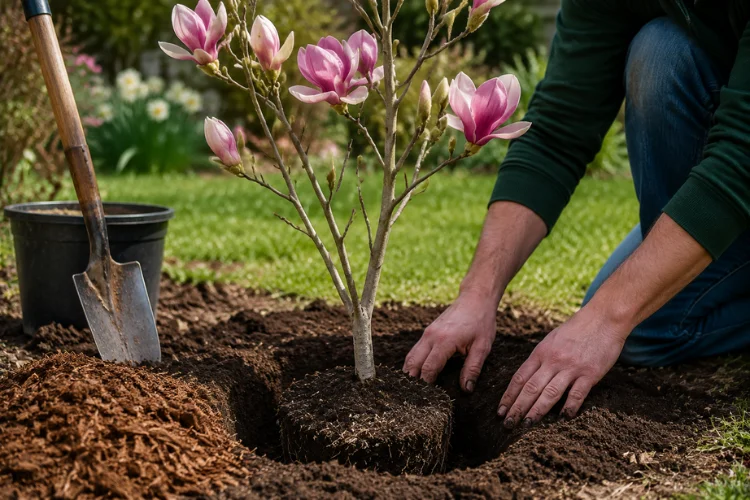
I’ve watched plenty of magnolias fail in their first year, and almost every time it traces back to the same two or three mistakes. Magnolias are not fussy plants once established, but they are particular about how they’re started.
Soil and Position
Magnolias want soil that’s rich, moist, and free-draining, with a slightly acidic pH somewhere between 5.5 and 6.5. Heavy clay that holds water will rot the roots before the tree ever gets going, so if your soil drains poorly, I’d recommend building a raised mound or amending generously with compost before planting. Position matters just as much. Magnolias generally prefer full sun to part shade, but they need shelter from harsh afternoon sun and strong wind, both of which can scorch leaves or knock early blooms straight off the branch.
Planting Depth and Spacing
Dig your hole roughly twice the width of the root ball, but no deeper than the pot itself. Planting too deep is one of the most common errors I see, and it’s almost always fatal to the tree’s long-term health because it suffocates the root flare. Backfill gently, water in thoroughly, and resist the urge to fertilise heavily in that first season. New roots need to establish before they can handle a feeding boost.
Mulching
Magnolias are shallow-rooted, which surprises a lot of people, given how large the trees get. That shallow root system means mulch is doing real work here, not just looking tidy. A generous layer around the drip zone, kept clear of the trunk itself, helps retain moisture and keeps those surface roots cool through summer.
Caring for an Established Magnolia
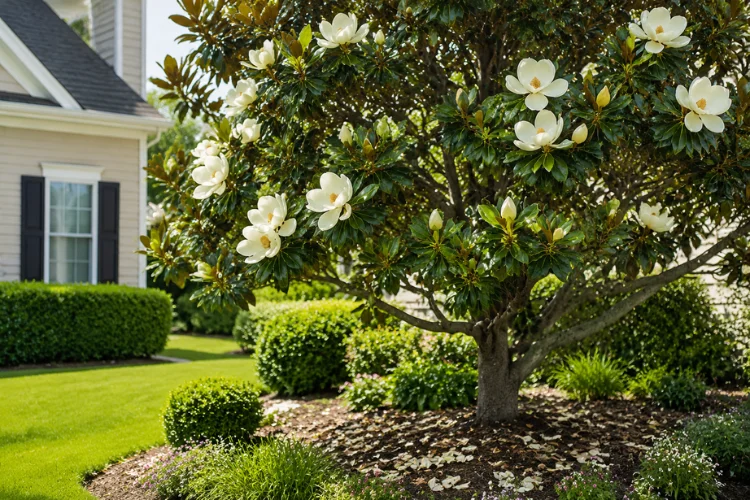
Once a magnolia is settled in, the maintenance load drops considerably, which is part of why I recommend it so often to people who want a high-impact tree without a high-effort relationship.
Watering
During the first two years, consistent watering is non-negotiable, especially through hot, dry stretches. After that, magnolias handle moderate dry spells reasonably well, though they’ll still appreciate deep watering during prolonged heat.
Feeding
A slow-release, balanced fertiliser two to three times a year, typically in spring, summer, and early autumn, keeps growth steady and blooms generous. I personally favour products formulated for acid-loving plants, since they tend to support the bloom colour and foliage density better than a generic all-purpose feed.
Pruning
Here’s something I wish more guides made clear: magnolias genuinely do not need much pruning. Evergreen types can be lightly shaped if you want a tidier silhouette, but deciduous magnolias should only have dead, damaged, or crossing branches removed, and ideally right after flowering finishes. Prune too early, and you’ll cut off next season’s flower buds before they’ve even formed.
Common Magnolia Problems (And the Ones Nobody Talks About)
Most articles on magnolia care stop at “pest and disease resistant” and leave it there. In my experience, that’s true in the broad strokes, but it skips a few practical issues people actually run into.
Frost damage to early buds is probably the single most common disappointment I hear about. Because deciduous magnolias bloom so early, a late cold snap can brown the petals just as they open, ruining a season’s display in one night. Choosing a slightly later-blooming cultivar, or positioning the tree away from a frost pocket, makes a real difference here.
Scale insects occasionally turn up on magnolia, particularly on saucer magnolia and its hybrids, showing as small bumps along stems that can weaken growth if left unchecked. Leaf scorch from harsh afternoon sun or wind is the other one I see constantly, and it’s almost always a positioning issue rather than a disease.
None of these is a dealbreaker. They’re simply the realistic, lived-experience version of Magnolia care that goes beyond the standard “low maintenance” summary you’ll find everywhere else.
Magnolia in Garden and Landscape Design
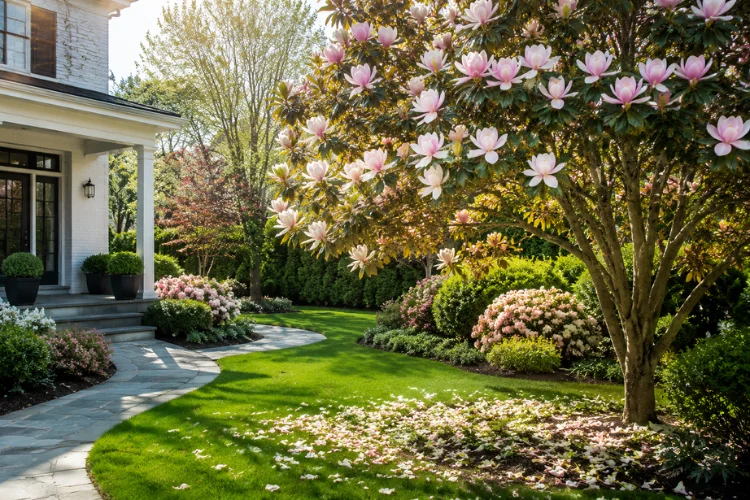
Beyond its biology, magnolia carries serious design weight. A single mature magnolia can anchor an entire front yard, and because the bloom timing is so distinct from most other flowering trees, it gives a garden a defined seasonal moment rather than blending into a general spring blur. I’ve used star magnolias near entryways for exactly this reason, and southern magnolias as living privacy screens where a fence would have felt too harsh.
If you’re planning a broader outdoor refresh and a magnolia is just one piece of a larger vision, that’s really where thinking holistically pays off. A tree this striking deserves surroundings that match it, and that’s the kind of detail our home makeover services are built around, helping you plan plantings, hardscaping, and overall outdoor design as one cohesive project rather than a string of disconnected decisions.
Magnolia Symbolism and Cultural Meaning
It’s worth knowing, even briefly, that magnolia carries genuine symbolic weight in several cultures. In the southern United States, it represents dignity, nobility, and perseverance, partly thanks to its long lifespan and resilience. In parts of East Asia, particularly China, magnolia has been associated with purity and feminine beauty for centuries, and it appears frequently in classical poetry and art. That layered meaning is part of why so many people choose magnolia specifically for memorial gardens, wedding venues, or significant family properties. It’s not just a pretty tree; it’s a tree that means something.
FAQs About Magnolia
Is magnolia a tree or a shrub?
Magnolia can be either, depending on the species and cultivar. Some varieties grow as large trees over 20 metres tall, while others, like dwarf cultivars, stay shrub-sized at under 2 metres.
How fast do magnolia trees grow?
Most magnolias are considered slow to moderate growers, typically adding 30 to 60 centimetres per year once established, though this varies by species and growing conditions.
Do magnolia trees need full sun?
Most magnolias prefer full sun to part shade, but they generally need protection from intense afternoon sun and strong winds, especially in hotter climates.
Why is my magnolia not flowering?
The most common causes are insufficient sunlight, over-pruning at the wrong time of year, frost damage to flower buds, or a tree that’s simply still too young, since some magnolias take several years to reach blooming maturity.
Are magnolia trees toxic to pets?
Magnolia is generally considered non-toxic to dogs and cats, making it a safer ornamental choice for households with animals compared to many other flowering trees.
Bringing Magnolia Into Your Own Garden
Magnolia earns its reputation honestly. It’s ancient, resilient, visually unmatched during bloom season, and far less demanding than its dramatic flowers would suggest. Whether you’re drawn to the bare-branch spectacle of a deciduous star magnolia or the year-round structure of an evergreen southern magnolia, there’s a variety suited to nearly every garden size and climate.
If you’re ready to plan a magnolia planting as part of a bigger outdoor transformation, rather than tackling it as an isolated project, it’s worth getting proper guidance on placement, soil prep, and design before you put a single shovel in the ground. That’s exactly where our team can help you turn one great tree into a complete outdoor space you’ll actually enjoy for decades.
More Resources

I’m Salman Khayam, the founder and editor of this blog, with 10 years of professional experience in Architecture, Interior Design, Home Improvement, and Real Estate. I provide expert advice and practical tips on a wide range of topics, including Solar Panel installation, Garage Solutions, Moving tips, as well as Cleaning and Pest Control, helping you create functional, stylish, and sustainable spaces that enhance your daily life.